
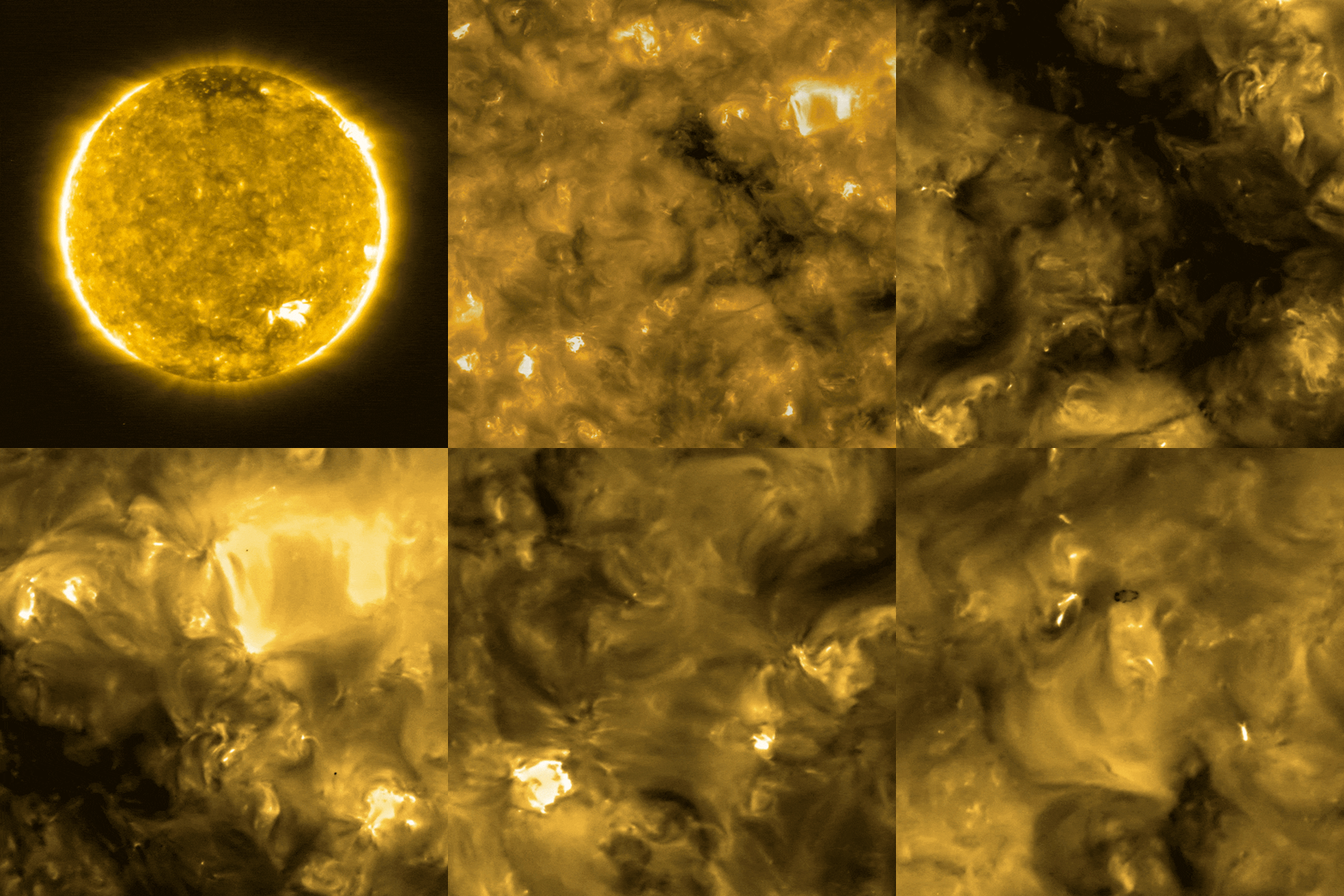
The first images from ESA/NASA’s Solar Orbiter are now available to the public, including the closest pictures ever taken of the Sun.
Solar Orbiter is an international collaboration between the European Space Agency, or ESA, and NASA, to study our closest star, the Sun. Launched on February 9, 2020 (EST), the spacecraft completed its first close pass of the Sun in mid-June.
“These unprecedented pictures of the Sun are the closest we have ever obtained,” said Holly Gilbert, NASA project scientist for the mission at NASA’s Goddard Space Flight Center in Greenbelt, Maryland. “These amazing images will help scientists piece together the Sun’s atmospheric layers, which is important for understanding how it drives space weather near the Earth and throughout the solar system.”
“We didn’t expect such great results so early,” said Daniel Müller, ESA’s Solar Orbiter project scientist. “These images show that Solar Orbiter is off to an excellent start.”
Getting to this point was no simple feat. The novel coronavirus forced mission control at the European Space Operations Center, or ESOC, in Darmstadt, Germany to close down completely for more than a week. During commissioning, the period when each instrument is extensively tested, ESOC staff were reduced to a skeleton crew. All but essential personnel worked from home.
“The pandemic required us to perform critical operations remotely – the first time we have ever done that,” said Russell Howard, principal investigator for one of Solar Orbiter’s imagers.
But the team adapted, even readying for an unexpected encounter with comet ATLAS’s ion and dust tails on June 1 and 6, respectively. The spacecraft completed commissioning just in time for its first close solar pass on June 15. As it flew within 48 million miles (77 million kilometers) of the Sun, all 10 instruments flicked on, and Solar Orbiter snapped the closest pictures of the Sun to date. (Other spacecraft have been closer, but none have carried Sun-facing imagers.)
Solar Orbiter carries six imaging instruments, each of which studies a different aspect of the Sun. Normally, the first images from a spacecraft confirm the instruments are working; scientists don’t expect new discoveries from them. But the Extreme Ultraviolet Imager, or EUI, on Solar Orbiter returned data hinting at solar features never observed in such detail.
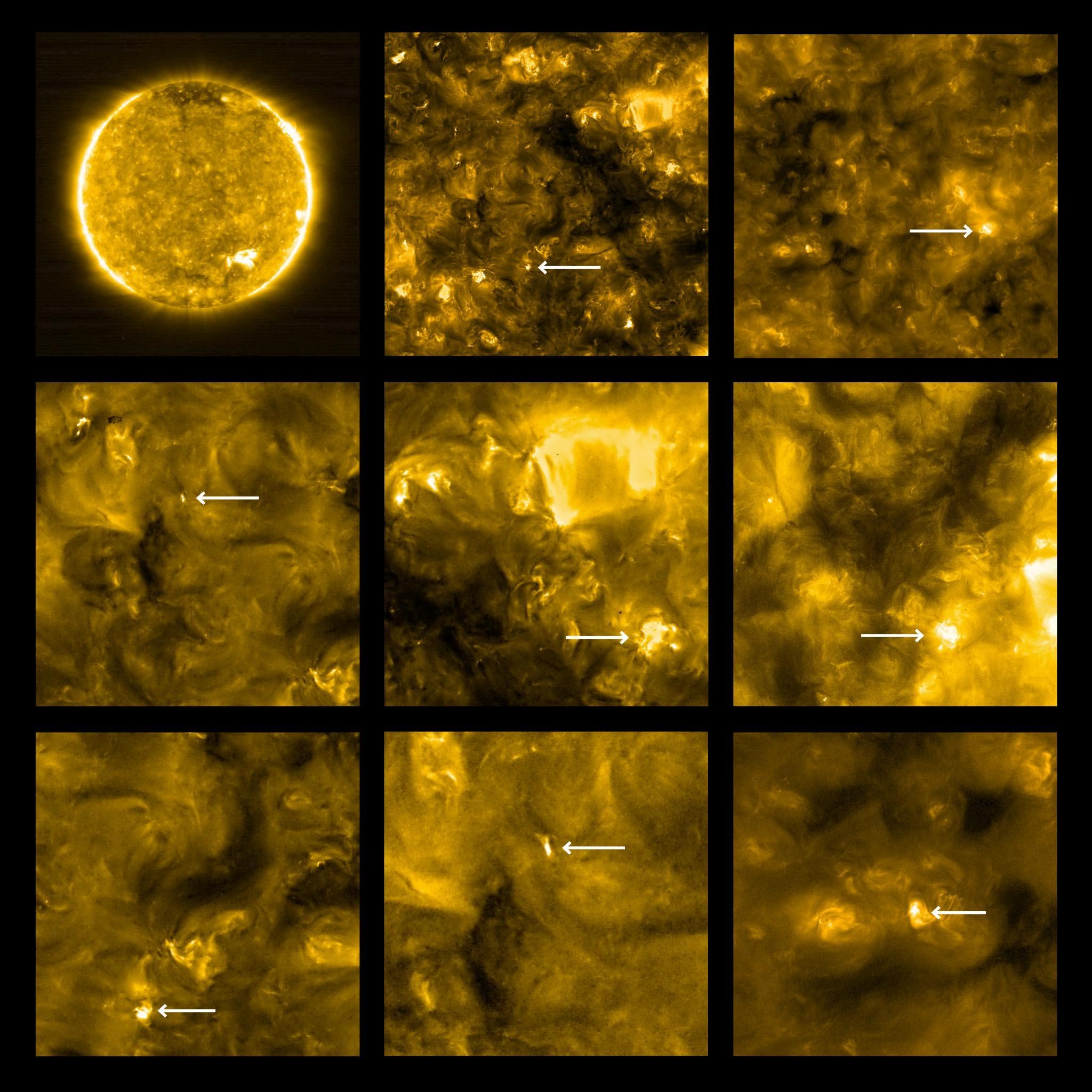
Principal investigator David Berghmans, an astrophysicist at the Royal Observatory of Belgium in Brussels, points out what he calls “campfires” dotting the Sun in EUI’s images.
“The campfires we are talking about here are the little nephews of solar flares, at least a million, perhaps a billion times smaller,” Berghmans said. “When looking at the new high resolution EUI images, they are literally everywhere we look.”
It’s not yet clear what these campfires are or how they correspond to solar brightenings observed by other spacecraft. But it’s possible they are mini-explosions known as nanoflares – tiny but ubiquitous sparks theorized to help heat the Sun’s outer atmosphere, or corona, to its temperature 300 times hotter than the solar surface.
To know for sure, scientists need a more precise measurement of the campfires’ temperature. Fortunately, the Spectral Imaging of the Coronal Environment, or SPICE instrument, also on Solar Orbiter, does just that.
“So we’re eagerly awaiting our next data set,” said Frédéric Auchère, principal investigator for SPICE operations at the Institute for Space Astrophysics in Orsay, France. “The hope is to detect nanoflares for sure and to quantify their role in coronal heating.”
Other images from the spacecraft showcase additional promise for later in the mission, when Solar Orbiter is closer to the Sun.
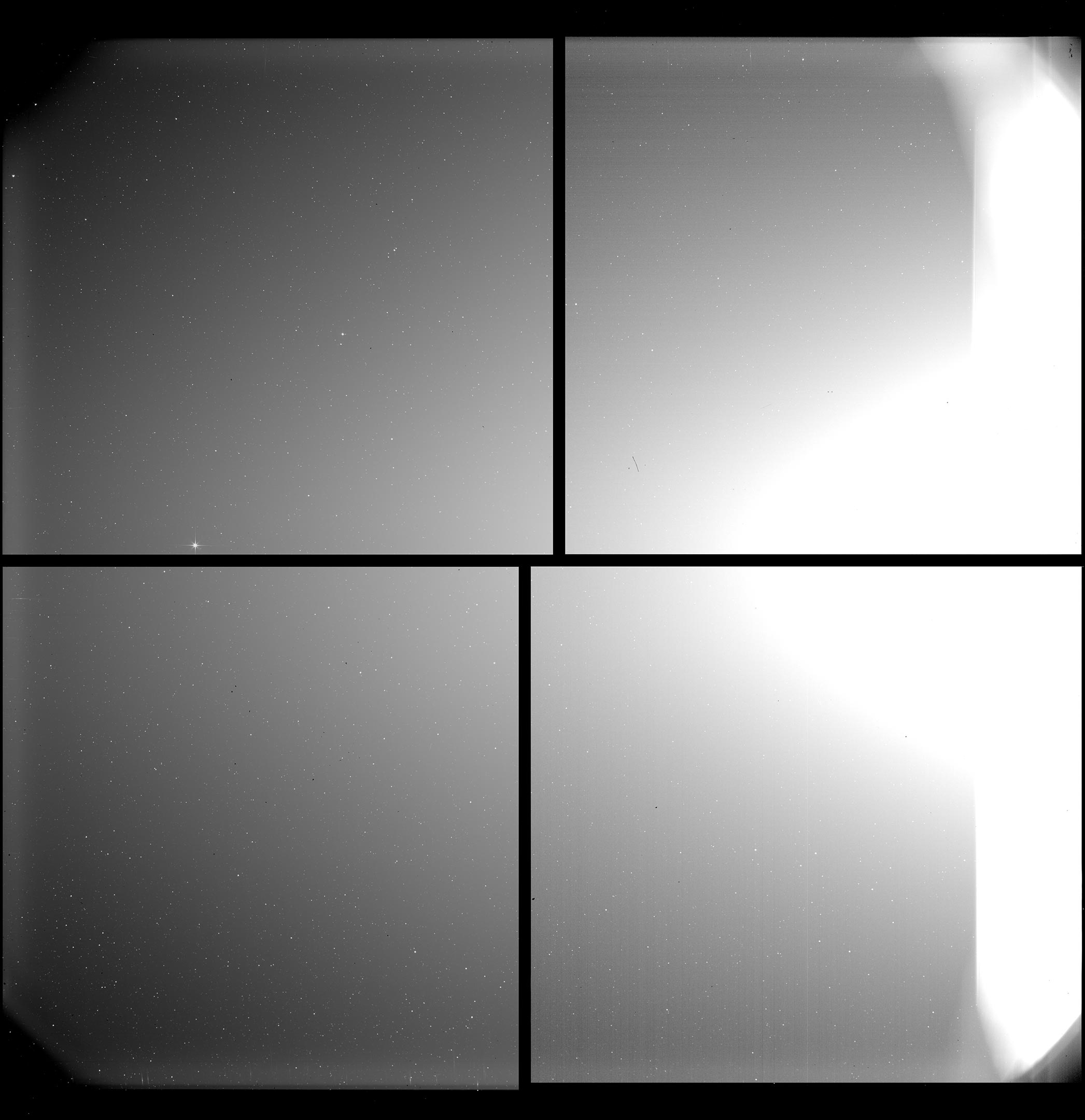
The Solar and Heliospheric Imager, or SoloHI, led by Russell Howard of the Naval Research Laboratory in Washington, D.C., revealed the so-called zodiacal light, light from the Sun reflecting off of interplanetary dust – a light so faint that the bright face of the Sun normally obscures it. To see it, SoloHI had to reduce the Sun’s light to one trillionth of its original brightness.
“The images produced such a perfect zodiacal light pattern, so clean,” Howard said. “That gives us a lot of confidence that we will be able to see solar wind structures when we get closer to the Sun.”

Images from the Polar and Helioseismic Imager, or PHI, showed it is also primed for later observations. PHI maps the Sun’s magnetic field, with a special focus on its poles. It will have its heyday later in the mission as Solar Orbiter gradually tilts its orbit to 24 degrees above the plane of the planets, giving it an unprecedented view of the Sun’s poles.
“The magnetic structures we see at the visible surface show that PHI is receiving top-quality data,” said Sami Solanki, PHI’s principal investigator at the Max Planck Institute for Solar System Research in Göttingen, Germany. “We’re prepared for great science as more of the Sun’s poles come into view.”
Today’s release highlights Solar Orbiter’s imagers, but the mission’s four in situ instruments also revealed initial results. In situ instruments measure the space environment immediately surrounding the spacecraft. The Solar Wind Analyser, or SWA instrument, shared the first dedicated measurements of heavy ions (carbon, oxygen, silicon, iron, and others) in the solar wind from the inner heliosphere.
The new data, including movies and images with detailed descriptions, can be viewed in ESA’s gallery.
Solar Orbiter is an international cooperative mission between the European Space Agency and NASA. The European Space Operations Centre (ESOC) in Germany operates Solar Orbiter. Solar Orbiter was built by Airbus Defence and Space, and contains 10 instruments: nine provided by ESA member states and ESA. NASA provided one instrument, SoloHI, hardware and sensors for three other instruments, and the Atlas V 411 launch vehicle. The European Space Astronomy Centre (ESAC) in Spain conducts the science operations.
Never miss a breakthrough: Join the SciTechDaily newsletter.
Follow us on Google and Google News.