

In response to the escalating coronavirus pandemic, ESA has decided to further reduce on-site personnel at its mission control center in Darmstadt, Germany.
The new adjustments require temporarily stopping instrument operation and data gathering on four Solar System science missions, which are part of the wider fleet of 21 spacecraft currently flown by the Agency from the European Space Operations Centre (ESOC) in Darmstadt.
ESA implemented risk mitigation measures early on. The vast majority of ESA’s workforce has been teleworking for nearly two weeks. Only key personnel performing critical tasks, which include maintaining real-time spacecraft operations, are still present on site at ESA’s establishments throughout Europe.

Supporting enhanced national measures
Recent developments, including strengthened restrictions by national, regional, and local authorities across Europe and the first positive test result for COVID-19 within the workforce at ESOC, have led the Agency to restrict on-site personnel at its mission control center even further.
“Our priority is the health of our workforce, and we will therefore reduce activity on some of our scientific missions, especially on interplanetary spacecraft, which currently require the highest number of personnel on site,” says ESA’s Director of Operations Rolf Densing.
“These have stable orbits and long mission durations, so turning off their science instruments and placing them into a largely unattended safe configuration for a certain period will have a negligible impact on their overall mission performance.”
Among the affected missions are:
- Cluster – A four-spacecraft mission launched in 2000, orbiting Earth to investigate our planet’s magnetic environment and how it is forged by the solar wind, the stream of charged particles constantly released by the Sun;
- ExoMars Trace Gas Orbiter – Launched in 2016, the spacecraft is in orbit around Mars, where it has been investigating the planet’s atmosphere and providing data relay for landers on the surface;
- Mars Express – Launched in 2003, the workhorse orbiter has been imaging the Martian surface and sampling the planet’s atmosphere for over one and a half decades;
- Solar Orbiter – ESA’s newest science mission, launched in February 2020 and currently en route to its science operations orbit around the Sun.
“It was a difficult decision, but the right one to take. Our greatest responsibility is the safety of people, and I know all of us in the science community understand why this is necessary,” says Günther Hasinger, ESA’s Director of Science.
“This is a prudent step to ensure that Europe’s world-class science missions are safe, along with the instruments from European scientists and our international partners flying on our missions. We are talking about some of humankind’s most advanced scientific experiments – and if switching some missions into temporary standby keeps them safe, then this is what we will do.”

The temporary reduction in personnel on site will also allow the ESOC teams to concentrate on maintaining spacecraft safety for all other missions involved, in particular the Mercury explorer BepiColombo, which is on its way to the innermost planet in the Solar System and will require some on-site support around its scheduled Earth flyby on April 10.
The challenging maneuver, which will use Earth’s gravity to adjust BepiColombo’s trajectory as it cruises towards Mercury, will be performed by a very small number of engineers and in full respect of social distancing and other health and hygiene measures required by the current situation.
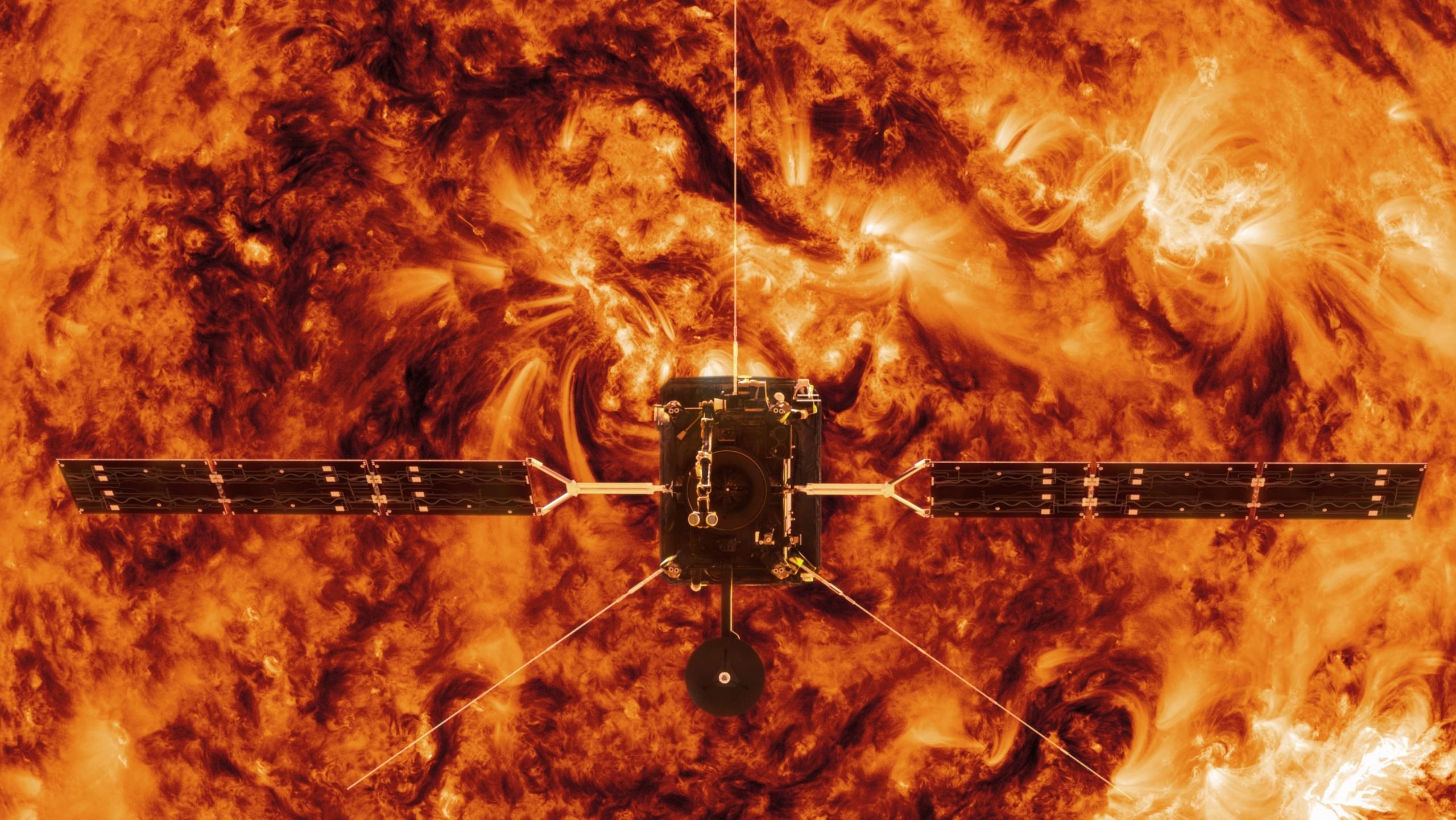
Commissioning and first check-out operations of scientific instruments on the recently launched Solar Orbiter, which had begun last month, have been temporarily suspended.
ESA expects to resume these operations in the near future, in line with the development of the coronavirus situation. Meanwhile, Solar Orbiter will continue its journey towards the Sun, with the first Venus flyby to take place in December.
Coasting through space
“Over the coming days, our interplanetary missions will be gradually commanded into a safe configuration, so that thereafter they will need little or no intervention from ground,” says Paolo Ferri, responsible for mission operations at ESA.
“These probes are designed to safely sustain long periods with limited or no interaction with ground, required for instance for the periods they spend behind the Sun as seen from Earth, when no radio contact is possible for weeks,” he adds. “We are confident that with very limited and infrequent interactions with ground control the missions can safely remain in that operation mode for months, should the duration of the coronavirus mitigation measures require it.”

In the coming days, ESA will monitor the evolving environmental conditions and restrictions, develop special procedures, plans, and decision logic for the future restart of the scientific operations.
“The decision on when to return to normal science production mode will be taken independently for each mission, depending on several variables, including the type and complexity of each mission,” adds Paolo Ferri.
The measure does not affect other ESA missions that are operated from Darmstadt, such as space science missions for astronomy or Earth observation missions, including those that are part of the European Commission’s Copernicus program. For these missions, which require frequent care from ground, teams are able to conduct most control actions remotely, with just a single technician in a control room.
People first
Even before this measure, the community of European and international scientists behind the interplanetary missions were already feeling the effects of the coronavirus outbreak, with processing and analysis hindered by local and national work restrictions and the need for social distancing.
“I wish to thank all the scientists, engineers, and other colleagues not only at mission control but across the Agency and at our partners who are keeping Europe’s essential space missions flying in the middle of this global crisis,” says ESA Director General Jan Wörner.
“I am glad to see how professional everyone at ESA is throughout this difficult situation. It shows that the Agency is, first and foremost, an ensemble of humans from all over Europe who care. Humans who care not only about science and space, but even more about the well-being of colleagues, families, and fellow citizens all over the planet.”
Never miss a breakthrough: Join the SciTechDaily newsletter.
Follow us on Google and Google News.