

Close Menu
    Facebook X (Twitter) Instagram
    SciTechDaily
    • Biology
    • Chemistry
    • Earth
    • Health
    • Physics
    • Science
    • Space
    • Technology
    Facebook X (Twitter) Pinterest YouTube RSS
    SciTechDaily
    Home»Space»Coronavirus Pandemic Forces Mission Control Adjustments – Responsible for 21 Flying Spacecraft
    Space

    Coronavirus Pandemic Forces Mission Control Adjustments – Responsible for 21 Flying Spacecraft

    By European Space Agency (ESA)March 20, 2020No Comments4 Mins Read
    Facebook Twitter Pinterest Telegram LinkedIn WhatsApp Email Reddit
    Share
    Facebook Twitter LinkedIn Pinterest Telegram Email Reddit
    ESA Main Control Room
    Panorama of the Main Control Room at ESOC, ESA’s European Space Operations Centre, Darmstadt, Germany, taken in 2012. Credit: ESA/J. Mai, CC BY-SA 3.0 IGO

    Responsible for spacecraft orbiting Earth, the Sun, and exploring the Solar System, teams at ESA’s ESOC mission control deal with in-flight challenges every day, from faulty hardware, problematic software, and hazardous space debris to computer viruses that could affect ground stations.

    So how do they keep missions flying when a viral pandemic puts the people of the Agency at risk?
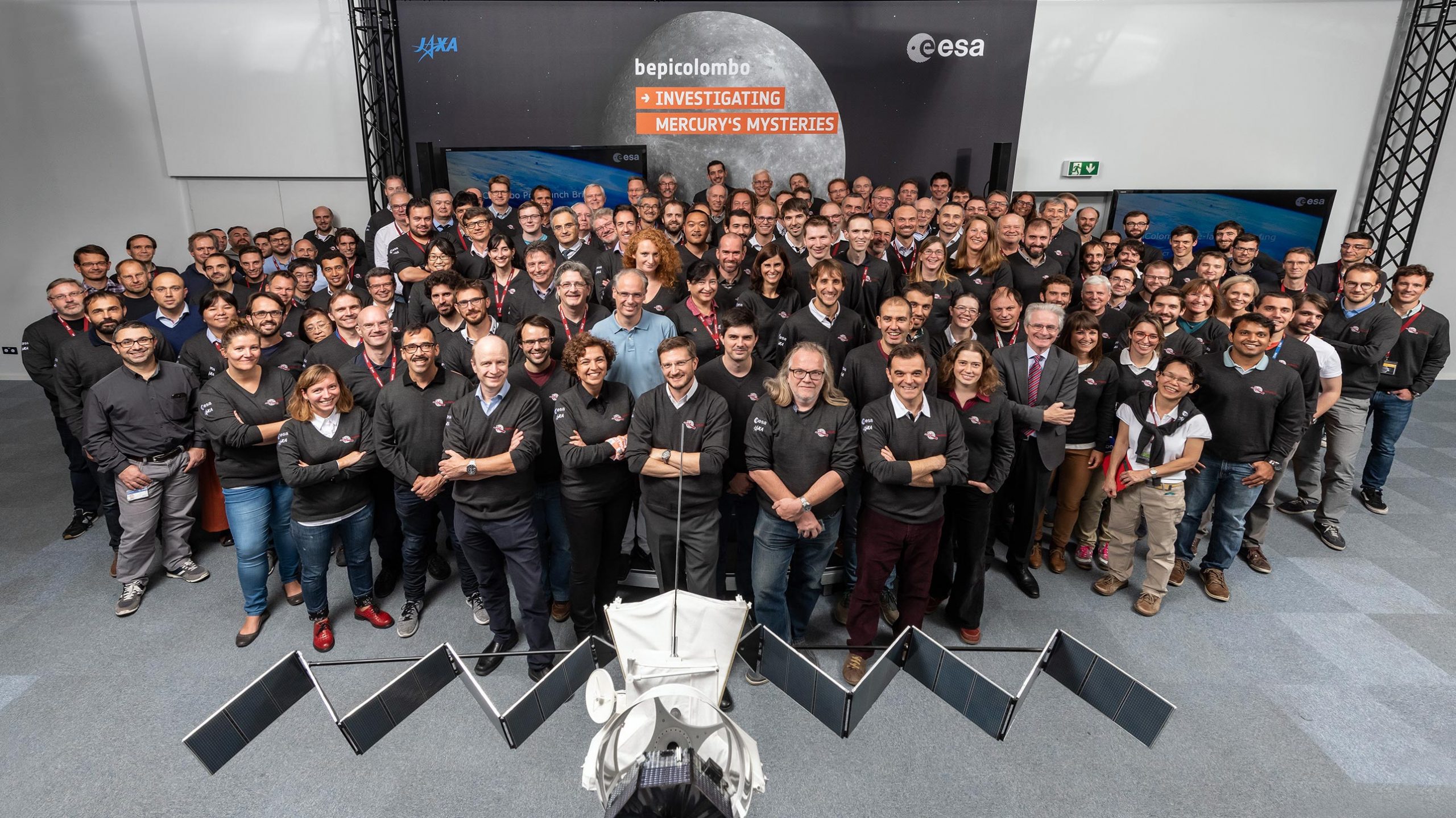
    ESA Control Center Mission Teams
    ESOC awaiting final countdown before launch of BepiColombo. Credit: Juergen Mai

    The first priority is the health and well-being of the workforce across the Agency, while those working at ESA’s mission control center, in Darmstadt, Germany, have the unique challenge of maintaining missions in orbit and ensuring critical ground infrastructure functions as it should, including seven ground stations located on three continents.

    Plans on the ground

    ESA is currently flying 21 spacecraft from ESOC, ranging from Earth observation to astronomy and planetary exploration missions, as well as five Sentinel satellites belonging to the European Union’s Copernicus program.

    These missions do not fly by themselves. Engineers must take regular measures to, for example, protect spacecraft from gradually drifting off their intended orbits or colliding with debris, ensure solar panels are getting enough light from the Sun, operate the scientific instruments, receive bundles of crucial data, and keep both onboard and ground systems working and up to date.

    To deal with the coronavirus outbreak, ESA is implementing numerous preventative measures taking account of the guidance provided by national and regional civil authorities, especially with respect to minimizing personal contact.
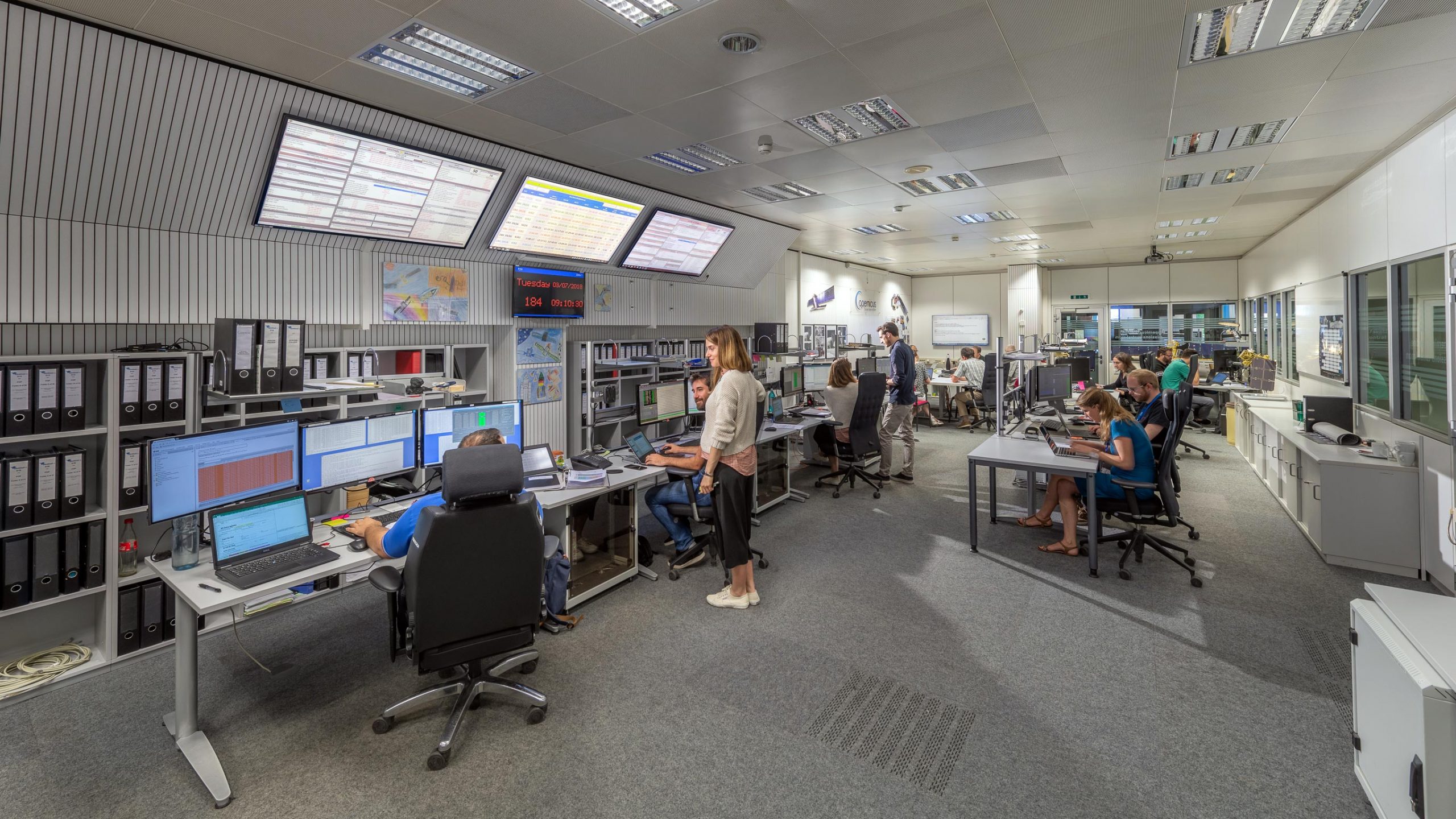
    ESA Sentinel Control Room
    Inside the Sentinel control room at ESA’s operation center in Darmstadt, Germany. Credit: ESA / J. Mai

    For the mission operations teams or the experts in technical ground segment areas like flight dynamics and ground stations, work is typically done together in small-ish control rooms, and so a range of plans are in place to respond to the developing severity of the outbreak.

    Responses differ primarily in the amount and type of personnel required on site in the control rooms and technical facilities.

    Taking mission control home

    For now, the aim at mission control remains maintaining the generation of mission data, and keeping the entire fleet of spacecraft, young and old, operating in a routine way.

    At the same time the preparation and execution of ad-hoc critical activities, like collision avoidance maneuvers or the upcoming Earth flyby of BepiColombo, have to be ensured.

    BepiColombo Earth Flyby
    Artist’s impression of the BepiColombo spacecraft in cruise configuration, flying past Earth and with the Sun in the background. Credit: ESA/ATG medialab

    As of Monday, March 16, the majority of the workforce at ESOC began working from home. Similar to staffing levels on a typical weekend, mission teams are now keeping a minimum presence on-site, while everyone who can is performing the maximum possible daily activities off site.

    “In the history of ESA’s mission control center, there has never been a period with so few people on-site,” says Rolf Densing, Director of Operations for ESA.

    “This, of course, has big implications for how missions are flown, and for the next few weeks, the priority will remain on protecting health by minimizing the number of people physically present, while ensuring effective daily operations”.
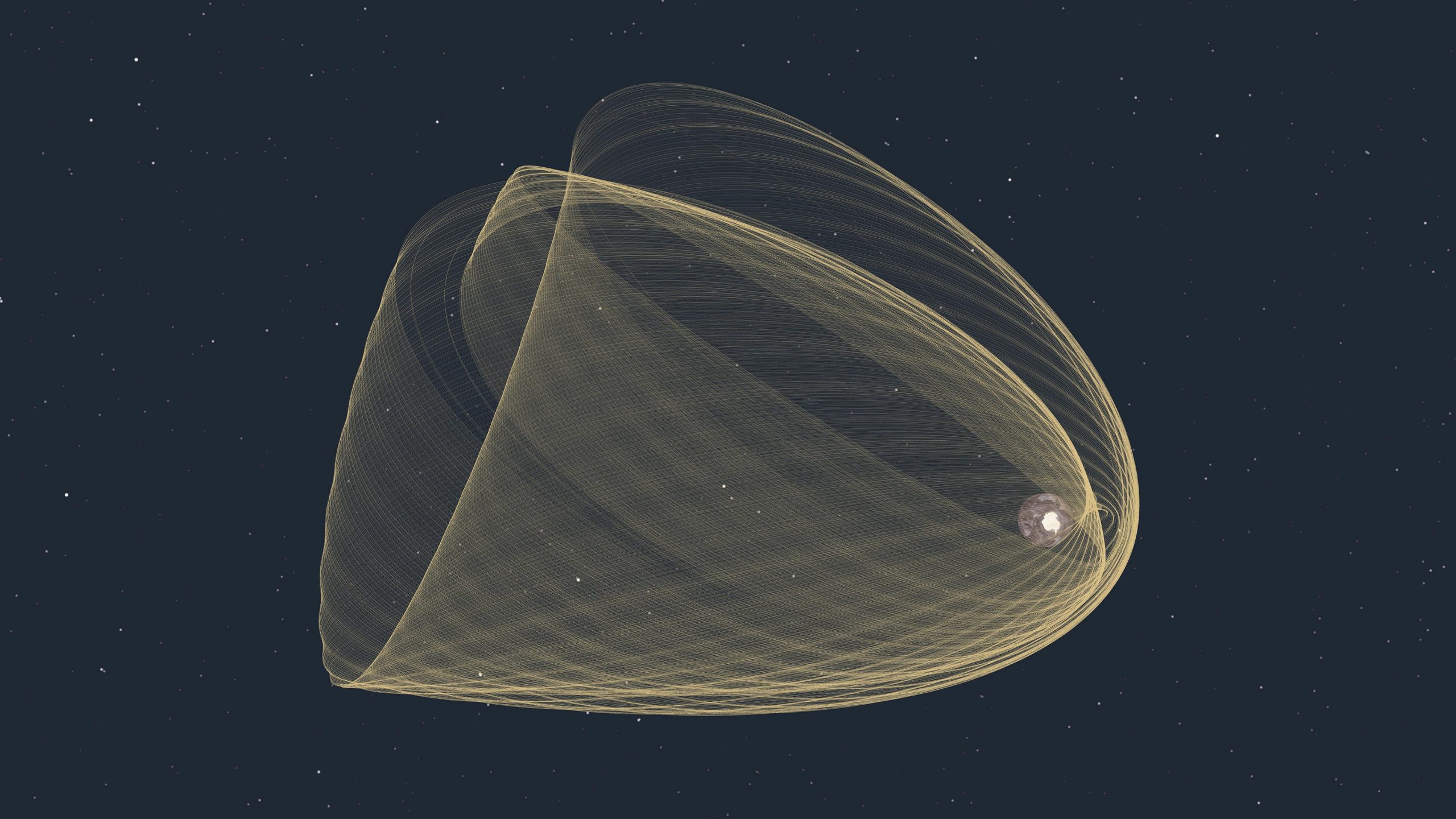
    Integrals Orbits
    ESA’s Integral space observatory has been orbiting Earth for 15 years, observing the ever-changing, powerful and violent cosmos in gamma rays, X-rays and visible light. Studying stars exploding as supernovas, monster black holes and, more recently, even gamma-rays that were associated with gravitational waves, Integral continues to broaden our understanding of the high-energy Universe. This image visualizes the orbits of the spacecraft since its launch on October 17, 2002, until October of 2017. ESA/ScienceOffice.org, CC BY-SA 3.0 IGO

    In the future, if necessary, ESA could reduce on-site personnel even more, necessitating a reduction or even a halt to science data gathering so as to focus on simply maintaining spacecraft in safe, stable orbits.

    “Such a scenario could be maintained for quite some time, extending into many weeks or months, if necessary,” says Paolo Ferri, Head of Mission Operations.

    Never miss a breakthrough: Join the SciTechDaily newsletter.
    Follow us on Google and Google News.

    COVID-19 European Space Agency
    Share. Facebook Twitter Pinterest LinkedIn Email Reddit

    Related Articles

    ESA Forced to Go Ahead With BepiColombo Gravity-Assist Flyby Despite Coronavirus Crisis

    European Space Agency Scales Down Mission Operations Amid COVID-19 Pandemic

    Ultra-Fast Outflows are Common Features of Black-Hole-Powered Galaxies

    Researchers Discover First Intermediate-Mass Black Hole

    New Planck Mission Images Show Strange Haze and Cold Gas

    ESA’s Vega Rocket Has Launched on Its Maiden Voyage, Carries 9 Satellites

    ESA’s Mars Express MARSIS Radar Explores Martian Oceans

    ESA’s Hershel Space Telescope Captures Incredible Views of Eagle Nebula

    Hubble Reaches New Milestone: 10,000th Scientific Paper Published

    Leave A Reply Cancel Reply

    • Facebook
    • Twitter
    • Pinterest
    • YouTube

    Don't Miss a Discovery

    Subscribe for the Latest in Science & Tech!

    Trending News

    Scientists Warn That This Common Pet Fish Can Wreck Entire Ecosystems

    Scientists Make Breakthrough in Turning Plastic Trash Into Clean Fuel Using Sunlight

    This Popular Supplement May Interfere With Cancer Treatment, Scientists Warn

    Scientists Finally Solved One of Water’s Biggest Mysteries

    Could This New Weight-Loss Pill Disrupt the Entire Market? Here’s What You Should Know About Orforglipron

    Earth’s Crust Is Tearing Open in Africa, and It Could Form a New Ocean

    Breakthrough Bowel Cancer Trial Leaves Patients Cancer-Free for Nearly 3 Years

    Natural Compound Shows Powerful Potential Against Rheumatoid Arthritis

    Follow SciTechDaily
    • Facebook
    • Twitter
    • YouTube
    • Pinterest
    • Newsletter
    • RSS
    SciTech News
    • Biology News
    • Chemistry News
    • Earth News
    • Health News
    • Physics News
    • Science News
    • Space News
    • Technology News
    Recent Posts
    • The Most Effective Knee Arthritis Treatments Aren’t What You Expect
    • Scientists Develop Bioengineered Chewing Gum That Could Help Fight Oral Cancer
    • Popular Weight-Loss Drugs Found To Cut Heart Attack and Stroke Risk
    • After 37 Years, the World’s Longest-Running Soil Warming Experiment Uncovers a Startling Climate Secret
    • NASA Satellite Captures First-Ever High-Res View of Massive Pacific Tsunami
    Copyright © 1998 - 2026 SciTechDaily. All Rights Reserved.
    • Science News
    • About
    • Contact
    • Editorial Board
    • Privacy Policy
    • Terms of Use

    Type above and press Enter to search. Press Esc to cancel.