
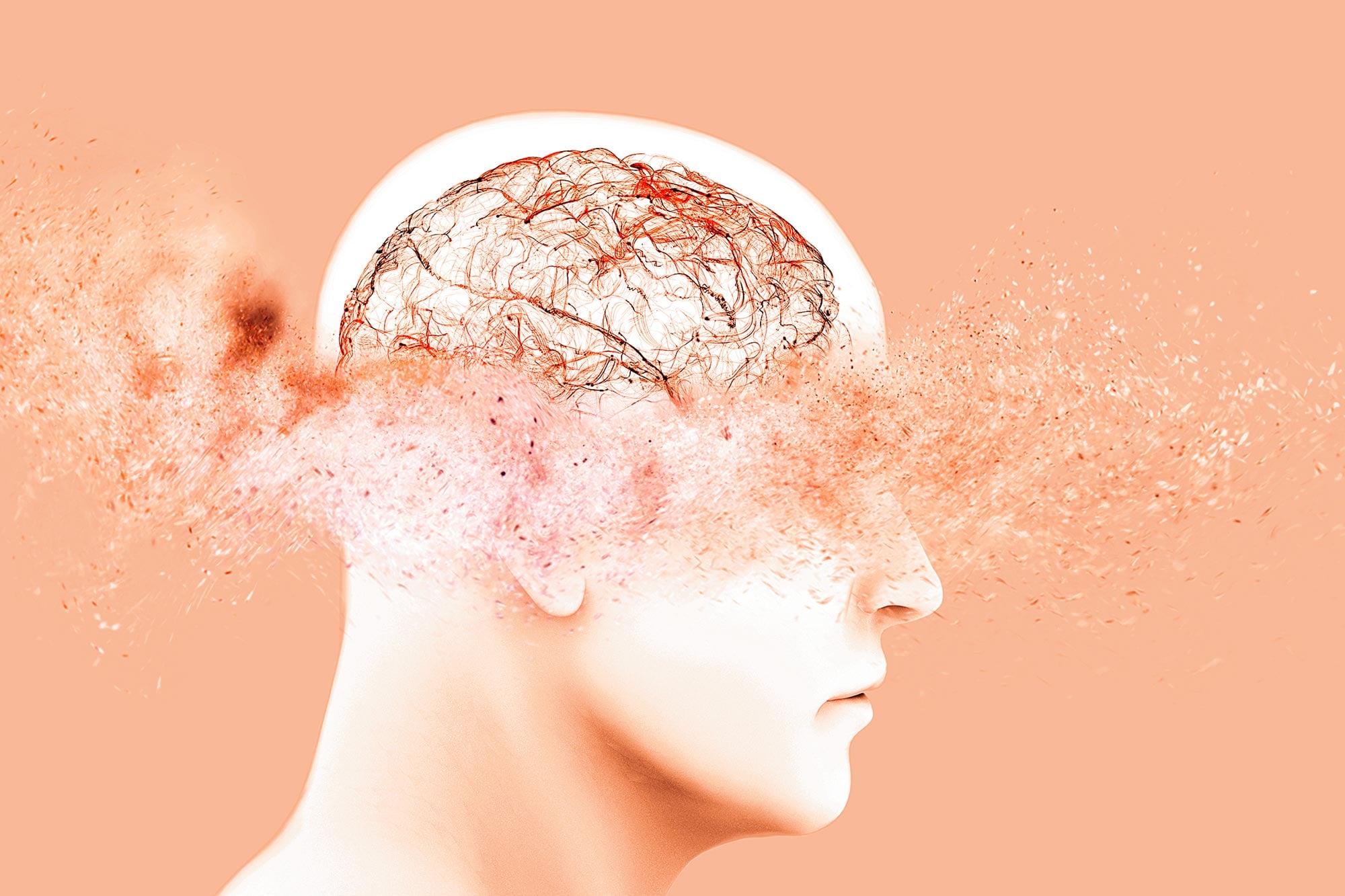
A newly identified protective brain pathway may help preserve vulnerable neurons in Parkinson’s disease.
Scientists have identified a brain pathway that could help slow Parkinson’s disease by protecting the brain’s dopamine-producing neurons. However, the benefit was seen only in females.
In a study published in the Journal of Neuroscience, researchers found that increasing the activity of nicotine-responsive receptors helped preserve dopamine-producing neurons and reduced signs of degeneration in female models. Importantly, the effect was achieved without using nicotine itself. The findings suggest a potential strategy for slowing the disease, rather than only treating its symptoms.
“This work is about keeping neurons alive longer,” said Dr. Rahul Srinivasan, associate professor of neuroscience at the Texas A&M University Naresh K. Vashisht College of Medicine. “If you can preserve dopamine‑producing cells, you have a real opportunity to slow the rate at which the disease advances.”
Looking Beyond Nicotine
Scientists have long been interested in the connection between nicotine and Parkinson’s disease. But because nicotine is addictive and affects many systems throughout the body, it is not considered a practical long-term treatment.
Instead, the new study focused on the brain pathways influenced by nicotine, without using the substance itself.
“Despite the nicotine connection, these receptors exist to serve normal brain function,” said Srinivasan, whose team includes Dr. Gauri Pandey, a Ph.D. graduate of the College of Medicine, and current M.D./Ph.D. student Roger Garcia. “Nicotine just hijacks a receptor system that’s already there.”
The research centered on receptors that respond to acetylcholine, a natural brain chemical involved in movement and communication between neurons. These same receptors are also targeted by nicotine.
Strengthening the Brain’s Own Defenses
Parkinson’s disease progresses as dopamine-producing neurons gradually die off. Existing treatments can help relieve symptoms by replacing dopamine or copying its effects, but they cannot stop the ongoing loss of neurons.
Previous work from Srinivasan’s lab showed that some nicotine-related drugs protected dopamine-producing neurons in female models. In the new study, the researchers wanted to determine whether they could strengthen the brain’s natural protective system without nicotine or nicotine-like drugs.
To do this, they used gene editing to increase the number of nicotine-responsive receptors available in neurons. This helped more receptors reach the areas of the neuron where they are needed.
The researchers found that strengthening this pathway helped dopamine-producing neurons survive under conditions that would normally lead to degeneration. Nearby brain cells also showed lower levels of reactivity, a sign of healthier brain tissue.
A Female-Specific Effect
One of the study’s most significant findings was that the protective effect appeared only in female models. Females consistently showed healthier dopamine neurons, lower activation of cell death signals, and healthier surrounding brain tissue. Male models did not show the same response.
“This wasn’t a subtle difference,” Srinivasan said. “The protective pathway was clearly engaged in females and absent in males.”
Researchers say the finding adds to growing evidence that Parkinson’s disease affects males and females differently. Hormones, receptor trafficking, and cellular regulation (the processes governing cell behavior) may all influence how neurons respond to damage.
“This study reinforces that sex differences are not secondary details, they are fundamental to how the disease works and how treatments may need to be designed,” Srinivasan said.
Toward Disease-Modifying Therapies
Because the pathway appears to protect dopamine-producing neurons instead of simply replacing lost dopamine, the findings support ongoing efforts to develop disease-modifying therapies for Parkinson’s disease.
“Every additional year that these neurons remain functional matters,” Srinivasan said. “If we can strengthen protective brain pathways early, we may be able to meaningfully slow Parkinson’s progression and improve the quality of life of patients with Parkinson’s.”
More research will be needed before scientists know whether this pathway can be targeted in people. Still, the study highlights a promising idea: slowing Parkinson’s disease may require helping the brain defend the neurons it cannot replace.
Reference: “Genetically encoded constitutive upregulation of β2 subunit containing neuronal nicotinic acetylcholine receptors is neuroprotective in female parkinsonian mice” by Gauri Pandey, Roger C. Garcia, Debanjana Das, Akilesh R. Mohan, Cristobal Rodriguez, Donovan Pollock, Nethra Karthik, Sushmitha Nalluri, Tan Nguyen, Christopher Polo, Sara M. Zarate, Mendell Rimer and Rahul Srinivasan, 28 April 2026, Journal of Neuroscience.
DOI: 10.1523/JNEUROSCI.1368-25.2026
Funding: American Parkinson Disease Association, NIH/National Institutes of Health
Never miss a breakthrough: Join the SciTechDaily newsletter.
Follow us on Google and Google News.