

On September 12, 2024, NASA’s Solar Dynamics Observatory recorded a significant solar event when the Sun unleashed an intense class solar flare. Classified as an X1.3 flare, it peaked at 5:43 a.m. ET.
Solar flares are powerful bursts of radiation emitted by the Sun when magnetic energy that has built up in the solar atmosphere is suddenly released. These flares are classified based on their brightness in the x-ray wavelengths, ranging from A, B, C, M, to X, with A being the smallest and X the most significant. Within each letter category, there is a finer scale from 1 to 9, indicating the flare’s intensity.
The potential risks of these flares to Earth include disruptions to satellite communications, navigation systems, and electrical power grids. More intense flares, such as those in the X category, can also pose a hazard to astronauts by exposing them to high radiation levels. Solar flares can affect radio communications, cause radiation storms, and even influence Earth’s climate in extreme cases.
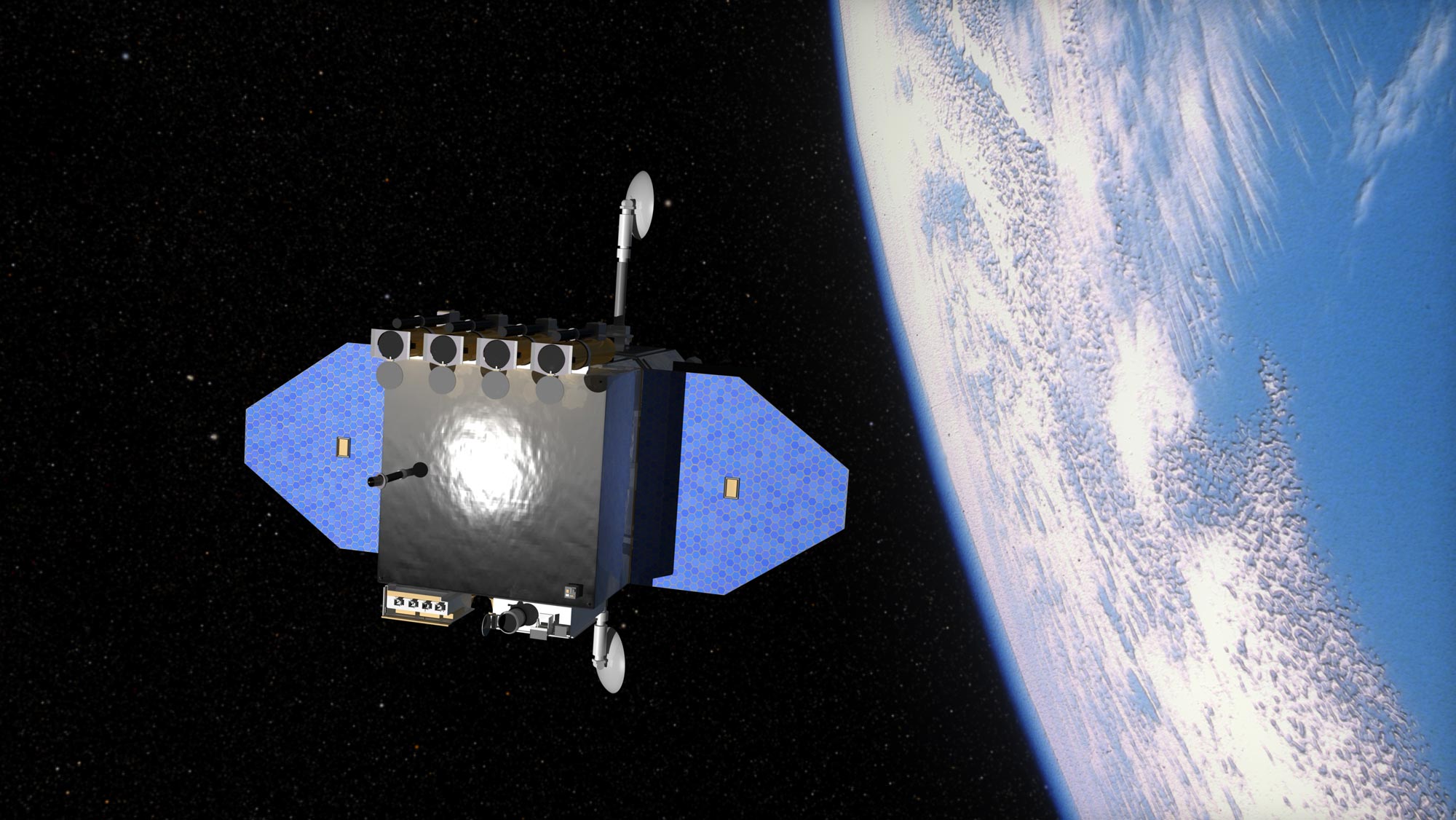
NASA’s Solar Dynamics Observatory (SDO) is a mission dedicated to understanding solar activity and its impacts on Earth and near-Earth space. Launched in February 2010, SDO is part of NASA’s Living With a Star (LWS) program. The observatory is equipped with advanced instruments that measure the solar atmosphere’s magnetic field, photograph the solar surface, and collect data on the solar ultraviolet output.
Its key instruments include the Atmospheric Imaging Assembly (AIA), the Helioseismic and Magnetic Imager (HMI), and the Extreme Ultraviolet Variability Experiment (EVE), each providing distinct data crucial for solar physics research. SDO’s findings help scientists improve space weather forecasts and understand the Sun’s influence on Earth’s environment.
Never miss a breakthrough: Join the SciTechDaily newsletter.
Follow us on Google and Google News.