
By studying intersection of ecology and economics, Asst. Prof. Eyal Frank helps solve a complex puzzle.
What happens if you reintroduce wolves into certain areas? Or if bats become ill, and their population declines? How does climate change affect a particular species—and what does that mean for human well-being?
Eyal Frank tries to answer questions like these with his work at the intersection of ecology and economics. An assistant professor at the University of Chicago’s Harris School of Public Policy, he uses natural experiments from ecology and policy—as well as other techniques—to estimate different pieces of the complex puzzle regarding the social cost of biodiversity losses.
Frank joined Harris School of Public Policy and the Energy Policy Institute (EPIC) in 2018. In the following Q&A, he discusses the unexpected ways that animals can impact our lives—from the likelihood of car collisions, to changes in housing prices.
How would you explain your research?
My work is at the intersection of economics and environment, and specifically ecology. For years, I’ve seen academic paper after academic paper about the loss of species, and the fact that biological diversity was in freefall. Yet I wanted to see numbers attached; I wanted to know and be able to quantify the economic repercussions of ecological events. And I realized that, for the most part, those numbers didn’t exist. My research seeks to fill that gap.
Using causal inference methods is not just going to matter to people who really care about panda bears and those who are dedicated watches of shows like Planet Earth; generating insights on ecology and economics has repercussions for work productivity, for agriculture, for energy use, and for much more. And it’s creating a way in which social scientists can understand what ecologists are worried about, using the best of applied methods.
Tell us how bats play into this.
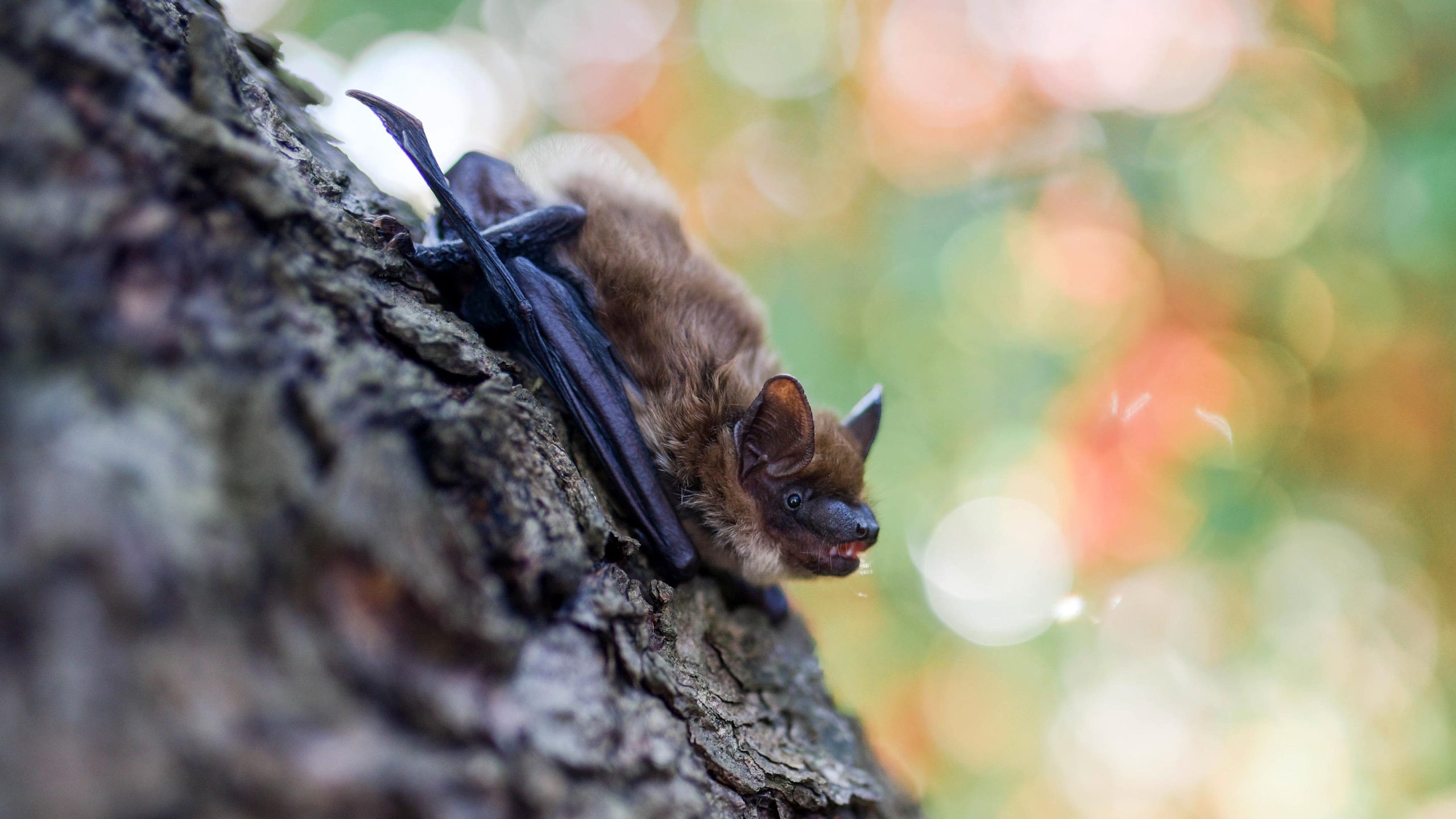
One day I was reading an article about white nose syndrome, which has killed millions of bats. It’s important to realize that bats are incredibly important, in an ecological sense: They are powerful pollinators and important pest control agents. Ecologists acknowledge that they’re vitally important, but how important are they? For obvious reasons, no review board would ever sign off on a study that randomly killed bats in order to quantify how significant they were ecologically. Yet, I realized that a natural experiment was taking place as a result of the effects of white nose syndrome.
I decided to combine different data sets that allowed me to test a key prediction in environmental economics. I found that in areas that experienced a decrease in the population of bats, farmers started using more insecticides to compensate for the reduction in biological pest control. Research since Rachel Carson’s 1962 classic Silent Spring shows that insecticides have negative effects—including on infant mortality rates. So now, we can see that bats are a meaningful part of the ecosystem—and we can see the important effects of not having them around.
Like bats, wolves have some terrible PR as well.
We’ve been looking at data from the United States on the effects of a program to reintroduce wolves into certain areas. We know that there are trade-offs: Wolves have an adverse effect on livestock, for instance, which is bad. But, on the other hand, wolves help reduce the deer population, and they deter deer from roadsides, which reduces collisions with automobiles. We’re looking into using the tools of economics to try to quantify these trade-offs.
“I wanted to know and be able to quantify the economic repercussions of ecological events.”
Asst. Prof. Eyal Frank
What is climate change’s role in all of this?
Climate change has a big role to play, and some of my work measures that role. Let’s look at the moth, L. dispar, for instance. (It was previously known by the common name “gypsy moth”; however, that name is no longer in use because it is a derogatory term.)
The moth contributes to defoliation, and there are natural boom and bust cycles. There’s a fungus that keeps the moth population in check, but climate change threatens to slide the scales in favor of the moth. What will that mean?
Well, we evaluated areas that have had great outbreaks in the moth population. Using detailed defoliation maps, we estimated that housing prices decreased by 2-5% near defoliated areas. So, you can start to see the connection—in unexpected ways—between climate change and people’s lives.
Can you leave us with some final words?
We’ve done a great deal of research—not just into bats, wolves, and gypsy moths, but also vultures and feral dogs, insects that are resistant to insecticides, and much more. The topics may seem peculiar, but I hope that my research can lead to a greater understanding of just how important ecology and wildlife are—not just for conservationists, but for all of us.
Oh, and I do hope you enjoy The Invisible Mammal, a documentary coming out next year, which I look forward to appearing in!
Never miss a breakthrough: Join the SciTechDaily newsletter.
Follow us on Google and Google News.
1 Comment
Three weeks from now you will wish you had started today. Simply give it a shot on the accompanying site.
GOOD LUCK… WorkJoin1.com