
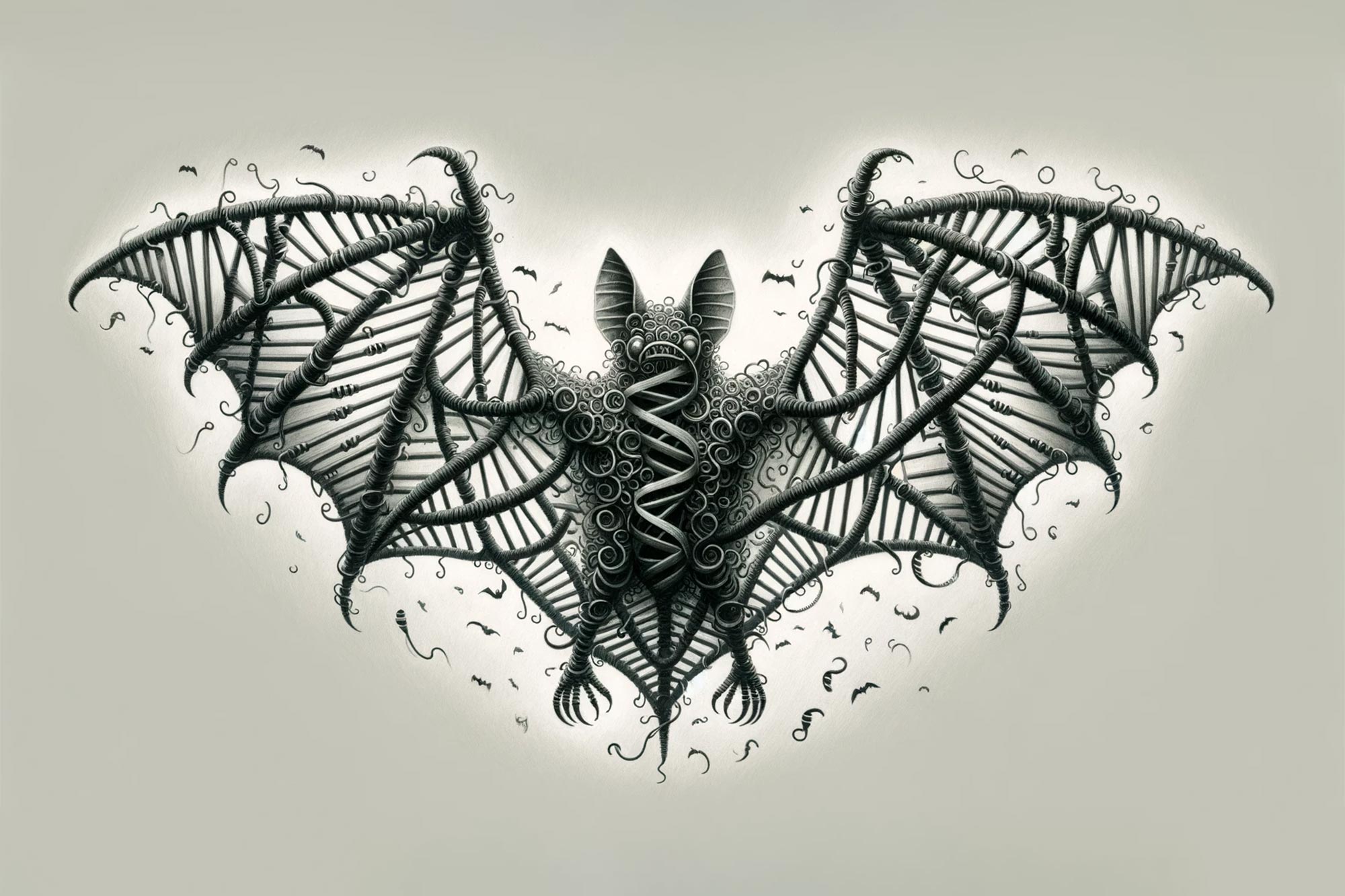
Genetic analysis of Solomon Islands’ leaf-nosed bats shows unexpected diversity, suggesting unique conservation needs and challenging previous size-based classifications.
Researchers from the University of Melbourne and the University of Kansas have uncovered significant genetic diversity among leaf-nosed bats in the Solomon Islands, despite their similar appearances across different islands. This research, published in the journal Evolution, involved field specimen collection and genetic analysis.
“This is genus of bats called Hipposideros with multiple species all over Southeast Asia in the Pacific,” said co-author Rob Moyle, senior curator of ornithology with the KU Biodiversity Institute and Natural History Museum, whose lab conducted much of the investigation. “In the Solomon Islands, where we’ve been doing a lot of fieldwork, on each island there can be four or five different species, and they parse out in terms of body size. There’s a small, medium, large — or if there are more than three species, there’s a small, medium, large, and extra large. On one island there’s five, so there’s an extra small.”
Study Details and Findings
According to Rob Moyle, who also serves as professor of evolutionary biology at KU, previous research based solely on physical traits concluded that similarly sized bats from the different islands were all of the same species. “You go from one island to the next, and the medium-sized species is identical to the other islands,” he said. “Biologists have always looked at those and said, ‘OK, it’s obvious. There’s a small, medium and large size species distributed across multiple islands.’”

However, Moyle and his collaborators had more modern analysis at their disposal. In sequencing the DNA of bats they collected from the field (along with specimens from museum collections), the team found the large and extra large bat species weren’t actually closely related.
“That means that somehow these populations arrived at this identical body size and appearance not by being closely related — but we usually think identical-looking things are that way because they’re really closely related,” Moyle said. “It brings up questions like what’s unique about these islands that you’d have convergence of body size and appearance into really stable size classes on different islands.”
The team performed precise measurements on bats from different islands, confirming previous work by scientists in the Solomon Islands.
“All the large ones from different islands all clustered together in their measurements,” Moyle said. “It’s not just that the earlier biologists made a mistake. They looked at them and said, ‘Oh, yeah, they’re the same.’ And they’re actually not. We measured them, and they’re all clustered together, though they’re different species. We verified — sort of — that earlier morphological work.”
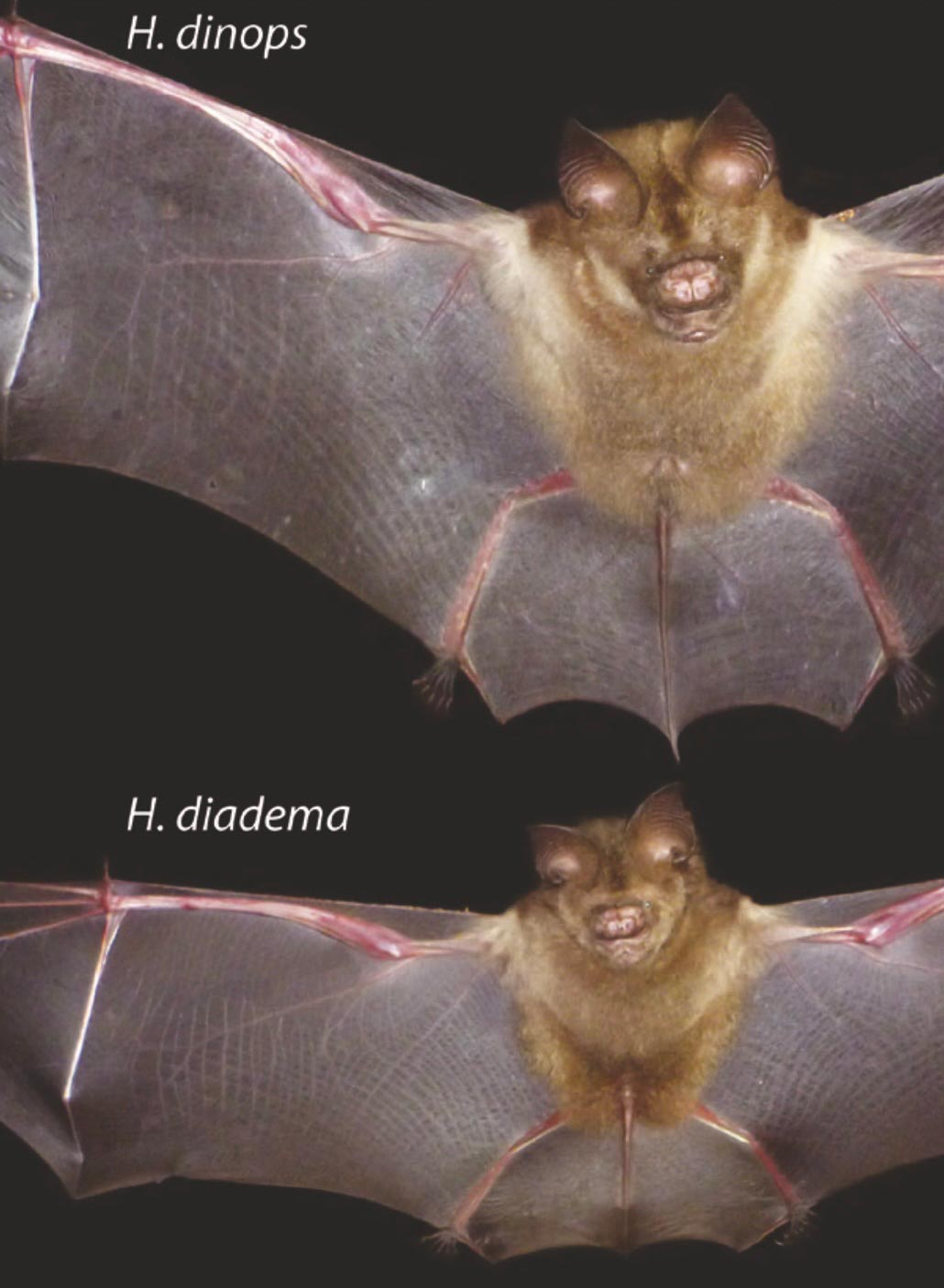
“When we created family trees using the bats’ DNA, we found that what we thought was just one species of large bat in the Solomon Islands was actually a case where bigger bats had evolved from the smaller species multiple times across different islands,” Lavery said. “We think these larger bats might be evolving to take advantage of prey that the smaller bats aren’t eating.”
Implications for Conservation and Evolutionary Biology
DeRadd said the work could be “highly relevant” for conservation efforts in identifying evolutionarily significant units in this group.
“Body size had misled the taxonomy,” DeRadd said. “It turns out every island’s population of extra-large bats is basically genetically unique and deserving of conservation. Understanding that is really helpful. There are issues with deforestation. If we don’t know whether these populations are unique, it’s hard to know whether we should be putting effort into conserving them.”
According to DeCicco, the new understanding of leaf-nosed bats was fascinating on a purely theoretical level.
“We study evolutionary processes that lead to biodiversity,” he said. “This shows nature is more complex. We humans love to try to find patterns — and researchers love to try to find rules that apply to broad suites of organisms. It’s super cool when we find exceptions to these rules. These are patterns that you see duplicated over lots of different taxa on lots of different islands — a large and a small species, or two closely related species that differ somehow to partition their niches. We’re seeing there are lots of different evolutionary scenarios that can produce that same pattern.”
Reference: “Parallel evolution in an island archipelago revealed by genomic sequencing of Hipposideros leaf-nosed bats” by Tyrone H Lavery, Devon A DeRaad, Piokera S Holland, Karen V Olson, Lucas H DeCicco, Jennifer M Seddon, Luke K P Leung and Robert G Moyle, 8 March 2024, Evolution.
DOI: 10.1093/evolut/qpae039
Never miss a breakthrough: Join the SciTechDaily newsletter.
Follow us on Google and Google News.
1 Comment
Had this happened in areas a thousand miles separated I doubt the scientists would be very surprised. But for them the various the Solomon Islands are packed together. That may, and probably isn’t, the same for the bats themselves.So it shouldn’t be especially surprising. I am curious in which species if any could breed with another.