
Close Menu
    Facebook X (Twitter) Instagram
    SciTechDaily
    • Biology
    • Chemistry
    • Earth
    • Health
    • Physics
    • Science
    • Space
    • Technology
    Facebook X (Twitter) Pinterest YouTube RSS
    SciTechDaily
    Home»Space»Space Foam Formed Inside Fluid Science Laboratory on the International Space Station
    Space

    Space Foam Formed Inside Fluid Science Laboratory on the International Space Station

    By European Space Agency (ESA)March 18, 2020No Comments3 Mins Read
    Facebook Twitter Pinterest Telegram LinkedIn WhatsApp Email Reddit
    Share
    Facebook Twitter LinkedIn Pinterest Telegram Email Reddit
    Space Foam
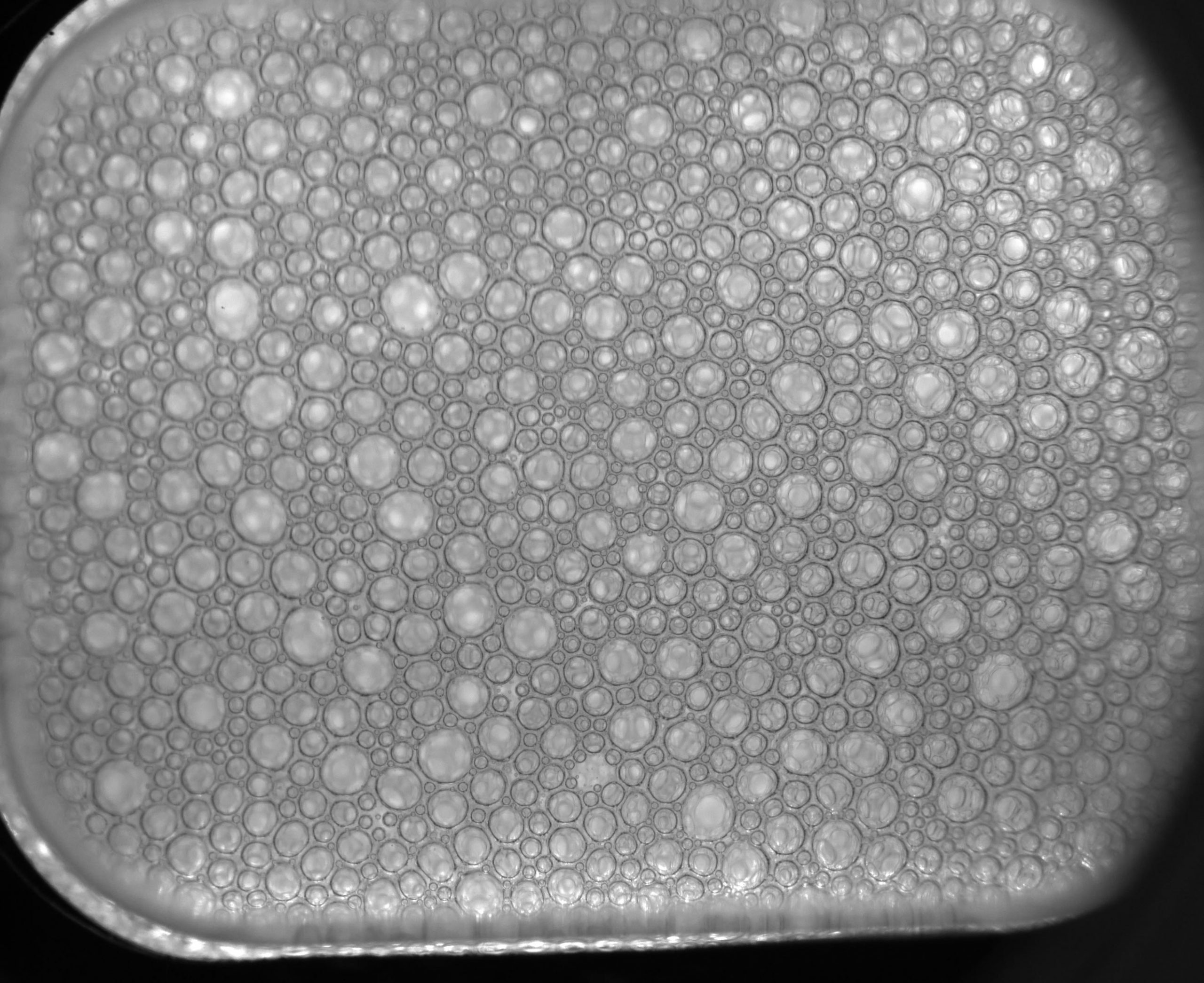
    The Foam-Coarsening experiment, developed by Airbus for ESA, is set to be activated this month but this image shows that the liquids held in cells are already bubbling as planned. Credit: ESA

    Installed on Friday in the International Space Station and sending down images by Monday. This picture shows one of the first images of foam formed inside the Fluid Science Laboratory in Europe’s space laboratory Columbus.

    The Foam-Coarsening experiment, developed by Airbus for ESA, is set to be activated this month but this image shows that the liquids held in cells are already bubbling as planned.

    The image will not be used by the scientists yet but is taken to allow the experiment operators at the Belgian User Operations Centre in Brussels, Belgium, to keep track of the experiment and set it up.

    The foams come in self-contained cells and hold liquids that are shaken by pistons and analyzed with laser optics and high-resolution cameras for the scientists on Earth. Researchers are keen to observe how foams behave in microgravity.

    On Earth, the mixture of gas and liquid that makes up a foam quickly starts to change. Gravity pulls the liquid between the bubbles downwards, and small bubbles shrink while the larger ones tend to grow at the expense of others. As the liquid is drawn downwards due to gravity the bubbles lose their strength and rupture, collapsing back to a liquid state.

    This is annoying for researchers as it limits the time they can study foams and interferes with their experiments. But in space foams are more stable as the liquid does not drain to the bottom in weightlessness.

    ESA astronaut Frank De Winne performed the Foam-Stability experiment in 2009 by shaking liquid solutions and recording what happened next. The samples ranged from pure water to protein-based fluids, like the ones used for chocolate foams, and antifoaming agents.

    After just ten seconds, the fluids stabilized more quickly and produced more foam than on Earth. Scientists discovered that it was possible to create super-stable foams in zero gravity.

    Building on this extensive foam research, Foam-Coarsening will investigate foam behavior at different liquid stages, particularly as it transitions from a solid- to liquid-like state.

    The results from this research will not just apply to the foam in your morning cappuccino. Foams are used in a wide range of areas from food production to cleaning and sealing products, cosmetics and personal hygiene products, and even construction.

    NASA astronaut Jessica Meir installed the experiment in the Fluid Science Laboratory on 6 March after removing the Multiscale boiling experiment known as Rubi. The experiment is controlled and data collected by the Belgian User Operations Centre who processed this image on March 9, 2020.

    Never miss a breakthrough: Join the SciTechDaily newsletter.
    Follow us on Google and Google News.

    European Space Agency International Space Station
    Share. Facebook Twitter Pinterest LinkedIn Email Reddit

    Related Articles

    100 Days of Space Science for ESA Astronaut Thomas Pesquet

    Smart Spacewalker: European Robotic Arm (ERA) Ready for Space Station [Video]

    NASA Astronaut Gets a Good GRASP on Gravity

    Astronauts Chosen for NASA SpaceX Crew-3 Mission to Space Station

    20 Top Experiments From 20 Years of Human Research on the International Space Station

    International Space Station: 20 Amazing Years in 60 Seconds [Video]

    Dosis-3D: Hidden Science Aboard the International Space Station

    Stunning View of Comet NEOWISE Over Madrid As Space Station Streaks Past

    Mission-Critical Upgrade: International Space Station Computer Gets a Heart Transplant

    Leave A Reply Cancel Reply

    • Facebook
    • Twitter
    • Pinterest
    • YouTube

    Don't Miss a Discovery

    Subscribe for the Latest in Science & Tech!

    Trending News

    Beyond Pain Relief: Scientists Discover a Protein That Could Stop Osteoarthritis in Its Tracks

    Scientists Discover Why Alcohol Prevents the Liver From Healing, Even After You Quit

    Scientists Stunned As Volcano Removes Methane From the Air

    Scientists Discover Signs Africa May Be Splitting Apart Beneath Zambia

    Common Blood Pressure Drug Supercharges Cancer Treatment in Surprising New Study

    540-Million-Year-Old Fossils Reveal a Huge Surprise About Early Life on Earth

    Scientists Reverse Stroke Damage Using Stem Cells in Breakthrough Study

    Eating One Egg a Day Could Cut Alzheimer’s Risk by 27%

    Follow SciTechDaily
    • Facebook
    • Twitter
    • YouTube
    • Pinterest
    • Newsletter
    • RSS
    SciTech News
    • Biology News
    • Chemistry News
    • Earth News
    • Health News
    • Physics News
    • Science News
    • Space News
    • Technology News
    Recent Posts
    • Scientists Uncover Promising New Strategy To Stop Parkinson’s in Its Tracks
    • New Study Reveals How Vitamin D Could Calm Gut Inflammation
    • Experts Reveal the Surprising Cancer Link Behind a Common Vitamin
    • NASA’s Roman Space Telescope Could Finally Find the Milky Way’s Missing Neutron Stars
    • Strange “Worm Towers” Found in the Wild for the First Time May Be Hitchhiking on Beetles
    Copyright © 1998 - 2026 SciTechDaily. All Rights Reserved.
    • Science News
    • About
    • Contact
    • Editorial Board
    • Privacy Policy
    • Terms of Use

    Type above and press Enter to search. Press Esc to cancel.