
Close Menu
    Facebook X (Twitter) Instagram
    SciTechDaily
    • Biology
    • Chemistry
    • Earth
    • Health
    • Physics
    • Science
    • Space
    • Technology
    Facebook X (Twitter) Pinterest YouTube RSS
    SciTechDaily
    Home»Space»‘Spectacular Meteorite Fall’ of Flensburg Reveals Liquid Water Existed in Early Solar System
    Space

    ‘Spectacular Meteorite Fall’ of Flensburg Reveals Liquid Water Existed in Early Solar System

    By University of MünsterMarch 6, 2020No Comments3 Mins Read
    Facebook Twitter Pinterest Telegram LinkedIn WhatsApp Email Reddit
    Share
    Facebook Twitter LinkedIn Pinterest Telegram Email Reddit
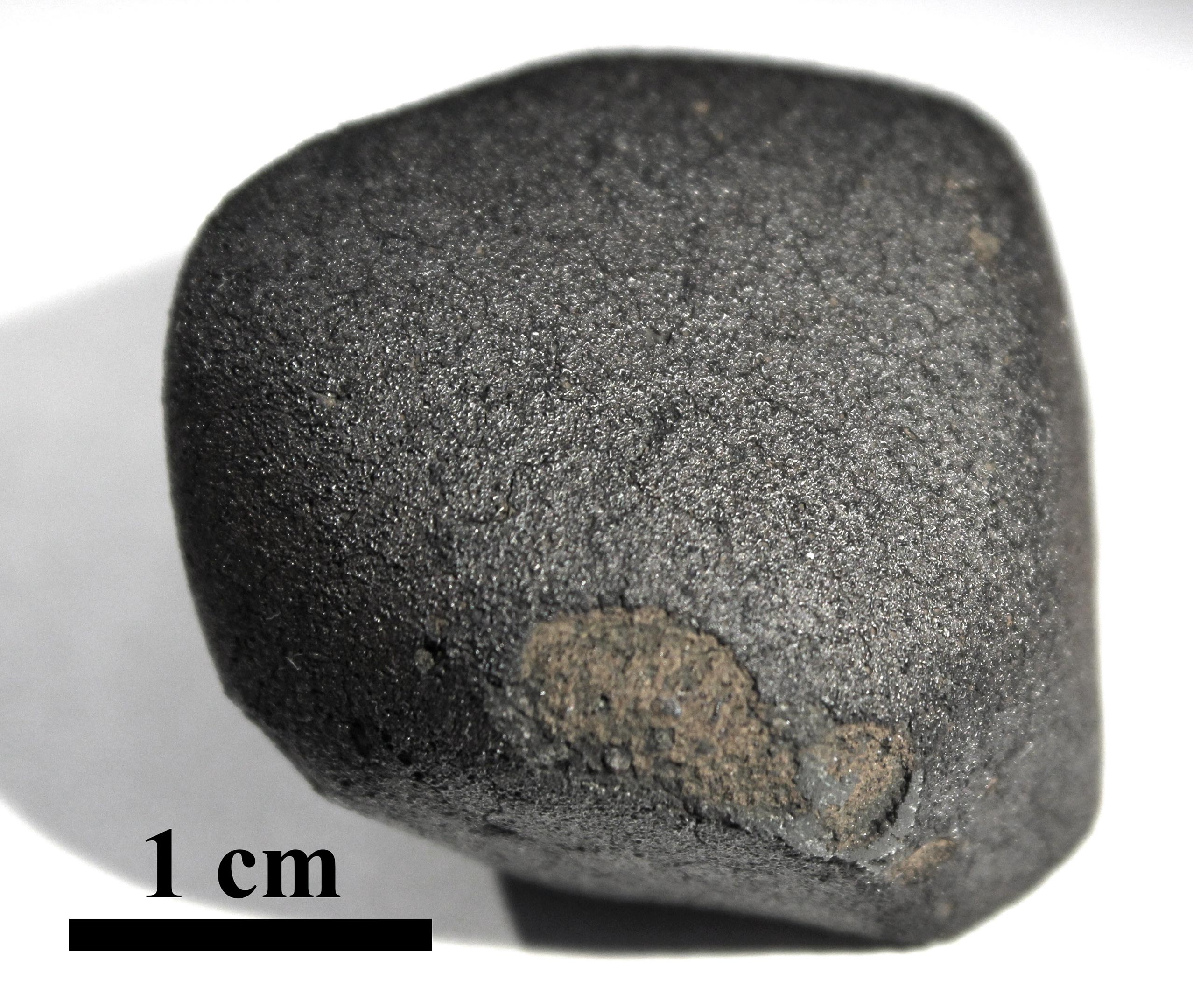
    Flensburg Meteorite
    The meteorite ‘Flensburg’ in close-up view. Credit: WWU – Markus Patzek

    Planetologists show that the meteorite contains minerals that formed under the presence of water on small planetesimals in the early history of our solar system.

    Planetologists from Münster University show that the meteorite contains minerals that formed under the presence of water on small planetesimals in the early history of our solar system.

    A fireball in the sky, accompanied by a bang, amazed hundreds of eyewitnesses in northern Germany in mid-September last year. The reason for the spectacle was a meteoroid entering the Earth’s atmosphere and partially burning up. One day after the observations, a citizen in Flensburg found a stone weighing 24.5 grams and having a fresh black fusion crust on the lawn of his garden.

    Dieter Heinlein, coordinator of the German part of the European Fireball Network at the German Aerospace Center in Augsburg, directly recognized the stone as a meteorite and delivered the rock to experts at the “Institut für Planetologie” at Münster University. Professor Addi Bischoff and Ph.D. student Markus Patzek have been studying the stone mineralogically and chemically ever since. About 15 universities and research institutes in Germany, France, and Switzerland now take part in the science consortium.
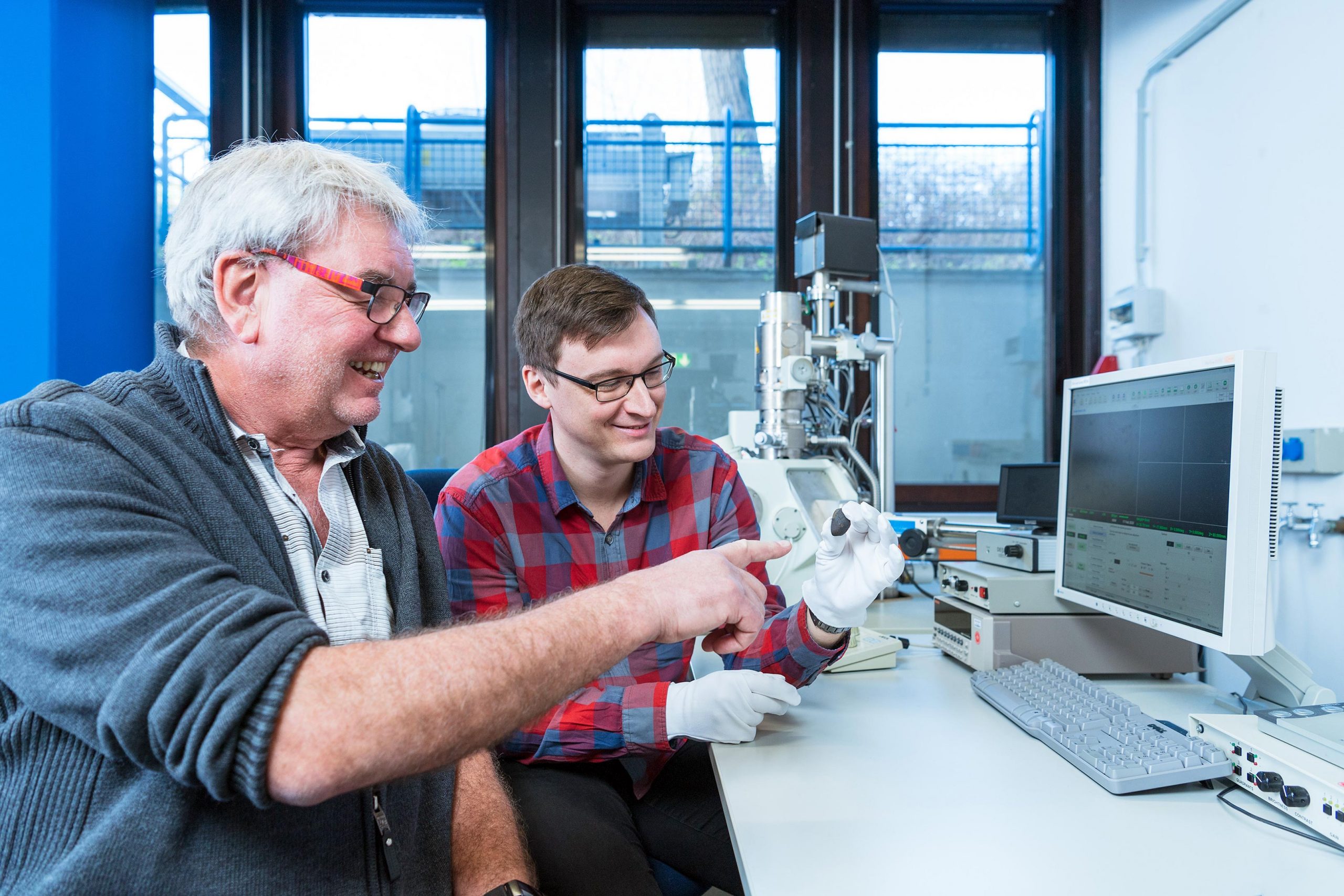
    Planetologists with Flensburg Meteorite
    Planetologists Professor Addi Bischoff (left) and Markus Patzek with the meteorite ‘Flensburg’ in front of the scanning electron microscope. Credit: WWU – Michael C. Möller

    The first research results show that the meteorite “Flensburg,” named after the location of the fall, belongs to an extremely rare type of carbonaceous chondrites. Scanning electron microscopic analyses prove that it contains minerals, especially sheet silicates, and carbonates that formed in the presence of water on small planetesimals in the early history of our solar system. Thus, these types of early parent bodies can be regarded as possible building blocks of the Earth that delivered water.

    “The meteorite of Flensburg belongs to an extremely rare meteorite class and is the only meteorite fall of this class in Germany proving that 4.56 billion years ago there must have been small bodies in the early solar system storing liquid water. Perhaps such bodies also delivered water to the Earth,” Addi Bischoff said.

    Meteorites provide information on the development of the Earth

    The new German meteorite “Flensburg” fully fits into the research program of the Collaborative Research Centre “TRR170 – Late Accretion onto Terrestrial Planets,” a science cooperation between institutions in Münster and Berlin. The major aim of the Collaborative Research Centre TRR170 is to understand the late growth history of the terrestrial planets. This leads to the question about the possible building blocks of the Earth. In order to find answers to this question, the researchers investigate various aspects including meteorites – most of them are fragments of asteroids and can be regarded as the oldest rocks of our solar system. Thus, studying them allows scientists to gain insight into the formation processes of the first solids and accretion and evolution of small bodies and planets in our solar system.

    The first details on the Flensburg meteorite have just been published in the “Meteoritical Bulletin Database” of the “Meteoritical Society.”

    Never miss a breakthrough: Join the SciTechDaily newsletter.
    Follow us on Google and Google News.

    Meteors Popular University of Münster
    Share. Facebook Twitter Pinterest LinkedIn Email Reddit

    Related Articles

    Don’t Miss October’s Dazzling Supermoon and Twin Meteor Showers

    Don’t Miss: Hunter’s, Blood Moon and Orionid Meteor Shower

    Potentially Hazardous 4,000 Year Comets Can Cause Meteor Showers on Earth

    Planetary Defense Conference: NASA to Participate in Exercise Simulating Asteroid Impact

    Extra-Terrestrial Particles Discovered in Antarctica Reveal Ancient Meteoritic Impact 430,000 Years Ago

    Juno Spacecraft Spots a Bright Explosion in Jupiter’s Atmosphere

    Moon Formed 100 Million Years More Recently Than Thought – Had Magma Ocean Over 1000 Km Deep

    Cosmic Fireball Lights Up the Entire Coast Near Seaside Town – Here’s What Happened

    Quadrantid Meteor Shower, Mars Rises & More January 2020 Skywatching Tips From NASA

    Leave A Reply Cancel Reply

    • Facebook
    • Twitter
    • Pinterest
    • YouTube

    Don't Miss a Discovery

    Subscribe for the Latest in Science & Tech!

    Trending News

    Why Popular Diabetes Drugs Like Ozempic Don’t Work for Everyone: The “Genetic Glitch”

    Scientists Stunned After Finding Plant Thought Extinct for 60 Years

    Scientists Discover Tiny New Spider That Hunts Prey 6x Its Size

    Natural Component From Licorice Shows Promise for Treating Inflammatory Bowel Disease

    Scientists Warn: Popular Sweetener Linked to Dangerous Metabolic Effects

    Monster Storms on Jupiter Unleash Lightning Beyond Anything on Earth

    Scientists Create “Liquid Gears” That Spin Without Touching

    The Simple Habit That Could Help Prevent Cancer

    Follow SciTechDaily
    • Facebook
    • Twitter
    • YouTube
    • Pinterest
    • Newsletter
    • RSS
    SciTech News
    • Biology News
    • Chemistry News
    • Earth News
    • Health News
    • Physics News
    • Science News
    • Space News
    • Technology News
    Recent Posts
    • Ancient Bacteria Turned a DNA System Into a Cell Skeleton
    • Researchers Finally Solve 50-Year-Old Blood Group Mystery
    • Scientists Discover “Molecular Switch” That Fuels Alzheimer’s Brain Inflammation
    • Hidden Ocean Currents Revealed in Stunning Detail by AI
    • Trees Emit Tiny Lightning Flashes During Storms and Scientists Finally Prove It
    Copyright © 1998 - 2026 SciTechDaily. All Rights Reserved.
    • Science News
    • About
    • Contact
    • Editorial Board
    • Privacy Policy
    • Terms of Use

    Type above and press Enter to search. Press Esc to cancel.