
Close Menu
    Facebook X (Twitter) Instagram
    SciTechDaily
    • Biology
    • Chemistry
    • Earth
    • Health
    • Physics
    • Science
    • Space
    • Technology
    Facebook X (Twitter) Pinterest YouTube RSS
    SciTechDaily
    Home»Space»Don’t Miss October’s Dazzling Supermoon and Twin Meteor Showers
    Space

    Don’t Miss October’s Dazzling Supermoon and Twin Meteor Showers

    By NASA's Jet Propulsion LaboratoryOctober 5, 2025No Comments4 Mins Read
    Facebook Twitter Pinterest Telegram LinkedIn WhatsApp Email Reddit
    Share
    Facebook Twitter LinkedIn Pinterest Telegram Email Reddit
    Meteor Shower Artist Depiction
    October’s skies ignite with a glowing supermoon and twin meteor showers — a cosmic show not to miss. Credit: Stock

    A supermoon, and meteor showers from the Draconids and Orionids

    October brings a celestial lineup featuring a brilliant supermoon and two meteor showers. The Draconids blaze early in the month, while the Orionids steal the show later, streaking across dark skies illuminated only by stars. With Halley’s Comet debris lighting up the heavens, this month is a stargazer’s dream.

    A supermoon takes over the sky, the Draconid meteor shower peeks through, and the Orionid meteor shower shines bright.

    Skywatching Highlights

    • October 6: The October supermoon
    • October 6-10: The Draconid meteor shower
    • October 21: The Orionid meteor shower peaks (full duration September 26 – November 22)

    Video Transcript

    What’s Up for October? A Supermoon takes over, the Draconid meteor shower peeks through, and the Orionid meteors sparkle across the night sky.

    The evening of October 6, look up and be amazed as the full moon is bigger and brighter because – it’s a supermoon!
    Supermoon Perigee Micromoon Apogee Size Comparison
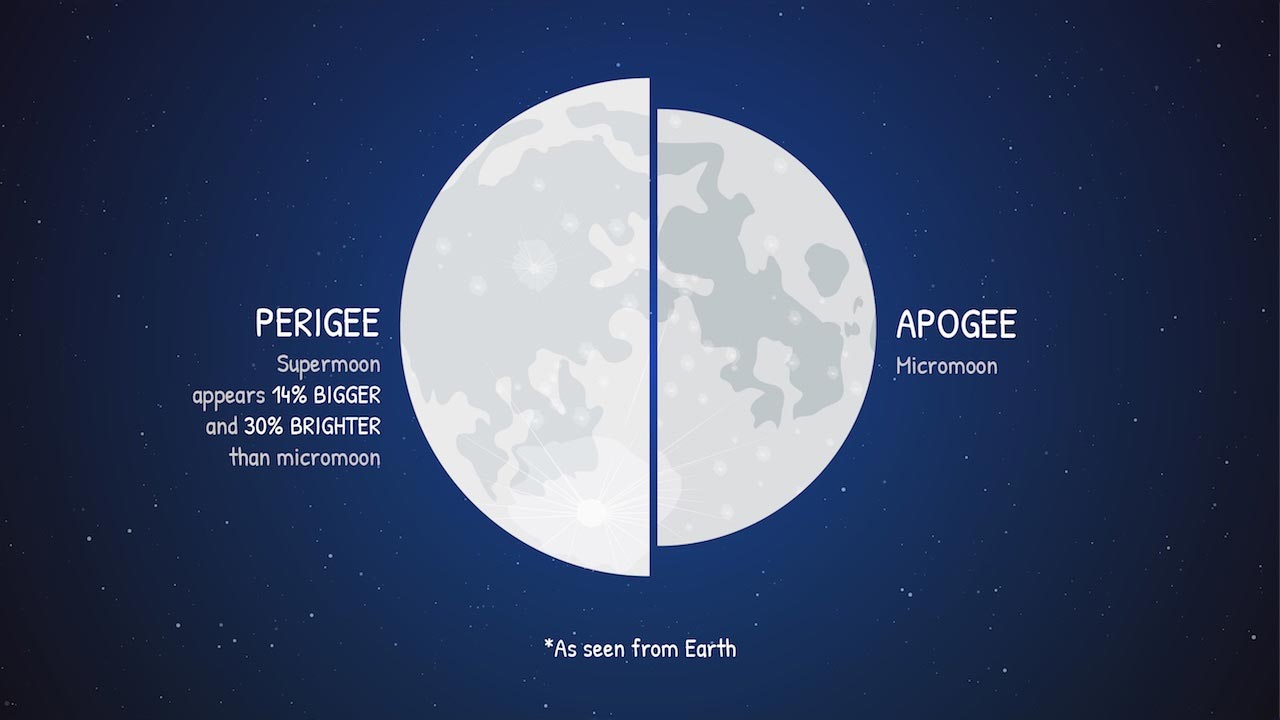
    This graphic shows the difference in the appearance of the Moon’s size in its furthest and closest distances to Earth. Credit: NASA/JPL-Caltech

    This evening, the moon could appear to be about 30% brighter and up to 14% larger than a typical full moon. But why?

    Supermoons happen when a new moon or a full moon coincides with “perigee,” which is when the moon is at its closest to Earth all month.

    So this is an exceptionally close full moon! Which explains its spectacular appearance.

    And what timing – while the supermoon appears on October 6th, just a couple of days before on October 4th is “International Observe the Moon Night”!

    It’s an annual, worldwide event when Moon enthusiasts come together to enjoy our natural satellite. You can attend or host a moon-viewing party, or simply observe the Moon from wherever you are.

    So look up, and celebrate the moon along with people all around the world!

    The supermoon will light up the sky on October 6th, but if you luck into some dark sky between October 6th and 10th, you might witness the first of two October meteor showers – the Draconids!
    Draconid Meteor Shower October 2025 Sky Chart
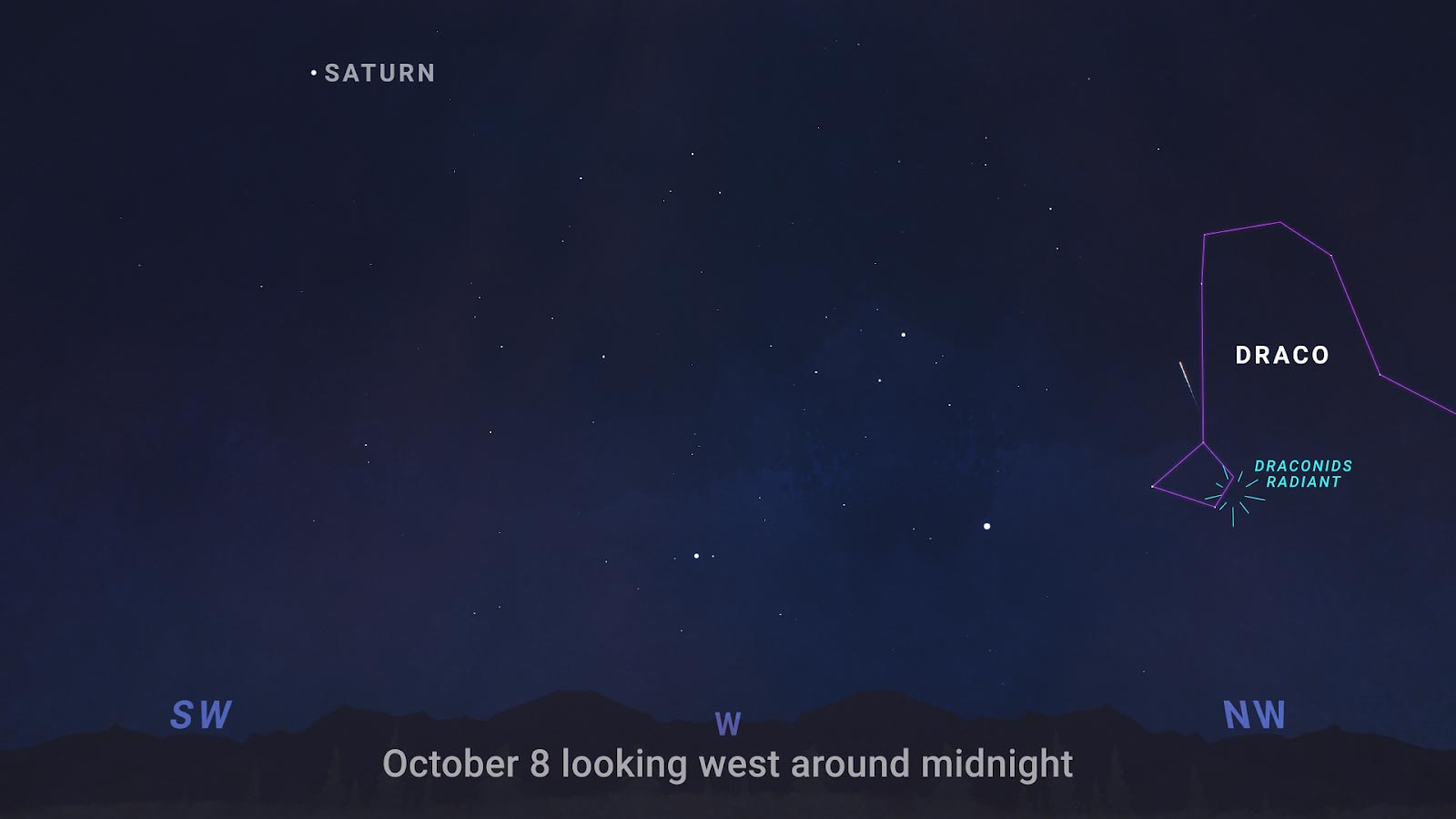
    Sky chart showing the Draconid meteor shower, including the radiant point of the shower and the Draco constellation where the meteors in the shower are often seen and stem from. Credit: NASA/JPL-Caltech

    The Draconid meteor shower comes from debris trailing the comet 21P Giacobini-Zinner, burning up in Earth’s atmosphere

    These meteors originate from near the head of the constellation Draco, the dragon, in the northern sky, and the shower can produce up to 10 meteors per hour!

    The Draconids peak around October 8th, but if you don’t see any, you can always blame the bright supermoon and wait a few weeks until the next meteor shower – the Orionids!
    Orionid Meteor Shower October 2025 Sky Chart
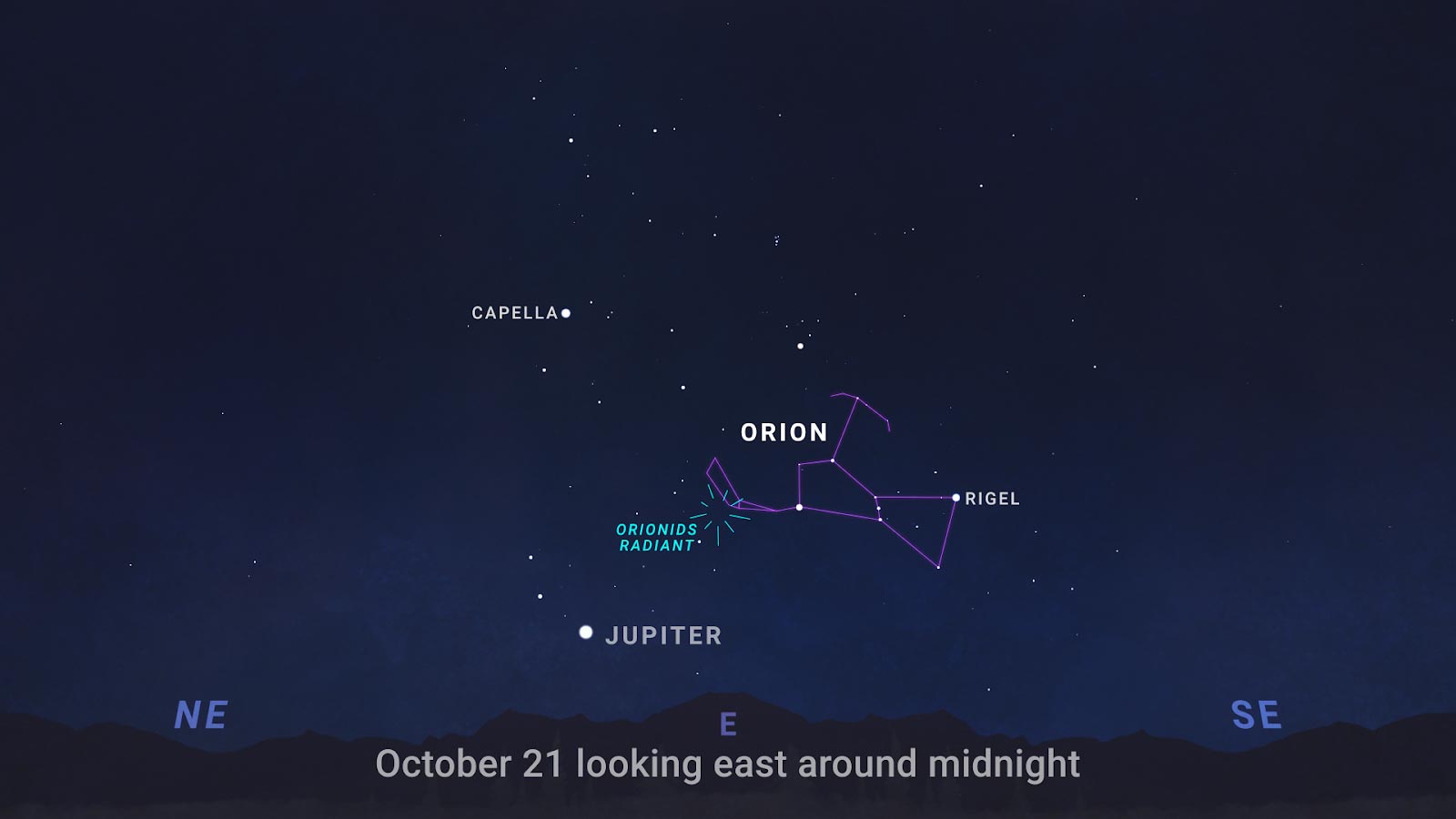
    Sky chart showing the Orionid meteor shower, including the radiant point of the shower and the Orion constellation where the meteors in the shower are often seen and stem from. Credit: NASA/JPL-Caltech

    The Orionid meteor shower, peaking on October 21, is set to put on a spectacular show, shooting about 20 meteors per hour across the night sky.

    This meteor shower happens when Earth travels through the debris trailing behind Halley’s Comet and it burns up in our atmosphere.

    The full duration of the meteor shower stretches from September 26 to November 22, but your best bet to see meteors is on October 21, before midnight until around 2 am.

    This is because, not only is this night the shower’s peak, it is also the October new moon, meaning the moon will be between the Earth and the Sun, making it dark and invisible to us.

    With a moonless sky, you’re much more likely to catch a fireball careening through the night.

    So find a dark location after the sun has set, look to the southeast sky (if you’re in the northern hemisphere) and the northeast (if you’re in the southern hemisphere), and enjoy!

    Orionid meteors appear to come from the direction of the Orion constellation, but you might catch them all across the sky.

    Here are the phases of the Moon for October.
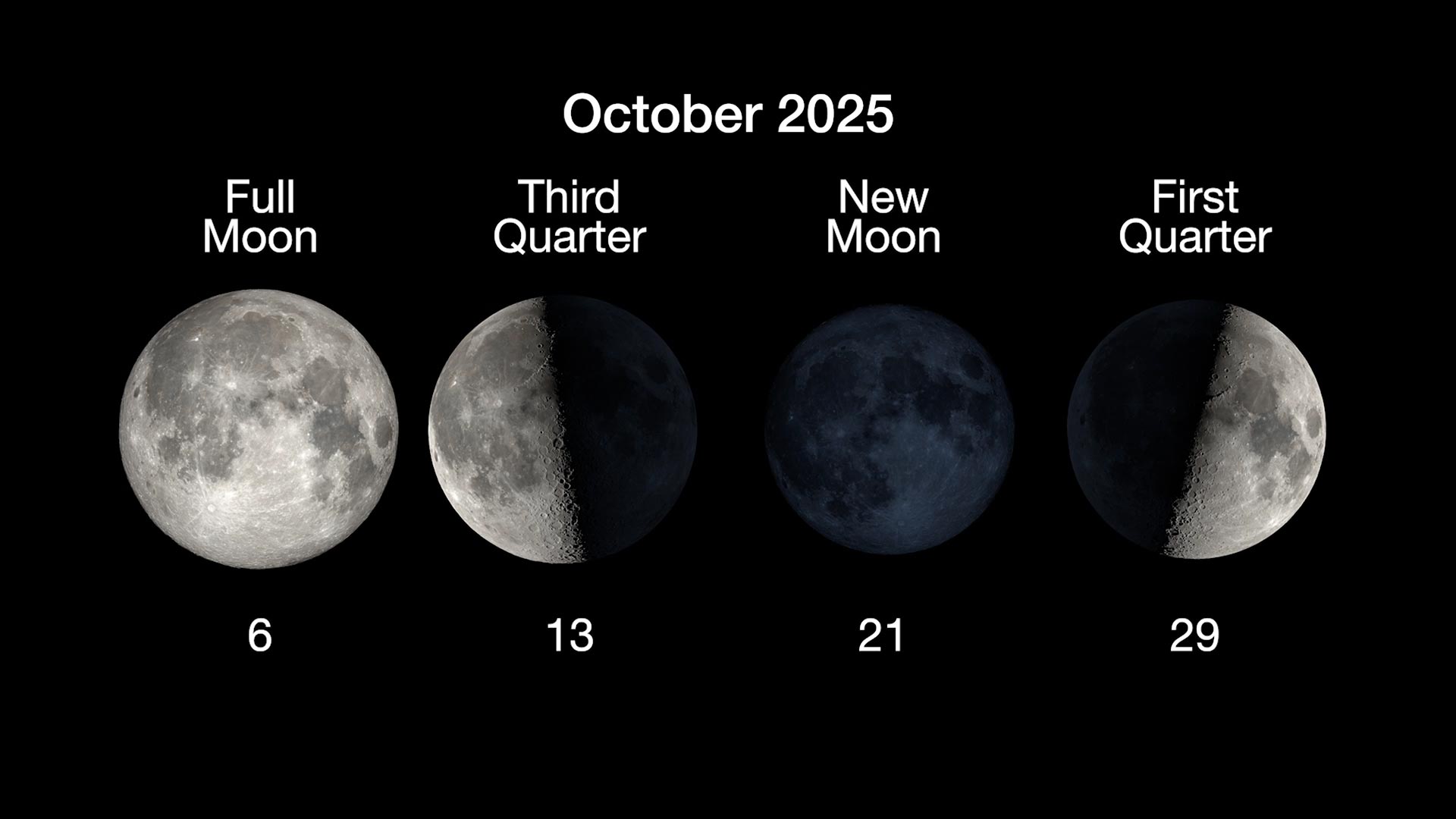
    Moon Phases October 2025
    The phases of the Moon for October 2025. Credit: NASA/JPL-Caltech

    Never miss a breakthrough: Join the SciTechDaily newsletter.
    Follow us on Google and Google News.

    Astronomy JPL Meteors NASA Popular
    Share. Facebook Twitter Pinterest LinkedIn Email Reddit

    Related Articles

    Don’t Miss: Lyrid Meteor Shower & Stunning “City of Stars” Light Up the Sky

    Don’t Miss: Meteor Shower Peak, Star Forge, Mars and Jupiter Converge

    Don’t Miss: Eta Aquariid Meteor Shower, Red Giant Star Antares, and May Planets

    Don’t Miss: Leonid Meteor Shower Peak & Saturn in “The Sea”

    Don’t Miss: Total Lunar Eclipse and Leonid Meteor Shower

    Mysterious, Repeating Radio Burst Identified in Our Own Galaxy for the First Time

    NASA’s Spitzer Spies a Massive Star Factory – 2 Quadrillion Miles Across

    NASA ASTHROS: Stratospheric Balloon the Size of a Football Stadium Will Carry a Cutting-Edge Telescope

    Quadrantid Meteor Shower, Mars Rises & More January 2020 Skywatching Tips From NASA

    Leave A Reply Cancel Reply

    • Facebook
    • Twitter
    • Pinterest
    • YouTube

    Don't Miss a Discovery

    Subscribe for the Latest in Science & Tech!

    Trending News

    First-of-Its-Kind Discovery: Homer’s Iliad Found Embedded in a 1,600-Year-Old Egyptian Mummy

    Beyond Inflammation: Scientists Uncover New Cause of Persistent Rheumatoid Arthritis

    A Simple Molecule Could Unlock Safer, Easier Weight Loss

    Scientists Just Built a Quantum Battery That Charges Almost Instantly

    Researchers Unveil Groundbreaking Sustainable Solution to Vitamin B12 Deficiency

    Millions of People Have Osteopenia Without Realizing It – Here’s What You Need To Know

    Researchers Discover Boosting a Single Protein Helps the Brain Fight Alzheimer’s

    World-First Study Reveals Human Hearts Can Regenerate After a Heart Attack

    Follow SciTechDaily
    • Facebook
    • Twitter
    • YouTube
    • Pinterest
    • Newsletter
    • RSS
    SciTech News
    • Biology News
    • Chemistry News
    • Earth News
    • Health News
    • Physics News
    • Science News
    • Space News
    • Technology News
    Recent Posts
    • Weight-Loss Drugs Like Ozempic May Come With an Unexpected Cost
    • After Decades, MIT Researchers Capture the First 3D Atomic View of a Mysterious Material
    • Your Favorite Fishing Spot Is Turning Brown – and the Fish Are Changing
    • 380-Million-Year-Old Fish Fossil Reveals Secrets of Life’s First Steps Onto Land
    • Mezcal “Worm” in a Bottle Mystery: DNA Testing Reveals a Surprise
    Copyright © 1998 - 2026 SciTechDaily. All Rights Reserved.
    • Science News
    • About
    • Contact
    • Editorial Board
    • Privacy Policy
    • Terms of Use

    Type above and press Enter to search. Press Esc to cancel.