
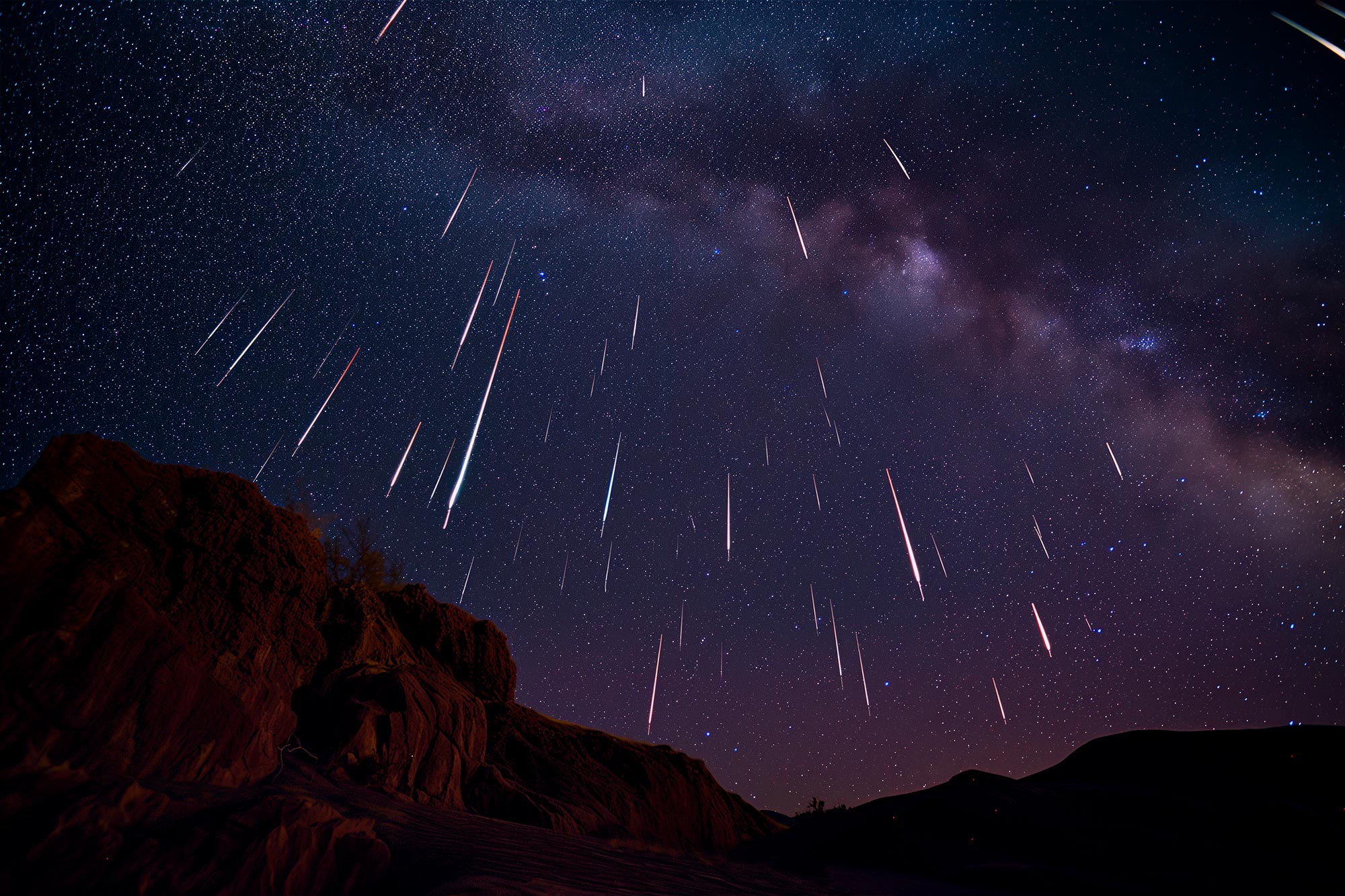
What are some skywatching highlights in May 2024? Mars and Saturn tussle with the Moon, Mercury makes a brief a.m. appearance, East Coasters can see red giant star Antares emerge from behind the Moon, and the eta Aquariid meteors peak on May 6th.
What to look for:
Morning Meteors and May Planets
See Mars, Saturn, and Mercury in the May morning sky. Antares slips behind the Moon for East Coast U.S. skywatchers. And the eta Aquariid meteors peak May 6th.
Video Transcript:
What’s Up for May? The Moon hangs out with Saturn twice this month, the Scorpion’s “heart” briefly goes missing, and meteors in the morning, courtesy of Comet Halley.
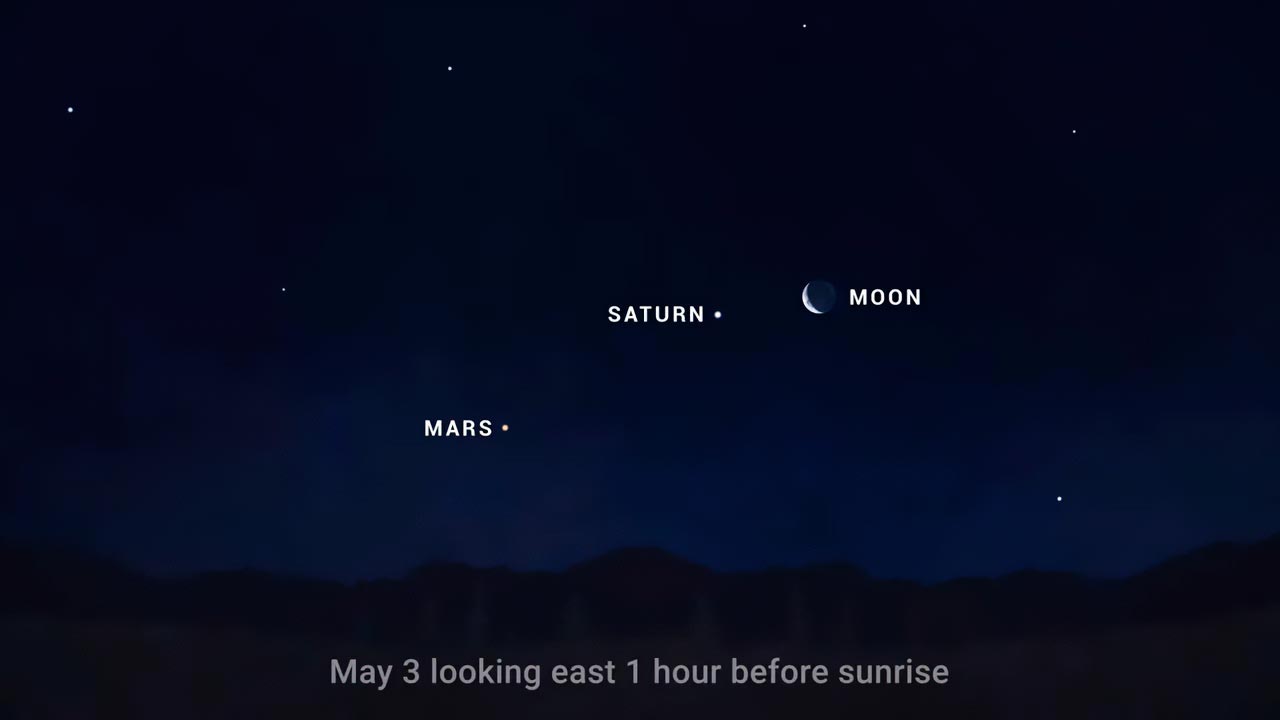
On May 3rd, in the hour or so before dawn, you’ll find the crescent Moon rising with Saturn in morning twilight. The pair are trailed by the Red Planet, Mars, which rises about 45 minutes after Saturn. They form a nice lineup in the east for early risers to enjoy. Then, on the following morning, the Moon shows a slimmer crescent and has moved between Saturn and Mars. The two planets are continuing to widen their separation following a close conjunction in early April, where they appeared super close in the sky.
And if you have a clear view to the horizon, you might just catch a glimpse of Mercury rising in the hour before the Sun. It’s shining pretty brightly, but it’s also low in the sky and competing with dawn twilight, so it makes for a good challenge. Those in the Southern Hemisphere will have an easier time spotting Mercury, as it rises a good bit higher in the sky for you.
On May 23rd, the full Moon will appear quite close to the bright red star Antares, in Scorpius, as the pair rise. But for those on the East Coast of the U.S. – south of Delaware and down through the whole state of Florida – you’ll actually observe the Moon pass in front of Antares – an event called an occultation. Over a couple of hours as the pair rise into the night sky, the Moon will move slightly in its orbit, first obscuring and then revealing Antares. And finally, on May 31st, planet Saturn rises in the wee hours of the morning with the crescent Moon in tow. If you’re up early on the final day of May, you’ll find the pair toward the southeast. They’ll be close enough to appear in the same field of view if observing through binoculars.
Meteor Showers
May brings one of two annual meteor showers that are attributed to Halley’s comet. The eta Aquariid meteors are seen each year in May, whereas the Orionid meteors streak through our skies in October. This situation occurs because Earth crosses through Comet Halley’s orbit twice every year, in May and October. Along Halley’s path is a meteor stream – lots of little grains of rock and dust cast off by the comet, and these strike our atmosphere and burn up as meteors.
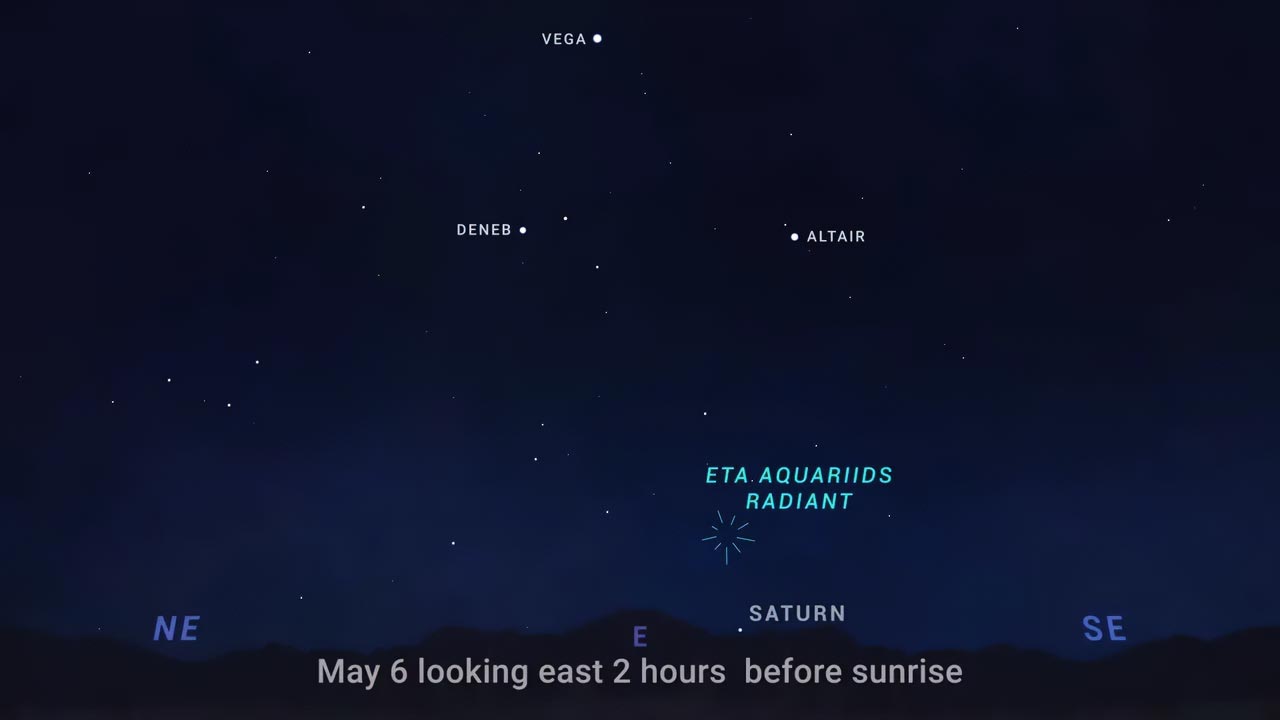
The shower peaks overnight on May 5th and into the morning of the 6th. You can see meteors from this shower the whole week centered around the peak night, though. The place on the sky where the meteors appear to originate, the radiant, is in the constellation Aquarius, so you’ll have a chance to see meteors as long as the radiant is above the horizon, with more meteors the higher that point rises in the sky. This time of year, Aquarius rises after midnight, so the time to watch this shower is in the few hours before dawn.
This is a great shower for observers in the Southern Hemisphere. The radiant rises a good bit higher in the sky before morning twilight, because in May, which is autumn there, nights are longer. Those in optimal dark sky conditions can see 40 meteors per hour. For Northern Hemisphere observers, it’s less than half that amount – more like 10 to 20 meteors per hour.
It’s still an above-average shower, though, especially with the peak this year being near a new moon, making for a darker sky. And with the warmer temperatures that come with springtime north of the equator, it can be a worthy shower to go out and enjoy.
As always, to see the most meteors, find yourself a safe, dark spot away from bright lights and give your eyes a few minutes to adapt to the dark.
Lie down with your feet pointed more or less toward the east, and look straight overhead. Bring a warm drink and a friend or two, and turn an early morning into a “meteor morning,” as you search the skies for the eta Aquariid meteors.
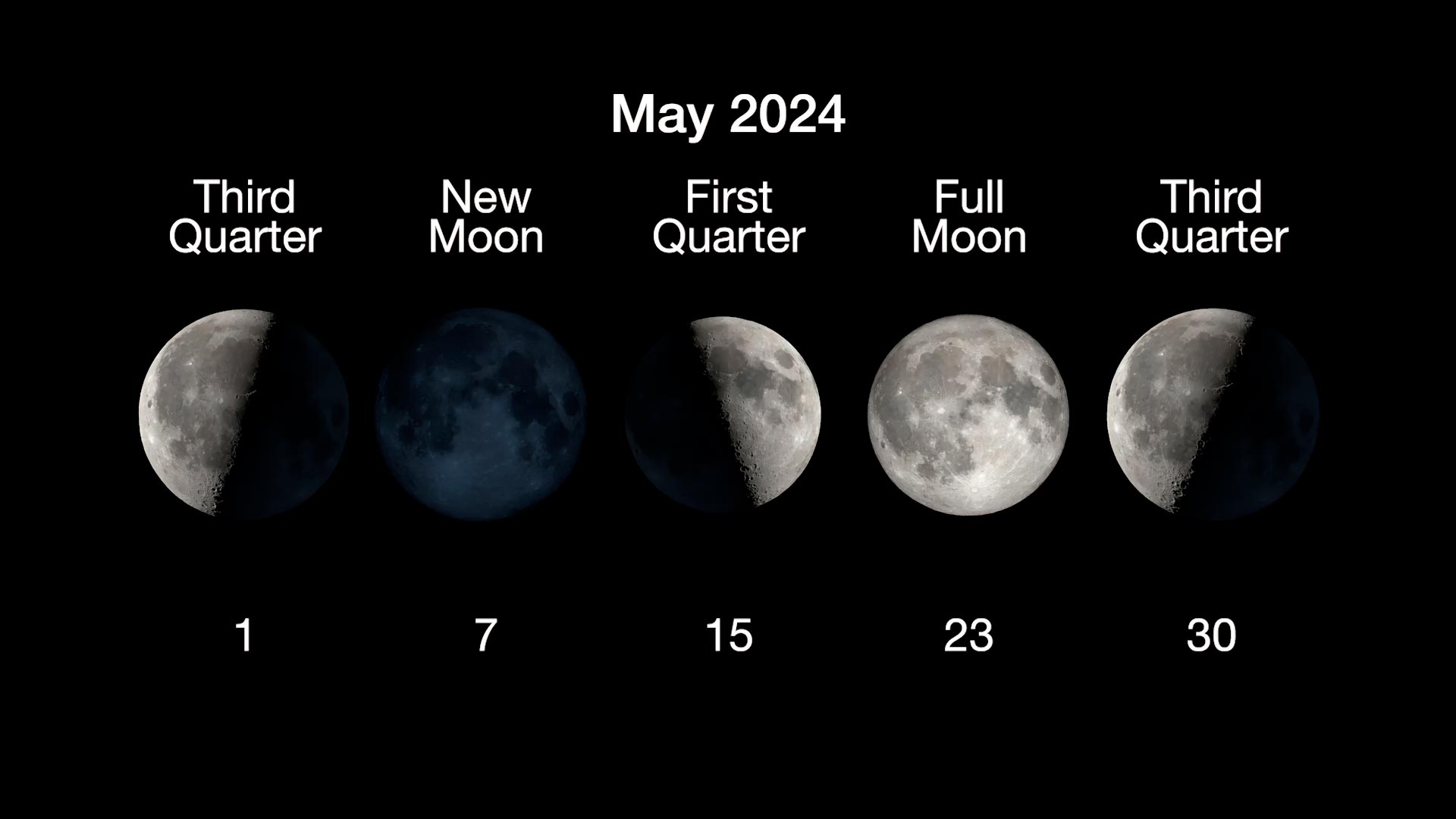
Here are the phases of the Moon for May.
Never miss a breakthrough: Join the SciTechDaily newsletter.
Follow us on Google and Google News.