

What are some skywatching highlights in August 2024?
Mars and Jupiter have a super close meetup, the conditions look good for the Perseid meteors, and how to observe a stellar nursery – the Lagoon Nebula.
What to look for:
A planetary rendezvous, meteors, and a “star forge”!
Two planets meet for a super close conjunction, the Perseid meteor shower peaks, and look for the Lagoon Nebula – a stellar nursery in Sagittarius.
Highlights
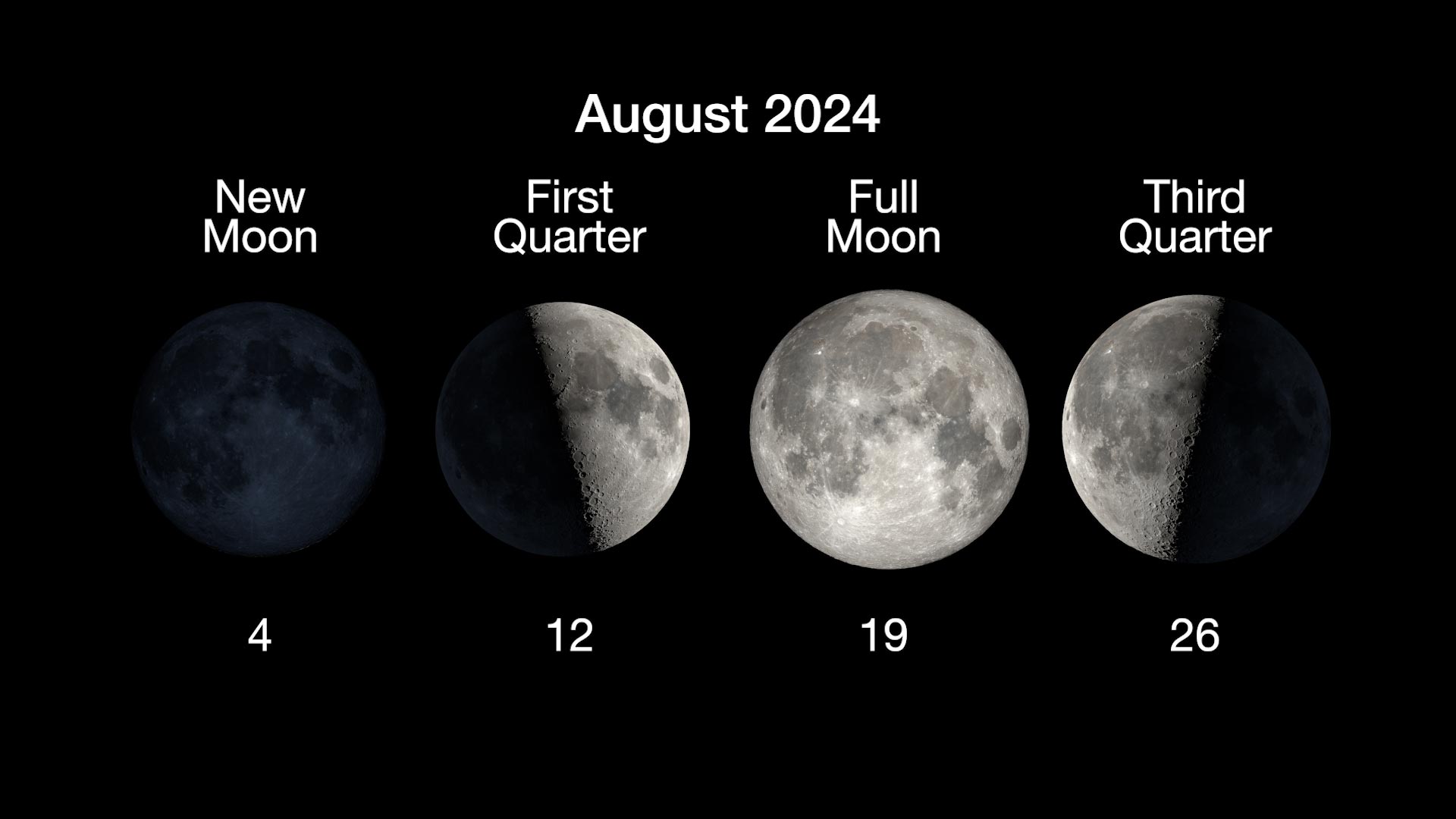
- August 4 – New moon
- August 11 – The Perseid meteor shower peaks overnight tonight! Provided you have clear skies, viewing conditions will be favorable this year, as the Moon sets by around 11:30 pm local time. Meteor activity picks up from then until dawn.
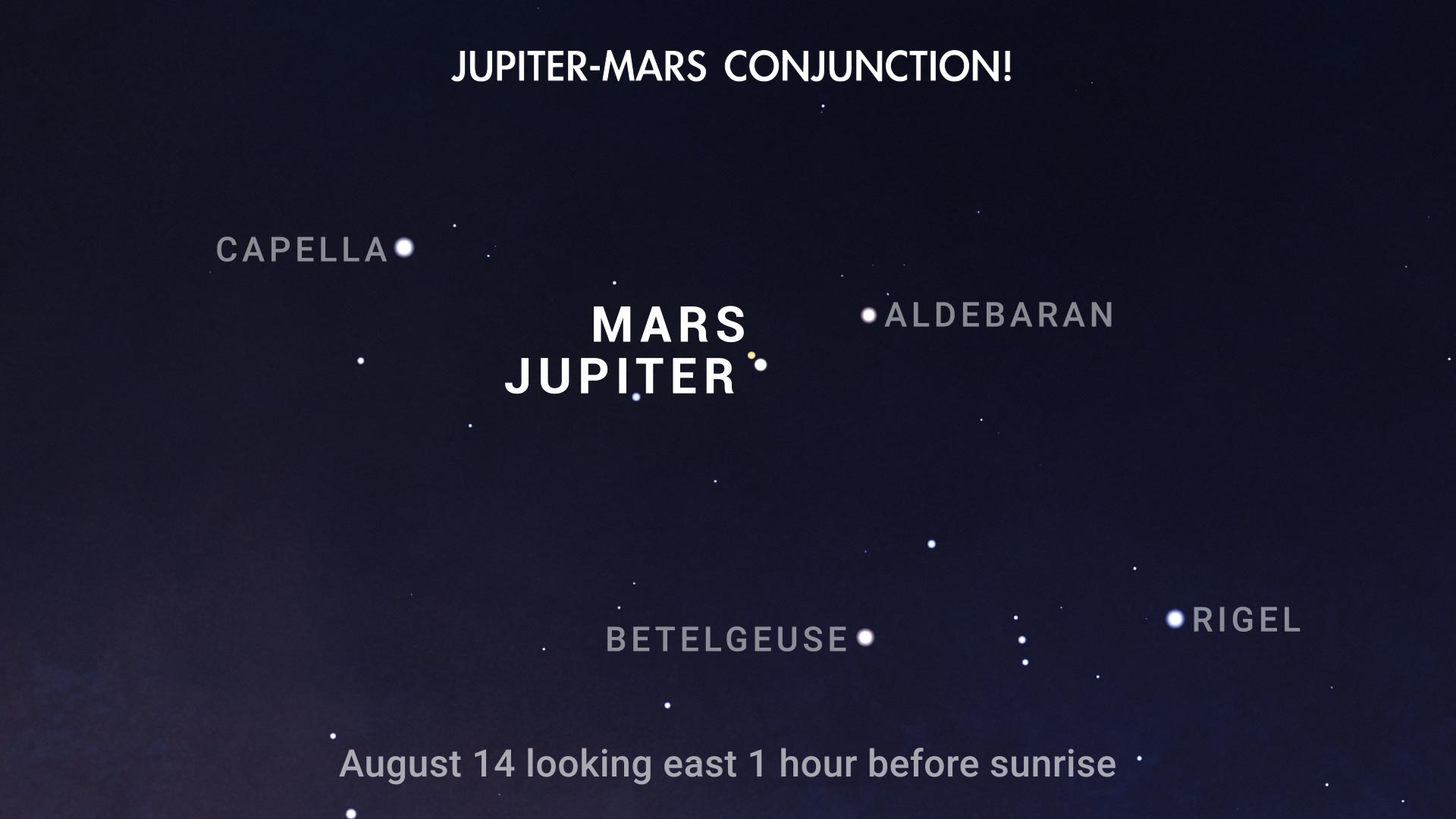
- August 14 – Jupiter and Mars have an extremely close pair-up called a conjunction this morning. They’ll appear just a third of a degree apart, which is less than the width of the full Moon. Find them in the eastern sky in the couple of hours before sunrise.
- August 19 – Full moon
- August 20 – The Moon chases Saturn across the sky tonight. The pair rise in the east shortly after dark, and trek toward the west together until dawn.
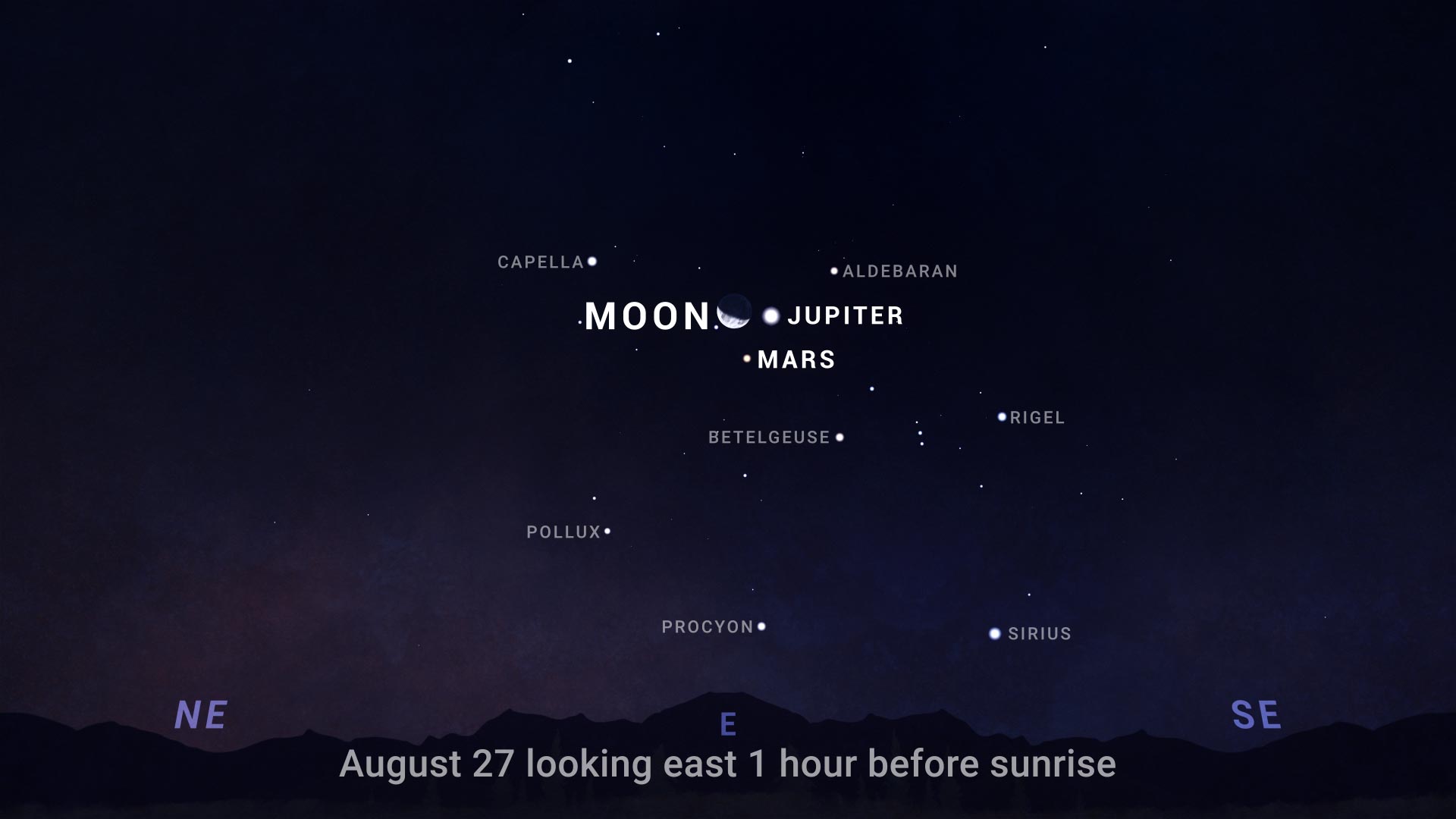
- August 27 – This morning the crescent moon joins Mars and Jupiter to form a captivating trio. Look for them in the east in the hour or so before sunrise.
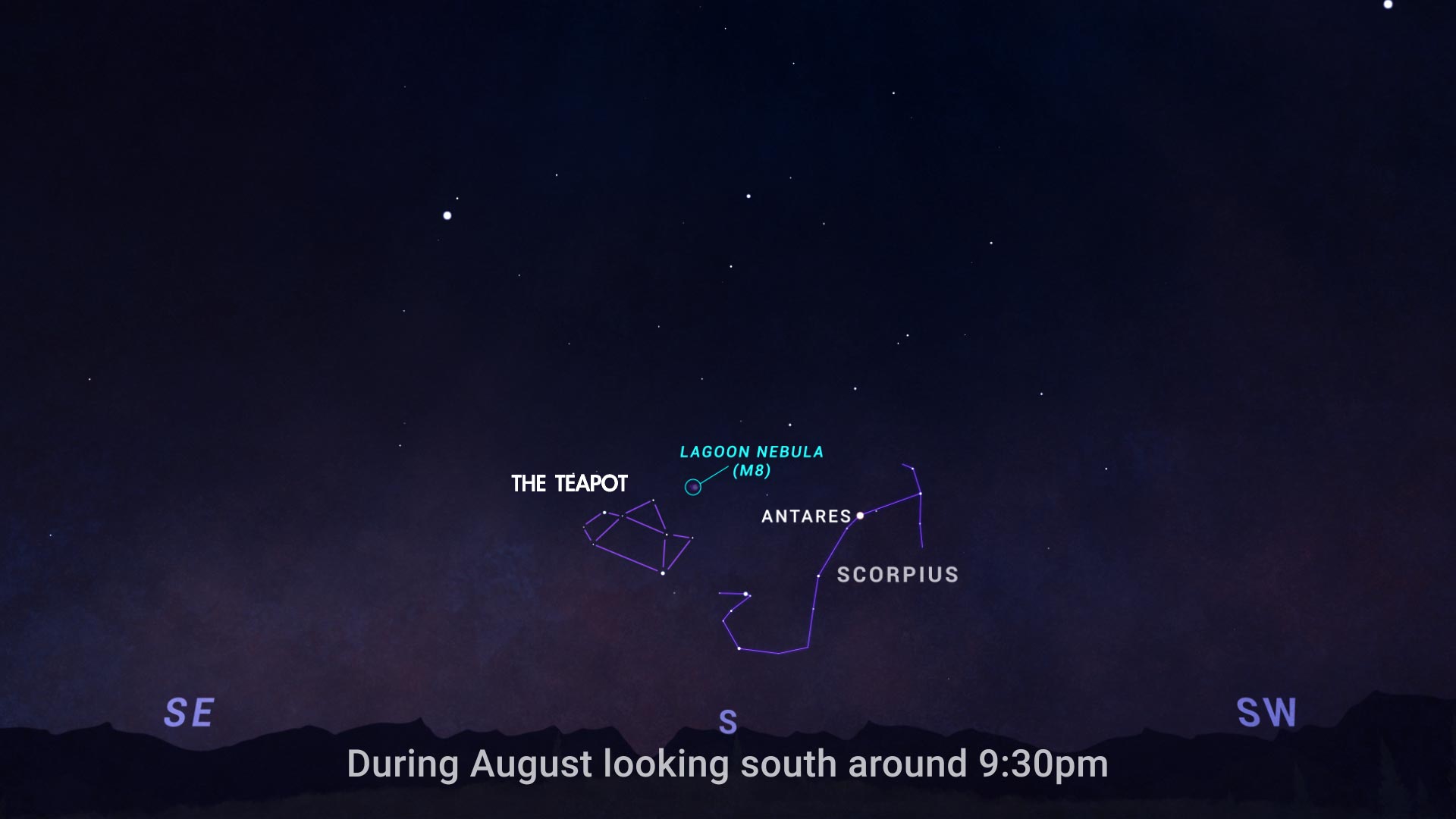
- All month – You can use binoculars or a telescope to observe the Lagoon Nebula all month in the first few hours after dark. It’s located in the constellation Sagittarius near the star pattern known as “The Teapot.” Similar in size and brightness to the Orion Nebula, it’s a cauldron of star formation located about 4,000 light years away.
Video Transcript
What’s Up for August? A super close meetup of Jupiter and Mars, the outlook for the Perseid meteors, and see a stellar nursery in the Lagoon Nebula.
During the month of August, the Red Planet, Mars, speeds past our solar system’s largest planet, Jupiter, in the a.m. sky. They have an extremely close pair-up, called a conjunction, on August 14th, when they’ll appear just a third of a degree apart, which is less than the width of the full Moon.
The view from NASA’s Eyes on the Solar System reveals the two planets arranged along the same line of sight, which is why they appear so close together in the sky at this time.
Mars quickly pulls away from Jupiter over the following mornings, but on the 27th, the crescent moon joins the two planets to form a captivating trio in the morning sky.
Saturn flies solo most of the month on the opposite side of the sky, though the Moon chases close behind the Ringed Planet on August 20th. The pair rise shortly after dark, and trek toward the west together until dawn.
The warm summer nights of August in the Northern Hemisphere make the Perseid meteor shower an annual favorite. This year’s peak night for Perseids comes on August 11th, and into morning twilight on the 12th. Provided you have clear skies, viewing conditions will be favorable this year, as the Moon sets by around 11:30 pm local time.
Meteor activity picks up from then until dawn. From darker viewing locations, meteor counts of 50 to 75 per hour are pretty normal at the peak.
The Perseids appear to originate from a place in the sky that rises in the northeast, so lie back and face roughly in that direction, but try to take in as much of the sky as you can in your view, as meteors can appear all over.
All the stars in the sky share a common origin in giant clouds of gas and dust called nebulas. And one such stellar nursery, the Lagoon Nebula, is well placed to observe in the August sky.
The Lagoon Nebula will feel familiar to you if you’ve ever observed the Orion Nebula – with the latter being just a bit brighter. Being about three times wider than the full moon, it’s still relatively easy to find, even under suburban skies, with binoculars or a small telescope.
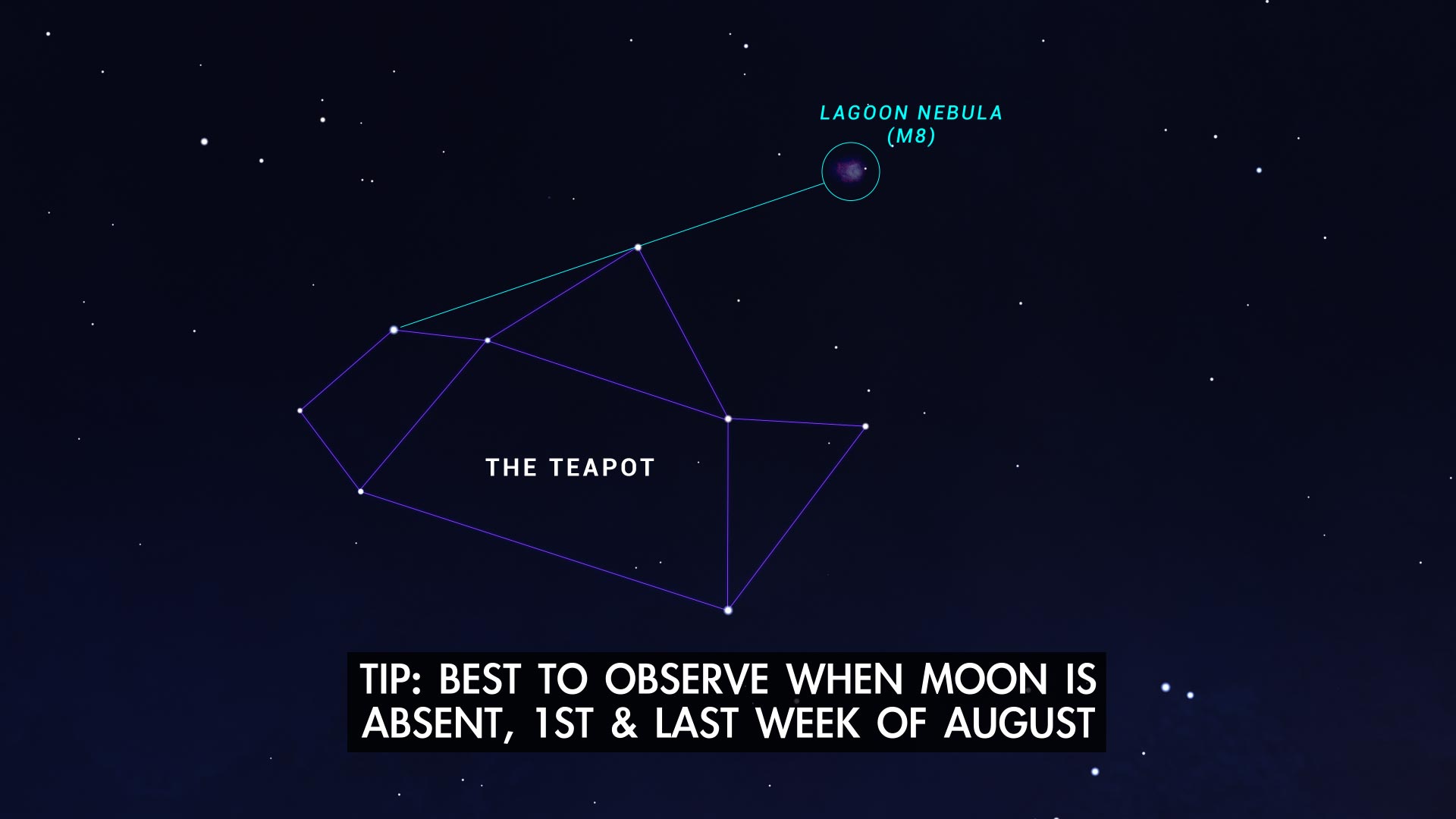
The Lagoon Nebula is located in the constellation Sagittarius, which regular skywatchers will know is synonymous with the faintly glowing band of the Milky Way core. You’ll find it here, just above the top of the star pattern known as the Teapot.
The nebula is located about 4,000 light years away. Its oblong structure is about 100 light-years long by about 50 light-years wide. It’s a cauldron of intense star-forming activity, with many young stars blazing brightly, causing the surrounding gas to glow. That glow is faint and colorless when peering at the Lagoon Nebula through binoculars, but long-exposure photos reveal its colorful nature. The bright stars are also sculpting the nebula, creating voids and turbulent knots and streamers of gas. The nebula gets its name from one of these dense, dark clouds that stretches across its middle, looking something like a watery lagoon.
The Lagoon Nebula appears high overhead in August for those in the Southern Hemisphere, and quite low for those at higher northern latitudes, but it’s visible throughout the lower 49 United States. If you can locate the stars in the Teapot, you should be able to observe the nebula too. To find it, follow a line toward the west, twice the distance from the top of the Teapot’s handle to the top of its lid.
Nebulas can be challenging to observe, even with a telescope. But with its large size and relative brightness, the Lagoon Nebula offers a great opportunity to see one of these star forges for yourself in August.
Here are the phases of the Moon for August.
Never miss a breakthrough: Join the SciTechDaily newsletter.
Follow us on Google and Google News.
3 Comments
Seeing a meteor in the sky is beautiful, but in a galactic year, it is rare to see a meteor in the sky
I meant that in a galactic year, the sky is full of meteors, so that the sky becomes dark during the day, not that in a galactic year, meteors are rarely seen, translation and artificial intelligence should not translate the wrong sentences, but I don’t understand why they made the sentence negative. At the time of translation in the comment above
Jupiter’s gravity affects the planetary belt for meteor showers