
It was previously thought that the brain featured a specific “God Spot” that was responsible for the neuropsychological basis for spirituality. A new study from the University of Missouri now suggests that spirituality is a complex phenomenon where multiple areas of the brain are responsible for aspects of spiritual experiences.
Scientists have speculated that the human brain features a “God spot,” one distinct area of the brain responsible for spirituality. Now, University of Missouri researchers have completed research that indicates spirituality is a complex phenomenon, and multiple areas of the brain are responsible for the many aspects of spiritual experiences. Based on a previously published study that indicated spiritual transcendence is associated with decreased right parietal lobe functioning, MU researchers replicated their findings. In addition, the researchers determined that other aspects of spiritual functioning are related to increased activity in the frontal lobe.
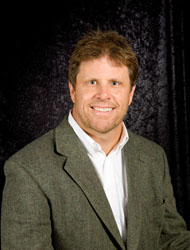
“We have found a neuropsychological basis for spirituality, but it’s not isolated to one specific area of the brain,” said Brick Johnstone, professor of health psychology in the School of Health Professions. “Spirituality is a much more dynamic concept that uses many parts of the brain. Certain parts of the brain play more predominant roles, but they all work together to facilitate individuals’ spiritual experiences.”
In the most recent study, Johnstone studied 20 people with traumatic brain injuries affecting the right parietal lobe, the area of the brain situated a few inches above the right ear. He surveyed participants on characteristics of spirituality, such as how close they felt to a higher power and if they felt their lives were part of a divine plan. He found that the participants with more significant injury to their right parietal lobe showed an increased feeling of closeness to a higher power.
“Neuropsychology researchers consistently have shown that impairment on the right side of the brain decreases one’s focus on the self,” Johnstone said. “Since our research shows that people with this impairment are more spiritual, this suggests spiritual experiences are associated with a decreased focus on the self. This is consistent with many religious texts that suggest people should concentrate on the well-being of others rather than on themselves.”
Johnstone says the right side of the brain is associated with self-orientation, whereas the left side is associated with how individuals relate to others. Although Johnstone studied people with brain injury, previous studies of Buddhist meditators and Franciscan nuns with normal brain function have shown that people can learn to minimize the functioning of the right side of their brains to increase their spiritual connections during meditation and prayer.
In addition, Johnstone measured the frequency of participants’ religious practices, such as how often they attended church or listened to religious programs. He measured activity in the frontal lobe and found a correlation between increased activity in this part of the brain and increased participation in religious practices.
“This finding indicates that spiritual experiences are likely associated with different parts of the brain,” Johnstone said.
The study, “Right parietal lobe ‘selflessness’ as the neuropsychological basis of spiritual transcendence,” was published in the International Journal of the Psychology of Religion.
Reference: “Right Parietal Lobe-Related “Selflessness” as the Neuropsychological Basis of Spiritual Transcendence” by Brick Johnstone, Angela Bodling, Dan Cohen, Shawn E. Christ and Andrew Wegrzyn, 18 September 2012, International Journal of the Psychology of Religion.
DOI: 10.1080/10508619.2012.657524
Never miss a breakthrough: Join the SciTechDaily newsletter.
Follow us on Google and Google News.
4 Comments
This is an example of “How to lie with statistics”
So Dick Cheney should shoot his hunting partners on the left side of their head or risk creating another enemy with a shot to the other side? (His real friends will stay on his left.)
You study 20 people and suddenly your statistics say something? Please.
The study, “Right parietal lobe ‘selflessness’ as the neuropsychological basis of spiritual transcendence,” was published in the International Journal of the Psychology of Religion.
The way this is written is intellectually dishonest. There should be a quote around “spiritual transcendence” as well, since otherwise, it suggests that spiritual transcendence is a given and not just the misrepresentation of brain damage that this study seems to be leaning toward.
“Brick Johnstone” sounds like the name of a superhero’s secret identity/