
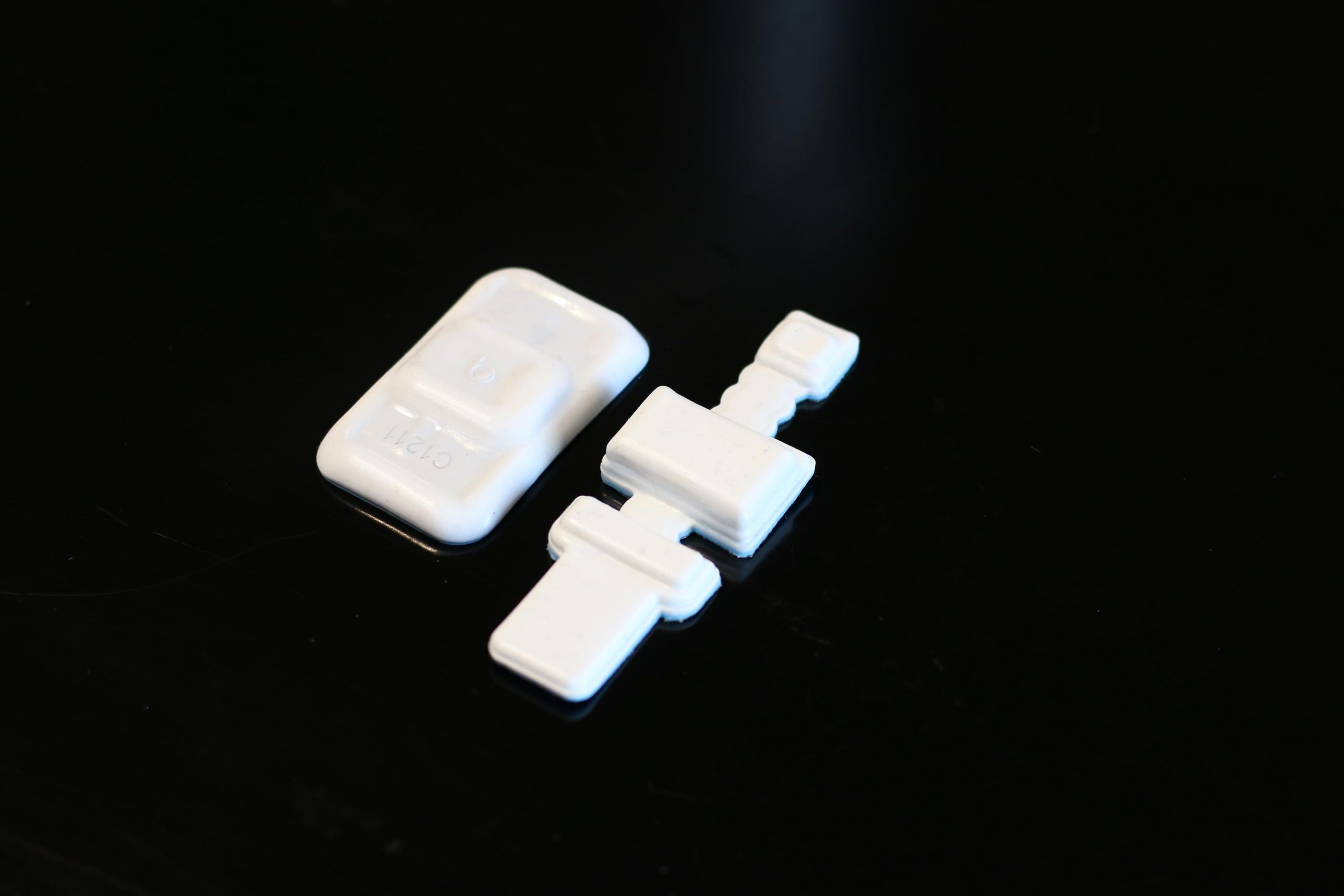
Clinical-grade wearable streams symptom data to physicians.
- Stamp-sized device comprises a suite of clinical-grade sensors, including temperature and pulse oximetry
- Device sits at the base of the throat to pick up vibratory signatures of breathing, coughing, swallowing
- Since developing the device, researchers have tested it on more than 50 physicians, rehabilitation specialists and patients at Shirley Ryan AbilityLab and Northwestern Memorial Hospital
- Researcher: ‘We are already seeing clear vital sign differences collected by the sensor between patients with COVID-19 and healthy-matched controls’
- Research group has partnered with BARDA to continue developing and deploying the device to help fight the pandemic
Although it might be tempting to rely on your fitness tracker to catch early signs of COVID-19, Northwestern University researchers caution that consumer wearables are not sophisticated enough to monitor the complicated illness.
The Northwestern team, led by bioelectronics pioneer John A. Rogers, published a perspective today (July 1) in the journal Science Advances, in which they differentiate between popular consumer electronics and clinical-grade monitoring systems.
Rogers co-authored the perspective with Dr. Shuai Xu, a Northwestern Medicine dermatologist, and Hyoyoung Jeong, a postdoctoral fellow in the Rogers lab.
“According to the Journal of the American Medical Association, the three most important early symptoms for COVID-19 are fever, shortness of breath, and coughing,” Rogers said. “For a wearable technology, you want to track those key symptoms. A conventional wearable device, such as a fitness tracker, sits on the wrist or finger — not the anatomical location that is most relevant to COVID-19.”
This past spring, the Rogers group and researchers at Shirley Ryan AbilityLab introduced a novel wearable device and set of data algorithms specifically tailored to catch early signs and symptoms associated with COVID-19 and to monitor patients as the illness progresses. About the size of a postage stamp, the soft, flexible, wireless device sits just below the suprasternal notch, the visible dip at the base of the throat — an ideal location for monitoring respiratory health.
More recently, Rogers’ team added a wearable, flexible pulse oximeter to pair with the suprasternal-mounted device. This allows physicians to continuously monitor for silent hypoxia, an often asymptomatic feature marked by alarmingly low blood oxygen levels. Adding this feature will help the device, and accompanying algorithms, give a fuller picture of the disease’s onset, progression and response to treatment.
“The device measures very tiny vibrations on the skin and has an embedded temperature sensor for fever,” Rogers said. “As you cough and breathe, it counts coughs, monitors the intensity of cough, and senses labored breathing. The location on the throat also is close enough to the carotid artery that it can measure mechanical signatures of blood flow, monitoring heart rate.”
“This sensor system targets key symptoms for COVID-19, with the goal to identify the infection earlier in patients,” Xu said. “It’s a suite of clinical-grade sensors wrapped into one small device. And once it’s placed on the throat, people don’t even realize that it’s there.”
Rogers is the Louis Simpson and Kimberly Querrey Professor of Materials Science and Biomedical Engineering in Northwestern’s McCormick School of Engineering, professor of neurological surgery at Northwestern University Feinberg School of Medicine and director of the Querrey Simpson Institute for Bioelectronics (QSIB).
Xu is an assistant professor of dermatology at Feinberg and of biomedical engineering at McCormick. He also is the medical director of QSIB.
Differences between COVID-19 patients and healthy controls
Since launching the device in April, the team has tested it on 52 COVID-19-positive physicians, nurses, rehabilitation specialists and patients at Shirley Ryan AbilityLab and Northwestern Memorial Hospital. The device was tested both in the hospital and in the home.
From these tests, Rogers and his team have collected 3,000 hours of data, which will continue to strengthen the device’s algorithms. Eventually, the machine-learning algorithms will become smart enough to distinguish between a COVID-like cough and more benign coughs from allergies, colds, or dryness. The team expects to test 500 subjects by the end of the year.
“We are already seeing clear vital sign differences collected by the sensor between patients with COVID-19 and healthy-matched controls,” said Arun Jayaraman, a researcher assistant scientist at Shirley Ryan AbilityLab, who leads the algorithm development. “We’re working together to develop predictive algorithms for detecting the disease earlier.”
Thoracic surgeon remotely monitors patients
Dr. Ankit Bharat, chief of thoracic surgery at Northwestern Medicine who performed the first double-lung transplant on a COVID-19 patient in the United States, is actively testing the device on his pulmonary patients. The device wirelessly transmits data to a HIPAA-protected cloud, where automated algorithms produce graphical summaries tailored to facilitate rapid, remote monitoring. This allows Bharat to continue monitoring his patients well after they have been dismissed from the hospital.
“It has provided valuable information about each patient’s respiratory status,” Bharat said. “We hope that as we gain experience with this device, it will greatly enhance our ability to monitor patients remotely. Under the circumstances of the pandemic, remote monitoring capabilities improve efficiency in medical care while increasing protection to health care workers against the virus.”
Continued research and deployment
To accelerate manufacturing and deployment, Rogers and Xu launched technology startup Sonica Health, based on intellectual property (IP) jointly developed by Northwestern and the Shirley Ryan AbilityLab. The IP related to this project has been optioned through Northwestern’s Innovation and New Ventures Office. The effort is supported by the Biomedical Advanced Research Deployment Authority (BARDA), part of the Office of the Assistant Secretary for Preparedness and Response at the U.S. Department of Health and Human Services.
Sonica Health previously partnered with BARDA for technology focused on chronic obstructive pulmonary disease (COPD). Now the partnership has expanded to focus on early detection of COVID-19 and other respiratory infections in high-risk clinical populations and, in collaboration with another spinout from QSIB, Sibel Health, to provide the pulse oximetry sensor.
With BARDA’s support, Sonica Health and Sibel Health will jointly submit the device and associated algorithms for Food and Drug Administration (FDA) approval later this month. The overall goal is an FDA-cleared platform that gives an early warning of COVID-19 contraction, helping reduce the transmission of the virus.
Reference: “Continuous on-body sensing for the COVID-19 pandemic: Gaps and opportunities” by Hyoyoung Jeong, John A. Rogers and Shuai Xu, 1 July 2020, Science Advances.
DOI: 10.1126/sciadv.abd4794
This work was supported by the Biomedical Advanced Research and Development’s DRIVe Early Notification to Act, Control, and Treat Program (75A50119C00043).
Editor’s note: Rogers, Xu and Northwestern have financial interests in Sonica Health and Sibel Health.
Never miss a breakthrough: Join the SciTechDaily newsletter.
Follow us on Google and Google News.