
A leadless, dissolving pacemaker offers a safer, more comfortable way to provide temporary cardiac pacing without infection-prone wires.
Wireless, fully implantable device gives temporary pacing without requiring removal.
- Bioresorption bypasses need to extract non-biodegradable leads, eliminating additional risk to patient
- Pacemaker is remotely powered by near-field communication protocols
- Researchers tested the device across a series of large and small animal models
- Heart surgeon: ‘This device will greatly improve a patient’s post-operative course’
Researchers at Northwestern and George Washington universities (GW) have developed the first-ever transient pacemaker — a wireless, battery-free, fully implantable pacing device that disappears after it’s no longer needed.
The thin, flexible, lightweight device could be used in patients who need temporary pacing after cardiac surgery or while waiting for a permanent pacemaker. All components of the pacemaker are biocompatible and naturally absorb into the body’s biofluids over the course of five to seven weeks, without needing surgical extraction.
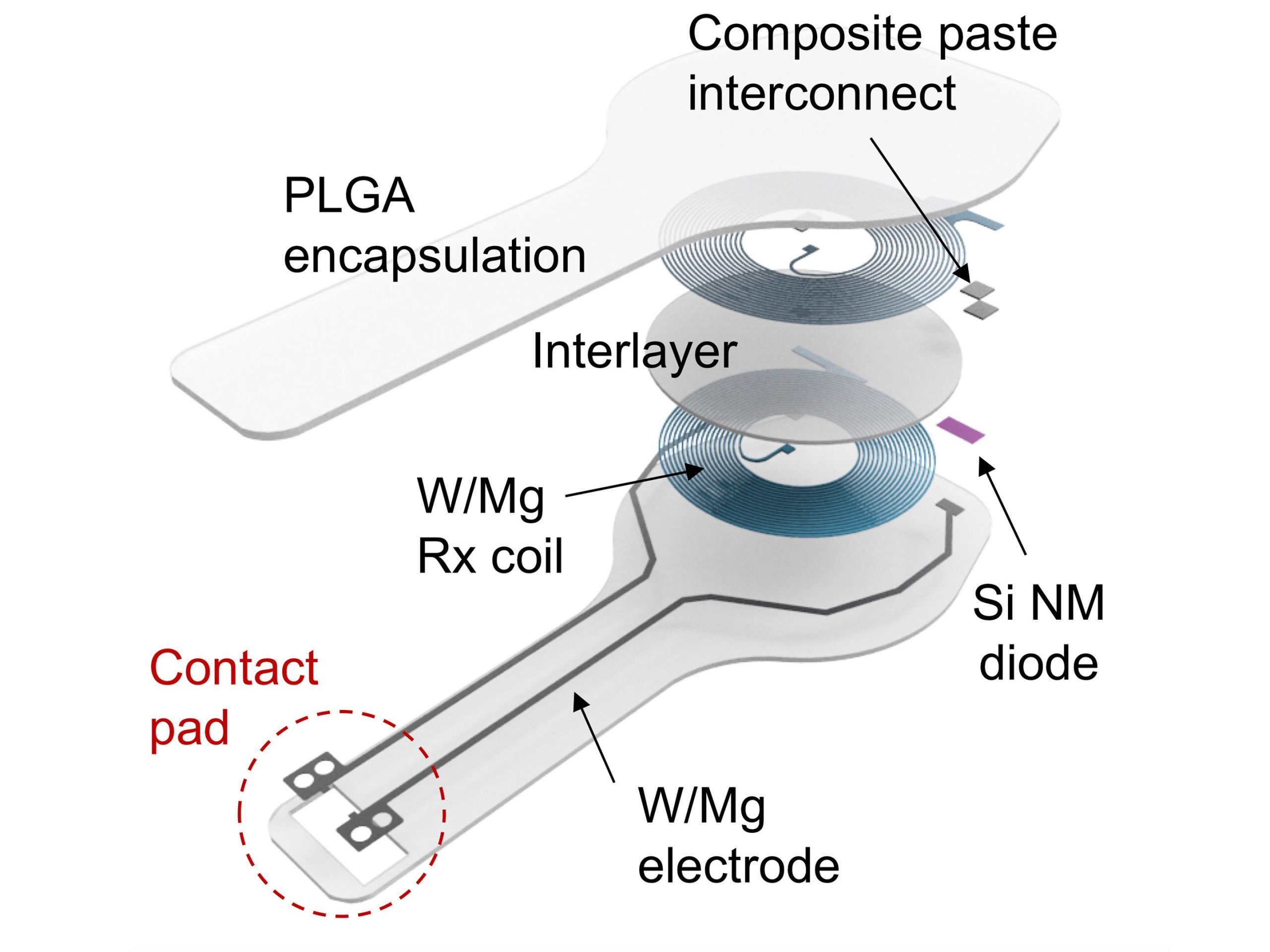
The device wirelessly harvests energy from an external, remote antenna using near-field communication protocols — the same technology used in smartphones for electronic payments and in RFID tags. This eliminates the need for bulky batteries and rigid hardware, including wires (or leads). Not only can leads introduce infections, they also can become enveloped in scar tissue, causing further damage when removed.
The study was published on June 28, 2021, in the journal Nature Biotechnology. The paper demonstrates the device’s efficacy across a series of large and small animal models.
Watch the transient pacemaker slowly dissolve over the course of 35 days and beyond. Credit: Northwestern University
“Hardware placed in or near the heart creates risks for infection and other complications,” said Northwestern’s John A. Rogers, who led the device’s development. “Our wireless, transient pacemakers overcome key disadvantages of traditional temporary devices by eliminating the need for percutaneous leads for surgical extraction procedures — thereby offering the potential for reduced costs and improved outcomes in patient care. This unusual type of device could represent the future of temporary pacing technology.”
“Sometimes patients only need pacemakers temporarily, perhaps after an open heart surgery, heart attack, or drug overdose,” said Dr. Rishi Arora, a cardiologist at Northwestern Medicine who co-led the study. “After the patient’s heart is stabilized, we can remove the pacemaker. The current standard of care involves inserting a wire, which stays in place for three to seven days. These have potential to become infected or dislodged.”
“The transient electronics platform opens an entirely new chapter in medicine and biomedical research,” said GW’s Igor Efimov, who co-led the study with Rogers and Arora. “The bioresorbable materials at the foundation of this technology make it possible to create whole host of diagnostic and therapeutic transient devices for monitoring progression of diseases and therapies, delivering electrical, pharmacological, cell therapies, gene reprogramming and more.”
Rogers is the Louis Simpson and Kimberly Querrey Professor of Materials Science and Engineering, Biomedical Engineering and Neurological Surgery in the McCormick School of Engineering and Feinberg School of Medicine and the director of the Querrey Simpson Institute for Bioelectronics. Arora is a professor of medicine at Feinberg and co-director of the Center for Arrhythmia Research. Efimov is the Alisann and Terry Collins Professor of Biomedical Engineering at GW.
Ditching Restrictive, Risky Leads
Currently, to set up a temporary pacing after open heart surgery, surgeons must sew on temporary pacemaker electrodes on the heart muscle during surgery. These have leads that exit the front of a patient’s chest, connecting to an external pacing box that delivers a current to control the heart’s rhythm.
When the temporary pacemaker is no longer needed, physicians remove the pacemaker electrodes. Although uncommon, potential complications of implanted temporary pacemakers include infection, dislodgement, torn or damaged tissues, bleeding, and blood clots.
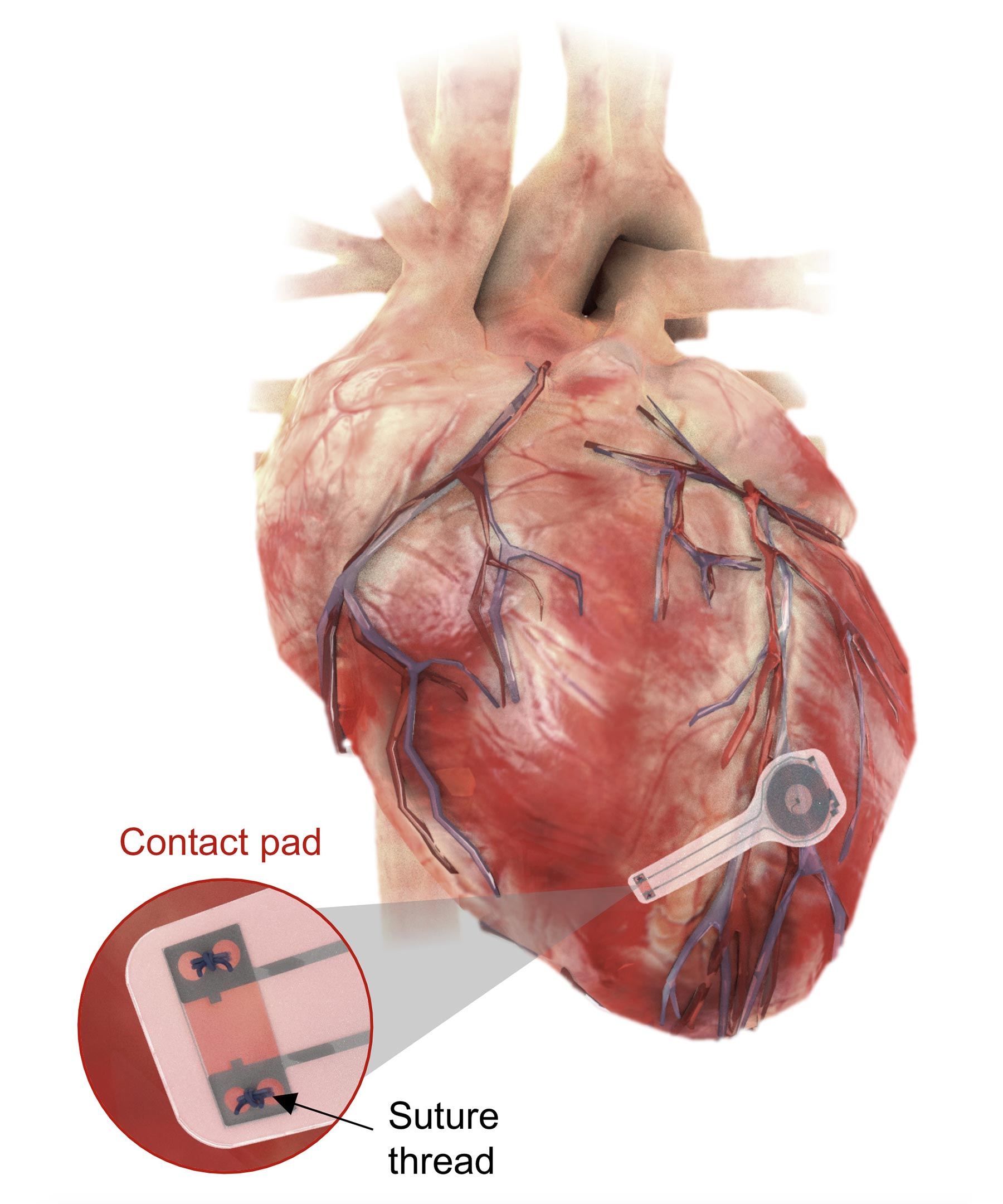
With Northwestern and GW’s transient pacemaker, surgeons and patients can sidestep this potentially risky procedure. The fully implantable device is light and thin — 250 microns thick and weighing less than half a gram. Soft and flexible, it encapsulates electrodes that softly laminate onto the heart’s surface to deliver an electrical pulse.
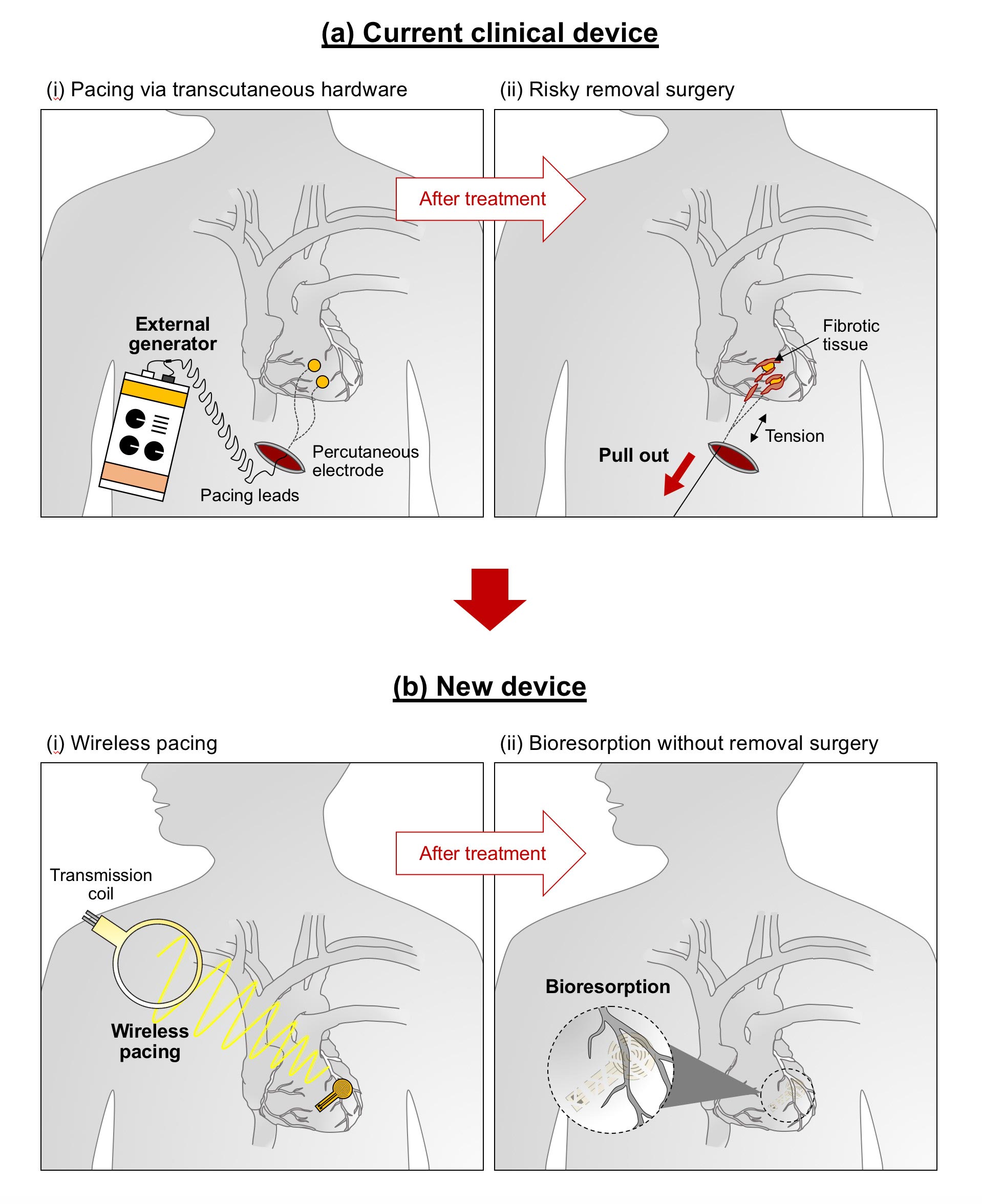
“Instead of using wires that can get infected and dislodged, we can implant this leadless biocompatible pacemaker,” Arora said. “The circuitry is implanted directly on the surface of the heart, and we can activate it remotely. Over a period of weeks, this new type of pacemaker ‘dissolves’ or degrades on its own, thereby avoiding the need for physical removal of the pacemaker electrodes. This is potentially a major victory for post-operative patients.
“With further modifications, it eventually may be possible to implant such bioresorbable pacemakers through a vein in the leg or arm,” he added. “In this instance, it also may be possible to provide temporary pacing to patients who have suffered a heart attack or to patients undergoing catheter-based procedures, such as trans-catheter aortic valve replacement.”
Prioritizing Patient Comfort
Northwestern Medicine cardiac surgeon Dr. Duc Thinh Pham, who was not involved with the research, imagines a transient pacemaker undoubtedly would make his patients more comfortable. With current pacemakers, patients often feel discomfort for days after the leads are inserted. Then, they must limit their movements and activities in order to prevent the leads from dislodging.
“This transient pacemaker is brilliant,” said Pham, who has performed more than 2,000 cardiac surgeries throughout his career. “In addition to addressing the primary issue of occasional post-cardiac surgery patients needing temporary pacing due to blockages or arrhythmias, the device addresses the secondary issue of patient comfort, ability to move freely and rehabilitate. If successful, this device will greatly improve a patient’s post-operative course.”
Disappearing Act
This is the second example of bioresorbable electronic medicine from the Rogers lab, which has been studying transient electronics for over a decade. In 2018, Rogers and colleagues demonstrated the world’s first bioresorbable electronic device — a biodegradable implant that speeds nerve regeneration. The team’s bioresorbable devices are completely harmless — similar to absorbable stitches. After fully degrading, the devices completely disappear through the body’s natural biological processes.
“There is clearly a need for better temporary cardiac pacemakers,” said Dr. Bradley Knight, the Chester C. and Deborah M. Cooley Distinguished Professor of Cardiology at Feinberg and coauthor of the study. “When I first learned about the bioresorbable nerve stimulator, I contacted Professor Rogers to explore the possibility of using this technology to pace the heart. He had already started working with Dr. Efimov to develop a small version of a bioresorbable pacemaker as a proof of concept. We then worked with both teams to develop a larger version of a bioresorbable, leadless, cardiac pacemaker that could be effective on a human scale. It’s a great example of what we can create at Northwestern by bridging the expertise in engineering and medicine.”
Depending on the patient, a temporary pacemaker might be needed anywhere from a couple of days to several weeks. By varying the composition and thickness of the materials in the device, Rogers’ team can control the precise number of days it remains functional before dissolving.
“We build these devices out of different types of safe, bioresorbable materials and in optimized architectures to ensure stable operation over a time period somewhat longer than is clinically necessary,” Rogers said. “We can tailor the devices to address a broad spectrum of relevant lifetimes. Transient technologies, in general, could someday provide therapy or treatment for a wide variety of medical conditions — serving, in a sense, as an engineering form of medicine.”
Reference: “Fully implantable and bioresorbable cardiac pacemakers without leads or batteries” by Yeon Sik Choi, Rose T. Yin, Anna Pfenniger, Jahyun Koo, Raudel Avila, K. Benjamin Lee, Sheena W. Chen, Geumbee Lee, Gang Li, Yun Qiao, Alejandro Murillo-Berlioz, Alexi Kiss, Shuling Han, Seung Min Lee, Chenhang Li, Zhaoqian Xie, Yu-Yu Chen, Amy Burrell, Beth Geist, Hyoyoung Jeong, Joohee Kim, Hong-Joon Yoon, Anthony Banks, Seung-Kyun Kang, Zheng Jenny Zhang, Chad R. Haney, Alan Varteres Sahakian, David Johnson, Tatiana Efimova, Yonggang Huang, Gregory D. Trachiotis, Bradley P. Knight, Rishi K. Arora, Igor R. Efimov and John A. Rogers, 28 June 2021, Nature Biotechnology.
DOI: 10.1038/s41587-021-00948-x
The paper, “Fully bioresorbable, leadless, battery-free cardiac pacemaker,” was supported by the Leducq Foundation (RHYTHM award), National Institutes of Health (award numbers R01-HL141470, R01-HL140061 and R01-HL125881), the American Heart Association (award number 19PRE34380781, AF SFRN), the National Science Foundation (award number 1842165) and the Ford Foundation. The paper’s co-first authors are Yeon Sik Choi, Rose Yin, Jahyun Koo and Anna Pfenniger.
Never miss a breakthrough: Join the SciTechDaily newsletter.
Follow us on Google and Google News.