
Close Menu
    Facebook X (Twitter) Instagram
    SciTechDaily
    • Biology
    • Chemistry
    • Earth
    • Health
    • Physics
    • Science
    • Space
    • Technology
    Facebook X (Twitter) Pinterest YouTube RSS
    SciTechDaily
    Home»Technology»Measuring Photovoltaic Performance Indoors – Under Artificial Ambient Light
    Technology

    Measuring Photovoltaic Performance Indoors – Under Artificial Ambient Light

    By American Institute of PhysicsAugust 4, 2021No Comments2 Mins Read
    Facebook Twitter Pinterest Telegram LinkedIn WhatsApp Email Reddit
    Share
    Facebook Twitter LinkedIn Pinterest Telegram Email Reddit
    Measuring Photovoltaic Performance Indoors
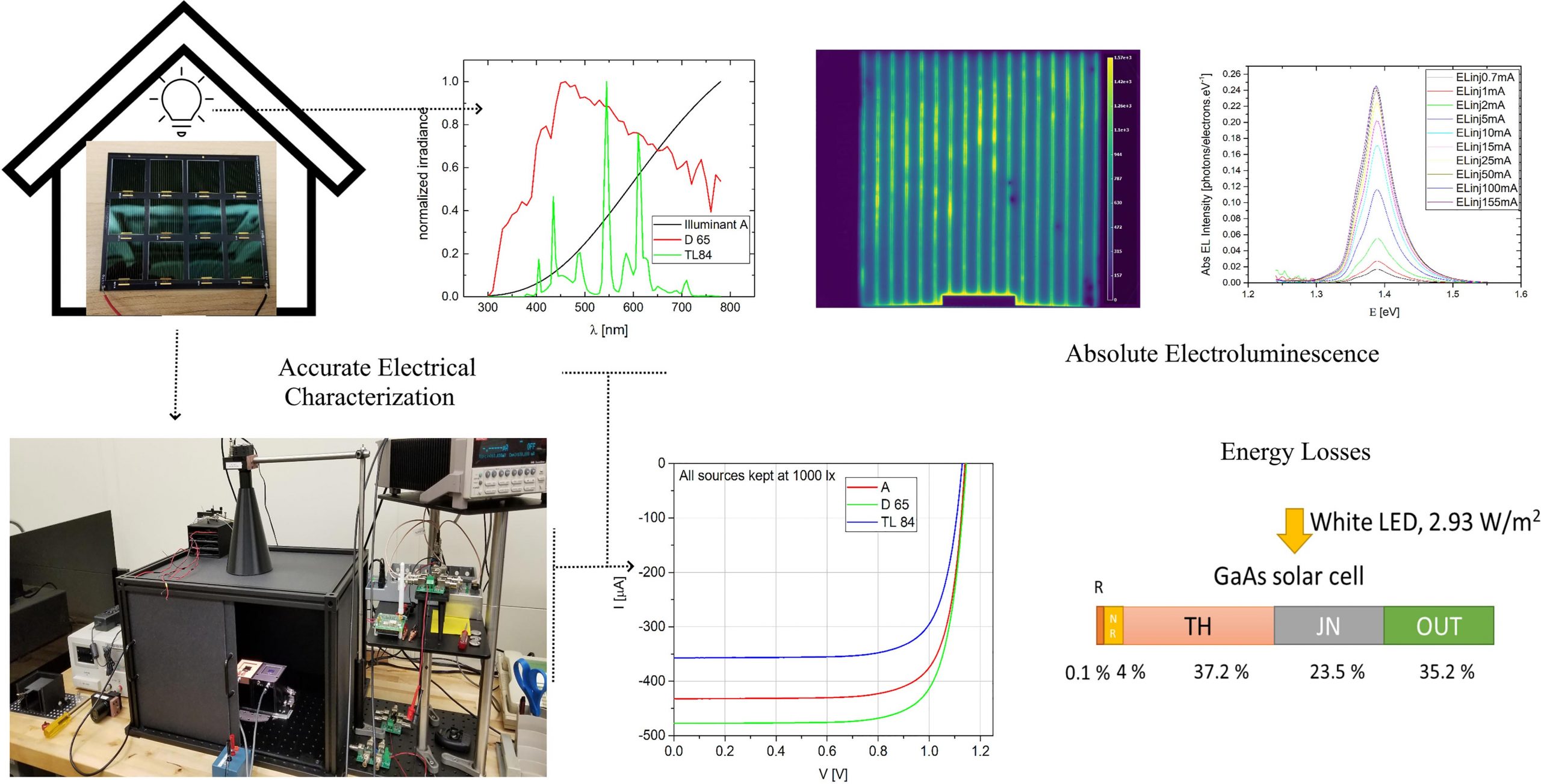
    Determining photovoltaic cells’ performance under artificial lighting. Credit: Hamadani

    Better methods for assessing solar cells under indoor ambient lighting can help improve their design.

    As photovoltaic (PV) technology continues to progress, PV devices’ applications in harvesting energy from indoor ambient light have become more realistic.

    During the AIP Publishing Horizons — Energy Storage and Conversion virtual conference, which will be held August 4-6, 2021, Behrang Hamadani, from the National Institute of Standards and Technology, will discuss methods for determining PV cells’ performance under artificial lighting. The presentation, “Measuring and understanding PV performance under ambient lighting,” will be available during the three-day conference.

    Depending on the material the PV cell is composed of and the type of artificial light, such as an LED or a fluorescent light source, the effectiveness of the technology can vary greatly. Though the amount of electricity generated by PV cells indoors is often quite low, it is often sufficient for some low-power everyday devices, such as sensors or rechargeable batteries.

    However, some combinations of PV material and light source — for example, a gallium indium phosphide PV cell under a warm white LED light — can be even more efficient in converting power than the same material under solar illumination. A better understanding of these relationships is needed to fully characterize the behavior of solar cells under very low illumination conditions.

    “Since this area of PV testing and characterization is relatively new, there are currently no universal standards for accurate measurement of electrical performance of these PV devices under different types of artificial light,” said Hamadani. “Therefore, there is a growing need to come up with accurate methods of measuring the performance of solar cells under indoor artificial lighting and adopt new universal standards.”

    Hamadani’s presentation will demonstrate how to accurately determine the power conversion efficiency of PV cells under indoor ambient lighting and discuss how energy is balanced within a solar cell in these conditions. He hopes his team’s method can help PV technologies further evolve.

    “If people are able to perform more reliable and repeatable measurements of their devices, they’ll be in a better position to incrementally improve the material properties and make progress in increasing the cell efficiency,” he said.

    Never miss a breakthrough: Join the SciTechDaily newsletter.
    Follow us on Google and Google News.

    American Institute of Physics Energy Photovoltaics Solar Cells
    Share. Facebook Twitter Pinterest LinkedIn Email Reddit

    Related Articles

    Innovative Technology Offers Big Performance Boost to Perovskite–Silicon Tandem Solar Cells

    The Michael Jordan of Solar Cells: New Technology Proves Its Lasting Power

    Artificial Intelligence Helps Scale Up Advanced Solar Cell Manufacturing

    Researchers Set New World Record for Solar Cell Efficiency

    Predicting Semiconductor Solar Cell Performance From Terahertz and Microwave Spectroscopy

    Solar Modules With a Marble Look for House Facades

    New Photovoltaic Materials Developed by Stanford Scientists for Ultrathin, Lightweight Solar Panels

    Templating Approach Stabilizes “Ideal” Perovskite Material for Cheap, Efficient Solar Cells

    Self-Harvesting Energy To Power Rechargeable Devices, Sensors

    Leave A Reply Cancel Reply

    • Facebook
    • Twitter
    • Pinterest
    • YouTube

    Don't Miss a Discovery

    Subscribe for the Latest in Science & Tech!

    Trending News

    Bone-Strengthening Discovery Could Reverse Osteoporosis

    Scientists Uncover Hidden Trigger Behind Stem Cell Aging

    Scientists Find Way to Reverse Fatty Liver Disease Without Changing Diet

    Could Humans Regrow Limbs? New Study Reveals Promising Genetic Pathway

    Scientists Reveal Eating Fruits and Vegetables May Increase Your Risk of Lung Cancer

    Scientists Reverse Brain Aging With Simple Nasal Spray

    Scientists Uncover Potential Brain Risks of Popular Fish Oil Supplements

    Scientists Discover a Surprising Way To Make Bread Healthier and More Nutritious

    Follow SciTechDaily
    • Facebook
    • Twitter
    • YouTube
    • Pinterest
    • Newsletter
    • RSS
    SciTech News
    • Biology News
    • Chemistry News
    • Earth News
    • Health News
    • Physics News
    • Science News
    • Space News
    • Technology News
    Recent Posts
    • Scientists Say This Fungus Could Survive the Trip to Mars
    • The Universe Is Expanding Too Fast and Scientists Can’t Explain Why
    • Gaining Weight Young May Be More Dangerous Than You Think
    • Scientists Discover Hidden Pathway Inside Catalysts That Defies Decades of Assumptions
    • Scientists Finally Crack Decades-Old Mystery of “Breathing” Lasers
    Copyright © 1998 - 2026 SciTechDaily. All Rights Reserved.
    • Science News
    • About
    • Contact
    • Editorial Board
    • Privacy Policy
    • Terms of Use

    Type above and press Enter to search. Press Esc to cancel.