
New Giant Planet Is Evidence of Possible Planetary Collisions
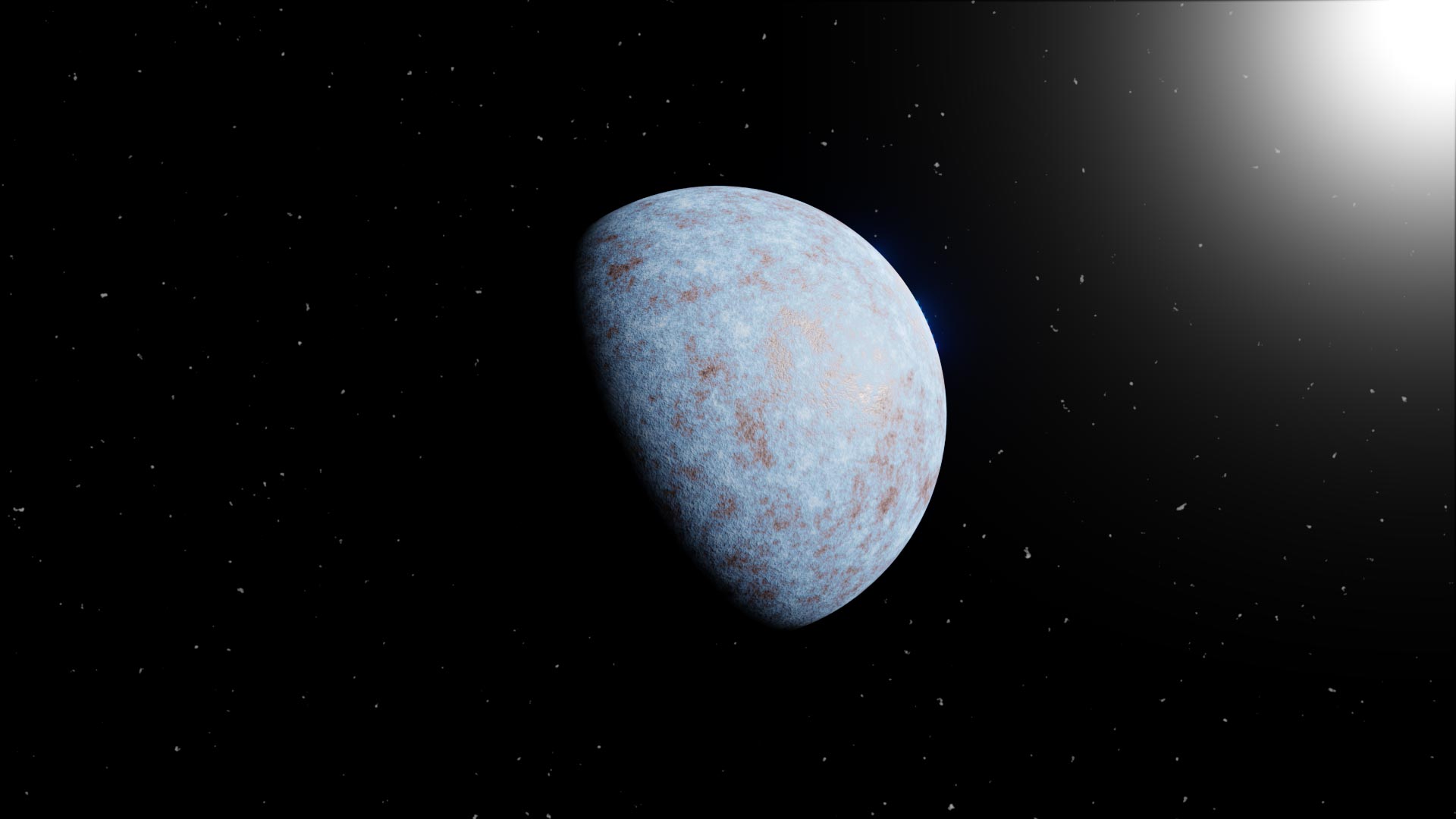
A Neptune-sized planet denser than steel has been discovered by an international team of astronomers, who believe its composition could be the result of a giant planetary clash.
TOI-1853b’s mass is almost twice that of any other similar-sized planet known and its density is incredibly high, meaning that it is made up of a larger fraction of rock than would typically be expected at that scale.
In the study, published today (August 31) in the journal Nature, scientists led by Luca Naponiello of University of Rome Tor Vergata suggest that this is the result of planetary collisions. These huge impacts would have removed some of the lighter atmosphere and water leaving a multitude of rock behind.
Senior Research Associate and co-author Dr. Phil Carter from the University of Bristol’s School of Physics, explained: “We have strong evidence for highly energetic collisions between planetary bodies in our solar system, such as the existence of Earth’s Moon, and good evidence from a small number of exoplanets.
“We know that there is a huge diversity of planets in exoplanetary systems; many have no analog in our solar system but often have masses and compositions between that of the rocky planets and Neptune/Uranus (the ice giants).
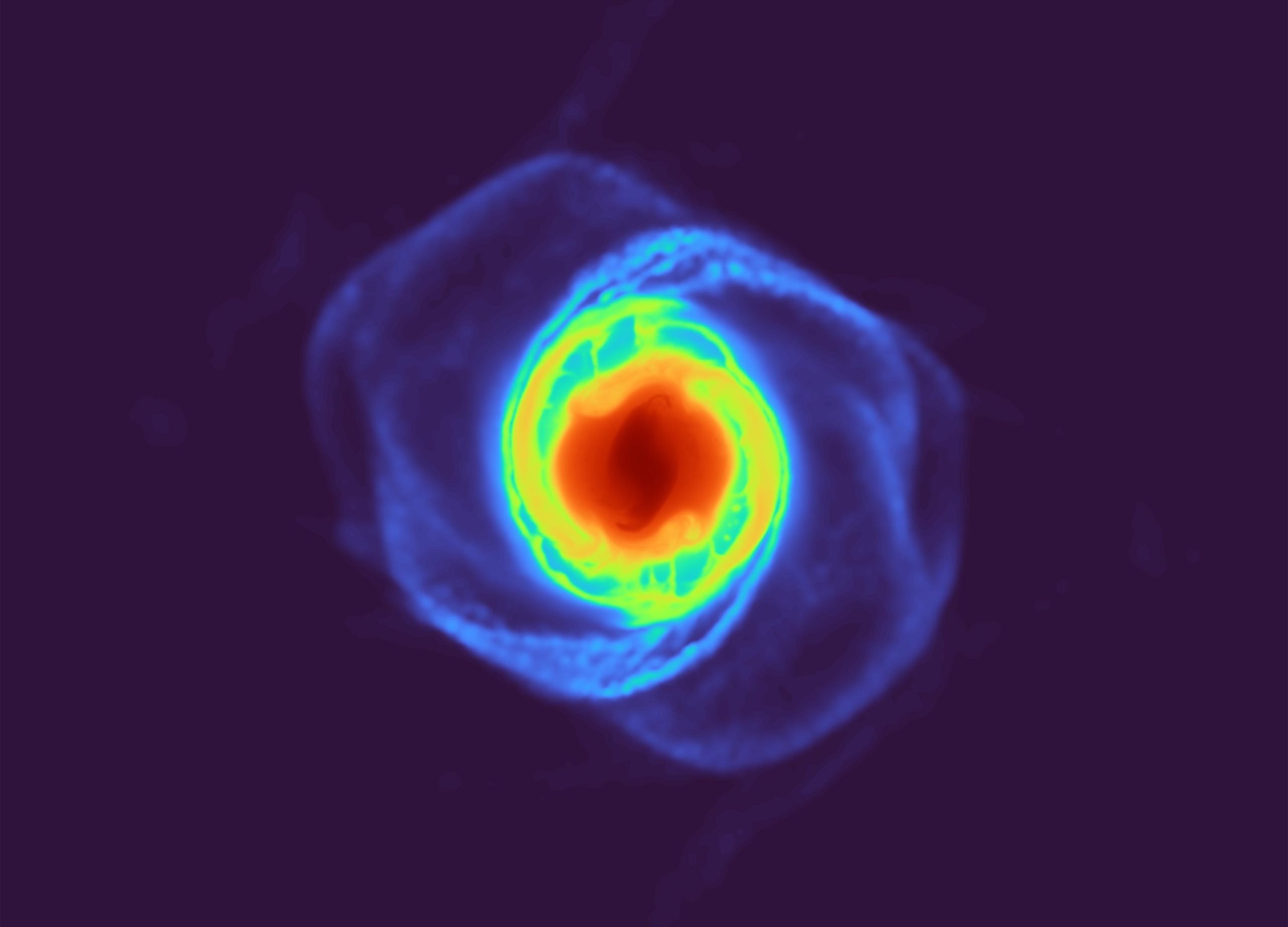
Modeling Extreme Planetary Impacts
“Our contribution to the study was to model extreme giant impacts that could potentially remove the lighter atmosphere and water/ice from the original larger planet in order to produce the extreme density measured,” Carter said.
“We found that the initial planetary body would likely have needed to be water-rich and suffer an extreme giant impact at a speed of greater than 75 km/s in order to produce TOI-1853b as it is observed.”
This planet provides new evidence for the prevalence of giant impacts in the formation of planets throughout the galaxy. This discovery helps to connect theories for planet formation based on the solar system to the formation of exoplanets. The discovery of this extreme planet provides new insights into the formation and evolution of planetary systems.
An Extreme Planet with Unexpected Characteristics
Postgraduate student and co-author Jingyao Dou said: “This planet is very surprising! Normally we expect planets forming with this much rock to become gas giants like Jupiter which have densities similar to water.
“TOI-1853b is the size of Neptune but has a density higher than steel. Our work shows that this can happen if the planet experienced extremely energetic planet-planet collisions during its formation.
“These collisions stripped away some of the lighter atmosphere and water leaving a substantially rock-enriched, high-density planet.”
Now the team plans detailed follow-up observations of TOI-1853b to attempt to detect any residual atmosphere and examine its composition.
Associate Professor and co-author Dr. Zoë Leinhardt concluded: “We had not previously investigated such extreme giant impacts as they are not something we had expected. There is much work to be done to improve the material models that underlie our simulations, and to extend the range of extreme giant impacts modeled.”
Reference: “A super-massive Neptune-sized planet” by Luca Naponiello, Luigi Mancini, Alessandro Sozzetti, Aldo S. Bonomo, Alessandro Morbidelli, Jingyao Dou, Li Zeng, Zoe M. Leinhardt, Katia Biazzo, Patricio E. Cubillos, Matteo Pinamonti, Daniele Locci, Antonio Maggio, Mario Damasso, Antonino F. Lanza, Jack J. Lissauer, Karen A. Collins, Philip J. Carter, Eric L. N. Jensen, Andrea Bignamini, Walter Boschin, Luke G. Bouma, David R. Ciardi, Rosario Cosentino, Silvano Desidera, Xavier Dumusque, Aldo F. M. Fiorenzano, Akihiko Fukui, Paolo Giacobbe, Crystal L. Gnilka, Adriano Ghedina, Gloria Guilluy, Avet Harutyunyan, Steve B. Howell, Jon M. Jenkins, Michael B. Lund, John F. Kielkopf, Katie V. Lester, Luca Malavolta, Andrew W. Mann, Rachel A. Matson, Elisabeth C. Matthews, Domenico Nardiello, Norio Narita, Emanuele Pace, Isabella Pagano, Enric Palle, Marco Pedani, Sara Seager, Joshua E. Schlieder, Richard P. Schwarz, Avi Shporer, Joseph D. Twicken, Joshua N. Winn, Carl Ziegler and Tiziano Zingales, 30 August 2023, Nature.
DOI: 10.1038/s41586-023-06499-2
The simulations were performed using the computational facilities of the Advanced Computing Research Centre, University of Bristol. Funders include Science and Technology Facilities Council (STFC) and China Scholarship Council.
Never miss a breakthrough: Join the SciTechDaily newsletter.
Follow us on Google and Google News.