
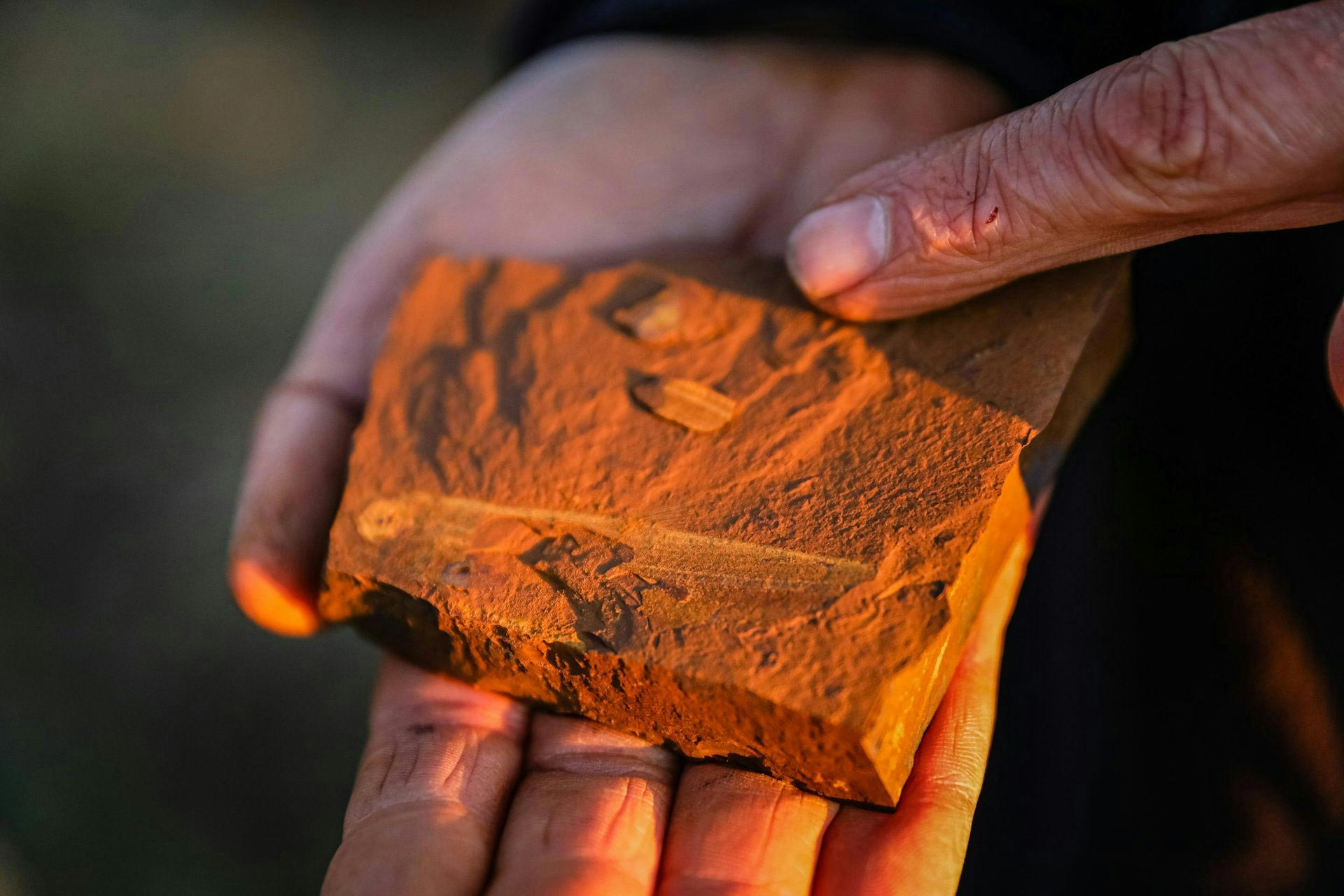
Iron-rich rocks at McGraths Flat preserve Miocene rainforest life in remarkable detail, reshaping ideas about how and where exceptional fossils form.
Beneath agricultural land in the central tablelands of New South Wales sits one of Australia’s most remarkable fossil deposits, known as McGraths Flat. The site dates to between 11 million and 16 million years ago, during the Miocene epoch, a period when many modern plants and animals were taking shape.
At this location, paleontologists and geologists from the Australian Museum Research Institute have uncovered an exceptional fossil record. Although the region is now shaped by dry conditions and dust, it was once covered by dense rainforest. Fossils from McGraths Flat capture this lost environment in unusually rich ecological detail.
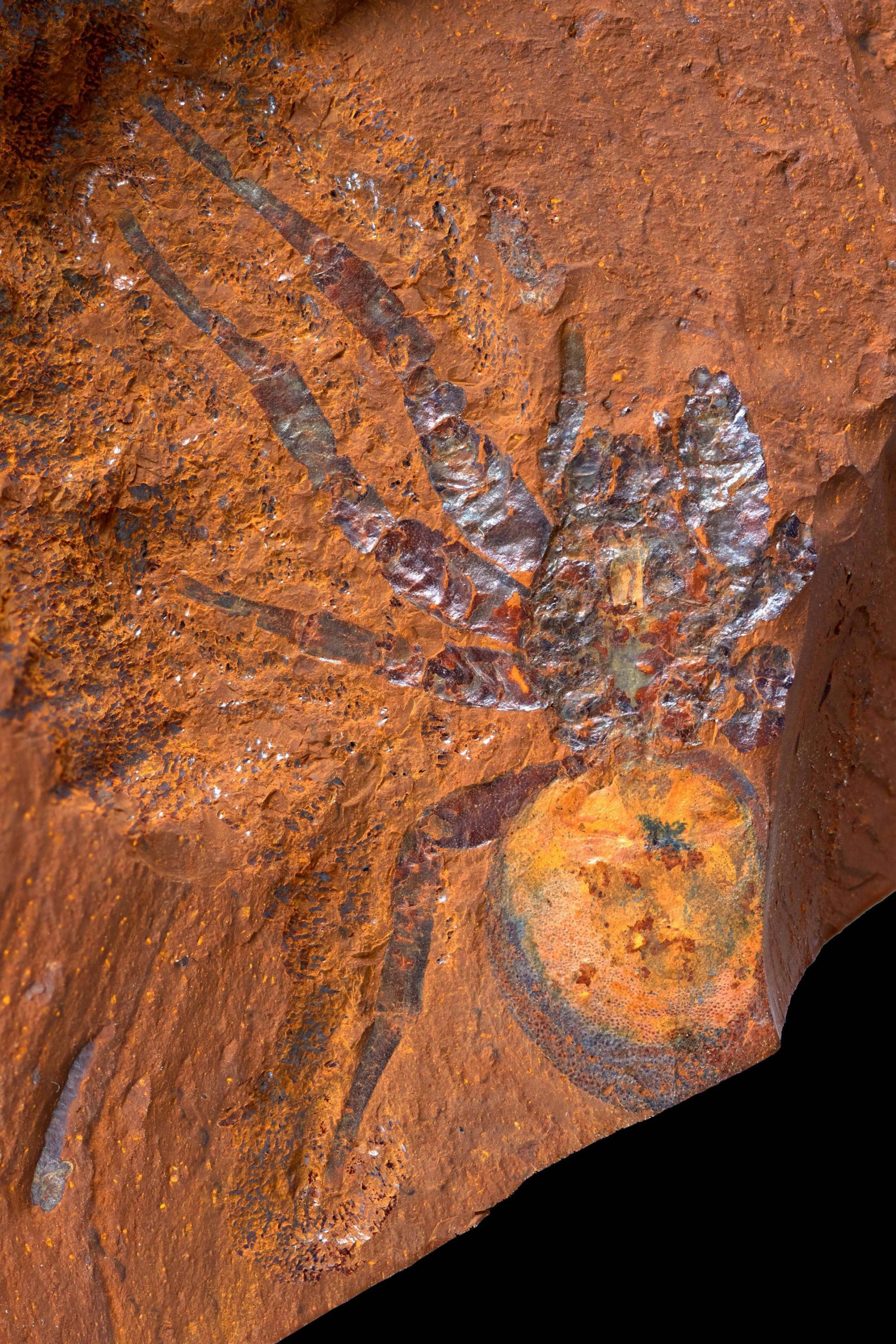
The rocks at the site are visually striking, with a deep red color caused by their composition. They are made entirely of goethite, a fine-grained iron-bearing mineral. This iron-rich material has preserved plants, insects, spiders, fish, and feathers with extraordinary precision.
A new study published in the journal Gondwana Research reveals that these fossils are important for more than their visual quality. The findings challenge long-held assumptions about where exceptionally preserved fossil sites can form on Earth, and the conditions that make such preservation possible.
Beyond shale and sandstone
The world’s most remarkable fossil discoveries have traditionally come from rock layers made up mostly of shale, sandstone, limestone, or volcanic ash.
Well-known examples include Germany’s Messel Pit or Canada’s Burgess Shale. In these locations, plants and animals were quickly buried under extremely fine sediments, a process that protected delicate structures and allowed scientists to study preserved soft tissues rather than only bones or shells.
Messel Pit has preserved roughly 47 million-year-old fossils showing the outlines of feathers, fur, and skin. The Burgess Shale, on the other hand, captures soft tissues from some of the earliest known animal life on Earth, with fossils that are about 500 million years old.
In sharp contrast, sedimentary rocks composed entirely of iron are generally considered one of the least likely places to find well-preserved remains of land-based (terrestrial) plants and animals.
That’s because iron-rich sedimentary rocks are predominantly known from banded iron formations. These massive iron deposits largely formed around 2.5 billion years ago in Earth’s ancient oxygen-depleted oceans, long before complex animal and plant life evolved.
In more recent history, iron is considered a mere weathering product, forming rust on the continents when exposed to our oxygen-rich atmosphere. Just look at Australia’s iconic red-rocked outback landscape that preserves these million- to billion-year-old features.
Yet the discovery of McGraths Flat has defied these expectations.
Terrestrial life entombed in iron
McGraths Flat is made from a very fine-grained, iron-rich rock called ferricrete. It’s essentially a cement made from iron.
The ferricrete consists almost entirely of microscopic iron-oxyhydroxide mineral particles, each just 0.005 millimetres across. When an animal died and was buried in the sediment, this minute scale is what allowed the iron particles to fill every cell. The result? Extraordinarily well-preserved soft tissue fossils.
Compared with marine life, fossil sites preserving terrestrial life are notoriously rare. Terrestrial sites that preserve soft tissues? Even rarer. The exceptional detail captured in the McGraths Flat fossils reveals new snapshots of past life we don’t often get to find.
These fossils are so perfectly preserved that individual pigment cells in fish eyes, internal organs of insects and fish, and even delicate spider hairs and nerve cells can be seen.
This level of preservation rivals other well-preserved fossil sites, such as those consisting of shale or sandstone. Except here, they are entombed in iron.
How did McGraths Flat form?
Our new study sheds light on how this fossil site came to be – a crucial step for finding similar terrestrial fossil troves in iron.
McGraths Flat began forming during the Miocene when iron leached from weathering basalt under warm, wet rainforest conditions.
Acidic groundwater then carried the dissolved iron underground until it reached a river system with an oxbow lake – an abandoned river channel. There, the iron became ultra-fine iron-oxyhydroxide sediment.
It rapidly coated dead organisms on the lake floor and replicated their soft tissue structures down to the cellular level.
A new fossil roadmap
Understanding how McGraths Flat formed could provide a roadmap for finding similar iron-rich fossil sites worldwide.
Key features to look for include very fine-grained and finely layered ferricrete in areas where:
- Ancient river channels once carved through older iron-rich terrain, including basaltic rock formed by volcanic activity
- Past climates that were warm and humid drove strong chemical weathering across the landscape
- The local geology contains little limestone or sulfur-containing minerals (such as pyrite), since these materials could disrupt the formation of iron-oxyhydroxide mineral sediments
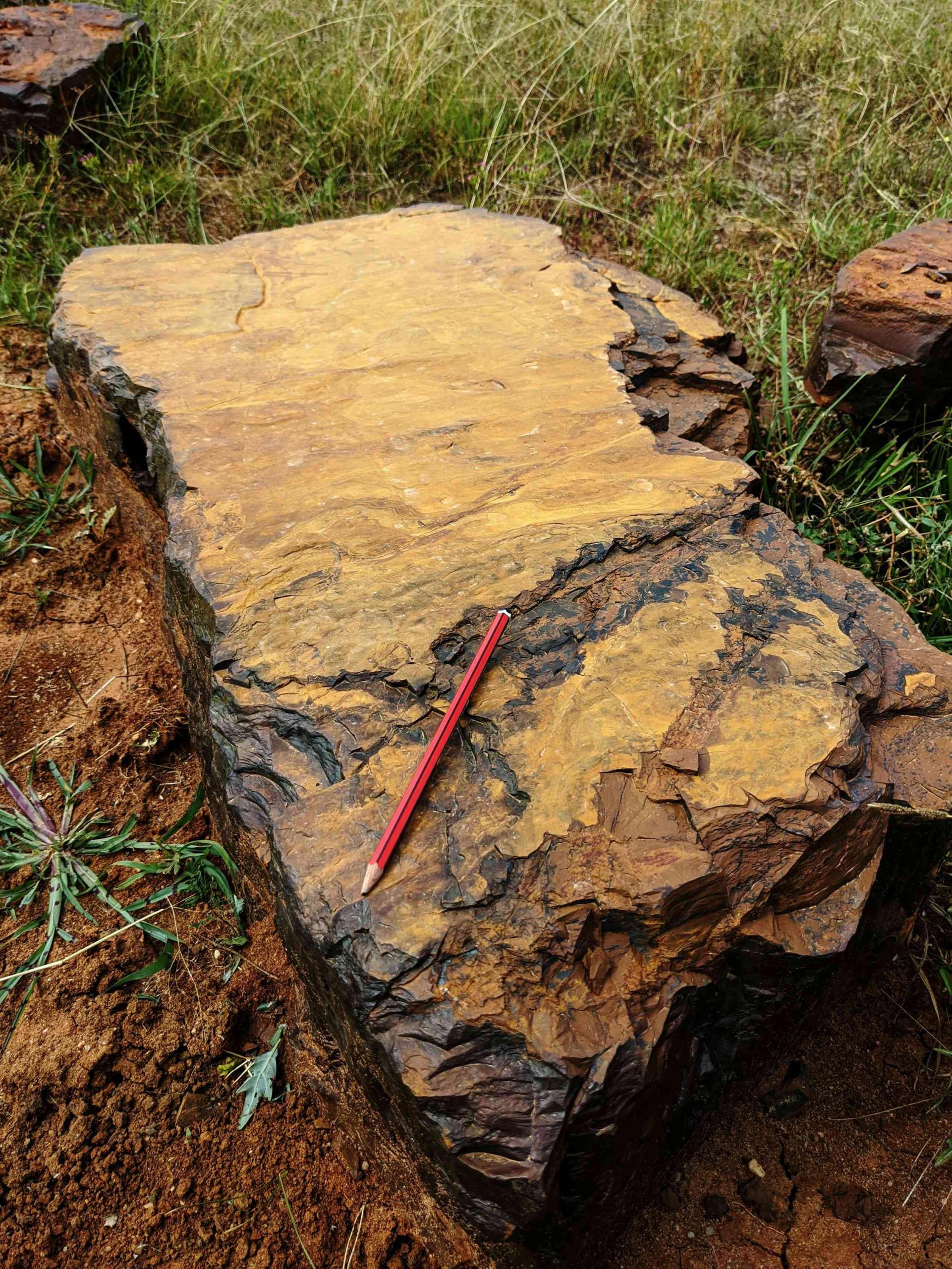
The red rocks of McGraths Flat open an entirely new chapter in our understanding of how exceptionally well-preserved fossil sites can form.
The next breakthrough in understanding ancient terrestrial life might not come from traditional shale or sandstone fossil beds, but from rusty-red rocks hidden beneath our feet.
Reference: “Taphonomy of soft-tissue preservation in ferricrete at the McGraths Flat Lagerstätte” by Tara Djokic, Patrick M. Smith, Jeff R. Havig, Michael Frese, Paulo Vasconcelos, Jochen Brocks, Michael Ellwood, David J. Cantrill, Dayna McGeeney, Ross Pogson, Chris Ryan, Yu Wang, Ai Nguyen, Matilda L. Rosas and Matthew R. McCurry, 14 September 2025, Gondwana Research.
DOI: 10.1016/j.gr.2025.08.012
Adapted from an article originally published in The Conversation.
Funding: Tara Djokic and co-authors received funding for this research from the Etheridge family descendants; Australian Museum Research Institute, Australian Museum Trust; and Australian Research Council (ARC). We acknowledge the scientific and technical assistance of Microscopy Australia, especially from the Centre for Advanced Microscopy, ANU (jointly funded by the ANU and the Australian Federal Government).
Disclosure: The study’s authors acknowledge the traditional custodians of the land and waterways on which McGraths Flat is located, the Wiradjuri Nation people.
Never miss a breakthrough: Join the SciTechDaily newsletter.
Follow us on Google and Google News.
7 Comments
Great stutt, keep it coming.
Mc-Graths Flat’s fossil imprints are to a point of confirmation found on rusted iron-oxyhydroxide rock at horse-shòe river bed,as found near the tail mountains of the EasternGhats,a part of Decantrap is also intruded,in the India.Fossil imprint of groups spider like creatures are often found.
Thank you to the authors of this report. It is evident they are enthusiastic about their subject and we’re able to share this in the article. I felt amazement and joy in reading the facts which could have been dull and uninteresting, instead I thoroughly enjoyed reading and seeing that amazing picture of the fossilized spider.
Well Done
Great stutt, keep it coming. Love your stuff.
This is really rare. Interesting.
More science articles
Hydrous iron oxide precipitates like goethite and ferrihydrite require the Fe3+ ferric iron cation and an anion. Usually a chloride or a nitrate, Which anion was used in these aqueous solutions and where did it go after goethite formation?