
Close Menu
    Facebook X (Twitter) Instagram
    SciTechDaily
    • Biology
    • Chemistry
    • Earth
    • Health
    • Physics
    • Science
    • Space
    • Technology
    Facebook X (Twitter) Pinterest YouTube RSS
    SciTechDaily
    Home»Biology»Strange Shell-Like Egg Case and the Secrets of Octopus Evolution
    Biology

    Strange Shell-Like Egg Case and the Secrets of Octopus Evolution

    By Oxford University Press USANovember 10, 2022No Comments3 Mins Read
    Facebook Twitter Pinterest Telegram LinkedIn WhatsApp Email Reddit
    Share
    Facebook Twitter LinkedIn Pinterest Telegram Email Reddit
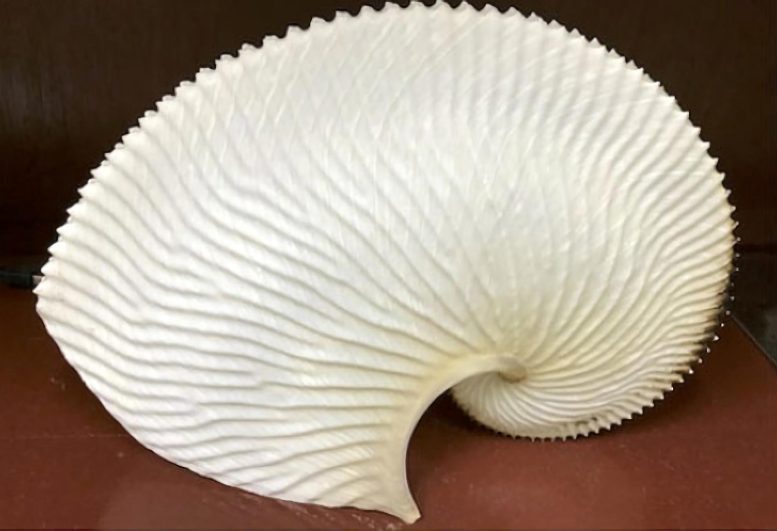
    Argonauta argo
    The shell-like egg case of Argonauta argo. Credit: Genome Biology and Evolution

    Research shows Argonauta argo evolved a shell-like egg case with unique proteins, separate from shelled ancestors, providing insights into cephalopod evolution.

    New research indicates that a type of octopus appears to have evolved independently to develop something resembling a shell, despite having lost the genetic code that produced actual shells in its ancestors and relatives. The study was presented in a new paper in Genome Biology and Evolution, a journal published by Oxford University Press.

    Argonauta argo, also known as the greater argonaut, is a species of octopus that lives in tropical and subtropical open seas. Female argonauts have a protective, spiral, shell-like egg case, which protects the eggs inside.

    Researchers have long wondered about the origin of this egg case. It looks very much like the shell of the commonly known pearly nautilus (Nautilus pompilius). This very distant relative of the argonaut has a true hard shell and lives on the ocean floor, but that may just be a coincidence. While the argonaut’s egg case and the nautilus’s shell are formed through the secretion of proteins, they are reportedly formed differently and look dissimilar at the microscopic level. Did the egg case evolve from the shell, or did it develop independently?
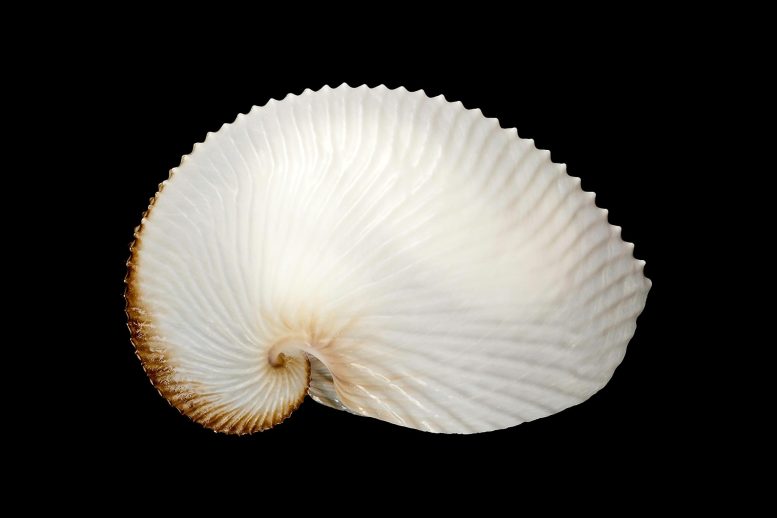
    Argonaut Shell Argonauta Argo
    Argonauta arg’s shell-like egg case did not evolve from shells.

    By sequencing the draft genome of the species a team of researchers from Japan, led by Masa-aki Yoshida and Davin Setiamarga, attempted to reveal the genomic background of argonauts and show how the species adapted to the open ocean and acquired its shell-like egg case. Scientists previously had avoided targeting argonauts because it was difficult to keep the animals in aquaria for research purposes. However, the authors here had access to a location in the Sea of Japan ideal for acquiring fresh samples.

    The new genome data uncovered here provides insight into several features related to shell evolution and egg case formation. The researchers found the egg case protein-coding genes in argonauts and discovered that most of these genes were not used to form shells in distantly related species, including the nautilus. This suggests that while the distant ancestors of argonaut octopuses likely had shells, the shells didn’t evolve into egg cases.

    “The argonaut genome is particularly intriguing because it shows that the break in synteny reported in the known octopus genome is not a general trait of this group,” said  Yoshida and Setiamarga. “We have demonstrated that, contrary to popular belief, cephalopods do not necessarily exhibit a distinct genome evolution. We anticipate that our findings will further the research of metazoan, mollusk, and cephalopod genome evolution, which has remained largely unexplored thus far.”

    Reference: “Gene Recruitments and Dismissals in the Argonaut Genome Provide Insights into Pelagic Lifestyle Adaptation and Shell-like Eggcase Reacquisition” by Masa-aki Yoshida, Kazuki Hirota, Junichi Imoto, Miki Okuno, Hiroyuki Tanaka, Rei Kajitani, Atsushi Toyoda, Takehiko Itoh, Kazuho Ikeo, Takenori Sasaki and Davin H E Setiamarga, 26 October 2022, Genome Biology and Evolution.
    DOI: 10.1093/gbe/evac140

    Never miss a breakthrough: Join the SciTechDaily newsletter.
    Follow us on Google and Google News.

    Cephalopod Evolution Genetics Octopus
    Share. Facebook Twitter Pinterest LinkedIn Email Reddit

    Related Articles

    Highly Intelligent: What Octopus and Human Brains Have in Common

    Horizontal Gene Transfer Between Plants is More Widespread than Previously Thought

    Evolutionary Changes Surrounding the NOS1 Gene

    Blond Hair of Melanesians Evolved Differently Than Those of Europeans

    Evolutionary History of Cypress Tree Reflects the Breakup of Pangaea

    Similarities Between Acorn Worm and Vertebrate Brain

    Iceman Ötzi’s DNA Reveals Health Risks and Relations

    Human Y-Chromosome Has Enough Genes to Stay for Millions of Years

    Researchers Discover that Prions Play Role in Yeast Survival and Evolution

    Leave A Reply Cancel Reply

    • Facebook
    • Twitter
    • Pinterest
    • YouTube

    Don't Miss a Discovery

    Subscribe for the Latest in Science & Tech!

    Trending News

    289-Million-Year-Old Reptile Mummy Reveals Origin of Human Breathing System

    New Brain Discovery Challenges Long-Held Theory of Teenage Brain Development

    Scientists Discover Plants “Scream” – We Just Couldn’t Hear Them Until Now

    Scientists Discover a Surprising Reason Intermittent Fasting Extends Life

    This Simple Fruit Wash Could Make Produce Safer and Last Days Longer

    Scientists Say Adding This Unusual Seafood to Your Diet Could Reverse Signs of Aging

    Scientists Say a Hidden Structure May Exist Inside Earth’s Core

    Doctors Surprised by the Power of a Simple Drug Against Colon Cancer

    Follow SciTechDaily
    • Facebook
    • Twitter
    • YouTube
    • Pinterest
    • Newsletter
    • RSS
    SciTech News
    • Biology News
    • Chemistry News
    • Earth News
    • Health News
    • Physics News
    • Science News
    • Space News
    • Technology News
    Recent Posts
    • The Ozone Layer Is Healing, But There’s a Hidden Catch
    • Earth’s Crust Is Tearing Open in Africa, and It Could Form a New Ocean
    • Breakthrough Bowel Cancer Trial Leaves Patients Cancer-Free for Nearly 3 Years
    • New Immune Pathway Could Supercharge mRNA Cancer Vaccines
    • Natural Compound Shows Powerful Potential Against Rheumatoid Arthritis
    Copyright © 1998 - 2026 SciTechDaily. All Rights Reserved.
    • Science News
    • About
    • Contact
    • Editorial Board
    • Privacy Policy
    • Terms of Use

    Type above and press Enter to search. Press Esc to cancel.