

Scientists have discovered a special enzyme that can help absorb CO2 from industrial emissions more efficiently. Found in a hot spring, this enzyme is incredibly tough, working well even in very hot and highly alkaline conditions.
Its ability to speed up CO2 absorption while withstanding harsh environments could make it a game-changer for reducing carbon emissions.
Extreme Environment Microorganisms
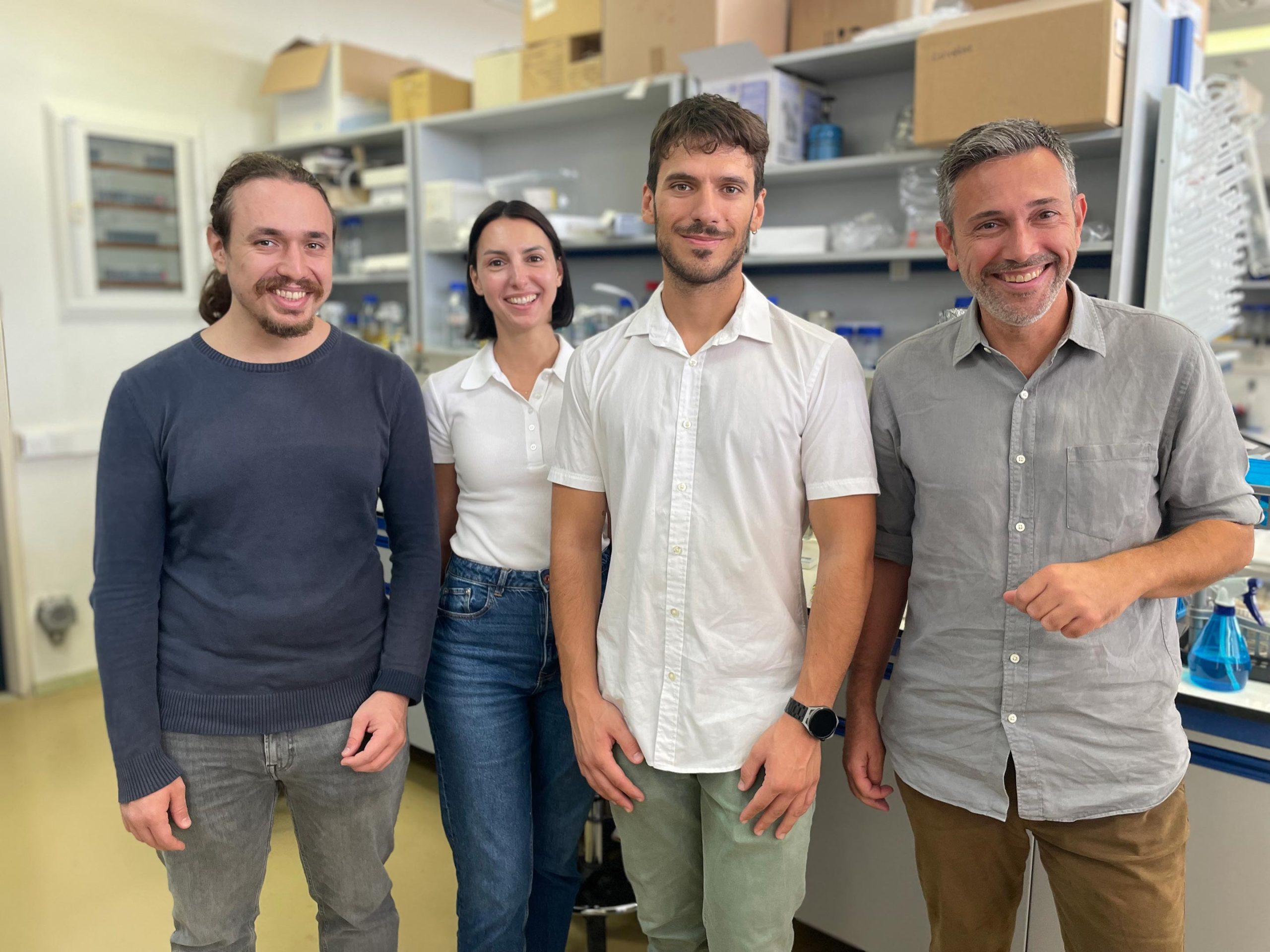
Microbial organisms that thrive in extreme environments produce proteins capable of speeding up CO2 dissolution in water while enduring extreme heat and high pH levels. These enzymes have immense potential for capturing CO2 from industrial emissions. Researchers at the Biomedical Sciences Research Center “Alexander Fleming” (BSRC Fleming) in Vari, Greece, recently identified one such powerful bioactive molecule.
Discovery of a Heat-Resistant Enzyme
Microorganisms living in harsh habitats like hot springs, salt lakes, and volcanoes have evolved to produce resilient enzymes. A Greek research team led by Dr. Georgios Skretas at BSRC Fleming developed advanced metagenomic analysis tools to search for heat-resistant enzymes with biotechnological potential. After analyzing millions of genes from open-access metagenomic databases, they discovered a promising enzyme in a sample from a hot spring in Japan’s Kirishima region.
The result of their search was the highly stable carbonic anhydrase CA-KR1, an enzyme remarkably effective at dissolving CO2 in water. It stands out for its exceptional stability under industrial conditions, making it a valuable tool for large-scale carbon capture technologies.
“Metagenomic analysis gives us access to a “pool of proteins” that remains largely unexplored and can unravel enzymes and other proteins of great biotechnological interest, such as the CA-KR1 enzyme we have discovered” comments Dr. Skretas. According to Dr. Skretas, the CA-KR1 enzyme is extremely stable at very high temperatures and in strong alkaline solutions, which is extremely rare for proteins.
Enhancing Industrial CO2 Capture
“More specifically, the enzyme performs exceptionally well under conditions of Hot Potassium Carbonate (HPC) capture technologies, with temperatures exceeding 80 °C and pH levels above 11. It enhances CO2 capture productivity by 90% at 90 °C compared to standard non-enzymatic methods. It also allows for 90% CO2 removal at 80 °C, surpassing the performance of standard HPC capture and doubling the initial CO2 absorption rate at 90 °C” explains PhD candidate Konstantinos Rigkos, who, along with the Post-Doctoral Researcher Dimitra Zarafeta, played a central role in this study, recently published in the journal Environmental Science & Technology.
Potential for Industrial Application
“The CA-KR1 enzyme is perhaps the most robust biocatalyst (carbonic anhydrase) for efficient CO2 capture in HPC conditions reported to date. Its integration in industrial settings holds great promise for accelerating the industrial implementation of biomimetic CO2 capture—a green, sustainable technology expected to be a “game changer” in carbon sequestration, significantly contributing to the timely achievement of carbon neutrality,” added Dr Zarafeta.
The innovative enzyme CA-KR1 is already patent-pending. Its transition from the laboratory bench to the industrial bioreactor will be an important step toward industrial decarbonization, significantly contributing to innovation in the critical area of CO2 capture for the well-being of the planet. These studies are currently underway.
Reference: “Biomimetic CO2 Capture Unlocked through Enzyme Mining: Discovery of a Highly Thermo- and Alkali-Stable Carbonic Anhydrase” by Konstantinos Rigkos, Georgios Filis, Io Antonopoulou, Ayanne de Oliveira Maciel, Pavlos Saridis, Dimitra Zarafeta and Georgios Skretas, 23 September 2024, Environmental Science & Technology.
DOI: 10.1021/acs.est.4c04291
Never miss a breakthrough: Join the SciTechDaily newsletter.
Follow us on Google and Google News.
2 Comments
If reducing the amount of atmospheric CO2 is the goal,, there is no technology, even scaled up globally, that can take enough out permanently to affect the climate. There are currently about 420 parts-per-million CO2 in the atmosphere and just ONE of those represents 7.8 gigaton (7,800 million metric tons) of CO2. So far, this expensive and heavily subsidized business is taking out CO2 in the low millions of tons, some of which is used for secondary oil recovery. This means it is a waste of time, money and energy to continue doing it. The climate wouldn’t even notice that one ppm was gone.
Thanks to all those sciteckies out there that are doing the hard work to save this planet.