
Close Menu
    Facebook X (Twitter) Instagram
    SciTechDaily
    • Biology
    • Chemistry
    • Earth
    • Health
    • Physics
    • Science
    • Space
    • Technology
    Facebook X (Twitter) Pinterest YouTube RSS
    SciTechDaily
    Home»Chemistry»Modern-Day Alchemy: Transforming Sugar Into Hydrocarbons To Power Future Cars
    Chemistry

    Modern-Day Alchemy: Transforming Sugar Into Hydrocarbons To Power Future Cars

    By University at BuffaloNovember 24, 20212 Comments5 Mins Read
    Facebook Twitter Pinterest Telegram LinkedIn WhatsApp Email Reddit
    Share
    Facebook Twitter LinkedIn Pinterest Telegram Email Reddit
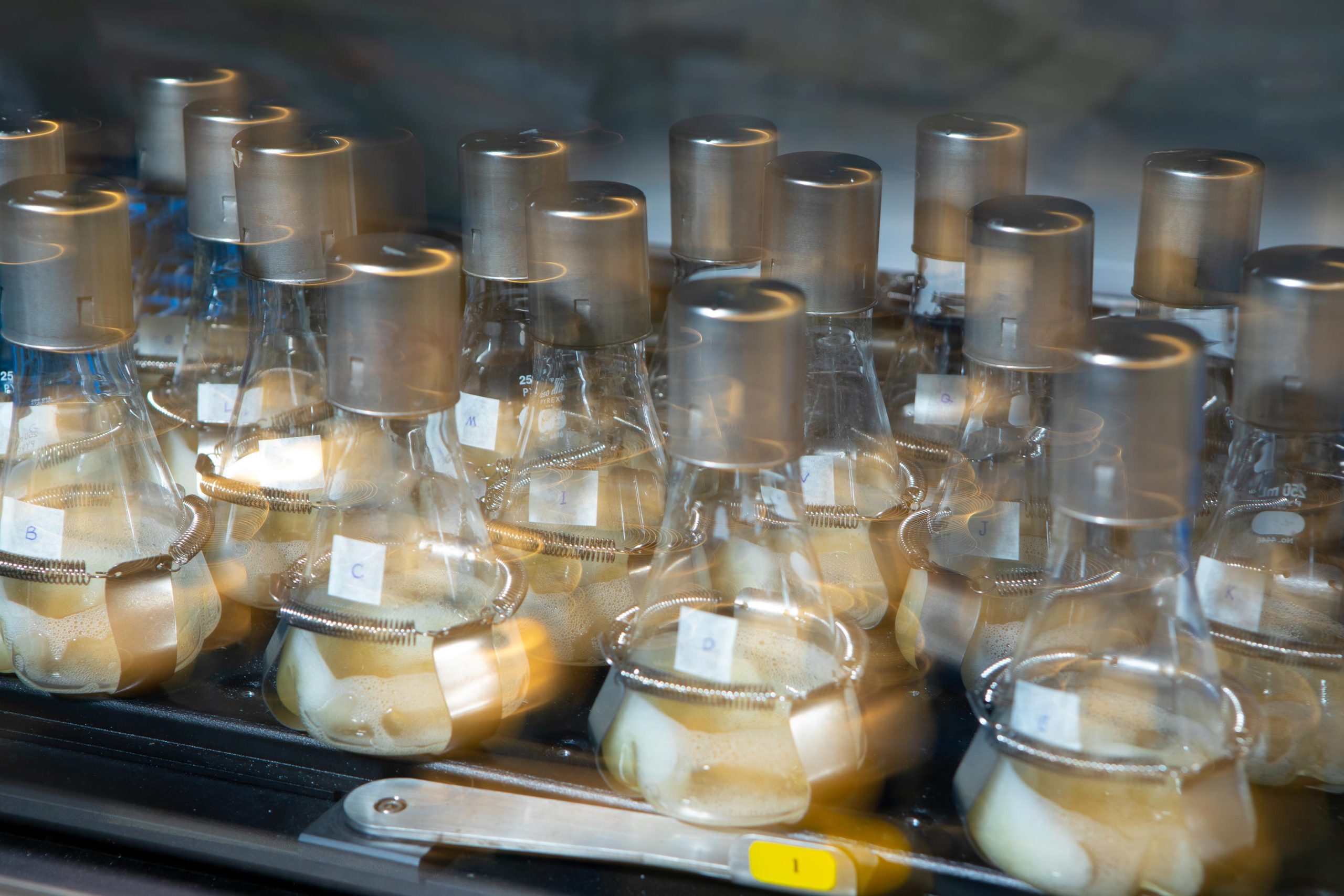
    Genetically Engineered Bacteria Convert Glucose
    Genetically engineered bacteria can convert glucose into a fatty acid, which can then be transformed into hydrocarbons called olefins. To grow such bacteria, scientists add the microbes to flasks filled with nutrients (the yellow broth) and shake them in an incubator to encourage oxygen flow, as pictured here. Credit: Douglas Levere / University at Buffalo

    In a new study, genetically engineered E. coli eat glucose, then help turn it into molecules found in gasoline.

    It sounds like modern-day alchemy: Transforming sugar into hydrocarbons found in gasoline.

    But that’s exactly what scientists have done.

    In a study in Nature Chemistry, researchers report harnessing the wonders of biology and chemistry to turn glucose (a type of sugar) into olefins (a type of hydrocarbon, and one of several types of molecules that make up gasoline).

    The project was led by biochemists Zhen Q. Wang at the University at Buffalo and Michelle C. Y. Chang at the University of California, Berkeley.

    The paper, which was published on November 22, 2021, marks an advance in efforts to create sustainable biofuels.
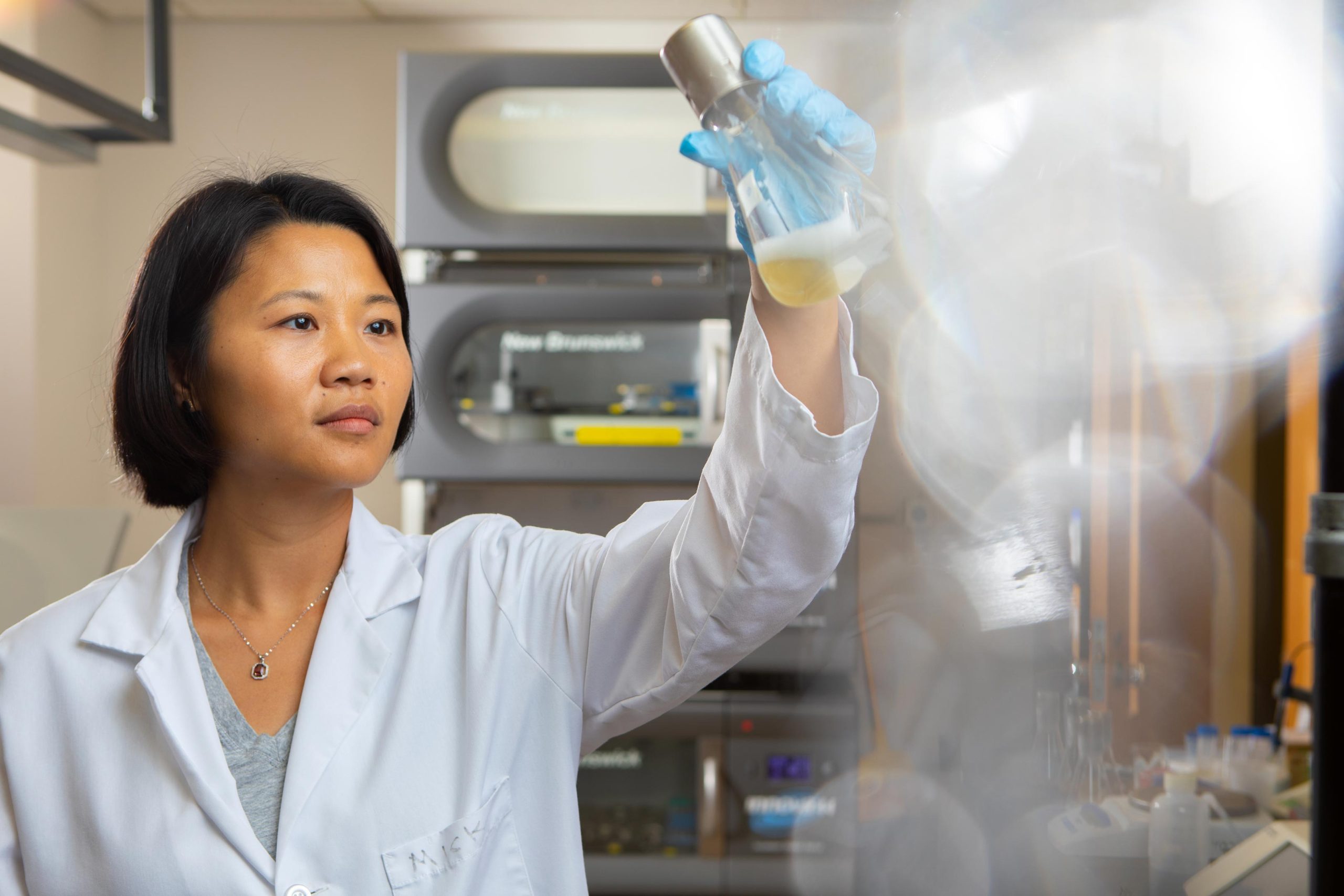
    Zhen Wang
    Zhen Wang, University at Buffalo assistant professor of biological sciences, is an expert in synthetic biology. Credit: Douglas Levere / University at Buffalo

    Olefins comprise a small percentage of the molecules in gasoline as it’s currently produced, but the process the team developed could likely be adjusted in the future to generate other types of hydrocarbons as well, including some of the other components of gasoline, Wang says. She also notes that olefins have non-fuel applications, as they are used in industrial lubricants and as precursors for making plastics.

    A Two-Step Process Using Sugar-Eating Microbes and a Catalyst

    To complete the study, the researchers began by feeding glucose to strains of E. coli that don’t pose a danger to human health.

    “These microbes are sugar junkies, even worse than our kids,” Wang jokes.

    The E. coli in the experiments were genetically engineered to produce a suite of four enzymes that convert glucose into compounds called 3-hydroxy fatty acids. As the bacteria consumed the glucose, they also started to make the fatty acids.
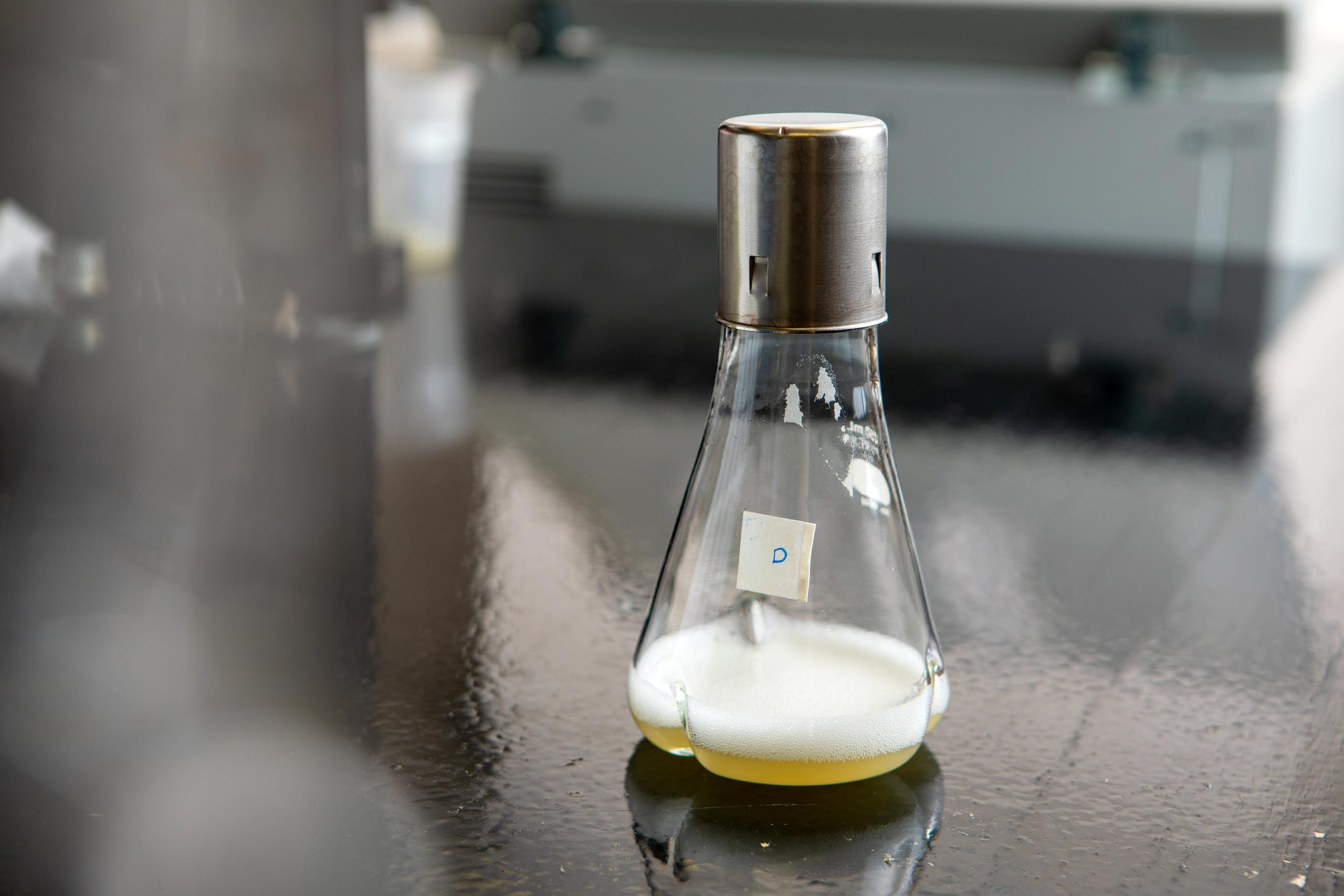
    E. coli Flask
    A strain of E. coli that doesn’t endanger human health grows in a flask full of nutrients (the yellow broth). In a study, scientists genetically engineered such E. coli to convert glucose into a class of fatty acids, which the team then transformed into a hydrocarbon called an olefin. Credit: Douglas Levere / University at Buffalo

    To complete the transformation, the team used a catalyst called niobium pentoxide (Nb2O5) to chop off unwanted parts of the fatty acids in a chemical process, generating the final product: the olefins.

    The scientists identified the enzymes and catalyst through trial and error, testing different molecules with properties that lent themselves to the tasks at hand.

    “We combined what biology can do the best with what chemistry can do the best, and we put them together to create this two-step process,” says Wang, PhD, an assistant professor of biological sciences in the UB College of Arts and Sciences. “Using this method, we were able to make olefins directly from glucose.”

    Glucose Comes From Photosynthesis, Which Pulls CO2 out of the Air

    “Making biofuels from renewable resources like glucose has great potential to advance green energy technology,” Wang says.

    “Glucose is produced by plants through photosynthesis, which turns carbon dioxide (CO2) and water into oxygen and sugar. So the carbon in the glucose — and later the olefins — is actually from carbon dioxide that has been pulled out of the atmosphere,” Wang explains.
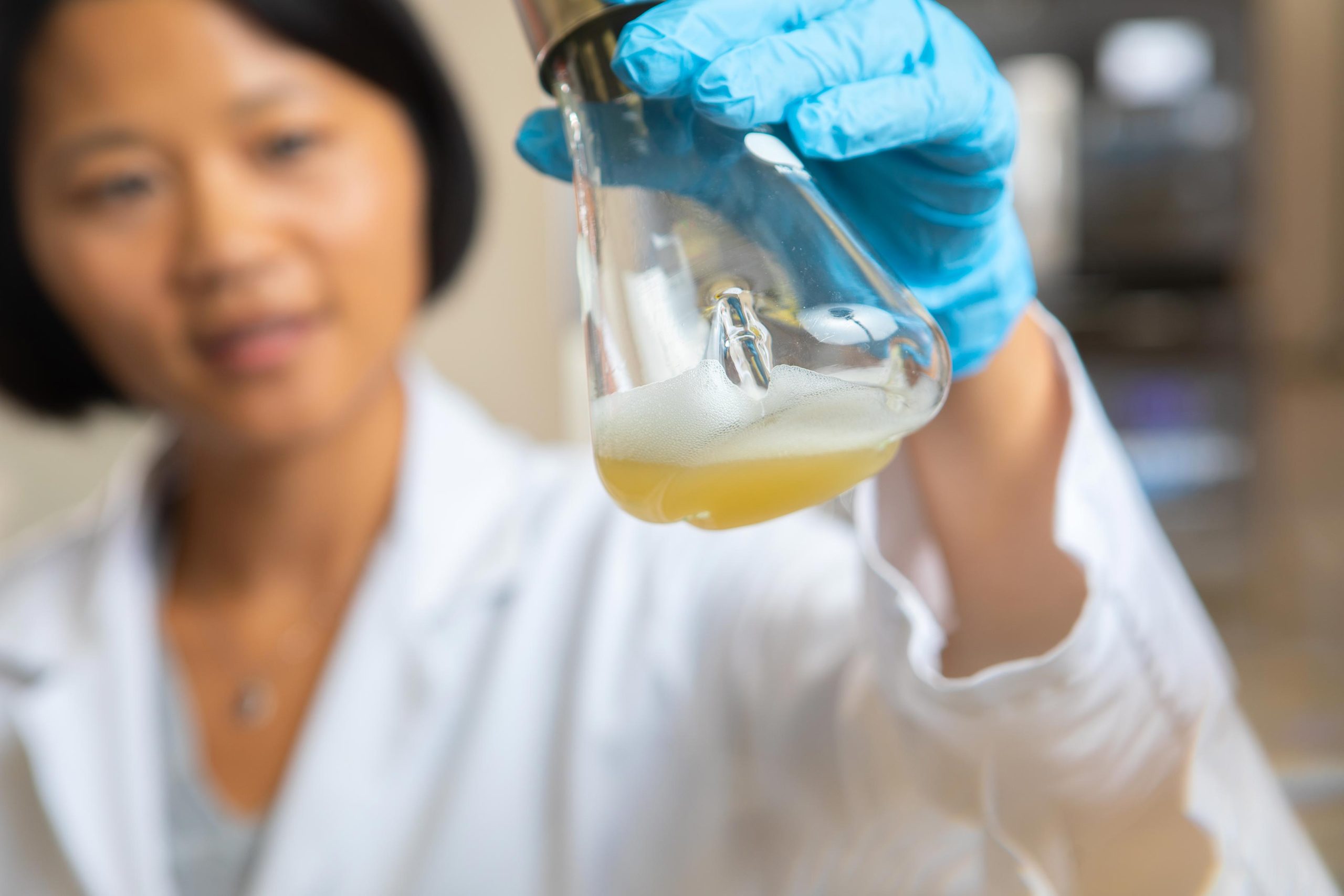
    Zhen Wang Flask
    Zhen Wang, University at Buffalo assistant professor of biological sciences, holds a flask containing a strain of E. coli that doesn’t endanger human health. Wang and colleagues have shown that genetically engineered E. coli can convert glucose into a class of fatty acids, which can then be transformed into hydrocarbons called olefins. Credit: Douglas Levere / University at Buffalo

    More research is needed, however, to understand the benefits of the new method and whether it can be scaled up efficiently for making biofuels or for other purposes. One of the first questions that will need to be answered is how much energy the process of producing the olefins consumes; if the energy cost is too high, the technology would need to be optimized to be practical on an industrial scale.

    Scientists are also interested in increasing the yield. Currently, it takes 100 glucose molecules to produce about 8 olefin molecules, Wang says. She would like to improve that ratio, with a focus on coaxing the E. coli to produce more of the 3-hydroxy fatty acids for every gram of glucose consumed.

    Reference: “A dual cellular–heterogeneous catalyst strategy for the production of olefins from glucose” by Zhen Q. Wang, Heng Song, Edward J. Koleski, Noritaka Hara, Dae Sung Park, Gaurav Kumar, Yejin Min, Paul J. Dauenhauer and Michelle C. Y. Chang, 22 November 2021, Nature Chemistry.
    DOI: 10.1038/s41557-021-00820-0

    Co-authors of the study in Nature Chemistry include Wang; Chang; Heng Song, PhD, at UC Berkeley and Wuhan University in China; Edward J. Koleski, Noritaka Hara, PhD, and Yejin Min at UC Berkeley; Dae Sung Park, PhD, Gaurav Kumar, PhD, and Paul J. Dauenhauer, PhD, at the University of Minnesota (Park is now at the Korea Research Institute of Chemical Technology).

    The research was supported by funding from the U.S. National Science Foundation; the Camille and Henry Dreyfus Postdoctoral Program in Environmental Chemistry; and the Research Foundation for the State University of New York.

    Never miss a breakthrough: Join the SciTechDaily newsletter.
    Follow us on Google and Google News.

    Biofuel Catalysts Energy Enzyme Materials Science Microbiology University at Buffalo
    Share. Facebook Twitter Pinterest LinkedIn Email Reddit

    Related Articles

    Entirely New, Inexpensive Catalyst Speeds the Production of Oxygen From Water

    New Generation of Synthetic Solar Fuel Catalysts: A Superstar Enzyme Is Ready for Its Close-Up

    Catalytic Hydrogenation of CO2 to Methanol: Low Temperature and High Efficiency

    Green Chemistry and Biofuel: Mechanism of a Key Photoenzyme Decrypted

    Major Milestone Reached for Sewage and Food Waste Biocrude Conversion Process

    High Efficiency at Low Cost: New Catalyst Moves Seawater Desalination, Hydrogen Production Closer to Commercialization

    Breakthrough: Catalyzing a Zero-Carbon World by Harvesting Energy From Living Cells

    Ultra-Efficient Catalyst: Making Biodiesel From Dirty Old Cooking Oil Just Got Way Easier

    Metallic Glass: One Step Closer to Solving a Major Problem of Hydrogen Energy

    2 Comments

    1. Nichola Savitri de Senneville on November 24, 2021 10:17 am

      We May start getting obese cars through

      Reply
    2. gerald berke on November 24, 2021 11:54 am

      We already do that with corn. Turning plants into fuel it NOT a good idea at all! My goodness!

      Reply
    Leave A Reply Cancel Reply

    • Facebook
    • Twitter
    • Pinterest
    • YouTube

    Don't Miss a Discovery

    Subscribe for the Latest in Science & Tech!

    Trending News

    Don’t Miss: A Brilliant Venus and Glowing Harvest Moon Light Up the Sky

    New Twist on the Einstein Problem Reveals Unexpected Physics

    JWST Captures Stunning Evidence of How Supermassive Black Holes Feed

    Early Exercise May Permanently Change How Much Energy the Body Uses To Move

    New Molecule Wipes Out Aggressive Lymphoma Tumors in Mice in Just 11 Days

    The Human Family Tree May Need a Major Rewrite

    Scientists Find a Surprising Cancer-Fighting Effect in Dark Sweet Cherries

    New AI Detects Hidden Warning Signs of Solar Eruptions Hours Before They Emerge

    Follow SciTechDaily
    • Facebook
    • Twitter
    • YouTube
    • Pinterest
    • Newsletter
    • RSS
    SciTech News
    • Biology News
    • Chemistry News
    • Earth News
    • Health News
    • Physics News
    • Science News
    • Space News
    • Technology News
    Recent Posts
    • Africa’s Giant Herbivores Were Disappearing Millions of Years Before Humans Could Hunt Them
    • This Utah Mountain Is Hiding Enough Ice To Fill 600 Olympic Pools
    • Vagus Nerve Stimulation Could Unlock the Brain’s Hidden Learning Potential
    • Your Mother’s Age May Leave a Biological Mark That Lasts for Generations
    • Women Who Ate More Antioxidants Had Strikingly Lower Rates of Cervical Cancer
    Copyright © 1998 - 2026 SciTechDaily. All Rights Reserved.
    • Science News
    • About
    • Contact
    • Editorial Board
    • Privacy Policy
    • Terms of Use

    Type above and press Enter to search. Press Esc to cancel.