

Cold temperatures activate proteasomes to clear harmful protein clumps, reducing risks of aging-related diseases like ALS. This mechanism, involving the activator PA28γ/PSME3, may explain longevity benefits observed across species and could inform new therapies.
Cold temperatures trigger a cellular cleansing process that dismantles dangerous protein clumps, which are responsible for various age-related diseases. Recent research on various model organisms has also revealed that reducing body temperature leads to a significant increase in lifespan.
However, the exact mechanisms behind this process remain unclear in many aspects. Now, a research team at the University of Cologne’s CECAD Cluster of Excellence in Aging Research has recently uncovered one of these mechanisms. Their findings were recently published in the journal Nature Aging.
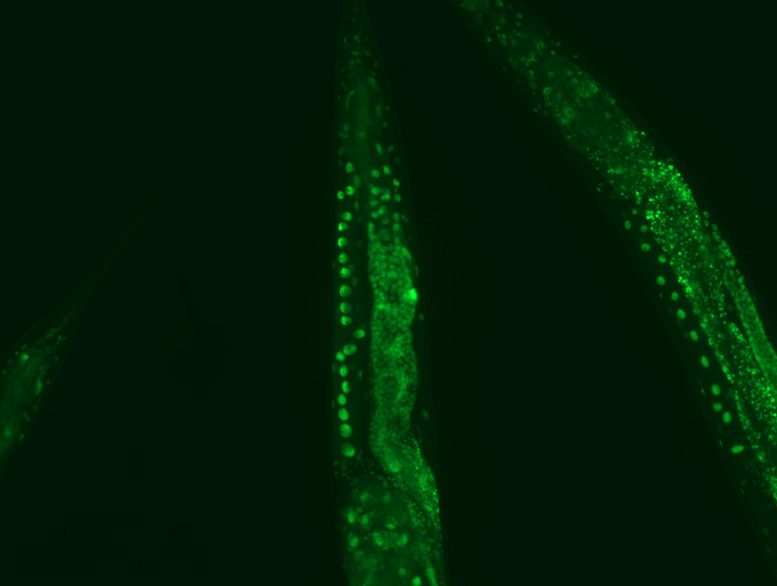
Professor Dr. David Vilchez and his working group used a non-vertebrate model organism, the nematode Caenorhabditis elegans, and cultivated human cells. Both carried the genes for two neurodegenerative diseases which typically occur in old age: amyotrophic lateral sclerosis (ALS) and Huntington’s disease. Both diseases are characterized by accumulations of harmful and damaging protein deposits – so-called pathological protein aggregations. In both model organisms, cold actively removed the protein clumps, thus preventing the protein aggregation that is pathological in both ALS and Huntington’s disease.
Proteasomes and the Role of PA28γ/PSME3
More precisely, the scientists explored the impact of cold on the activity of proteasomes, a cellular mechanism that removes damaged proteins from cells. The research revealed that the proteasome activator PA28γ/PSME3 mitigated the deficits caused by aging in both the nematode and in the human cells. In both cases, it was possible to activate proteasome activity through a moderate decrease in temperature.
“Taken together, these results show how over the course of evolution, cold has preserved its influence on proteasome regulation – with therapeutic implications for aging and aging-associated diseases,” said Professor Vilchez.
Aging is a major risk factor for several neurodegenerative diseases associated with protein aggregation, including Alzheimer’s, Parkinson’s, Huntington’s, and ALS. Vilchez added: “We believe that these results may be applied to other age-related neurodegenerative diseases as well as to other animal species.” A key finding was that the proteasome activity can also be increased by genetic overexpression of the activator.
That way, disease-causing proteins can be eliminated even at the normal body temperature of 37 degrees Celsius. These results may provide therapeutic targets for aging and aging-associated diseases.
Temperature’s Role in Longevity
It has long been known that while extremely low temperatures can be harmful to organisms, a moderate reduction in body temperature can have very positive effects. For example, a lower body temperature prolongs the longevity of cold-blooded animals like worms, flies, or fish, whose body temperature fluctuates with the temperature of the environment. However, the same phenomenon also applies to mammals, who maintain their body temperature within a narrow range no matter how cold or warm their environment is.
For example, the nematode lives much longer if it is moved from the standard temperature of 20 degrees Celsius to a colder temperature of 15 degrees Celsius. And in mice, a slight decrease in body temperature of just 0.5 degrees significantly extends their lifespan. This supports the assumption that temperature reduction plays a central role in longevity in the animal kingdom and is a well-conserved evolutionary mechanism.
Even in humans, a correlation between body temperature and lifespan has been reported. Normal human body temperature is between 36.5 and 37 degrees Celsius. While an acute drop in body temperature below 35 degrees leads to hypothermia, human body temperature fluctuates slightly during the day and even reaches a cool 36 degrees during sleep. Interestingly, a previous study reported that human body temperature has steadily declined by 0.03 degrees Celsius per decade since the Industrial Revolution, suggesting a possible link to the progressive increase in human life expectancy over the last 160 years.
Reference: “Cold temperature extends longevity and prevents disease-related protein aggregation through PA28γ-induced proteasomes” by Hyun Ju Lee, Hafiza Alirzayeva, Seda Koyuncu, Amirabbas Rueber, Alireza Noormohammadi and David Vilchez, 3 April 2023, Nature Aging.
DOI: 10.1038/s43587-023-00383-4
The research was conducted at the University of Cologne’s CECAD Cluster of Excellence in Aging Research.
Never miss a breakthrough: Join the SciTechDaily newsletter.
Follow us on Google and Google News.