
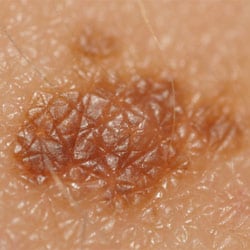
Using a nano-sensor constructed of nano-sized carbon tubes coated with strands of DNA, researchers from the Monell Chemical Senses Center identified melanoma cells by scent, suggesting that non-invasive odor analysis may be a valuable technique in the detection and early diagnosis of human melanoma.
According to new research from the Monell Center and collaborating institutions, odors from human skin cells can be used to identify melanoma, the deadliest form of skin cancer. In addition to detecting a unique odor signature associated with melanoma cells, the researchers also demonstrated that a nanotechnology-based sensor could reliably differentiate melanoma cells from normal skin cells. The findings suggest that non-invasive odor analysis may be a valuable technique in the detection and early diagnosis of human melanoma.
Melanoma is a tumor affecting melanocytes, skin cells that produce the dark pigment that gives skin its color. The disease is responsible for approximately 75 percent of skin cancer deaths, with chances of survival directly related to how early the cancer is detected. Current detection methods most commonly rely on visual inspection of the skin, which is highly dependent on individual self-examination and clinical skills.
The current study took advantage of the fact that human skin produces numerous airborne chemical molecules known as volatile organic compounds, or VOCs, many of which are odorous. “There is a potential wealth of information waiting to be extracted from examination of VOCs associated with various diseases, including cancers, genetic disorders, and viral or bacterial infections,” notes George Preti, PhD, an organic chemist at Monell who is one of the paper’s senior authors.
In the study, published online ahead of print in the Journal of Chromatography B, researchers used sophisticated sampling and analytical techniques to identify VOCs from melanoma cells at three stages of the disease as well as from normal melanocytes. All the cells were grown in culture.
The researchers used an absorbent device to collect chemical compounds from air in closed containers containing the various types of cells. Then, gas chromatography-mass spectrometry techniques were used to analyze the compounds and identify different profiles of VOCs emitting from melanoma cells relative to normal cells.
Both the types and concentrations of chemicals were affected. Melanoma cells produced certain compounds not detected in VOCs from normal melanocytes and also more or less of other chemicals. Further, the different types of melanoma cells could be distinguished from one another.
Noting that translation of these results into the clinical diagnostic realm would require a reliable and portable sensor device, the researchers went on to examine VOCs from normal melanocytes and melanoma cells using a previously described nano-sensor.
Constructed of nano-sized carbon tubes coated with strands of DNA, the tiny sensors can be bioengineered to recognize a wide variety of targets, including specific odor molecules. The nano-sensor was able to distinguish differences in VOCs from normal and several different types of melanoma cells.
“We are excited to see that the DNA-carbon nanotube vapor sensor concept has potential for use as a diagnostic. Our plan is to move forward with research into skin cancer and other diseases,” said A.T. Charlie Johnson, PhD, Professor of Physics at the University of Pennsylvania, who led the development of the olfactory sensor.
Together, the findings provide proof-of-concept regarding the potential of the two analytical techniques to identify and detect biomarkers that distinguish normal melanocytes from different melanoma cell types.
“This study demonstrates the usefulness of examining VOCs from diseases for rapid and noninvasive diagnostic purposes,” said Preti. “The methodology should also allow us to differentiate stages of the disease process.”
Current studies are focusing on the analysis of VOCs from tumor sites of patients diagnosed with primary melanoma.
Also contributing to the research were lead author Jae Kwak, Michelle Gallagher, Mehmet Hakan Ozdener, Charles J. Wysocki, Adam Faranda, and Amaka Isamah, all from Monell; A. T. Charlie Johnson, Brett R. Goldsmith, and Steven S. Fakharzadeh from the University of Pennsylvania; and Meenhard Herlyn from The Wistar Institute. Research reported in the publication was supported by The National Institute on Deafness and Other Communication Disorders of the National Institutes of Health under Award Number T 32 DC00014-26 to Monell. The content is solely the responsibility of the authors and does not necessarily represent the official views of the National Institutes of Health. Additional funds were donated to the Monell Center by Ms. Bonnie Hunt in memory of her parents, Ida and Percy Hunt. Support for Drs Johnson and Goldsmith came from the University of Pennsylvania Nano/Bio Interface Center through National Science Foundation grant NSEC DMR08-32802.
The Monell Chemical Senses Center is an independent nonprofit basic research institute based in Philadelphia, Pennsylvania. For 45 years, Monell has advanced scientific understanding of the mechanisms and functions of taste and smell to benefit human health and well-being. Using an interdisciplinary approach, scientists collaborate in the programmatic areas of sensation and perception; neuroscience and molecular biology; environmental and occupational health; nutrition and appetite; health and well-being; development, aging and regeneration; and chemical ecology and communication.
Reference: “Volatile biomarkers from human melanoma cells” by Jae Kwak, Michelle Gallagher, Mehmet Hakan Ozdener, Charles J. Wysocki, Brett R. Goldsmith, Amaka Isamah, Adam Faranda, Steven S. Fakharzadeh, Meenhard Herlyn, A.T. Charlie Johnson and George Preti, 22 May 2013, Journal of Chromatography B.
DOI: 10.1016/j.jchromb.2013.05.007
Never miss a breakthrough: Join the SciTechDaily newsletter.
Follow us on Google and Google News.
1 Comment
Incredible! I’m curious to know whether this technology or direction in was on the back of the discovery of cases where pets were alerted to areas of their owners bodies that cancers and tumours were located.