
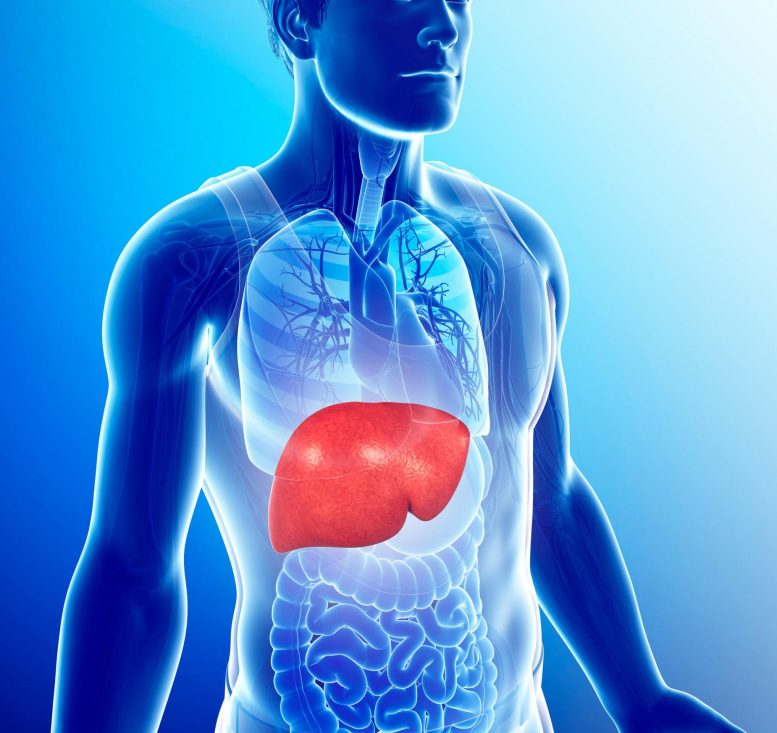
The bacteria responsible for leprosy could aid liver regeneration, bypassing scarring and tumors, and offering hope for safer liver disease treatments.
Leprosy, a chronic infectious disease caused by the bacterium Mycobacterium leprae, is one of the oldest and most persistent diseases in the world. However, new surprising research suggests that the bacteria that cause leprosy may also have the ability to stimulate the growth and regeneration of the liver in adult animals without causing damage or scarring. Scientists have discovered that parasites associated with leprosy can reprogram cells to increase the size of the liver.
The findings suggest the potential to use this natural process to rejuvenate aging livers and extend the period of disease-free living in humans, known as healthspan. It may also be possible to use this process to regenerate damaged livers, potentially reducing the need for liver transplantation, which is currently the only effective treatment for individuals with severely scarred livers.
Overcoming Challenges of Previous Liver Regeneration Methods
Previous studies promoted the regrowth of mouse livers by generating stem cells and progenitor cells – the step after a stem cell that can become any type of cell for a specific organ – via an invasive technique that often resulted in scarring and tumor growth.
To overcome these harmful side effects, Edinburgh researchers built on their previous discovery of the partial cellular reprogramming ability of the leprosy-causing bacteria, Mycobacterium leprae.
Working with the US Department of Health and Human Services in Baton Rouge, Louisiana, the team infected 57 armadillos – a natural host of leprosy bacteria – with the parasite and compared their livers with those of uninfected armadillos and those that were found to be resistant to infection.
Rejuvenation Without Damage or Scarring
They found that the infected animals developed enlarged – yet healthy and unharmed – livers with the same vital components, such as blood vessels, bile ducts, and functional units known as lobules, as the uninfected and resistant armadillos.
The team believes the bacteria ‘hijacked’ the inherent regenerative ability of the liver to increase the organ’s size and, therefore, to provide it with more cells within which to increase. They also discovered several indicators that the main kinds of liver cells – known as hepatocytes – had reached a “rejuvenated” state in the infected armadillos.
Genetic Changes Induced by Leprosy Bacteria
Livers of the infected armadillos also contained gene expression patterns – the blueprint for building a cell – similar to those in younger animals and human fetal livers. Genes related to metabolism, growth, and cell proliferation were activated and those linked with aging were downregulated or suppressed. Scientists think this is because the bacteria reprogrammed the liver cells, returning them to the earlier stage of progenitor cells, which in turn became new hepatocytes and grow new liver tissues.
The team is hopeful that the discovery has the potential to help develop interventions for aging and damaged livers in humans. Liver diseases currently result in two million deaths a year worldwide.
Professor Anura Rambukkana, the lead author from the University of Edinburgh’s Centre for Regenerative Medicine, said: “If we can identify how bacteria grow the liver as a functional organ without causing adverse effects in living animals, we may be able to translate that knowledge to develop safer therapeutic interventions to rejuvenate aging livers and to regenerate damaged tissues.”
Reference: “In vivo partial reprogramming by bacteria promotes adult liver organ growth without fibrosis and tumorigenesis” by Samuel Hess, Timothy J. Kendall, Maria Pena, Keitaro Yamane, Daniel Soong, Linda Adams, Richard Truman and Anura Rambukkana, 15 November 2022, Cell Reports Medicine.
DOI: 10.1016/j.xcrm.2022.100820
The study was been funded by the UK’s Medical Research Council and the US National Institutes of Health and the National Institute of Allergy and Infectious Diseases.
Never miss a breakthrough: Join the SciTechDaily newsletter.
Follow us on Google and Google News.
11 Comments
Would this make it possible to take liver cells from a person with liver disease and grow them a new liver or new lobe of liver and retransplant the new liver back in the person?
That is a very good question, Tom. If they did it that way, perhaps it would be less stressful on the body?
“parasites associated with leprosy” should be “leprosy bacteria”.
This sounds really hopeful. I’m wondering can you do something like this for lungs people who have bad lungs. Also scientists come up with cures for hepatitis c I heard. What about herpes 1 & 2.. will there ever be a cure. Tons of people have it. About 15 years ago I saw a friend who’s children were covered with it.everywere.i I never saw anything like jt in my life. All of her children had it. How can there be still no cure at least on the way?
I shot an arrow into the air. It fell to Earth and I know where. Right in my father’s left buttocks. I got a huge beating for that. It left scars. I told all my friends that I had herpes to hide the disfigurement. I haven’t been laid since.
Lepteria
Unless I missed something, doesn’t Leprosy kill you??
Not necessarily. You can stay horribly disfigured and not die of leprosy. On the bright side, you’ll have a brand spanking new liver.
Leprosy can be treated today with antibiotics if caught early. Obviously, if you kill the bacteria, you won’t grow liver cells (or lose appendages).
95 percent of people are naturally immune to Mycobacterium leprae.
Prof Pop made a statement that you printed in his comment on the regenerative proficiency appearing in the ‘leprosy bacteria?’ that caught my eye and was not refuted…
He claims that 95% of the human population are inherently immune(?) to the bacteria Mycobacterium leprae.
How can that be TRUE and no one that i know in the science community have ever heard that statisic? And if not TRUE, how can you live with yourself by publishing that statement without response being given to it? Seems like yellow journalism for sensationalism.