

In a joint research study from Sweden, scientists from Chalmers University of Technology and Stockholm University have developed a new material for capturing carbon dioxide. The new material offers many benefits — it is sustainable, has a high capture rate, and has low operating costs. The research has been published in the journal ACS Applied Materials & Interfaces.
Carbon Capture and Storage (CCS) is a technology that attracts a lot of attention and debate. Large investments and initiatives are underway from politicians and industry alike, to capture carbon dioxide emissions and tackle climate change. So far, the materials and processes involved have been associated with significant negative side effects and high costs. But now, new research from Chalmers University of Technology and Stockholm University in Sweden has demonstrated the possibility of a sustainable, low-cost alternative with excellent, selective carbon dioxide-capturing properties.
The new material is a bio-based hybrid foam, infused with a high amount of CO2-adsorbing ‘zeolites’ — microporous aluminosilicates. This material has been shown to have very promising properties. The porous, open structure of the material gives it a great ability to adsorb carbon dioxide.
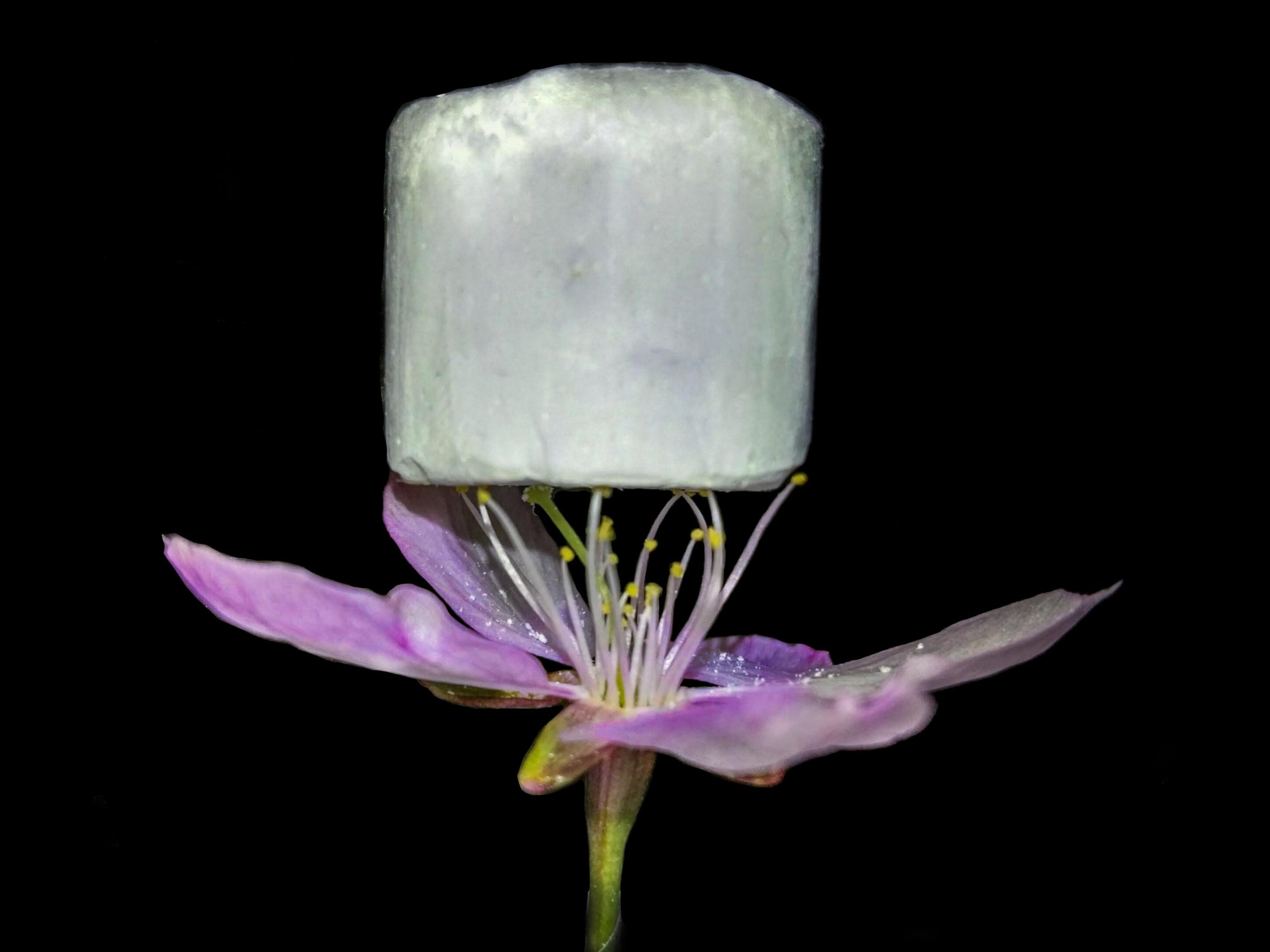
“In the new material, we took zeolites, which have excellent capabilities for capturing carbon dioxide, and combined them with gelatine and cellulose, which has strong mechanical properties. Together, this makes a durable, lightweight, stable material with high reusability. Our research has shown that the cellulose does not interfere with the zeolites’ ability to adsorb carbon dioxide. The cellulose and zeolites together therefore create an environmentally friendly, affordable material,” says Walter Rosas Arbelaez, Ph.D. student at Chalmers’ Department of Chemistry and Chemical Engineering and one of the researchers behind the study.
The researchers’ work has yielded important knowledge and points the way for further development of sustainable carbon capture technology. Currently, the leading CCS technology uses ‘amines’, suspended in a solution. This method has several problems — amines are inherently environmentally unfriendly, larger and heavier volumes are required, and the solution causes corrosion in pipes and tanks. Additionally, a lot of energy is required to separate the captured carbon dioxide from the amine solution for reuse. The material now presented avoids all of these problems. In future applications, filters of various kinds could be easily manufactured.
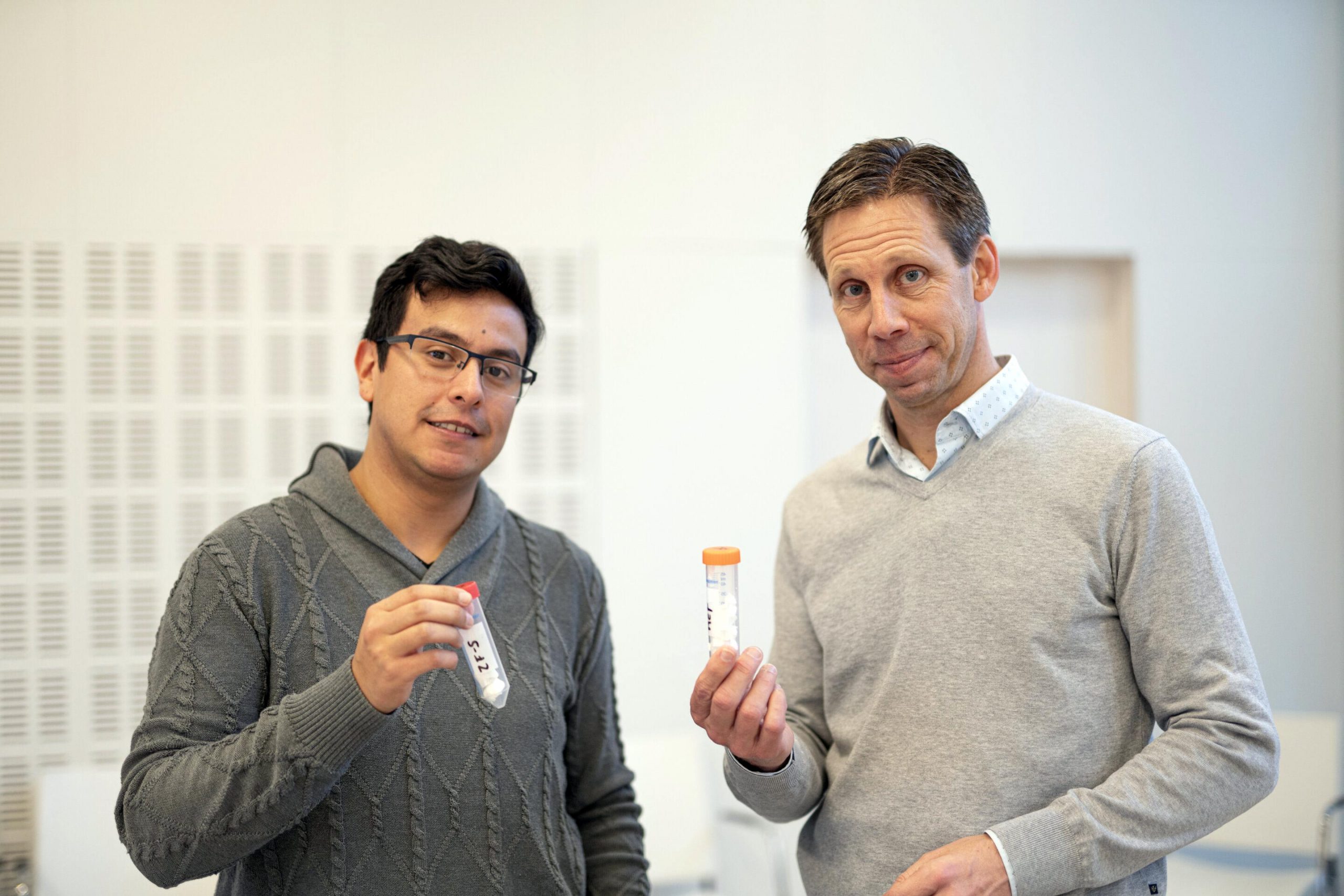
“This research fits well with the ongoing developments within CCS and CCU (Carbon Capture and Utilisation) technology, as a sustainable alternative with great potential. In addition to bio-based materials being more environmentally friendly, the material is a solid — once the carbon dioxide has been captured, it is therefore easier and more efficient to separate it than from the liquid amine solutions,” says Professor Anders Palmqvist, research leader for the study at Chalmers.
Zeolites have been proposed for carbon capture for a long time, but so far, the obstacle has been that ordinary, larger zeolite particles are difficult to work with when they are processed and implemented in different applications. This has prevented them from being optimally used. But the way the zeolite particles have been prepared this time — as smaller particles in a suspension — means they can be readily incorporated in and supported by the highly porous cellulose foam. Overcoming this obstacle has been a vital breakthrough of the current study.
“What surprised us most was that it was possible to fill the foam with such a high proportion of zeolites. When we reached 90% by weight, we realized that we had achieved something exceptional. We see our results as a very interesting piece of the puzzle in the search for a solution to the complex challenge of being able to reduce the amount of carbon dioxide in the Earth’s atmosphere quickly enough to meet climate goals,” says Walter Rosas Arbelaez.
Reference: “Bio-based Micro-/Meso-/Macroporous Hybrid Foams with Ultrahigh Zeolite Loadings for Selective Capture of Carbon Dioxide” by Luis Valencia, Walter Rosas, Andrea Aguilar-Sanchez, Aji P. Mathew and Anders E.C. Palmqvist, 8 October 2019, ACS Applied Materials & Interfaces.
DOI: 10.1021/acsami.9b11399
Never miss a breakthrough: Join the SciTechDaily newsletter.
Follow us on Google and Google News.
6 Comments
Thanks for your efforts.
What part of “life needs carbon dioxide do people not understand. It’s not a pollutant. They fill greenhouses with it so plants thrive and use less water. It’s part of the oxygen cycle.
It’s necessary for life.
You’re talking to people who genuinely believe in garbage like the hockey stick graphs. What would really be funny is if this was deployed and the warming didn’t stop. Man would that ever put some egg on faces, so to speak.
All this CO2 carbon panic is just a distraction from the real environmental issues anyway. The politicians latch onto it because it allows for the most invasive policy, not because it does the most damage. When they start talking about the chemical runoff from “green” energy generator production and microplastics screwing over entire biomes of the ocean, I’ll start taking them more seriously.
Life needs carbon dioxide, true. However, if we replaced all air with carbon dioxide, everything will die. There is a balance, and that balance is not being currently maintained.
Beautiful article . thank you .
The simplest reply to any climate sceptics is that many ideas vital if mainstream views are correct make sense even if climate change were a damp squib or temperatures fell e.g following a major volcanic eruption like Tambora in 1815. Less waste, silviculture, restoring fish stocks, combining conservation with careful use and reducing the impact of conventional livestock per head (although some reduction in numbers may still be sensible). Methane-reducing feed additives have existed for decades but not been adopted even though some boost growth! What’s wrong with win-win options?