
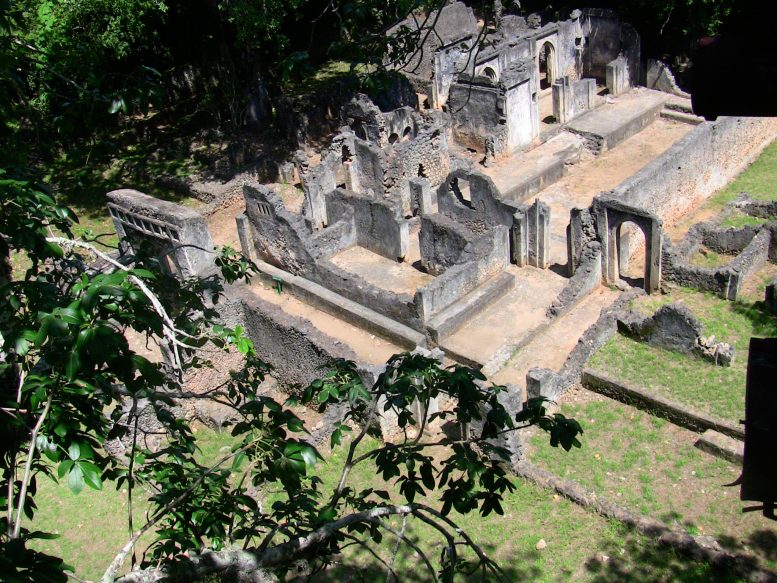
Life’s work of University of South Florida researcher uncovers first ancient DNA from Swahili civilization.
New study brings peace and restores pride to millions of people who identify as Swahili by overturning false narratives and providing clarity to Swahili heritage.
A University of South Florida (USF) anthropologist has uncovered the first ancient DNA from the Swahili Civilization, prosperous trading states along the coast of East Africa dating back to the 7th century.
From Kenya to Mozambique, Chapurukha Kusimba, a USF professor of anthropology, dedicated 40 years to studying the ancestry of those who built the civilizations – a debate that many Swahilis feel robbed them of their heritage for centuries.
“This research has been my life’s work – this journey to recover the past of the Swahili and restore them to rightful citizenship,” Kusimba said. “These findings bring out the African contributions, and indeed, the Africanness of the Swahili, without marginalizing the Persian and Indian connection.”
Published today (March 29) in the journal Nature, the study examines the DNA of 80 individuals from as long as 800 years ago – making it the first ancient DNA uncovered from the Swahili Civilization.
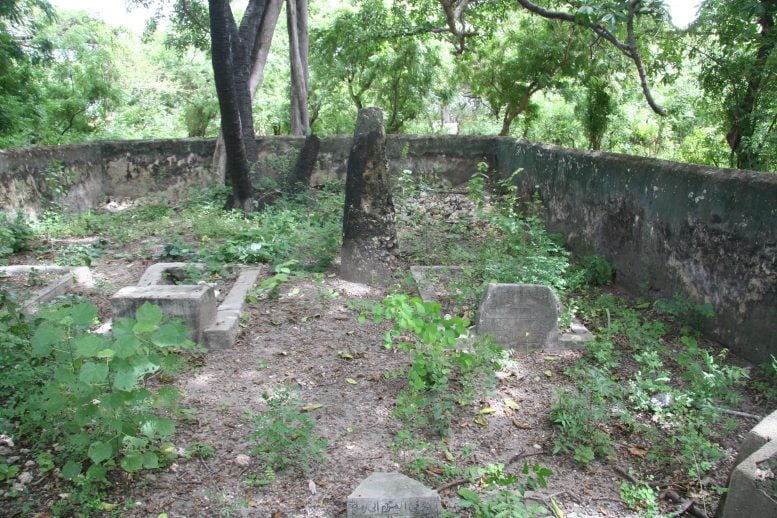
As part of his decades-long research, Kusimba, a Kenya native, spent time with the people of Swahili to gain their trust before receiving their approval to complete cemetery excavations. To respect the remains, Kusimba finished the sampling and re-burial process all in one season.
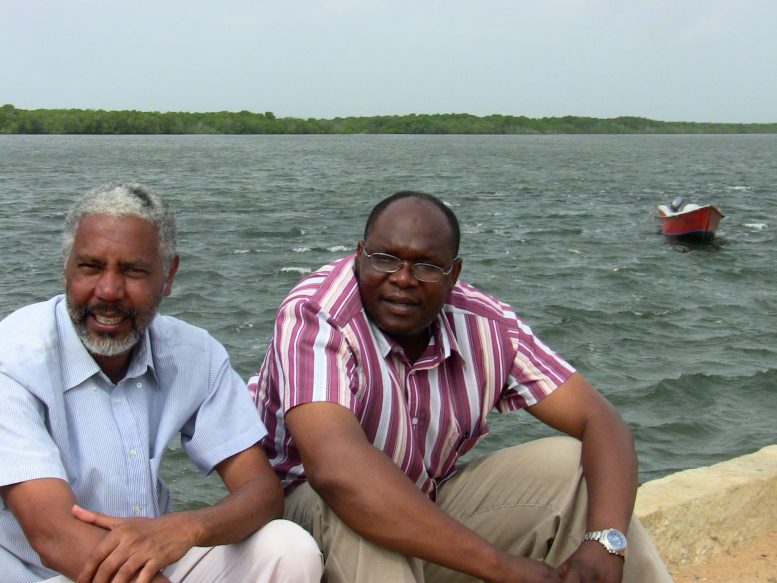
Working alongside Harvard geneticists David Reich and Esther Brielle and corresponding authors, Jeff Fleisher from Rice University and Stephanie Wynne-Jones from University of York, Kusimba discovered the ancestry of the people analyzed was both African and Asian. The DNA revealed a pattern: the overwhelming majority of male-line ancestors came from Asia, while the female-line ancestors came from Africa.
African Women’s Central Role in Swahili Culture
Despite their intermarrying, descendants spoke an African language, not an Asian one. This led researchers to conclude that African women had great influence on the formation of the culture. So much so, the villages were established prior to colonialism from Asia, making women the primary holders of economic and social power.
The findings challenge centuries-old narratives – constructed by other African natives – that suggest wealthier Swahilis did not have real ancestral connections to Asia and only claimed they did in order to minimize their African heritage to obtain higher social status and cultural affinities. Despite the vital role Swahilis played in trade between Africa and the rest of the Indian Ocean world for more than 2,500 years, Kusimba’s previous work from the 1990s documented the poor treatment of Swahili descendants as a result of the narratives.
The study’s results prove Asian and African ancestors began intermarrying at least 1,000 years ago, long after Africans had established villages.
“Our results do not provide simple validation for the narratives previously advanced in archaeological, historical, or political circles,” Kusimba said. “Instead, they contradict and complicate those narratives.”
Impacts on Modern Swahili Identity
By challenging and overturning narratives imposed from the outside for political and economic ends, Kusimba said, the research brings peace and restores pride to the millions of people who identify as Swahili today. Up until now, it has been difficult to determine how people who now identify as Swahili relate to people of the early modern Swahili culture.
Kusimba plans to continue his research on the Swahili to gather more DNA and create a larger sample size to better analyze a broader, more socioeconomically diverse population. The successful methods and collaboration between anthropologists and geneticists throughout this project suggest a possible resolution to longstanding questions around the heritage of other groups of people who founded ancient cities and civilizations, including ongoing disagreement among scholars around whether the ancient Egyptian civilization is African in origin.
“There is always tension between anthropology and genetics surrounding the interpretation of the material,” Kusimba said. “But working with my colleagues from Harvard, Rice University and University of York to ensure that the anthropological explanation accommodated the genetic data analysis without being simplistic has been so rewarding.”
Reference: “Entwined African and Asian Genetic Roots of Medieval Peoples of the Swahili Coast” by Esther S. Brielle, Jeffrey Fleisher, Stephanie Wynne-Jones, Kendra Sirak, Nasreen Broomandkhoshbacht, Kim Callan, Elizabeth Curtis, Lora Iliev, Ann Marie Lawson, Jonas Oppenheimer, Lijun Qiu, Kristin Stewardson, J. Noah Workman, Fatma Zalzala, George Ayodo, Agness O. Gidna, Angela Kabiru, Amandus Kwekason, Audax Z. P. Mabulla, Fredrick K. Manthi, Emmanuel Ndiema, Christine Ogola, Elizabeth Sawchuk, Lihadh Al-Gazali, Bassam R. Ali, Salma Ben-Salem, Thierry Letellier, Denis Pierron, Chantal Radimilahy, Jean-Aimé Rakotoarisoa, Ryan L. Raaum, Brendan J. Culleton, Swapan Mallick, Nadin Rohland, Nick Patterson, Mohammed Ali Mwenje, Khalfan Bini Ahmed, Mohamed Mchulla Mohamed, Sloan R. Williams, Janet Monge, Sibel Kusimba, Mary E. Prendergast, David Reich and Chapurukha M. Kusimba, 29 March 2023, Nature.
DOI: 10.1038/s41586-023-05754-w
Never miss a breakthrough: Join the SciTechDaily newsletter.
Follow us on Google and Google News.