
Close Menu
    Facebook X (Twitter) Instagram
    SciTechDaily
    • Biology
    • Chemistry
    • Earth
    • Health
    • Physics
    • Science
    • Space
    • Technology
    Facebook X (Twitter) Pinterest YouTube RSS
    SciTechDaily
    Home»Science»SynapShot Unveiled: Observing the Processes of Memory and Cognition in Real Time
    Science

    SynapShot Unveiled: Observing the Processes of Memory and Cognition in Real Time

    By The Korea Advanced Institute of Science and Technology (KAIST)January 21, 2024No Comments5 Mins Read
    Facebook Twitter Pinterest Telegram LinkedIn WhatsApp Email Reddit
    Share
    Facebook Twitter LinkedIn Pinterest Telegram Email Reddit
    Neuroscience Brain Signals Cognition Art Concept
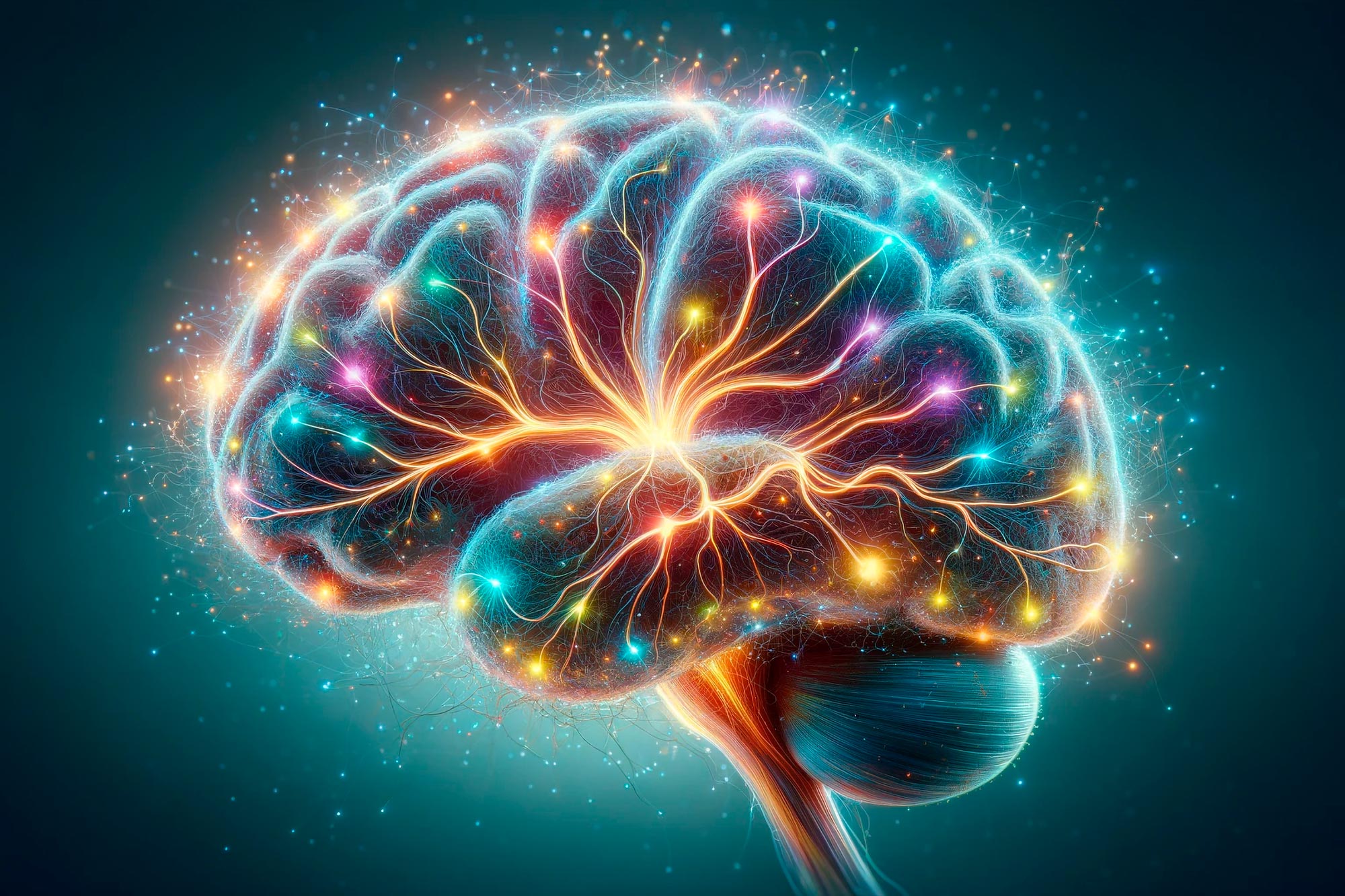
    A research team developed SynapShot, a novel technique for real-time observation of synapse formation and alterations. This breakthrough, allowing live monitoring of synaptic changes in neurons, is expected to transform neurological research and enhance understanding of brain functions. Credit: SciTechDaily.com

    SynapShot, developed by an international research team, marks a major advancement in neuroscience by enabling real-time, live observation of synaptic changes in the brain.

    The human brain contains approximately 86 billion neurons and 600 trillion synapses that exchange signals between the neurons to help us control the various functions of the brain including cognition, emotion, and memory. Interestingly, the number of synapses decrease with age or as a result of diseases like Alzheimer’s, and research on synapses thus attracts a lot of attention. However, limitations have existed in observing the dynamics of synapse structures in real-time.
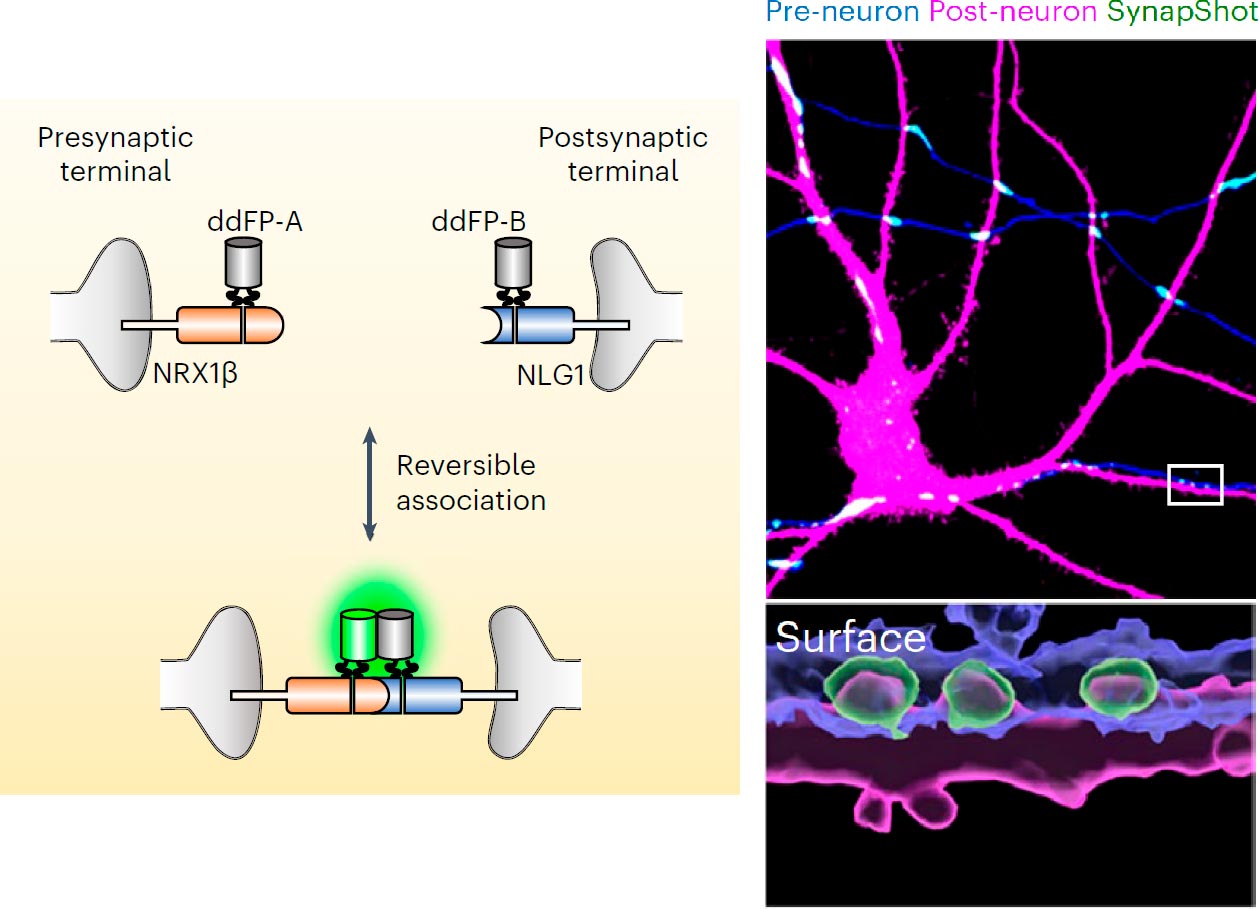
    Observing Dynamically Changing Synapses
    Figure 1. To observe dynamically changing synapses, dimerization-dependent fluorescent protein (ddFP) was expressed to observe flourescent signals upon synapse formation as ddFP enables fluorescence detection through reversible binding to pre- and postsynaptic terminals. Credit: KAIST Optogenetics & RNA therapeutics Lab

    Breakthrough in Synapse Observation

    On January 8, a joint research team led by Professor Won Do Heo from the KAIST Department of Biological Sciences, Professor Hyung-Bae Kwon from Johns Hopkins School of Medicine, and Professor Sangkyu Lee from the Institute for Basic Science (IBS) revealed that they have developed the world’s first technique to allow real-time observation of synapse formation, extinction, and alterations.

    Professor Heo’s team conjugated dimerization-dependent fluorescent proteins (ddFP) to synapses in order to observe the process in which synapses create connections between neurons in real-time. The team named this technique SynapShot, by combining the words ‘synapse’ and snapshot’, and successfully tracked and observed the live formation and extinction processes of synapses as well as their dynamic changes.
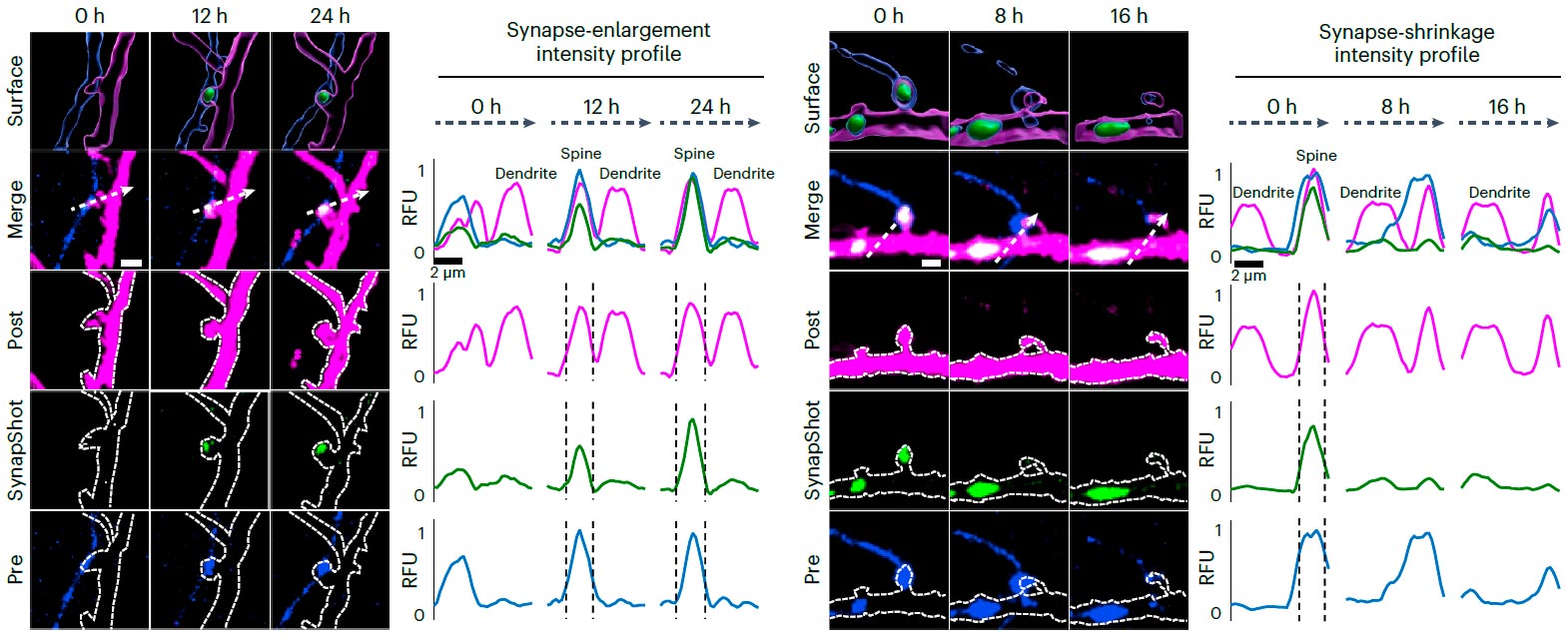
    Changes of the Flourescence of the Synapse Sensor (SynapShot)
    Figure 2. Microscopic photos observed through changes of the flourescence of the synapse sensor (SynapShot) by cultivating the neurons of an experimental rat and expressing the SynapShot. The changes in the synapse that is created when the pre- and post-synaptic terminals come into contact and the synapse that disappears after a certain period of time are measured by the fluorescence of the SynapShot. Credit: KAIST Optogenetics & RNA therapeutics Lab

    Enhancements and Applications of SynapShot

    Through a joint research project, the teams led by Professor Heo and Professor Sangkyu Lee at IBS together designed a SynapShot with green and red fluorescence, and were able to easily distinguish the synapse connecting two different neurons. Additionally, by combining an optogenetic technique that can control the function of a molecule using light, the team was able to observe the changes in the synapses while simultaneously inducing certain functions of the neurons using light.
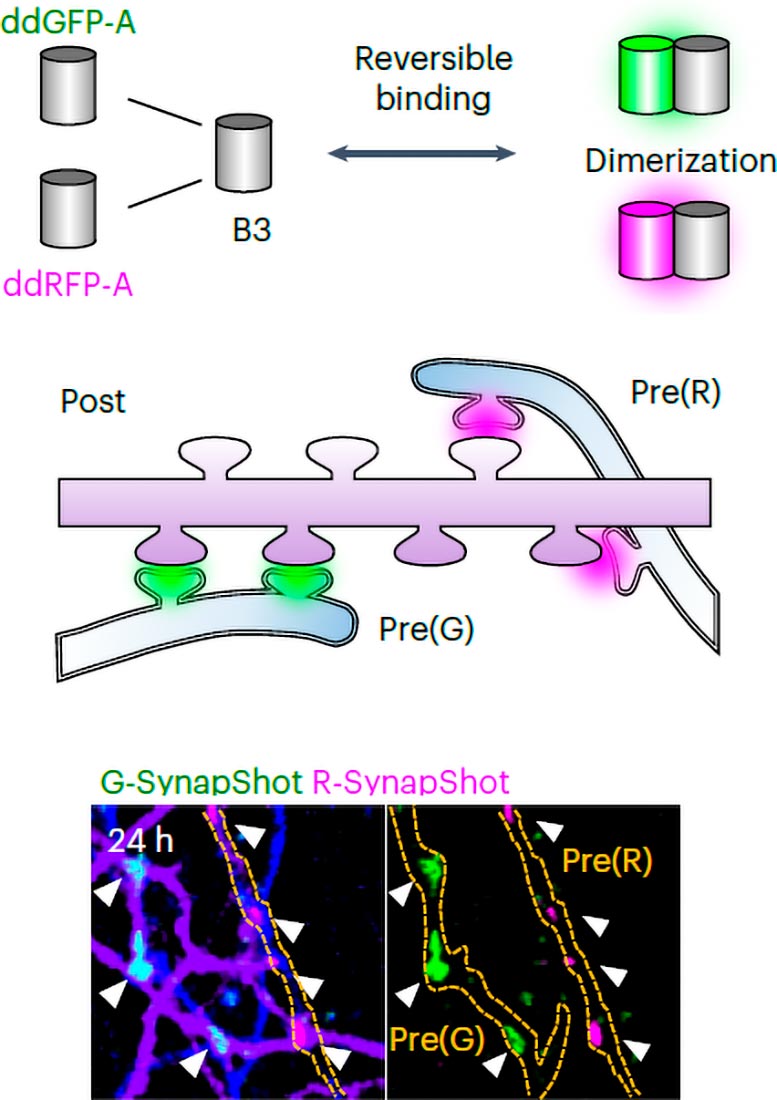
    Simultaneous Use of Green-SynapShot and Red-SynapShot
    Figure 3. Simultaneous use of green-SynapShot and red-SynapShot to distinguish and observe synapses with one post-terminal and different pre-terminals. Credit: KAIST Optogenetics & RNA therapeutics Lab

    Through more joint research with the team led by Professor Hyung-Bae Kwon at the Johns Hopkins School of Medicine, Professor Heo’s team induced several situations on live mice, including visual discrimination training, exercise, and anesthesia, and used SynapShot to observe the changes in the synapses during each situation in real-time. The observations revealed that each synapse could change fairly quickly and dynamically. This was the first-ever case in which the changes in synapses were observed in a live mammal.
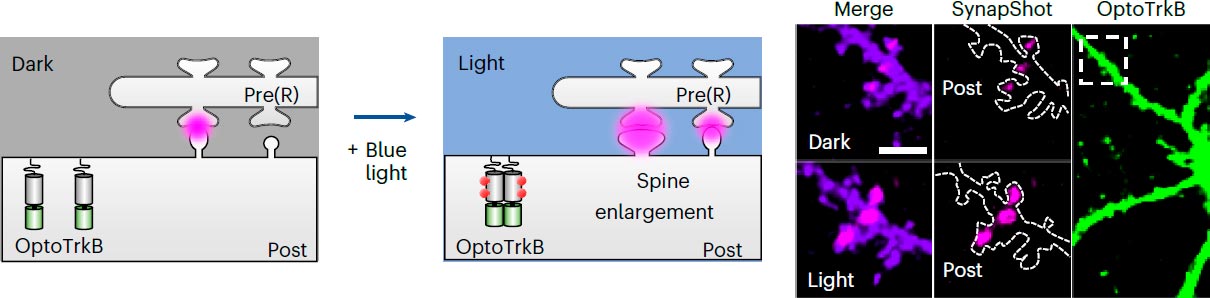
    Strengthening of Synaptic Connections Through Signals of Brain-Derived Neurotrophic Factor Is Observed
    Figure 4. Dimer-dependent fluorescent protein (ddFP) exists as a green fluorescent protein as well as a red fluorescent protein, and can be applied together with blue light-activated optogenetic technology. After activating Tropomyosin receptor kinase B (TrkB) by blue light using optogenetic technology, the strengthening of synaptic connections through signals of brain-derived neurotrophic factor is observed using red-SynapShot. Credit: KAIST Optogenetics & RNA therapeutics Lab

    Conclusion and Future Prospects

    Professor Heo said, “Our group developed SynapShot through a collaboration with domestic and international research teams, and have opened up the possibility for first-hand live observations of the quick and dynamic changes of synapses, which was previously difficult to do. We expect this technique to revolutionize research methodology in the neurological field, and play an important role in brightening the future of brain science.”
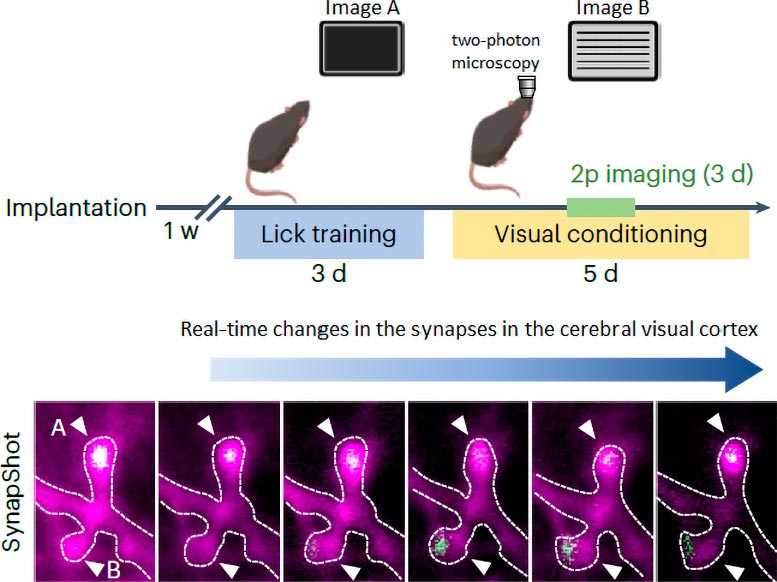
    Real-Time Changing Synapses in the Visual Cortex
    Figure 5. Micrographs showing real-time changing synapses in the visual cortex of mice trained through visual training using in vivo imaging techniques such as two-photon microscopy as well as at the cellular level. Credit: KAIST Optogenetics & RNA therapeutics Lab

    This research, conducted by co-first authors Seungkyu Son (Ph.D. candidate), Jinsu Lee (Ph.D. candidate), and Dr. Kanghoon Jung from Johns Hopkins, was published in the online edition of Nature Methods on January 8 under the title “Real-time visualization of structural dynamics of synapses in live cells in vivo”, and will be printed in the February volume.

    Reference: “Real-time visualization of structural dynamics of synapses in live cells in vivo” by Seungkyu Son, Kenichiro Nagahama, Jinsu Lee, Kanghoon Jung, Chuljung Kwak, Jihoon Kim, Young Woo Noh, Eunjoon Kim, Sangkyu Lee, Hyung-Bae Kwon and Won Do Heo, 8 January 2024, Nature Methods.
    DOI: 10.1038/s41592-023-02122-4

    This research was supported by Mid-Sized Research Funds and the Singularity Project from KAIST,  and by IBS.

    Never miss a breakthrough: Join the SciTechDaily newsletter.
    Follow us on Google and Google News.

    Brain Imaging Korea Advanced Institute of Science and Technology Memory Neuroscience
    Share. Facebook Twitter Pinterest LinkedIn Email Reddit

    Related Articles

    Neuroscientists Identify Fundamental Mechanism for Long Term Memory Storage

    How the Brain Makes Memories and Uses “Time Travel” To Remember

    Researchers Discover How the Human Brain Separates, Stores, and Retrieves Memories

    Lifetime of Knowledge Can Clutter Memories of Older Adults

    Why Do We Forget? New Theory Says “Forgetting” Is Actually a Form of Learning

    Where Are Memories Stored in the Brain? They May Be in the Connections Between Your Brain Cells

    Study of Mice Watching Movies Reveals Brain Circuit That Ensures Vision Remains Reliable

    Practice Makes Perfect, but Sleep Helps, Too: Reactivating Memories During Sleep Improves Motor Skills

    Scientists Monitor Brains Replaying Memories in Real Time

    Leave A Reply Cancel Reply

    • Facebook
    • Twitter
    • Pinterest
    • YouTube

    Don't Miss a Discovery

    Subscribe for the Latest in Science & Tech!

    Trending News

    New Research Shows Vitamin B12 May Hold the Key to Healthy Aging

    These Simple Daily Habits Can Quickly Improve Blood Pressure and Heart Risk Factors

    A Common Nutrient May Play a Surprising Role in Anxiety

    Doing This After 9 p.m. Could Double Your Risk of Gut Issues

    Scientists Discover How Coffee Impacts Memory, Mood, and Gut Health

    Why Did the Neanderthals Disappear? Scientists Reveal Humans Had a Hidden Advantage

    Physicists Propose Strange Experiment Where Time Goes Quantum

    Magnesium Magic: New Drug Melts Fat Even on a High-Fat, High-Sugar Diet

    Follow SciTechDaily
    • Facebook
    • Twitter
    • YouTube
    • Pinterest
    • Newsletter
    • RSS
    SciTech News
    • Biology News
    • Chemistry News
    • Earth News
    • Health News
    • Physics News
    • Science News
    • Space News
    • Technology News
    Recent Posts
    • This New Memory Technology Could Make Devices Last Months on One Charge
    • Scientists Turn Cancer’s Own Bacteria Against It in Breakthrough Therapy
    • Cannabis Can Make You Remember Things That Never Happened
    • Doctors Are Surprised by What This Vaccine Is Doing to the Heart
    • Quantum Breakthrough Turns Simple Forces Into Powerful New Interactions
    Copyright © 1998 - 2026 SciTechDaily. All Rights Reserved.
    • Science News
    • About
    • Contact
    • Editorial Board
    • Privacy Policy
    • Terms of Use

    Type above and press Enter to search. Press Esc to cancel.