
Close Menu
    Facebook X (Twitter) Instagram
    SciTechDaily
    • Biology
    • Chemistry
    • Earth
    • Health
    • Physics
    • Science
    • Space
    • Technology
    Facebook X (Twitter) Pinterest YouTube RSS
    SciTechDaily
    Home»Earth»“Terrifying” Climate Impacts 626% Worse Than Expected for Intact Forest Loss
    Earth

    “Terrifying” Climate Impacts 626% Worse Than Expected for Intact Forest Loss

    By University of QueenslandNovember 16, 20191 Comment3 Mins Read
    Facebook Twitter Pinterest Telegram LinkedIn WhatsApp Email Reddit
    Share
    Facebook Twitter LinkedIn Pinterest Telegram Email Reddit
    Forest Wilderness
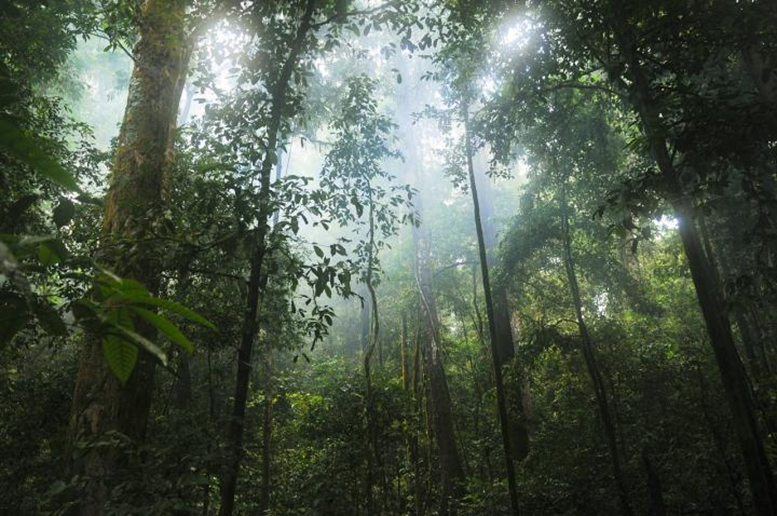
    ‘Losing Earth’s remaining wilderness is devastating by itself, but climate impacts 626 percent greater than expected is terrifying,’ Professor Watson said. Credit: The University of Queensland

    The impact of losing intact tropical forests is more devastating on the climate than previously thought, according to University of Queensland-led research.

    The international study has revealed between 2000 and 2013 the clearance of intact tropical forests resulted in a much higher level of carbon being emitted to the atmosphere than first believed – resulting in a 626 percent increase in the calculated impact on climate.

    UQ conservation scientist Dr. Sean Maxwell said this difference equated to two years of global land-use change emissions, and was previously unaccounted for due to a lack of full carbon accounting.

    “Usually only ‘pulse’ emissions are considered – these are emissions released the instant intact forest is destroyed,” Dr. Maxwell said. “Our analysis considers all impacts such as the effects of selective logging, forgone carbon sequestration, expanding effects on the edges of forests, and species extinction.

    “We were shocked to see that when considering all of the available factors, the net carbon impact was more than six times worse for the climate.”

    The researchers analyzed maps of intact forest clearing across the tropics between 2000 and 2013, then calculated the areas’ pulse emissions and simulated the impact of previously unrecorded factors.

    “We could see where selective logging was occurring based on where new roads have been built, the extent of new forest edges based on where deforestation had recently occurred, and the loss of large seed-dispersing animals due to them becoming more susceptible to hunting,” Dr. Maxwell said.

    “The team then estimated the amount of carbon that these processes will release into the atmosphere between 2013 and 2050, labeling it ‘committed emissions’. “By comparing ‘pulse’ and ‘committed emissions’ with what these forests could have removed from the atmosphere if they’d remained intact until 2050, we determined the real impacts of deforestation.”

    UQ and Wildlife Conservation Society’s Professor James Watson said the study’s approach better captured the true carbon impact of intact forest loss.

    “Losing Earth’s remaining wilderness is devastating by itself, but climate impacts 626 percent greater than expected is terrifying,” Professor Watson said. “Humanity needs to better fund the conservation of intact forests, especially now we’ve shown their larger-than-realized role in stabilizing the climate. Our study will hopefully mobilize more funding from the climate finance sector, improving and expanding efforts to retain intact forests across the tropics.”

    Dr. Maxwell said that Indigenous peoples and local communities will increasingly play a central role in efforts to improve and expand forest conservation.

    “Intact forests are often critical to the material and spiritual aspects of traditional cultures,” he said. “Strengthening the land tenure of Indigenous and traditional peoples is a powerful way to protect intact forests.”

    The research has been published in Science Advances.

    Reference: “Degradation and forgone removals increase the carbon impact of intact forest loss by 626%” by Sean L. Maxwell, Tom Evans, James E. M. Watson, Alexandra Morel, Hedley Grantham, Adam Duncan, Nancy Harris, Peter Potapov, Rebecca K. Runting, Oscar Venter, Stephanie Wang and Yadvinder Malhi, 30 October 2019, Science Advances.
    DOI: 10.1126/sciadv.aax2546

    Never miss a breakthrough: Join the SciTechDaily newsletter.
    Follow us on Google and Google News.

    Climate Change Forests University of Queensland
    Share. Facebook Twitter Pinterest LinkedIn Email Reddit

    Related Articles

    Increased Threat of Fierce Fires and Accelerated Global Warming From Water Loss in Northern Peatlands

    Ecologist Warns: Planting Trees Is No Panacea for Climate Change

    How Much Carbon Can Tropical Forests Absorb?

    Tropical Forests’ Carbon Sink Is Rapidly Weakening – Crucial for Stabilizing Earth’s Climate

    Scientists Devise a Plan to Save Earth’s Oceans – Will It Work?

    Local Water Availability Is Reduced and Never Recovers After Planting Forests

    Tipping Point Identified for Deforestation That Leads to Rapid Forest Loss

    Amazon’s Burning Crisis: Deforestation and Number of Fires Show 2019 Not a ‘Normal’ Year

    Cloud Forests are at Risk of Destruction from Global Warming

    1 Comment

    1. dana on November 17, 2019 2:30 pm

      love your site

      Reply
    Leave A Reply Cancel Reply

    • Facebook
    • Twitter
    • Pinterest
    • YouTube

    Don't Miss a Discovery

    Subscribe for the Latest in Science & Tech!

    Trending News

    AI Could Detect Early Signs of Alzheimer’s in Under a Minute – Far Before Traditional Tests

    What if Dark Matter Has Two Forms? Bold New Hypothesis Could Explain a Cosmic Mystery

    This Metal Melts in Your Hand – and Scientists Just Discovered Something Strange

    Beef vs. Chicken: Surprising Results From New Prediabetes Study

    Alzheimer’s Breakthrough: Scientists Discover Key Protein May Prevent Toxic Protein Clumps in the Brain

    Quantum Reality Gets Stranger: Physicists Put a Lump of Metal in Two Places at Once

    Scientists May Have Found the Key to Jupiter and Saturn’s Moon Mystery

    Scientists Uncover Brain Changes That Link Pain to Depression

    Follow SciTechDaily
    • Facebook
    • Twitter
    • YouTube
    • Pinterest
    • Newsletter
    • RSS
    SciTech News
    • Biology News
    • Chemistry News
    • Earth News
    • Health News
    • Physics News
    • Science News
    • Space News
    • Technology News
    Recent Posts
    • Living With Roommates Might Be Changing Your Gut Microbiome Without You Knowing
    • Simple and Cheap Blood Test Could Detect Cancer and Other Diseases Before Symptoms Appear
    • Century-Old Cleaning Chemical Linked to 500% Increased Risk of Parkinson’s Disease
    • What if Your Memories Never Happened? Physicists Take a New Look at the Boltzmann Brain Paradox
    • Students Found an Ancient Star That Shouldn’t Be in the Milky Way
    Copyright © 1998 - 2026 SciTechDaily. All Rights Reserved.
    • Science News
    • About
    • Contact
    • Editorial Board
    • Privacy Policy
    • Terms of Use

    Type above and press Enter to search. Press Esc to cancel.