
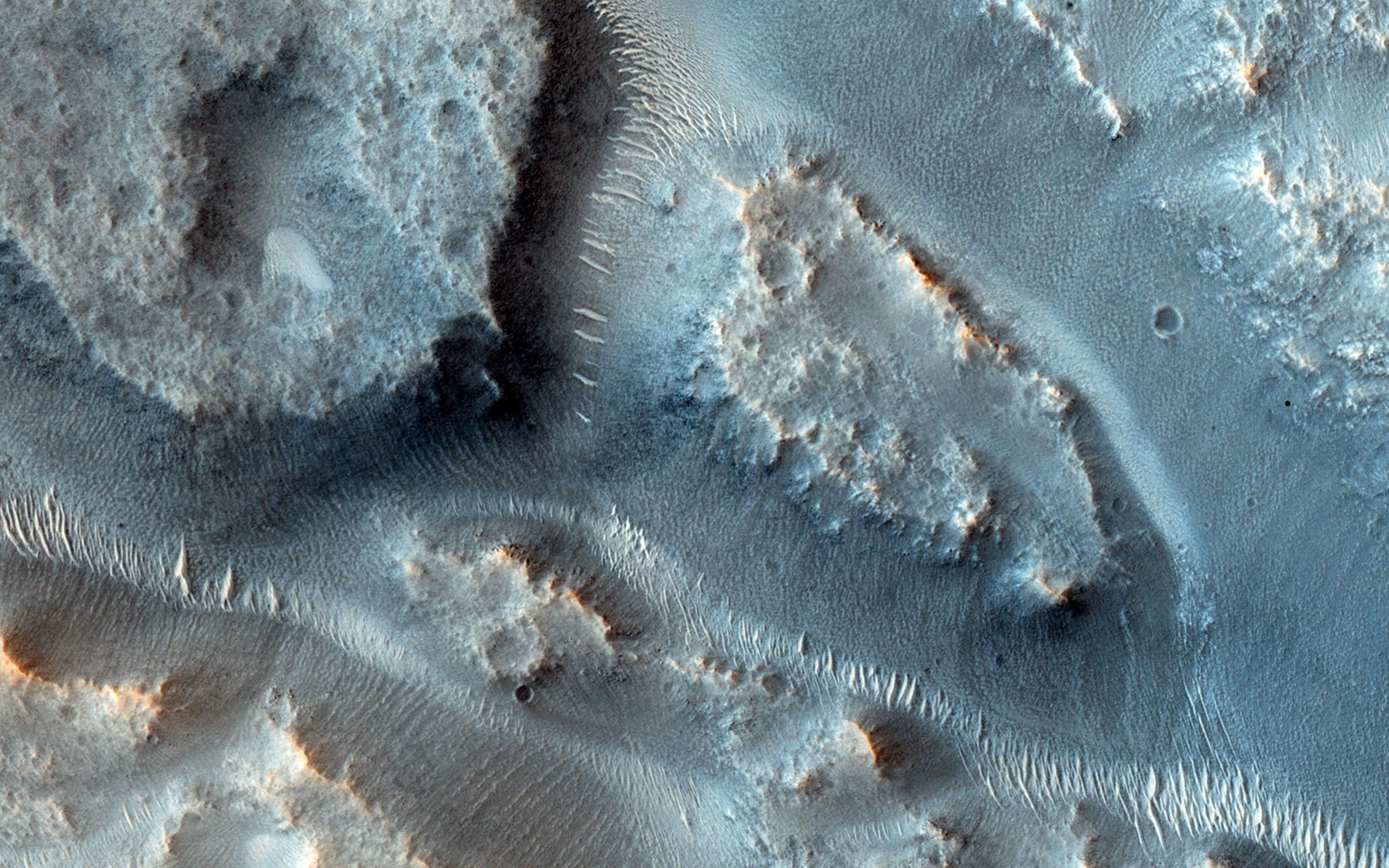
New research reveals that ancient Mars once hosted vast river drainage systems comparable in scale to some of Earth’s major watersheds.
Billions of years ago, rainfall shaped the surface of Mars. Water moved across the landscape and gathered in valleys and river channels, eventually filling craters until they overflowed. These flows then traveled through canyons and may even have reached a large ocean that once existed on the planet.
On Earth, regions surrounding major river systems are among the most biologically rich places known. A well-known example is the Amazon River basin, home to tens of thousands of documented species. Scientists believe that if Mars once hosted river networks similar to those on Earth, those areas could have provided favorable conditions for early life when liquid water was still present.
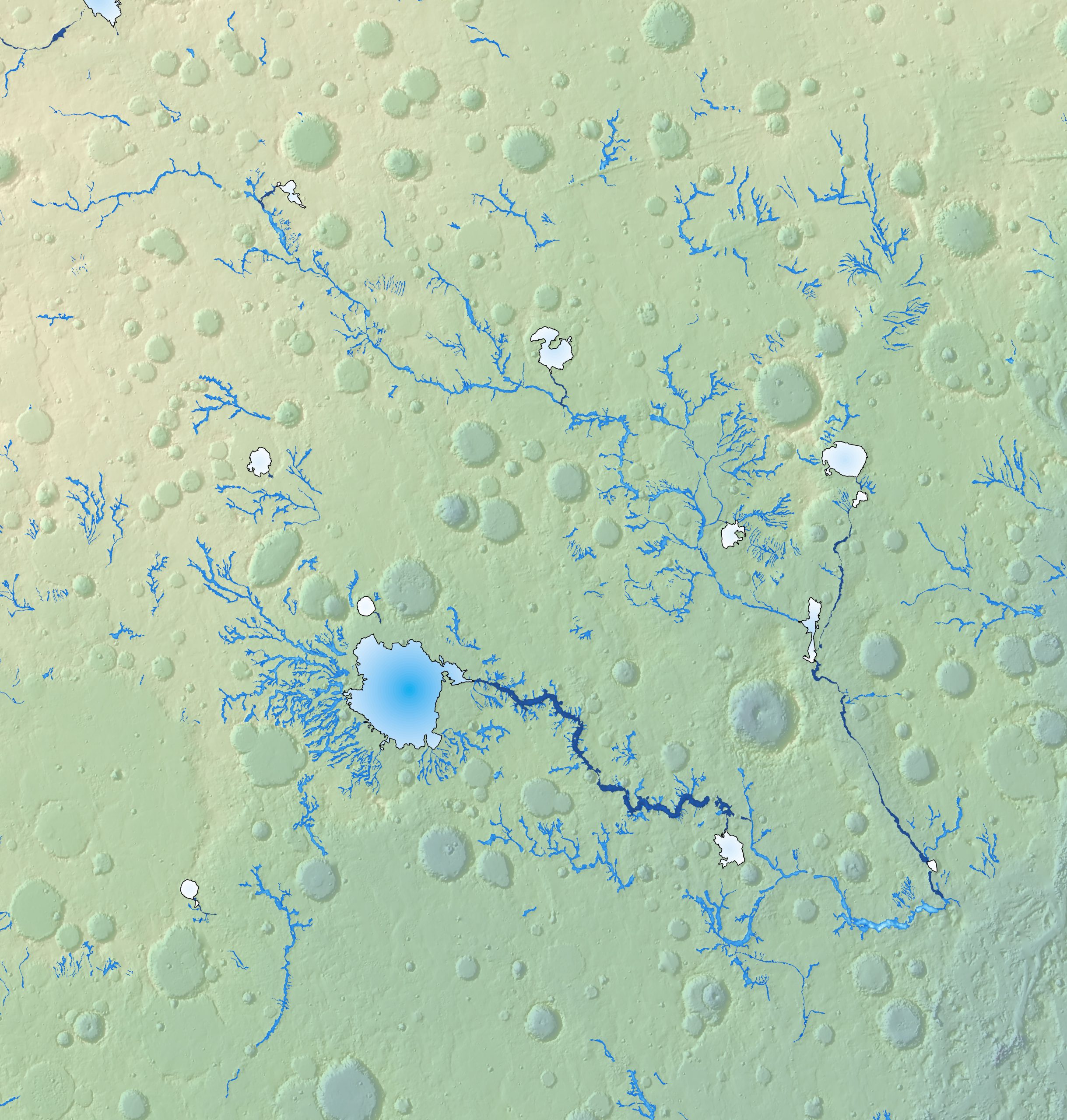
A new study published in PNAS by researchers at The University of Texas at Austin is the first to clearly identify large river drainage systems on Mars. The team mapped 16 extensive basins that would have offered some of the most promising environments for life on the planet.
“We’ve known for a long time that there were rivers on Mars,” said co-author Timothy A. Goudge, an assistant professor in the Department of Earth and Planetary Sciences at the UT Jackson School of Geosciences. “But we really didn’t know the extent to which the rivers were organized in large drainage systems at the global scale.”
To gain that understanding, Goudge and postdoctoral fellow Abdallah S. Zaki combined several previously published datasets that charted Mars’ valley networks, lakes and rivers. By merging these sources, they were able to reconstruct the full extent of the drainage systems and calculate their overall size.
A Planet-Wide Reconstruction
Their analysis revealed 19 major groupings of valley systems, streams, lakes, canyons and sediment deposits. Among these, 16 formed interconnected watersheds covering at least 100,000 square kilometers, which matches the minimum size of a large river basin on Earth. This marks the first comprehensive effort to identify such features across the entire Martian surface.
“We did the simplest thing that could be done. We just mapped them and pieced them together,” said Zaki, who led the research.
On Earth, large watersheds spanning at least 100,000 square kilometers are much more common than on Mars; there are 91. The Amazon River basin system, the largest on the planet, is about 6.2 million square kilometers. Texas’ Colorado River basin system just barely qualifies as large at 103,300 square kilometers.
Where these large river basins sit, life follows. As a general rule, the larger the river, the more nutrients are transported throughout the system. That’s why some of the most diverse ecosystems on the planet exist in the largest drainage basins. The most sprawling of these watersheds, such as the Indus River basin, are often considered the cradles of human civilization.
On Earth, tectonic activity has built mountains, valleys and other diverse topography that directs water where to flow and connects it to other systems. This varying topography is part of what makes a large drainage system. Because Mars lacks tectonic activity, it has fewer large drainage systems, the researchers said.
Nevertheless, although the large drainage systems only make up 5% of the planet’s ancient terrain, the researchers found that they represent about 42% of the total material eroded by rivers on Mars.
Since sediment contains nutrients, these are the best spots to look for signs of past life, Zaki said; although more work needs to be done to pinpoint exactly where the sediment ended up.
Searching for Signs of Habitability
“The longer the distance, the more you have water interacting with rocks, so there’s a higher chance of chemical reactions that could be translated into signs of life,” he said.
By and large, Mars is covered by what the researchers describe as a mosaic of smaller drainage systems. While each one represented a potentially habitable environment, the researchers said that the 16 large drainage areas could be the most worthwhile areas of future study for Mars’ habitability.
“It’s a really important thing to think about for future missions and where you might go to look for life,” Goudge said.
Department Chair Danny Stockli said this research is another example of the impactful work coming out of the Jackson School.
“Tim Goudge and his team continue to be leaders in the field, making groundbreaking contributions to the understanding of Mars’ planetary surface and hydrologic processes,” he said.
Reference: “Large drainage systems produced half of Mars’ ancient river sediment” by Abdallah S. Zaki, Timothy A. Goudge and David Mohrig, 24 November 2025, Proceedings of the National Academy of Sciences.
DOI: 10.1073/pnas.2514527122
This study was also co-authored by David Mohrig, professor in the Department of Earth and Planetary Sciences.
Never miss a breakthrough: Join the SciTechDaily newsletter.
Follow us on Google and Google News.