
Close Menu
    Facebook X (Twitter) Instagram
    SciTechDaily
    • Biology
    • Chemistry
    • Earth
    • Health
    • Physics
    • Science
    • Space
    • Technology
    Facebook X (Twitter) Pinterest YouTube RSS
    SciTechDaily
    Home»Biology»The Contractile Forces of Life: New Discovery Reshapes Our Understanding of Embryo Formation
    Biology

    The Contractile Forces of Life: New Discovery Reshapes Our Understanding of Embryo Formation

    By CNRSMay 8, 2024No Comments2 Mins Read
    Facebook Twitter Pinterest Telegram LinkedIn WhatsApp Email Reddit
    Share
    Facebook Twitter LinkedIn Pinterest Telegram Email Reddit
    Cell Contraction Drive the Initial Shaping of Human Embryos
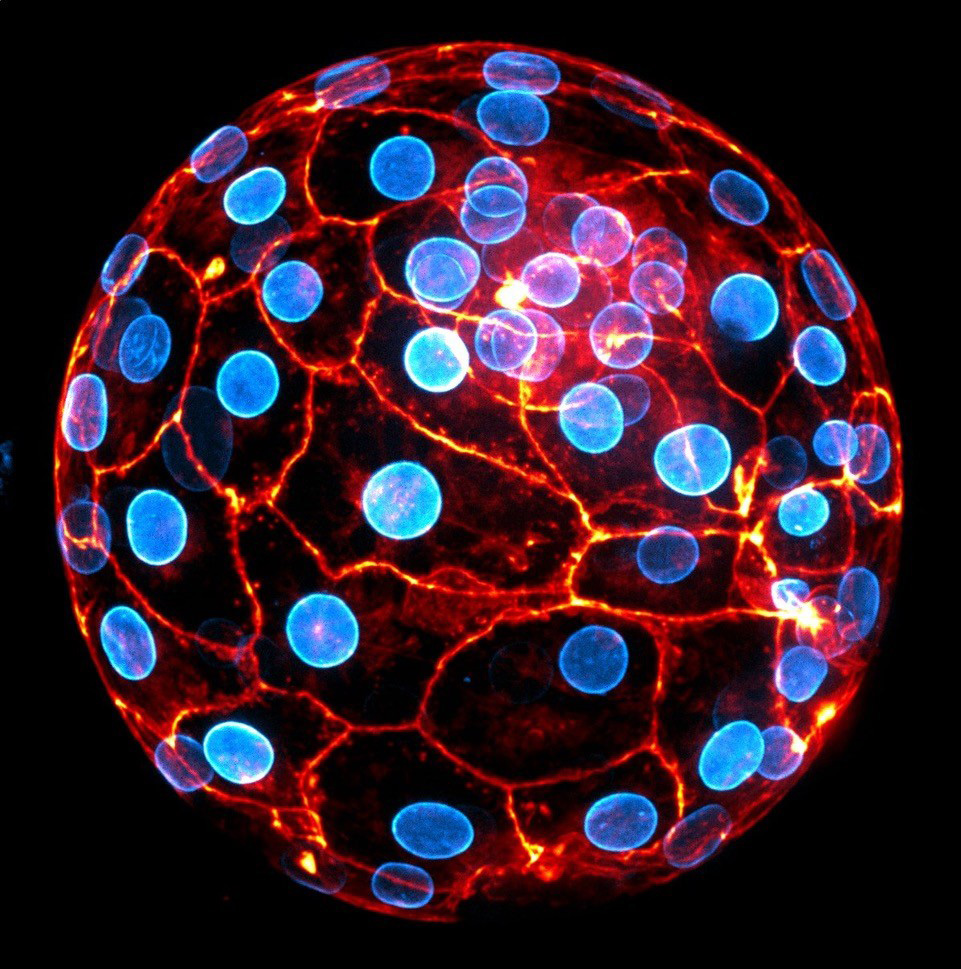
    Human embryo at the blastocyst stage ready to implant. The nuclear envelope of the cells appears in blue and the actin cytoskeleton in orange. Credit: Julie Firmin et Jean-Léon Maître

    A breakthrough study by the Institut Curie reveals that embryonic cell compaction in humans is caused by cell contraction, offering new insights to enhance assisted reproductive technology success rates.

    In human development, the compaction of embryonic cells is a vital process in the early stages of an embryo’s formation. Four days post-fertilization, the cells tighten together, helping to form the embryo’s initial structure. If compaction is flawed, it can hinder the development of the essential structure needed for the embryo to attach to the uterus. During assisted reproductive technology (ART), this stage is meticulously observed before the embryo is implanted.

    An interdisciplinary research team led by scientists at the Genetics and Developmental Biology Unit at the Institut Curie (CNRS/Inserm/Institut Curie) studying the mechanisms at play in this still little-known phenomenon has made a surprising discovery: human embryo compaction is driven by the contraction of embryonic cells. Compaction problems are therefore due to faulty contractility in these cells, and not a lack of adhesion between them, as was previously assumed. This mechanism had already been identified in flies, zebrafish, and mice, but is a first in humans.
    Human Embryo at the 4 Cell Stage
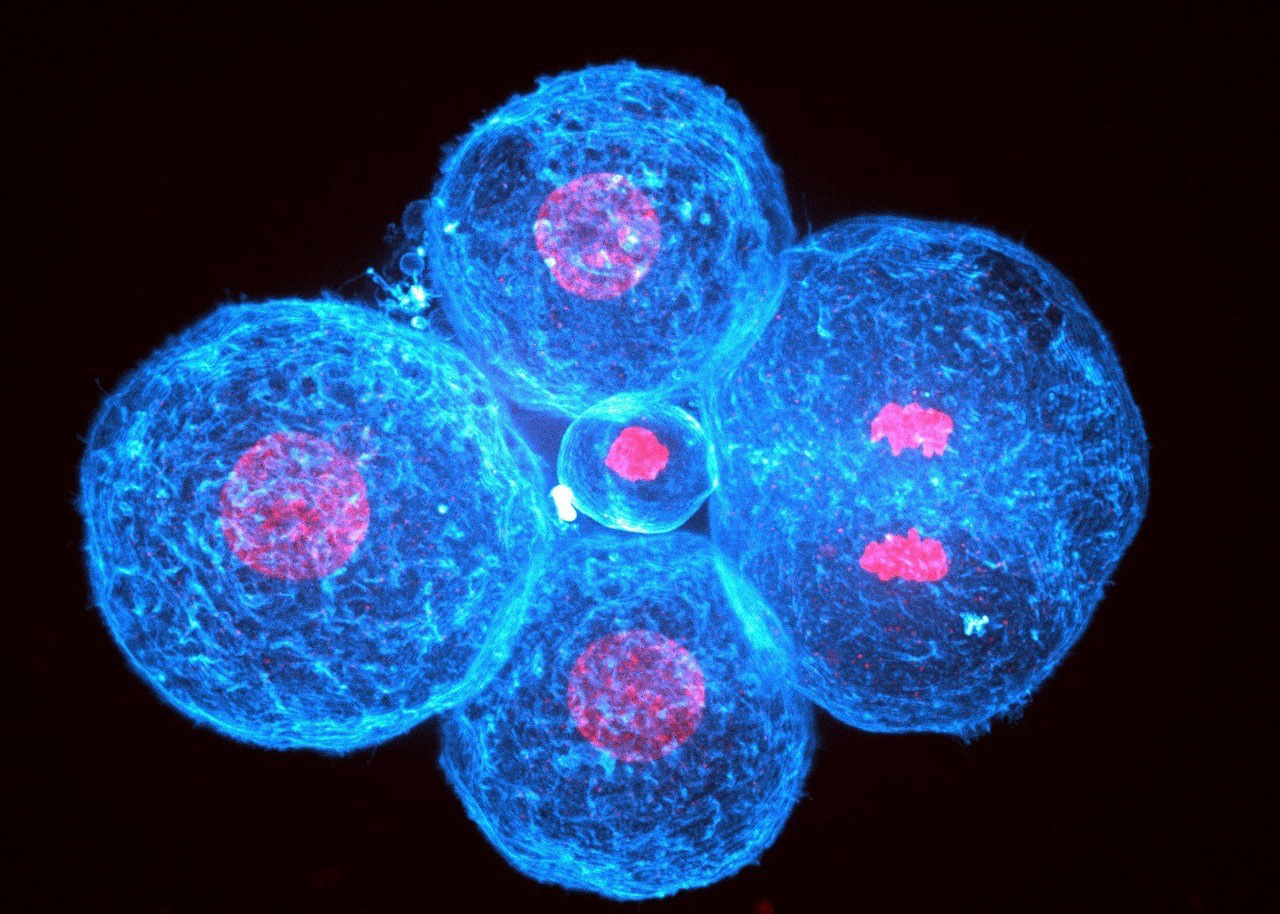
    Human embryo at the 4-cell stage. Cell DNA appears in red and their actin cytoskeleton in blue. The cell on the right has just split its genome into two and is about to divide. Credit: Julie Firmin et Jean-Léon Maître

    By improving our understanding of the early stages of human embryonic development, the research team hopes to contribute to the refinement of ART as nearly one-third of inseminations are unsuccessful today.

    The results were obtained by mapping cell surface tensions in human embryonic cells. The scientists also tested the effects of inhibiting contractility and cell adhesion and analyzed the mechanical signature of embryonic cells with defective contractility.

    Reference: “Mechanics of human embryo compaction” by Julie Firmin, Nicolas Ecker, Diane Rivet Danon, Özge Özgüç, Virginie Barraud Lange, Hervé Turlier, Catherine Patrat and Jean-Léon Maître, 1 May 2024, Nature.
    DOI: 10.1038/s41586-024-07351-x

    Never miss a breakthrough: Join the SciTechDaily newsletter.
    Follow us on Google and Google News.

    Cell Biology CNRS Reproduction
    Share. Facebook Twitter Pinterest LinkedIn Email Reddit

    Related Articles

    AI Protein Discovery Unlocks Secrets of Life’s Beginning

    Scientists Discover That Chromosomes Are Fluid

    Steps That Enable Human Stem Cells to Develop Into Egg Cells

    Researchers Identify BAD as Key Seizure-Suppressing Protein

    DNA Jumps Directly From the Cell’s Chloroplasts Into Its Nucleus

    Birth Ratios Skew Towards More Females During Famine

    Researchers Study Regulatory Gene’s Role in Sperm Quality Control

    Researchers Show Sperm Production Has Health Implications

    Viruses Use Bacteria for Reproduction

    Leave A Reply Cancel Reply

    • Facebook
    • Twitter
    • Pinterest
    • YouTube

    Don't Miss a Discovery

    Subscribe for the Latest in Science & Tech!

    Trending News

    Monster Storms on Jupiter Unleash Lightning Beyond Anything on Earth

    Scientists Create “Liquid Gears” That Spin Without Touching

    The Simple Habit That Could Help Prevent Cancer

    Millions Take These IBS Drugs, But a New Study Finds Serious Risks

    Scientists Unlock Hidden Secrets of 2,300-Year-Old Mummies Using Cutting-Edge CT Scanner

    Bread Might Be Making You Gain Weight Even Without Eating More Calories

    Scientists Discover Massive Magma Reservoir Beneath Tuscany

    Europe’s Most Active Volcano Just Got Stranger – Here’s Why Scientists Are Rethinking It

    Follow SciTechDaily
    • Facebook
    • Twitter
    • YouTube
    • Pinterest
    • Newsletter
    • RSS
    SciTech News
    • Biology News
    • Chemistry News
    • Earth News
    • Health News
    • Physics News
    • Science News
    • Space News
    • Technology News
    Recent Posts
    • Scientists Discover Plants “Scream” – We Just Couldn’t Hear Them Until Now
    • 25-Year Study Uncovers Hidden Paths and Early Warning Signs of Blood Cancer
    • Not Just Snoring – New Research Reveals Sleep Apnea May Be Damaging Your Muscles
    • Scientists Discover a Surprising Reason Intermittent Fasting Extends Life
    • Scientists Discover a New Meteor Shower From a Mysterious Crumbling Asteroid
    Copyright © 1998 - 2026 SciTechDaily. All Rights Reserved.
    • Science News
    • About
    • Contact
    • Editorial Board
    • Privacy Policy
    • Terms of Use

    Type above and press Enter to search. Press Esc to cancel.