

Earth’s climate over millions of years is shaped by both internal forces, like volcanic activity, and external ones, such as solar radiation changes.
Scientists have synchronized ancient climate records with incredible precision, revealing how massive volcanic eruptions in India’s Deccan Traps may have altered global ecosystems. By analyzing geochemical fingerprints in ocean deposits, they found strong evidence linking volcanic activity to environmental changes, reshaping our understanding of Earth’s past.
Earth’s Climate: A Dance of Internal and External Forces
On time scales ranging from tens of thousands to millions of years, Earth’s climate is shaped by both internal and external forces. Internally, heat from radioactive decay and gases released by volcanic activity, such as sulfur dioxide (SO2) and carbon dioxide (CO2), influence atmospheric and oceanic conditions. Externally, cyclical changes in Earth’s orbit around the Sun alter the amount and distribution of solar energy reaching the planet, affecting seasonal patterns. These internal and external factors interact through complex geochemical processes, ultimately shaping the climate we experience today.
Synchronizing the Past: Geological Timekeeping
“Just like a metronome, we used the rhythmic changes in solar insolation imprinted in geological data to synchronize geological climate archives from the South Atlantic and the Northwest Pacific. These key records span the last million years of the Cretaceous and are synchronized down to 5,000 years or less, geologically a blink of an eye 66 million years ago,” says lead author Thomas Westerhold from MARUM – Center for Marine Environmental Sciences at the University of Bremen.
To unravel causality arguments in Earth climate history across regions, this kind of synchronization is essential. “So, we had the geological records perfectly lined up in time, and observed that two major changes in climate and biota occurred at the same time in both oceans. But we had to find a way to test if these changes are caused by large scale volcanic eruptions related to the Deccan Traps in India,” says Westerhold.
Volcanic Eruptions and Mass Extinctions
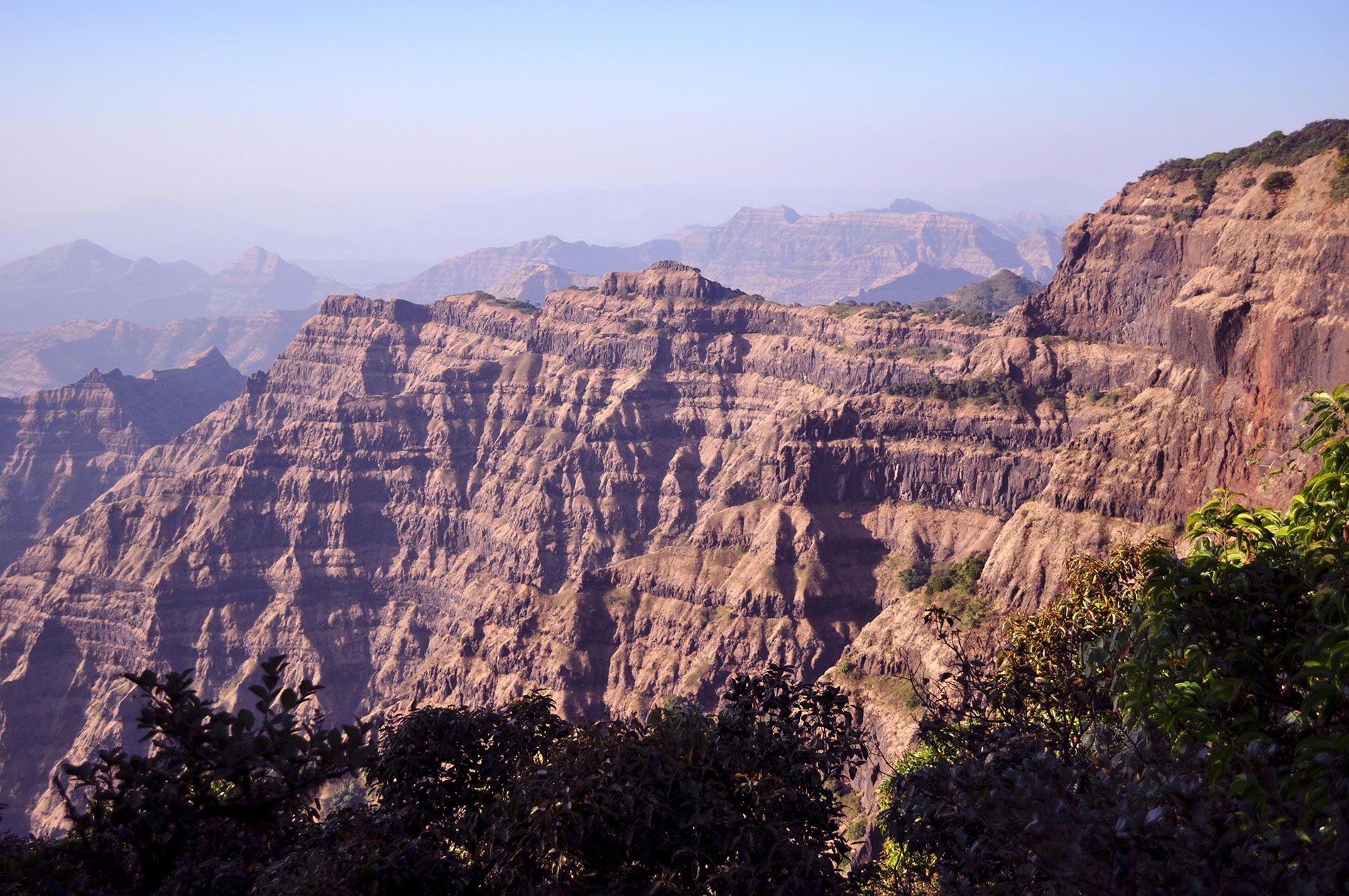
The up to two kilometers thick basaltic rocks of the Deccan Traps cover a large part of western India. This large-scale volcanism flooding entire landscapes is referred to as Large Igneous Province by geoscientists. Several times in Earth’s history, these caused mass extinction events of life on the surface of the planet. Particularly the release of volcanic gases like carbon and sulfur dioxide during the formation of the flood basalts may have played a key role.
“The formation of the flood basalts and its subsequent weathering will leave a geochemical fingerprint in the ocean. Therefore, we measured the Osmium isotope composition of the South Atlantic and the Northwest Pacific deposits. They should show the same fingerprint at the same time,” says co-author Junichiro Kuroda (University Tokyo, Japan), who conducted the geochemical analyses.
Surprising Findings in Earth’s Climate Story
“To our surprise we found two steps in the Osmium isotope composition in both oceans contemporaneous with major eruption phases of the Deccan Traps in the latest Cretaceous. And even more surprising, those steps had different impacts on the environment as recorded by fossil remains in the drill cores,” says Thomas Westerhold.
The new data were difficult to understand, but geochemical modeling helped to unravel their secrets. “The volume of the erupted flood basalt must have been much larger than previously thought during this early phase of Deccan Trap volcanism. And the related distinct emissions of carbon and sulfur dioxide had diverse effects on the global climate system,” says Don Penman (Utah State University, USA) who did the geochemical modeling.
According to the new finding, it seems plausible that at the onset of major Deccan Trap volcanism, independently dated 66.288 million years by radioisotopic methods, an initial pulse with sulfur-rich eruptions occurred stressing the ecosystem locally and possibly also globally.
Reference: “Earth orbital rhythms links timing of Deccan trap volcanism phases and global climate change” by Thomas Westerhold, Edoardo Dallanave, Donald Penman, Blair Schoene, Ursula Röhl, Nikolaus Gussone and Junichiro Kuroda, 7 March 2025, Science Advances.
DOI: 10.1126/sciadv.adr8584
Never miss a breakthrough: Join the SciTechDaily newsletter.
Follow us on Google and Google News.
4 Comments
Very fascinating
The Earth is a living thing and has its own cycles. Human existence is a tiny spot, a hair’s width at the end of a long, long line. But we are pushing the system way out of whack, adding so much Greenhouse gases that there has been so heating like this for millions of years. The amount of CO2 has gone up 40% just in my lifetime! Eventually the planet will stabilize and resume its balance, but humans, or at least our civilization, may not survive that.
That’s what you’re *meant* to think.