
Researchers are exploring ghost shark breeding sites using Remotely Operated Underwater Vehicles (ROVs), aiming to uncover their developmental secrets and aid conservation efforts.
This summer, a team of researchers from the University of Florida and the Seattle Aquarium is plunging 100 meters beneath the waves in the Pacific Northwest to investigate the enigmatic ghost sharks, one of the ocean’s strangest deep-sea creatures.
The scientists are utilizing Remotely Operated Underwater Vehicles (ROVs) in their quest to locate the breeding habitats of the Pacific spotted ratfish, Hydrolagus colliei, a ghostlike fish that lurks on the ocean floor.
“We know very little about these elusive relatives of sharks and even less about their spawning habits and embryonic development,” said Gareth Fraser, an assistant professor of biology at UF, before leaving for the expedition. “We will deploy ROVs to try to find where these ghost sharks lay their eggs.”
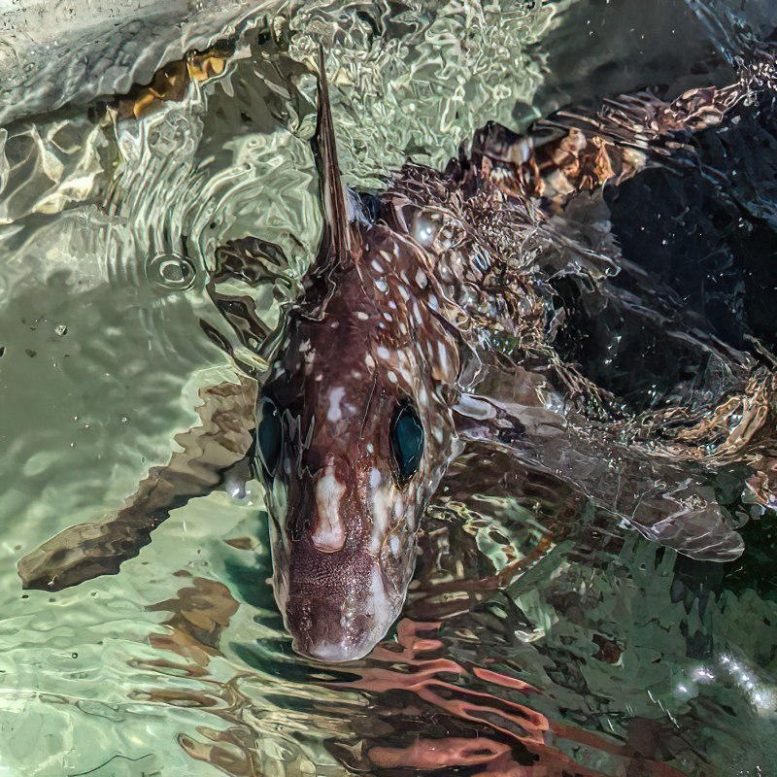
The ghost shark up close. Credit: University of Florida
Related to sharks and rays but separated by nearly 400 million years of evolution, ghost sharks — formally called chimaeras — are one of the most enigmatic and understudied group of fishes, Fraser said. They typically live in deep waters, which is why scientists don’t know much about them. However, there are a few places in the world, including in the Salish Sea along the coast of Washington, where chimaeras will come into more shallow waters to breed and feed, especially during the summer months.
“If we can locate their embryos, we can begin to learn about the developmental processes that lead to some weird morphologies, or biological characteristics, unique to these fishes,” Fraser said.
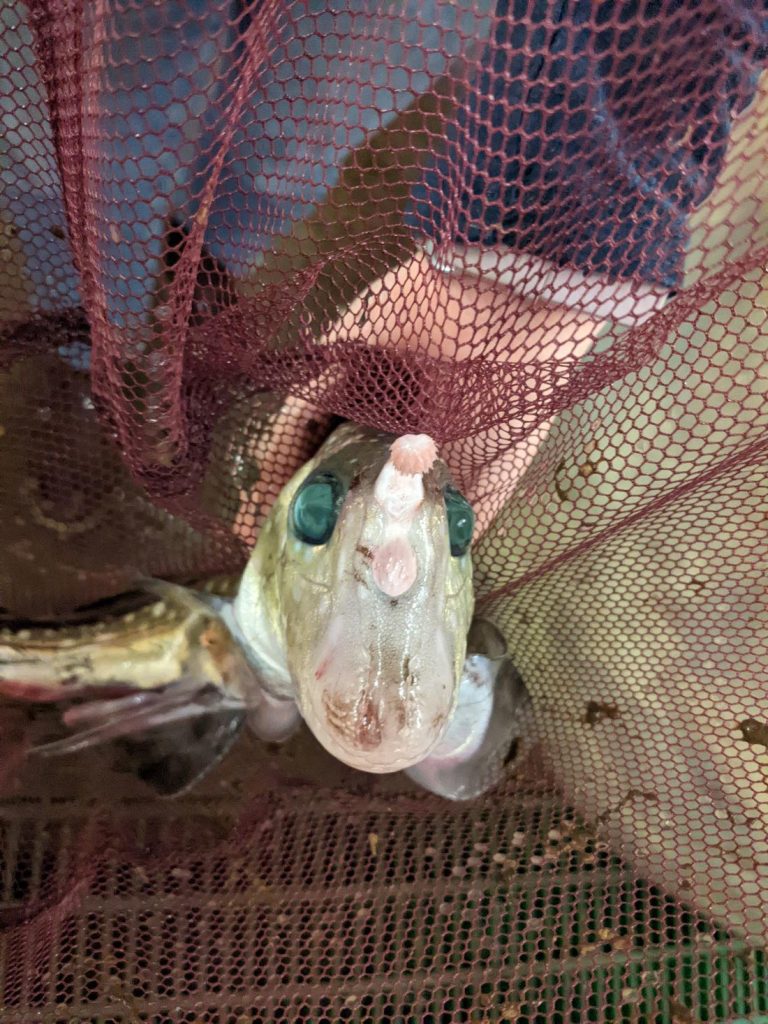
For example, chimaeras have big round eyes like a rabbit that allow them to see as they creep in the dark hunting for food. They have ever-growing tooth plates like a rodent, which is why they are often called ratfish. While shark skin is covered in teeth, chimaeras have no teeth on their skin, and the males have a giant bulb on their forehead called a tenaculum that grows spiky teeth that look like shark teeth.
“We think they use this head clasper like a second ‘jaw’ on their head to bite down and attach to the female during copulation,” Fraser explained. “Ghost sharks are a very strange group of shark relatives whose biology makes them a bit other-worldly. When we get a chance to find these obscure fish where they feed and breed, we have to go for it.”
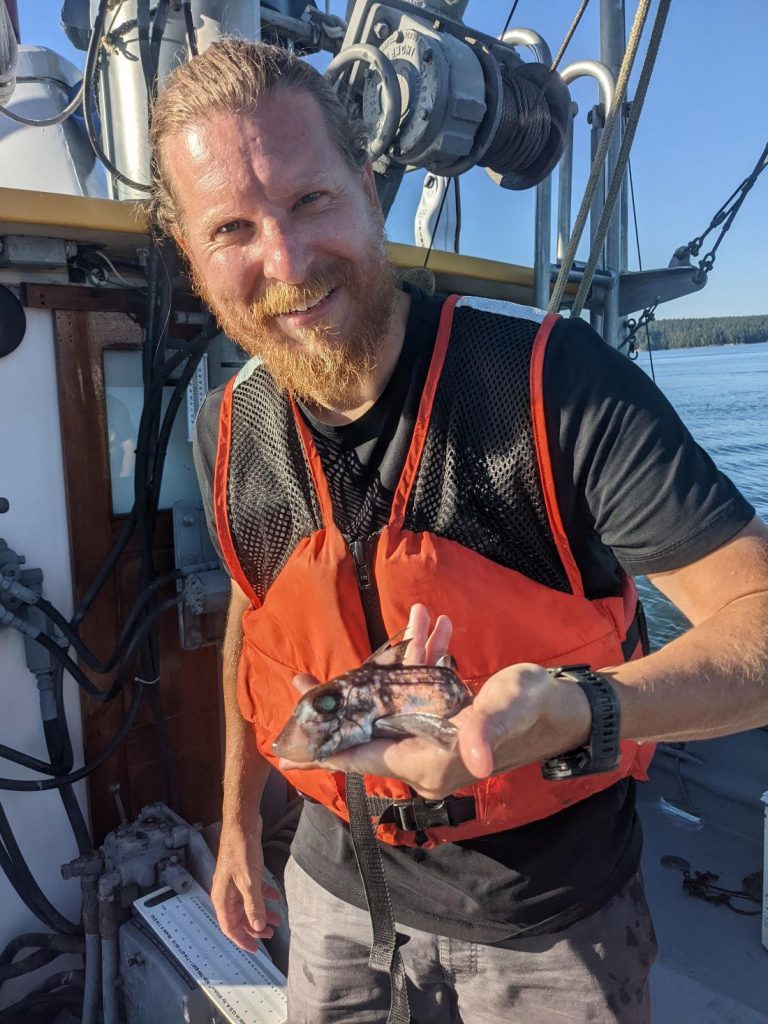
Fraser and others across the globe have had success in the last year with deep-water trawling projects locating adult ghost sharks, but studying older fish doesn’t shed much light on their developmental processes. This summer’s underwater search for the ghost shark nesting areas is the first of its kind for this species.
“We found a lot of different stages of the fish last year, from newly hatched babies to fully mature adults, so this year, we’re going back to find their nursery grounds,” Fraser said.
The ghost shark exploration project is supported through funds from a National Science Foundation grant focused on the skin teeth of sharks and Fraser’s UF start-up grant. The team hopes to uncover secrets about the origins of teeth, which could help them learn more about how to regrow human teeth.
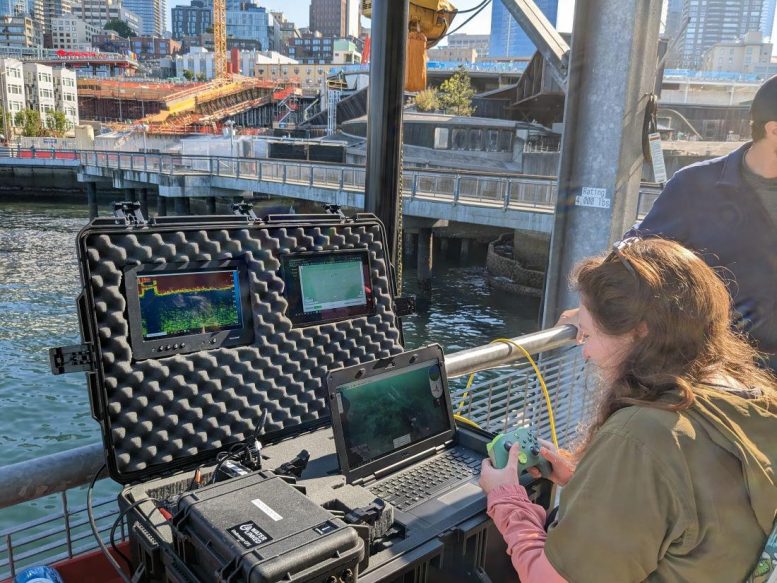
The four-day expedition began June 11 in Seattle, with the team on a pier operating the ROV, which is essentially an underwater drone, that traveled about 10 meters deep in search of the ghost shark nesting sites.
The male ghost shark reveals its tenaculum. Credit: University of Florida
In the coming weeks, the team will deploy the ROV about 100 meters deep from a boat in Elliot Bay in Puget Sound, and other sites around the San Juan Islands. Covered in cameras that will deliver 360-degree views, the ROV will capture images designed to create a virtual reality scene of the depths of the ocean for scientists once they are back in the lab.
“This will take us to the waters off Washington state so that we can swim with these ghost sharks virtually and get an up-close, panoramic view of their environment,” Fraser said.
Karly Cohen, a UF biology postdoctoral fellow in the Fraser Lab who originally located the potential ghost shark nursing sites, said their project is an excellent opportunity to help strengthen conservation efforts.
“It’s important to learn about these understudied deep-water fish and their reproductive strategies,” she said. “Ultimately, we want to protect this really charismatic species.”
The research was funded by the National Science Foundation.
Never miss a breakthrough: Join the SciTechDaily newsletter.
Follow us on Google and Google News.