
Close Menu
    Facebook X (Twitter) Instagram
    SciTechDaily
    • Biology
    • Chemistry
    • Earth
    • Health
    • Physics
    • Science
    • Space
    • Technology
    Facebook X (Twitter) Pinterest YouTube RSS
    SciTechDaily
    Home»Technology»The Future of AI and 5G: Scientists Develop the First Universal, Programmable, and Multifunctional Photonic Chip
    Technology

    The Future of AI and 5G: Scientists Develop the First Universal, Programmable, and Multifunctional Photonic Chip

    By Universitat Politècnica de ValènciaJune 9, 20244 Comments3 Mins Read
    Facebook Twitter Pinterest Telegram LinkedIn WhatsApp Email Reddit
    Share
    Facebook Twitter LinkedIn Pinterest Telegram Email Reddit
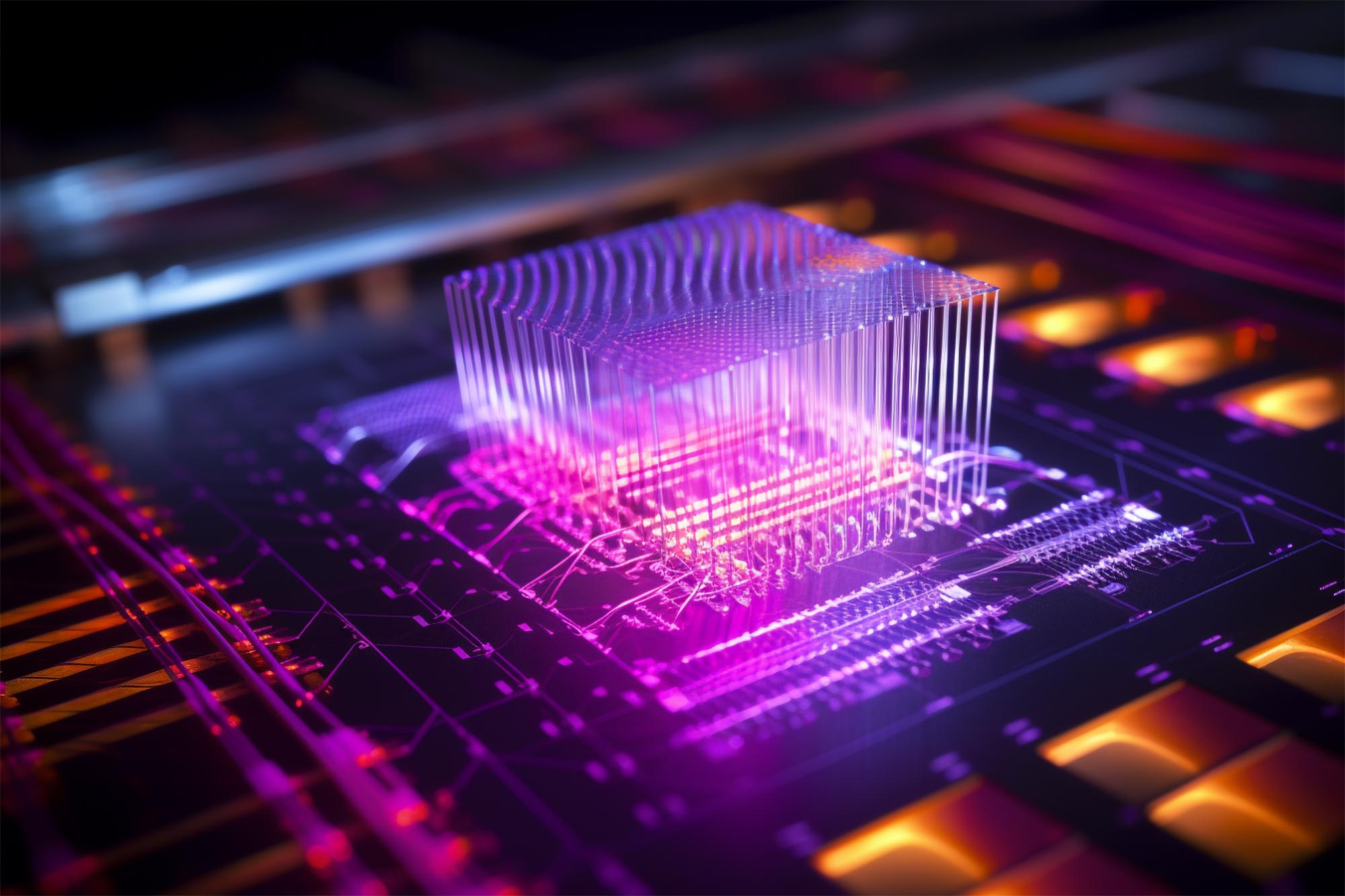
    Optical Chip Communication Concept Illustration
    A team from Universitat Politècnica de València and iPRONICS has developed the world’s first programmable and multifunctional photonic chip, enhancing data flow management in telecommunications and AI systems. (Artist’s concept). Credit: SciTechDaily.com

    A collaborative team from UPV and iPRONICS has developed the market’s first universal, programmable, and multifunctional photonic chip.

    Researchers from the Photonics Research Laboratory (PRL)-iTEAM at the Universitat Politècnica de València, in collaboration with iPRONICS, have developed a groundbreaking photonic chip. This chip is the world’s first to be universal, programmable, and multifunctional, making it a significant advancement for the telecommunications industry, data centers, and AI computing infrastructures. It is poised to enhance a variety of applications including 5G communications, quantum computing, data centers, artificial intelligence, satellites, drones, and autonomous vehicles.

    The development of this revolutionary chip is the main result of the European project UMWP-Chip, led by researcher José Capmany and funded by an ERC Advanced Grant from the European Research Council. The work has been published in the Nature Communications journal.
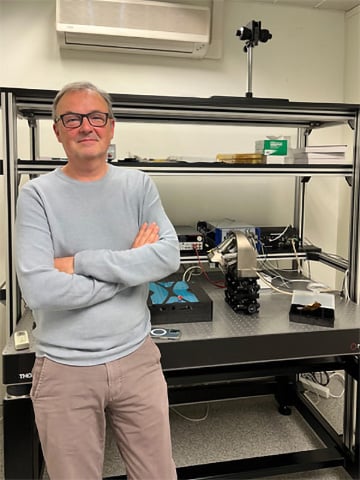
    José Capmany
    Researcher José Capmany. Credit: UPV

    Chip’s Functionality and Application

    The chip devised and manufactured by the UPV and iPRONICS team allows on-demand programming and interconnecting of wireless and photonic segments of communication networks, avoiding the generation of bottlenecks that can limit both the capacity and bandwidth available.

    “It is the first chip in the world with these characteristics. It can implement the twelve basic functionalities required by these systems and can be programmed on demand, thus increasing the efficiency of the circuit,” explains Capmany.

    The UPV professor, an international reference in the field of photonics, explains that applications such as 5G or autonomous cars require a higher frequency, making it necessary to reduce the size of the antennas and the associated circuits. In this case, the PRL-iTEAM from UPV has managed to make the converter behind the antenna, an interface chip, as tiny and compact as possible and ready to support current and expected future frequency bands.

    This chip has already been integrated into an iPRONICS product, the Smartlight, and Vodafone has already used it in testing.

    “For us, the development of this chip is a crucial step because it has allowed the validation of our developments applied to a growing problem, the efficient management of data flows in data centers and networks for artificial intelligence computing systems. Our next goal is to scale the chip to meet the needs of this market segment,” said Daniel Pérez-López, co-founder and CTO of iPronics.

    Reference: “General-purpose programmable photonic processor for advanced radiofrequency applications” by Daniel Pérez-López, Ana Gutierrez, David Sánchez, Aitor López-Hernández, Mikel Gutierrez, Erica Sánchez-Gomáriz, Juan Fernández, Alejandro Cruz, Alberto Quirós, Zhenyun Xie, Jesús Benitez, Nandor Bekesi, Alejandro Santomé, Diego Pérez-Galacho, Prometheus DasMahapatra, Andrés Macho and José Capmany, 20 February 2024, Nature Communications.
    DOI: 10.1038/s41467-024-45888-7

    Never miss a breakthrough: Join the SciTechDaily newsletter.
    Follow us on Google and Google News.

    Artificial Intelligence Chip Electronics Photonics
    Share. Facebook Twitter Pinterest LinkedIn Email Reddit

    Related Articles

    AI at the Speed of Light: How Silicon Photonics Are Reinventing Hardware

    Not Science Fiction: How Optical Neural Networks Are Revolutionizing AI

    1,000x Faster: Ultrafast Photonics Chip Reshapes Signal Processing

    At the Speed of Light: Unveiling the Chip That’s Reimagining AI Processing

    Revolutionary “LEGO-Like” Photonic Chip Paves Way for Semiconductor Breakthroughs

    SmartDope: The “Self-Driving Lab” That Unlocks Quantum Dot Secrets in Hours – Instead of Years

    Light Speed Ahead: 3D Photonic-Electronic Hardware Revolutionizes AI

    Light-Based Processor Chips Advance Machine Learning

    AI Boosted by Parallel Convolutional Light-Based Processors

    4 Comments

    1. Dismythed on June 10, 2024 6:26 am

      That was as informative as a headline: “We made a Photonic Chip that speeds up processing“. It didn’t tell us anything about what a photonic chip is or how it works.

      Reply
    2. Dismythed on June 10, 2024 6:27 am

      Nor did it give us any quantifiable data.

      Reply
    3. Antonio Izquierdo on June 10, 2024 6:54 am

      I’m sure it’s fake, it’s just to spend European funds, tipicall Spanish.

      Reply
    4. kamir bouchareb st on April 14, 2025 10:49 am

      thank you for this

      Reply
    Leave A Reply Cancel Reply

    • Facebook
    • Twitter
    • Pinterest
    • YouTube

    Don't Miss a Discovery

    Subscribe for the Latest in Science & Tech!

    Trending News

    Magnetic Fields May Solve a Longstanding Binary Star Mystery

    The Probiotic Breakthrough for Natural Anxiety Relief and Better Mental Health

    Animal vs. Plant Protein: Scientists Found a Surprising Nutritional Difference

    According to Scientists, This Simple Dietary Change Is Linked to Lower Depression Scores

    Researchers Discover a Hidden Vitamin D Problem That Persists Year-Round

    Interstellar Comet 3I/ATLAS Reveals Strange Chemistry Beyond Our Solar System

    A Newly Found Cellular Shift May Explain Why Aging Leads to Disease

    Scientists Discover Gut Signal That Turns Off Sugar Cravings

    Follow SciTechDaily
    • Facebook
    • Twitter
    • YouTube
    • Pinterest
    • Newsletter
    • RSS
    SciTech News
    • Biology News
    • Chemistry News
    • Earth News
    • Health News
    • Physics News
    • Science News
    • Space News
    • Technology News
    Recent Posts
    • Breakthrough for 800 Million Patients? Kidney Disease Drug Shows Powerful New Benefits
    • A Surprising Discovery Suggests Autism Is Not One Condition
    • New Alzheimer’s Discovery Could Change How Scientists Fight the Disease
    • This Quantum Detector Boosts Terahertz Sensitivity by 20 Times
    • A Universe Without Dark Energy? Mathematicians Challenge Standard Cosmology
    Copyright © 1998 - 2026 SciTechDaily. All Rights Reserved.
    • Science News
    • About
    • Contact
    • Editorial Board
    • Privacy Policy
    • Terms of Use

    Type above and press Enter to search. Press Esc to cancel.