
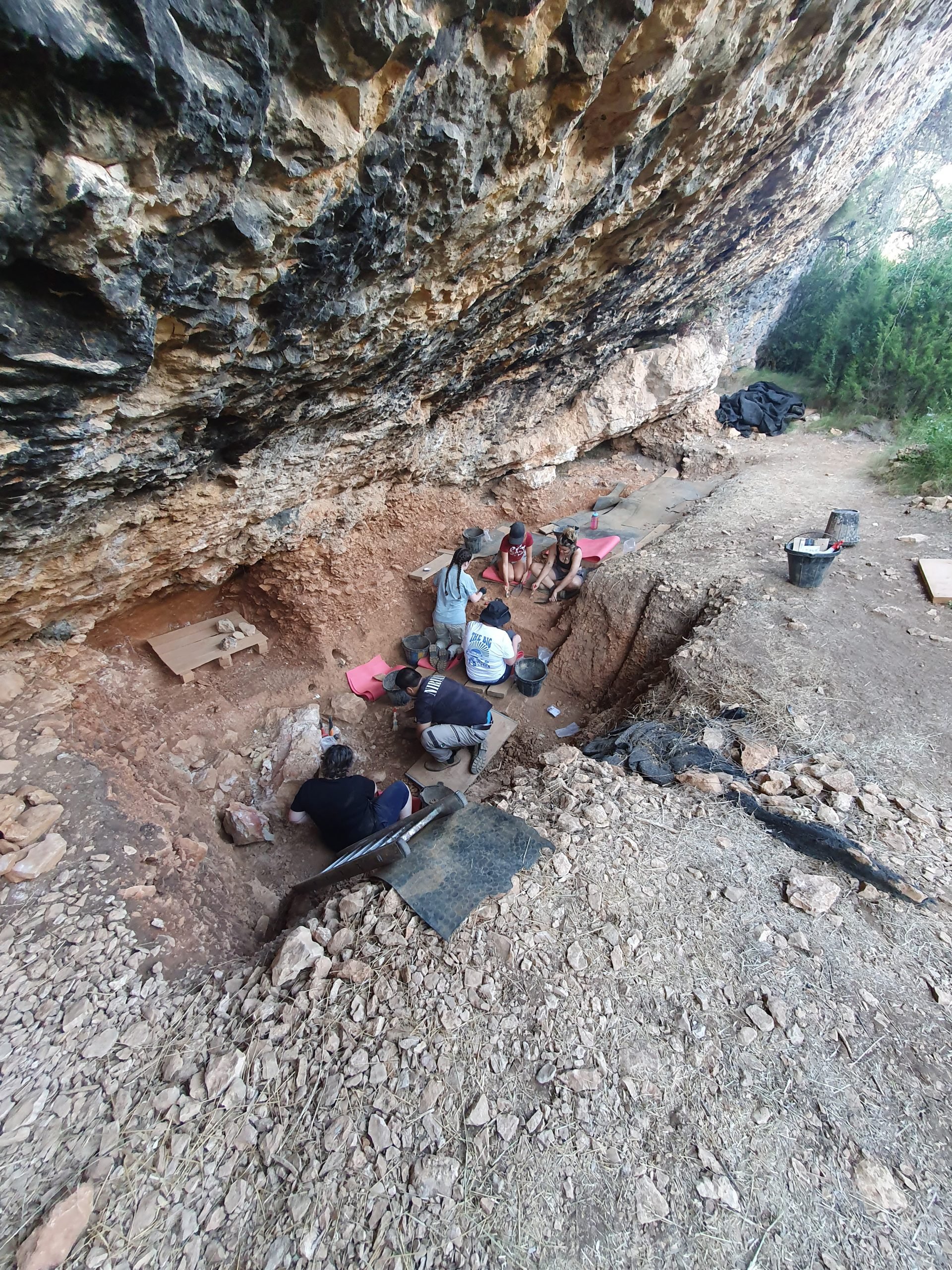
New research from ANU reveals that Neanderthals in the Southern Pyrenees were highly adaptable and skilled in diverse hunting, challenging old stereotypes and providing insights into their survival and eventual extinction.
An unexplored region in the foothills of the Southern Pyrenees in Spain is shedding light on a little-known period of Neanderthal history. New research from The Australian National University (ANU) suggests that this area could offer valuable clues to help archaeologists unravel the mystery of the Neanderthals’ decline.
Abric Pizarro is one of only a few sites worldwide dating from 100,000 to 65,000 years ago during a period called MIS 4. The researchers have gathered hundreds of thousands of artifacts, including stone tools, animal bones, and other evidence, providing significant data about the Neanderthal way of life during that time — largely unknown in human history until now.
The findings reveal Neanderthals were able to adapt to their environment, challenging the archaic humans’ reputation as slow-footed cavemen and shedding light on their survival and hunting skills.
Lead author and ANU archaeologist, Dr Sofia Samper Carro, said that the findings show that Neanderthals knew the best ways to exploit the area and territory and were resilient through harsh climate conditions.
Insights on Neanderthal Hunting
“Our surprising findings at Abric Pizarro show how adaptable Neanderthals were. The animal bones we have recovered indicate that they were successfully exploiting the surrounding fauna, hunting red deer, horses, and bison, but also eating freshwater turtles and rabbits, which imply a degree of planning rarely considered for Neanderthals,” she said.
According to the researchers, these new insights challenge widespread beliefs that Neanderthals only hunted large animals, such as horses and rhinoceros.
“Through the bones that we are finding, which display cut marks, we have direct proof that Neanderthals were capable of hunting small animals,” Dr Samper Carro said.
“The bones on this site are very well preserved, and we can see marks of how Neanderthals processed and butchered these animals.
“Our analysis of the stone artifacts also demonstrates variability in the type of tools produced, indicating Neanderthals’ capability to exploit the available resources in the area.”
Shedding light on this crucial transitional period helps archaeologists edge closer to solving a mystery that has plagued researchers for decades: what drove the Neanderthals to extinction?
According to the researchers, finding sites like Abric Pizarro, from this specific and not well-recorded period, gives information about how Neanderthals lived when modern humans were not in the area yet and shows that they were thriving.
“The unique site at Abric Pizarro gives a glimpse of Neanderthal behavior in a landscape they had been roaming for hundreds of thousands of years,” Dr. Samper Carro said.
“Neanderthals disappeared around 40,000 years ago. Suddenly, we modern humans appear in this region of the Pyrenees, and the Neanderthals disappear. But before that, Neanderthals had been living in Europe for almost 300,000 years.
“They clearly knew what they were doing. They knew the area and how to survive for a long time.
“This is one of the most interesting things about this site, to have this unique information about when Neanderthals were alone and living in harsh conditions and how they thrived before modern humans appeared.”
Modern Techniques in Archaeology
Thanks to modern excavation techniques, Abric Pizarro and other nearby Neanderthal sites provide fine-grain data to understand Neanderthal behavior.
“We 3D plot every single remain found larger than one to two centimeters. This makes our work slow, and we have been excavating some of these sites for over 20 years, but it turns into a uniquely precise recording of the sites,” Dr Samper Carro said.
“We are interested in how the different data relates to each other, from stone tools to bones and hearths. This more thorough excavation gives archaeologists information on how Neanderthals lived and how long they were in an area.
“It’s not only the individual materials that give us clues, but also where exactly they are found in relation to other materials on the site that helps us understand how and when Neanderthals were visiting these sites. Were they settled there or just passing through?”
Reference: “Living on the edge: Abric Pizarro, a MIS 4 Neanderthal site in the lowermost foothills of the southeastern Pre-Pyrenees (Lleida, Iberian Peninsula)” by Sofia C. Samper Carro, Susana Vega Bolivar, Jezabel Pizarro Barbera, Eboni Westbury, Simon Connor, Ethel Allué, Alfonso Benito-Calvo, Lee J. Arnold, Martina Demuro, Gilbert J. Price, Jorge Martinez-Moreno and Rafael Mora, 26 July 2024, Journal of Archaeological Science.
DOI: 10.1016/j.jas.2024.106038
The research team also included scientists from the Autonomous University of Barcelona (CEPAP-UAB). Research in the Catalan Pre-Pyrenees is supported by The Spanish Ministry of Science and Innovation and the Culture Department of the Catalan Government.
Never miss a breakthrough: Join the SciTechDaily newsletter.
Follow us on Google and Google News.
4 Comments
What INTELLECTS!!! OF COURSE the Neanderthal ate ANYTHING POSSIBLE. That goes without saying. U think a newly born fawn, apples, floater ducks, etc., weren’t happily consumed? OF COURSE THEY WERE.
I was wondering, why are Darwinists / Evolutionists so trustworthy…
Look at all those headlines below this article:
European Cave Paintings Older Than Previously Thought,
or
Early Humans Moved Through Mediterranean Much Earlier Than Previously Believed
or
New Evidence Shows Humans Mastered Fire Earlier Than Thought
… and so on ….
These people (evolutionists) seem to be PERMANENTLY wrong … why should I believe anything what they say or claim ? These people seem to be PERMANENTLY wrong…
You shouldn’t believe anything you don’t want to.
Science is about facts. New evidence can change facts.