
Close Menu
    Facebook X (Twitter) Instagram
    SciTechDaily
    • Biology
    • Chemistry
    • Earth
    • Health
    • Physics
    • Science
    • Space
    • Technology
    Facebook X (Twitter) Pinterest YouTube RSS
    SciTechDaily
    Home»Science»The Problem With Microwaving Tea: Why Microwaving Liquids Is Different From Other Heating Techniques
    Science

    The Problem With Microwaving Tea: Why Microwaving Liquids Is Different From Other Heating Techniques

    By American Institute of PhysicsAugust 16, 20203 Comments3 Mins Read
    Facebook Twitter Pinterest Telegram LinkedIn WhatsApp Email Reddit
    Share
    Facebook Twitter LinkedIn Pinterest Telegram Email Reddit
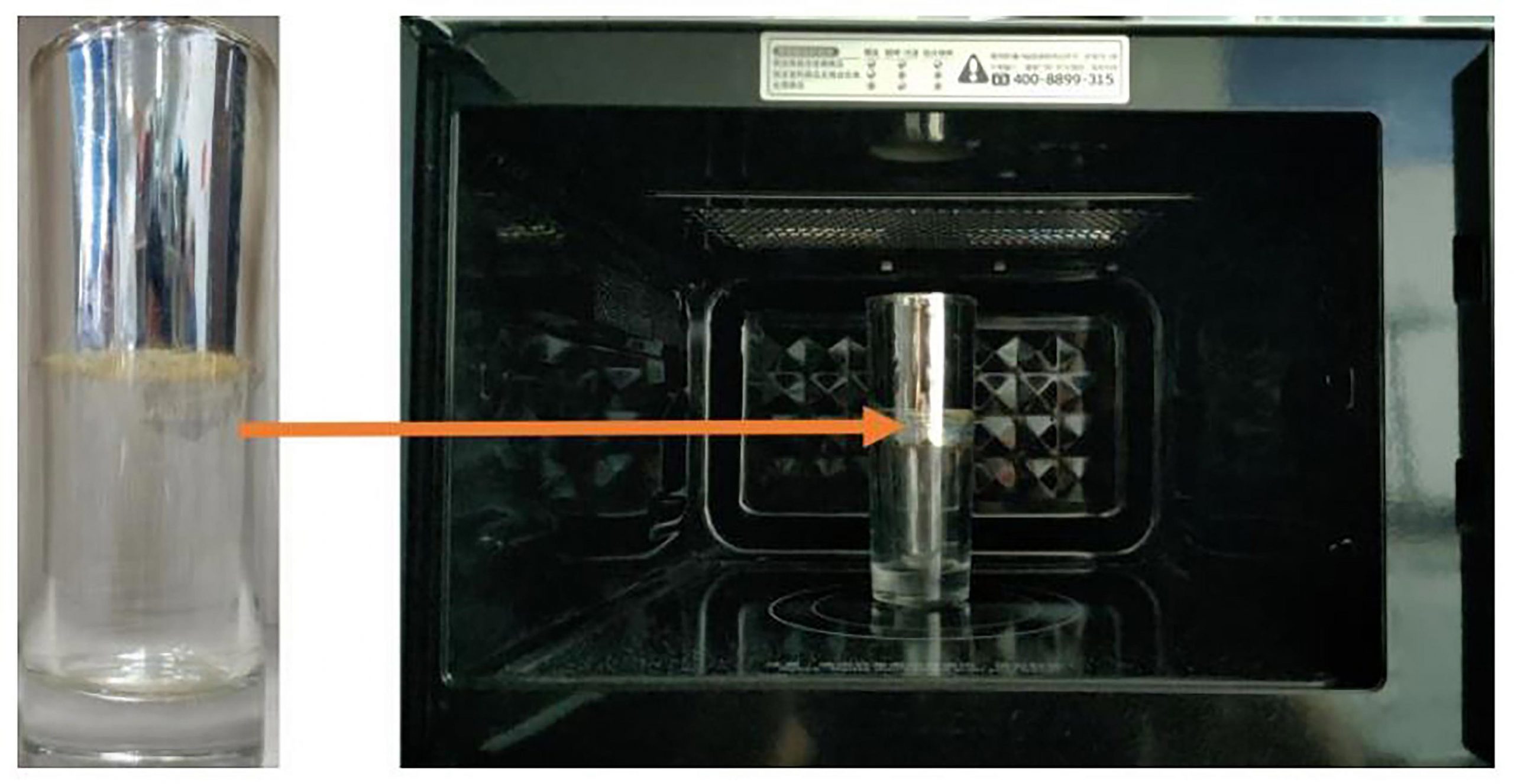
    Silver-Plated Cup in Microwave
    The silver-plated cup helps liquids heat through uniformly in microwaves. Credit: Baoqing Zeng

    Tea drinkers have been saying it for years. Water heated in a microwave just isn’t the same.

    Typically, when a liquid is being warmed, the heating source — a stove, for example — heats the container from below. By a process called convection, as the liquid toward the bottom of the container warms up, it becomes less dense and moves to the top, allowing a cooler section of the liquid to contact the source. This ultimately results in a uniform temperature throughout the glass.

    Inside a microwave, however, the electric field acting as the heating source exists everywhere. Because the entire glass itself is also warming up, the convection process does not occur, and the liquid at the top of the container ends up being much hotter than the liquid at the bottom.

    A team of researchers from the University of Electronic Science & Technology of China studied this nonuniform heating behavior and presents a solution to this common problem in the journal AIP Advances, from AIP Publishing.

    By designing a silver plating to go along the rim of a glass, the group was able to shield the effects of the microwave at the surface of the liquid. The silver acts as a guide for the waves, reducing the electric field at the top and effectively blocking the heating. This creates a convection process similar to traditional approaches, resulting in a more uniform temperature.

    Placing silver in the microwave may seem like a dangerous idea, but similar metal structures with finely tuned geometry to avoid ignition have already been safely used for microwave steam pots and rice cookers.

    “After carefully designing the metal structure at the appropriate size, the metal edge, which is prone to ignition, is located at weak field strength, where it can completely avoid ignition, so it is still safe,” said Baoqing Zeng, one of the authors on the paper and professor of electronic science and engineering at UESTC.

    Solids don’t undergo convection, so getting your leftovers to warm up uniformly is a completely different challenge.

    “For solids, there is no simple way to design a bowl or plate in order to achieve a much better heating result,” Zeng said. “We can change the field distribution, but the change is very small, so the improvement is limited.”

    The group is considering other ways to improve nonuniformity in solid foods, but the methods are currently too expensive for practical use. For now, they’re focusing their efforts on working with a microwave manufacturer to commercialize their microwave accessories for liquids.

    A future in which tea can be microwaved without ridicule may not be too far away.

    Reference: “Multiphysics analysis for unusual heat convection in microwave heating liquid” by Peiyang Zhao, Weiwei Gan, Chuanqi Feng, Zongxing Qu, Jianlong Liu, Zhe Wu, Yubin Gong and Baoqing Zeng, 4 August 2020, AIP Advances.
    DOI: 10.1063/5.0013295

    Never miss a breakthrough: Join the SciTechDaily newsletter.
    Follow us on Google and Google News.

    American Institute of Physics Fluid Dynamics
    Share. Facebook Twitter Pinterest LinkedIn Email Reddit

    Related Articles

    Researchers Reveal Simple Trick To Make Your Coffee Stronger

    Scientists Reveal What’s Behind the “Pop and Slosh” When Opening a Swing-Top Beer

    Discover the Science Behind the Swirls of “The Starry Night”

    Written in Blood: The Revealing Forensic “Tails” of Crime Scene Bloodstains

    The Battle of Tongues: When Languages Collide, Which Survives?

    Rewiring Time: How Synchronizing Your Internal Clocks Can Ease Jet Lag and Aging

    The Science Behind Skipping Stones: Gateway to Marine Engineering Advances

    Sizzling Sound of Deep-Frying Reveals Complex Physics of Vapor Cavities

    Better-Tasting Desserts: Complex Fluid Dynamics Update Century-Old Food Testing Method

    3 Comments

    1. Mark W on August 16, 2020 8:35 am

      You could also stir the water for a couple of seconds to get a uniform temperature distribution.

      Reply
      • Ian Orchard on August 16, 2020 2:15 pm

        Or maybe cover the top of the container with some Al foil. I was always amused (or bemused) by microwave manuals that on page 1 said “DO NOT PUT METALS IN THE MICROWAVE!!” and on page 5 said “Cover the chicken legs and breast with foil.” Huh?

        Reply
    2. Dr. An(Dre) on August 17, 2020 2:47 am

      Simplest solution. Pop the kettle on.

      Reply
    Leave A Reply Cancel Reply

    • Facebook
    • Twitter
    • Pinterest
    • YouTube

    Don't Miss a Discovery

    Subscribe for the Latest in Science & Tech!

    Trending News

    Largest-Ever Study Finds Medicinal Cannabis Ineffective for Anxiety, Depression, PTSD

    250-Million-Year-Old Egg Solves One of Evolution’s Biggest Mysteries

    Living With Roommates Might Be Changing Your Gut Microbiome Without You Knowing

    Century-Old Cleaning Chemical Linked to 500% Increased Risk of Parkinson’s Disease

    What if Your Memories Never Happened? Physicists Take a New Look at the Boltzmann Brain Paradox

    One of the Universe’s Largest Stars May Be Getting Ready To Explode

    Scientists Discover Enzyme That Could Supercharge Ozempic-Like Weight Loss Drugs

    Popular Sweetener Linked to DNA Damage – “It’s Something You Should Not Be Eating”

    Follow SciTechDaily
    • Facebook
    • Twitter
    • YouTube
    • Pinterest
    • Newsletter
    • RSS
    SciTech News
    • Biology News
    • Chemistry News
    • Earth News
    • Health News
    • Physics News
    • Science News
    • Space News
    • Technology News
    Recent Posts
    • Scientists Prove There Are Just Six Degrees of Separation in a Social Network
    • Bee Bacteria Could Fix a Major Flaw in Plant-Based Milk
    • Scientists Discover a Surprising Way To Make Bread Healthier and More Nutritious
    • Natural Compounds Boost Bone Implant Success While Killing Bacteria and Cancer Cells
    • After 60 Years, Scientists Uncover Unexpected Brain Effects of Popular Diabetes Drug Metformin
    Copyright © 1998 - 2026 SciTechDaily. All Rights Reserved.
    • Science News
    • About
    • Contact
    • Editorial Board
    • Privacy Policy
    • Terms of Use

    Type above and press Enter to search. Press Esc to cancel.