
Close Menu
    Facebook X (Twitter) Instagram
    SciTechDaily
    • Biology
    • Chemistry
    • Earth
    • Health
    • Physics
    • Science
    • Space
    • Technology
    Facebook X (Twitter) Pinterest YouTube RSS
    SciTechDaily
    Home»Space»Cosmic Detective Work: Asteroid Fragments May Have Jumped the Gap in the Early Solar System
    Space

    Cosmic Detective Work: Asteroid Fragments May Have Jumped the Gap in the Early Solar System

    By Arizona State UniversityAugust 16, 2020No Comments4 Mins Read
    Facebook Twitter Pinterest Telegram LinkedIn WhatsApp Email Reddit
    Share
    Facebook Twitter LinkedIn Pinterest Telegram Email Reddit
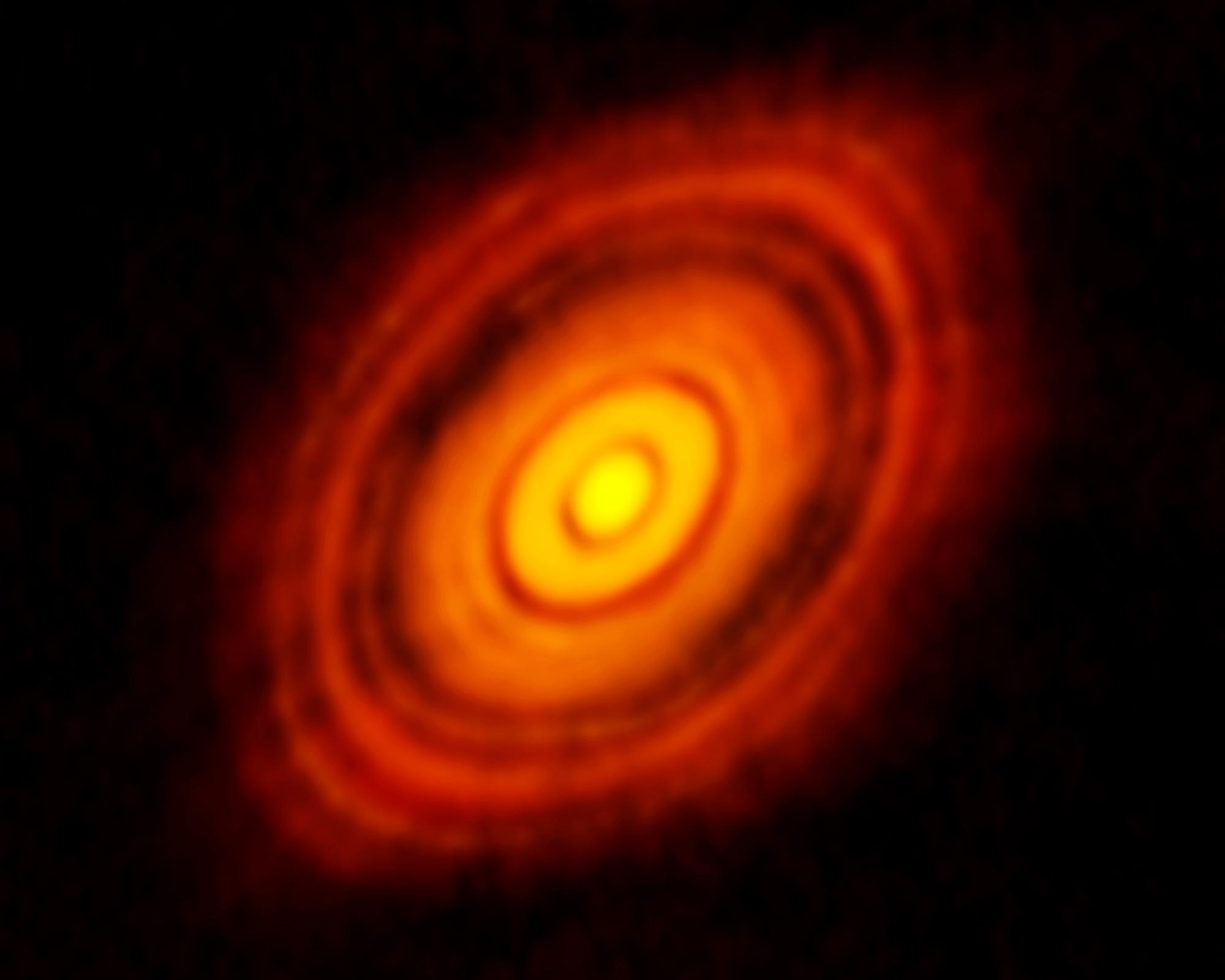
    Protoplanetary Disk of HL Tauri
    Atacama Large Millimeter Array image of the protoplanetary disk around HL Tauri. The dark rings are gaps in the dust and gas-rich protoplanetary disk, likely due to the formation of planets. These gaps may be similar to the disk gap thought to be formed by the formation of Jupiter in our protoplanetary disk. Credit: ALMA (ESO/NAOJ/NRAO), NSF

    Using some cosmic detective work, a team of researchers has found evidence that tiny pieces of asteroids from the inner solar system may have crossed a gap to the outer solar system, a feat once thought to be unlikely.

    About 1 million years after the start of the solar system, it is thought that while Jupiter’s core formed, it created a gap in the protoplanetary disk (the disk of dense gas and dust surrounding the sun). Called the “Jupiter Gap,” this divide severely limited material from getting across it and is thought to have created two distinct reservoirs in the disk.

    Against the odds, however, a team of researchers including Associate Research Professor Devin L. Schrader and Research Scientist Jemma Davidson of Arizona State University’s Center for Meteorite Studies have found evidence in meteorites that tiny fragments of asteroids from the inner solar system crossed the Jupiter Gap into the outer solar system. The results of their study have been recently published in Geochimica et Cosmochimica Acta.

    Murchison Meteorite Piece
    Associate Research Professor Devin Schrader holds a piece of the Murchison meteorite from the ASU Center for Meteorite Studies collection. A piece of the Murchison meteorite was found to contain evidence that inner solar system material migrated to the outer solar system. Credit: Devin Schrader/ASU

    “This research provides new information about the dynamics of the early solar system,” lead author Schrader said. “Our research shows that these two reservoirs were not completely isolated from one another.”

    The research team, which also includes scientists from the Smithsonian Institution’s National Museum of Natural History, the University of Hawaiʻi at Mānoa, Washington University in St. Louis, and Harvard University, were inspired to conduct this study because of samples brought back from NASA’s comet sample return mission, Stardust.

    These samples hinted that comets could contain material that migrated from the inner solar system to the outer reaches where comets formed and suggested that the migration of material may have been more widespread in the early solar system than previously thought.

    Devin Schrader
    Associate Research Professor Devin Schrader uses the ion mass spectrometer at the University of Hawaiʻi at Mānoa to determine the isotopic composition of individual minerals in meteorites. Credit: Devin Schrader/ASU

    “The Stardust mission was like peeking through the blinds at the earliest solar system,” said co-author Timothy McCoy, chair and curator of meteorites at the National Museum of Natural History, Smithsonian Institution. “We knew that meteorites in our collections could open the window so that we could see the whole view”

    With that in mind, they set out to test this hypothesis using samples of meteorites, specifically chondrites, that were present in the early solar system.

    And thanks to the large collection of meteorites from the Center for Meteorite Studies, the Smithsonian Institution, and NASA, they had access to samples of chondrites that were believed to have formed in the inner solar system as well as those believed to have been formed in the outer solar system.
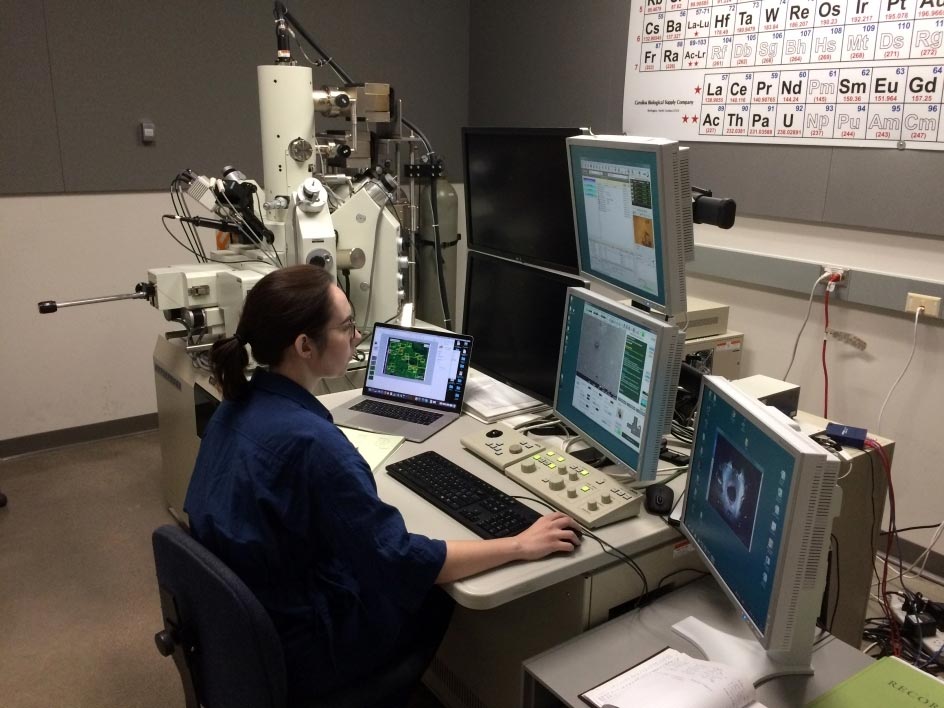
    Jemma Davidson
    Research scientist Jemma Davidson uses the electron probe microanalyzer at ASU to obtain high resolution images of the meteorite samples and determine major and minor element data of individual minerals. Credit: Devin Schrader/ASU

    Using electron probe microanalyzers (to obtain high resolution images of the samples and major and minor element data of individual minerals) and a secondary ion mass spectrometer (used to analyze the isotopic composition of samples), the team was able to provide direct evidence for a complex mixing of materials between the inner and outer solar system.

    “By looking at the kinds of samples we have in the Center for Meteorite Studies collection, we were able to investigate how material moved around in the protoplanetary disk four and a half billion years ago,” co-author Davidson said.

    In future studies, the team hopes to learn more from asteroid sample return missions like the Japanese Aerospace Exploration Agency’s Hayabusa2 mission to the asteroid Ryugu, which is scheduled to return samples to Earth later this year and NASA’s OSIRIS-REx to the asteroid Bennu, which is expected to return samples to Earth in 2023.

    Reference: “Outward migration of chondrule fragments in the early Solar System: O-isotopic evidence for rocky material crossing the Jupiter Gap?” by Devin L.Schrader, Kazuhide Nagashima, Jemma Davidson, Timothy J. McCoy, Ryan C. Ogliore and Roger R. Fuin, 22 May 2020, Geochimica et Cosmochimica Acta.
    DOI: 10.1016/j.gca.2020.05.014

    Never miss a breakthrough: Join the SciTechDaily newsletter.
    Follow us on Google and Google News.

    Arizona State University Asteroid Astrophysics Geophysics
    Share. Facebook Twitter Pinterest LinkedIn Email Reddit

    Related Articles

    Meteorites That Helped Form Earth May Have Originated in the Outer Solar System

    Remnants of an Ancient Asteroid Shake Up a Once Accepted Timeline for Cataclysmic Events in the Early Solar System

    Carbon-Rich Exoplanets May Be Made of Diamonds – “Unlike Anything in Our Solar System”

    Small Asteroids Completely Shattered the Moon’s Upper Crust

    Researchers Confirm Three Asteroids Are Co-Orbital With Uranus

    Finding the Asteroids That Threaten Earth

    Asteroid Dust Could Shield Earth From Harmful Solar Radiation

    Trajectory Models of Refractory Particles Help Solve Two Solar System Puzzles

    NEOWISE Data Reveals Potentially Hazardous Asteroids

    Leave A Reply Cancel Reply

    • Facebook
    • Twitter
    • Pinterest
    • YouTube

    Don't Miss a Discovery

    Subscribe for the Latest in Science & Tech!

    Trending News

    First-of-Its-Kind Discovery: Homer’s Iliad Found Embedded in a 1,600-Year-Old Egyptian Mummy

    Beyond Inflammation: Scientists Uncover New Cause of Persistent Rheumatoid Arthritis

    A Simple Molecule Could Unlock Safer, Easier Weight Loss

    Scientists Just Built a Quantum Battery That Charges Almost Instantly

    Researchers Unveil Groundbreaking Sustainable Solution to Vitamin B12 Deficiency

    Millions of People Have Osteopenia Without Realizing It – Here’s What You Need To Know

    Researchers Discover Boosting a Single Protein Helps the Brain Fight Alzheimer’s

    World-First Study Reveals Human Hearts Can Regenerate After a Heart Attack

    Follow SciTechDaily
    • Facebook
    • Twitter
    • YouTube
    • Pinterest
    • Newsletter
    • RSS
    SciTech News
    • Biology News
    • Chemistry News
    • Earth News
    • Health News
    • Physics News
    • Science News
    • Space News
    • Technology News
    Recent Posts
    • New Research Challenges Long-Held Beliefs About How the Brain Makes Decisions
    • Breakthrough Technology Reveals New Treatment Targets for Cancer
    • Scientists Discover New Way To Make Drug-Resistant Cancer Treatable Again
    • This Simple Exercise Trick Builds Muscle With Less Effort, Study Finds
    • Middle Age Is Becoming a Breaking Point in America, Study Reveals
    Copyright © 1998 - 2026 SciTechDaily. All Rights Reserved.
    • Science News
    • About
    • Contact
    • Editorial Board
    • Privacy Policy
    • Terms of Use

    Type above and press Enter to search. Press Esc to cancel.