
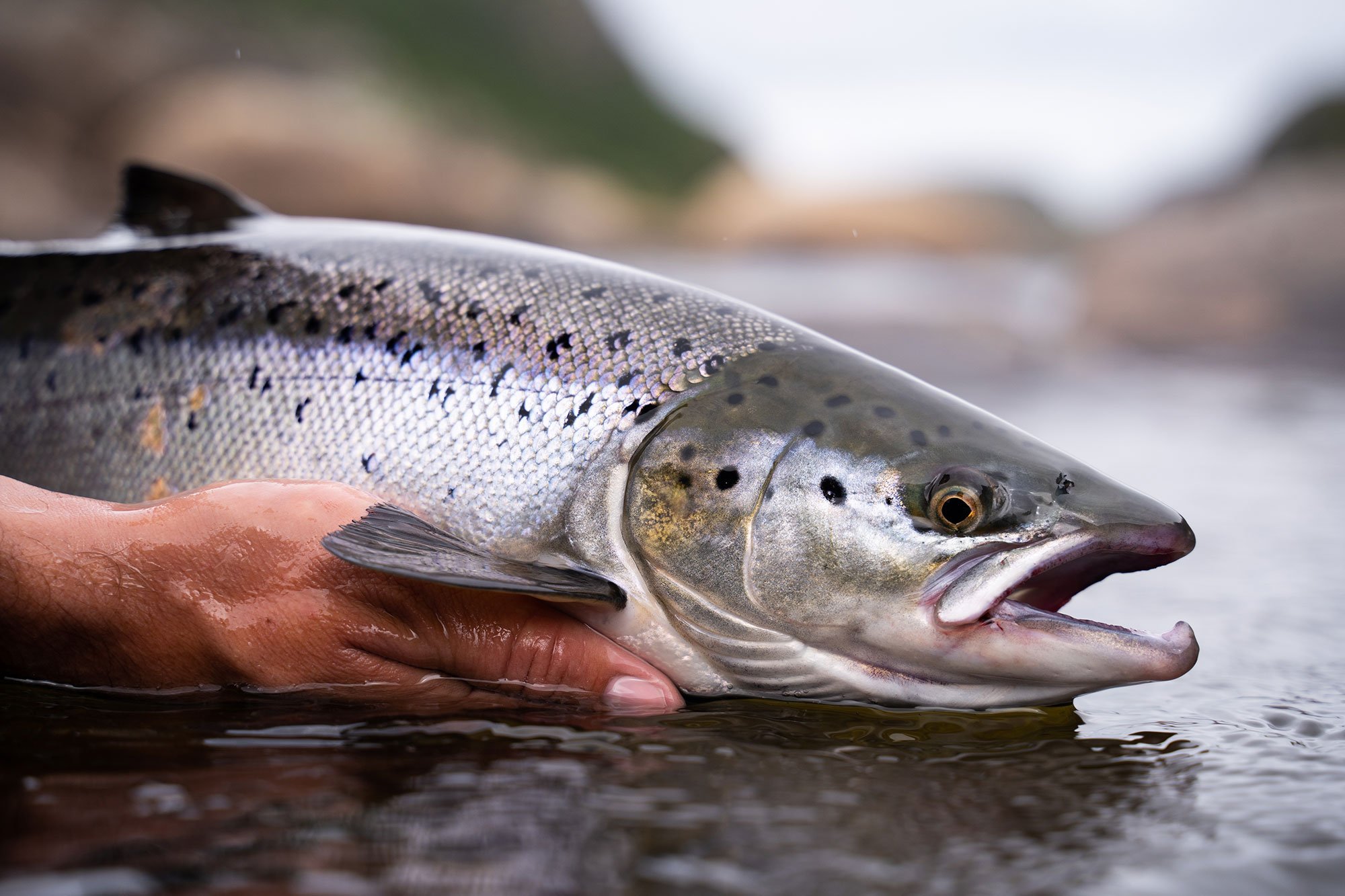
A hidden alliance between algae and bacteria in the Eel River powers ecosystems, sustains salmon, and may inspire future clean technologies.
In northern California, salmon represent far more than a food source. They are central to tribal traditions, vital for tourism, and serve as indicators of river health. Working along the Eel River, researchers from NAU and the University of California Berkeley report the discovery of a microscopic nutrient engine that supports river health and helps salmon flourish.
Their new paper in Proceedings of the National Academy of Sciences explains how algae and bacteria cooperate to provide a clean source of nitrogen. The partners convert nitrogen from the air into food that sustains the river ecosystem, avoiding the need for fertilizers and the pollution they can create. This hidden source of nutrients increases populations of aquatic insects that young salmon depend on for growth and survival.
At the core of the finding is a diatom called Epithemia, a single-celled aquatic plant encased in a glass-like shell. Although smaller than a grain of table salt and roughly the width of a human hair, Epithemia plays a major role in keeping rivers productive.
Each diatom contains bacterial partners known as diazoplasts, which are tiny nitrogen-fixing compartments that turn atmospheric nitrogen into plant food. Epithemia captures sunlight to make sugar, and the diazoplast uses that sugar to carry out nitrogen fixation. In return, the diazoplast supplies nitrogen that enables the diatom to continue photosynthesis.
“This is nature’s version of a clean nutrient pipeline, from sunlight to fish, without the runoff that creates harmful algal blooms,” said Jane Marks, biology professor at Northern Arizona University and lead author of the study.
A Seasonal Surge of Productivity
By late summer, Marks said, strands of the green alga Cladophora are draped with rusty-red Epithemia along the Eel River. At this stage, the algae–bacteria duos supply up to 90% of the new nitrogen entering the river’s food web, giving insect grazers the fuel they need and powering salmon from the bottom up.
“Healthy rivers don’t just happen—they’re maintained by ecological interactions, like this partnership,” said Mary Power, co-author of the study and faculty director of UC Berkeley’s Angelo Coast Range Reserve, where the field study took place. “When native species thrive in healthy food webs, rivers deliver clean water, wildlife, and essential support for fishing and outdoor communities.”
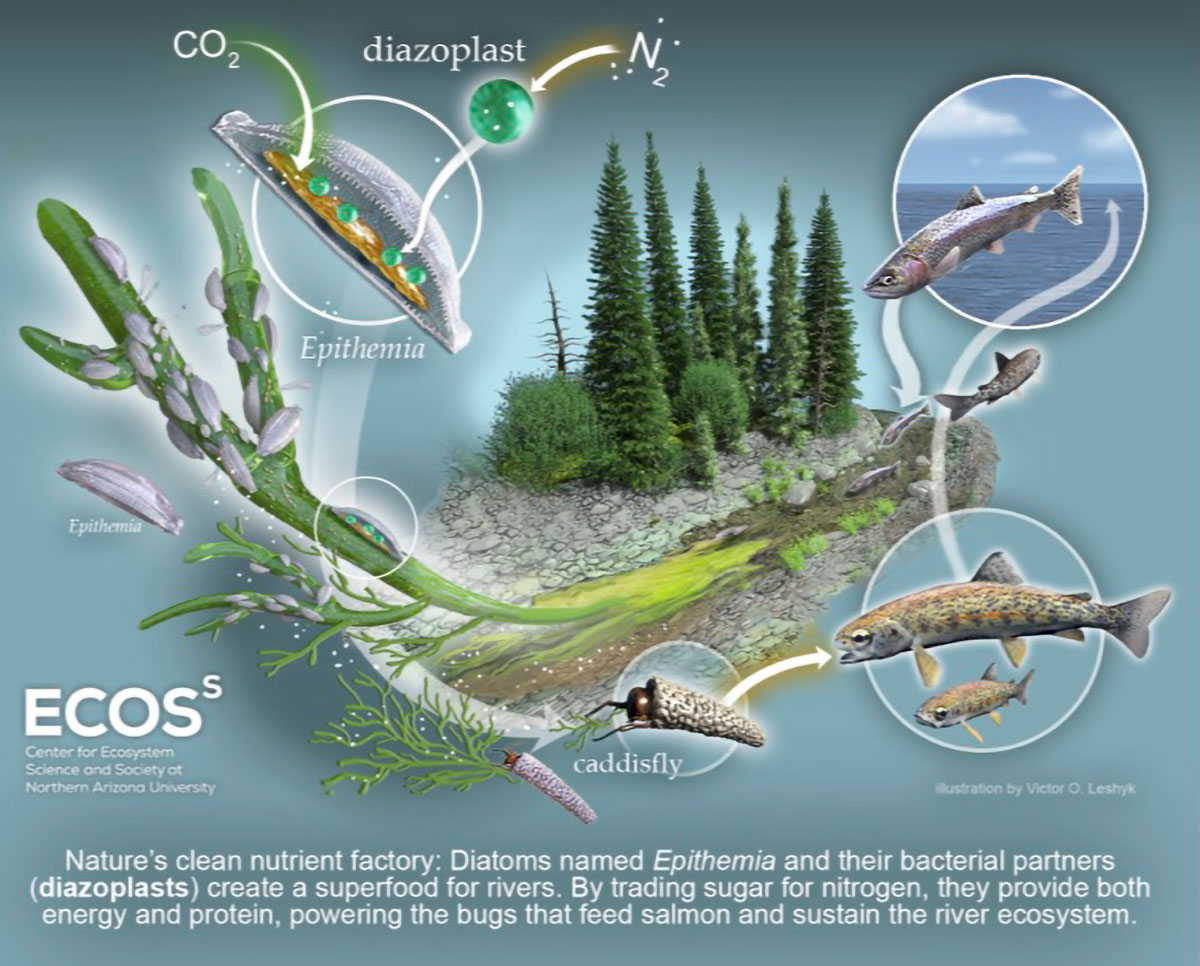
Using advanced imaging, the research team watched the partners trade life’s essentials in a perfect loop: The diatom used sunlight and carbon dioxide to make sugar and share it with the bacterium, which then used the sugar to turn nitrogen from the air into plant food. That nitrogen helped the diatom make even more sugar, because the key enzymes of photosynthesis need lots of nitrogen.
“It’s like a handshake deal: Both sides benefit, and the entire river thrives,” said Mike Zampini, a postdoctoral researcher at NAU and the study’s isotope tracing lead. “The result is a beautifully efficient cycle of energy and nutrients.”
A Global Phenomenon with Wide Implications
This partnership isn’t unique to the Eel River. Epithemia and similar diatom–diazoplast teams live in rivers, lakes, and oceans across the world, often in places where nitrogen is scarce. That means they may be quietly boosting productivity in many other ecosystems.
Beyond its role in nature, this clean and efficient nutrient exchange could inspire new technologies such as more efficient biofuels, natural fertilizers that don’t pollute or even crop plants engineered to make their own nitrogen, cutting costs for farmers while reducing environmental impacts.
When nature engineers solutions this elegant, Marks said, it reminds us what’s possible when people, places, and discovery come together.
Reference: “Ecosystem consequences of a nitrogen-fixing proto-organelle” by Jane C. Marks, Michael C. Zampini, Raina Fitzpatrick, Saeed H. Kariunga, Augustine Sitati, Ty J. Samo, Peter K. Weber, Steven Thomas, Bruce A. Hungate, Christina E. Ramon, Michael Wulf, Victor O. Leshyk, Egbert Schwartz, Jennifer Pett-Ridge and Mary E. Power, 8 September 2025, Proceedings of the National Academy of Sciences.
DOI: 10.1073/pnas.2503108122
The research was funded in part by a grant from the National Science Foundation’s Rules of Life/Microbiome program (#2125088). Research at Lawrence Livermore National Labs was conducted under U.S. Department of Energy Contract DE-AC52-07NA27344.
Never miss a breakthrough: Join the SciTechDaily newsletter.
Follow us on Google and Google News.
1 Comment
Fascinating research—nature’s own nutrient pipeline is a true superfood story for salmon and river ecosystems. At Xiphias Superfoods, we believe in the same principle: harnessing natural, nutrient-rich sources to support health and wellbeing without harmful additives. Just as diatoms and salmon thrive through clean, sustainable cycles, people too can benefit from superfoods that work in harmony with nature.