
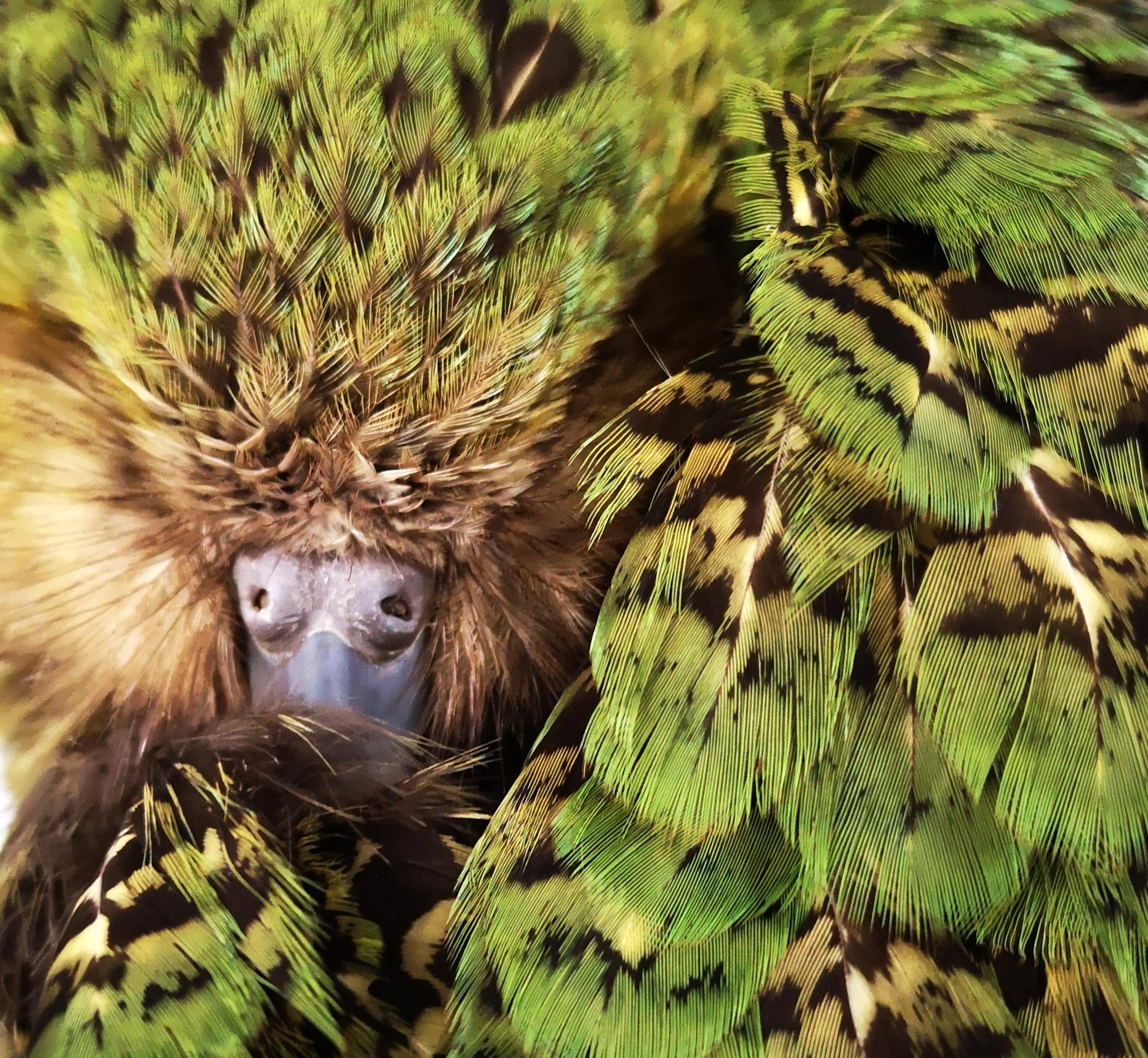
New research highlights how the kākāpō, a unique flightless bird from New Zealand, evolved green and olive color variations to survive predation.
Despite dwindling numbers, these color traits have survived through the ages, initially aiding in evading predators that are now extinct.
Evolution of Kākāpō Coloration
Aotearoa New Zealand’s flightless parrot, the kākāpō, evolved two different color types to potentially help them avoid detection by a now-extinct apex predator, Lara Urban at Helmholtz AI, Germany and colleagues from the Aotearoa New Zealand Department of Conservation and the Māori iwi Ngāi Tahu, report today (September 10) in the open-access journal PLOS Biology.
The kākāpō (Strigops habroptilus) is a nocturnal, flightless parrot endemic to New Zealand. It experienced severe population declines after European settlers introduced new predators. By 1995 there were just 51 individuals left, but intense conservation efforts have helped the species rebound to around 250 birds. Kākāpō come in one of two colors — green or olive — which occur in roughly equal proportions.
Genetic Insights Into Kākāpō Survival
To understand how this color variation evolved and why it was maintained despite population declines, researchers analyzed genome sequence data for 168 individuals, representing nearly all living kākāpō at the time of sequencing. They identified two genetic variants that together explain color variation across all the kākāpō they studied. Scanning electron microscopy showed that green and olive feathers reflect slightly different wavelengths of light because of differences in their microscopic structure.
The researchers estimate that olive coloration first appeared around 1.93 million years ago, coinciding with the evolution of two predatory birds: Haast’s eagle and Eyles’ harrier. Computer simulations suggest that whichever color was rarer would have been less likely to be detected by predators, explaining why both colors persisted in the kākāpō population over time.
The results suggest that kākāpō coloration evolved due to pressure from apex predators that hunted by sight. This variation has remained even after the predators went extinct, around 600 years ago.
Conservation Implications
The authors argue that understanding the origins of kākāpō coloration might have relevance to the conservation of this critically endangered species. They show that without intervention, kākāpō color variation could be lost within just 30 generations, but it would be unlikely to negatively impact the species today.
Co-author and conservationist Andrew Digby adds, “By using a comprehensive genomic library for the species, we have explained how the current color morphs of kākāpō might be a result of pressure from extinct predators. Using genomics to understand the current significance of such characteristics is important as we seek to restore the mauri (life force) of kākāpō by reducing intensive management and returning them to their former habitats.”
Reference: “The genetic basis of the kākāpō structural color polymorphism suggests balancing selection by an extinct apex predator” by Lara Urban, Anna W. Santure, Lydia Uddstrom, Andrew Digby, Deidre Vercoe, Daryl Eason, Jodie Crane, Kākāpō Recovery Team, Matthew J. Wylie, Tāne Davis, Marissa F. LeLec, Joseph Guhlin, Simon Poulton, Jon Slate, Alana Alexander, Patricia Fuentes-Cross, Peter K. Dearden, Neil J. Gemmell, Farhan Azeem, Marvin Weyland, Harald G. L. Schwefel, Cock van Oosterhout and Hernán E. Morales, 10 September 2024, PLOS Biology.
DOI: 10.1371/journal.pbio.3002755
Never miss a breakthrough: Join the SciTechDaily newsletter.
Follow us on Google and Google News.