
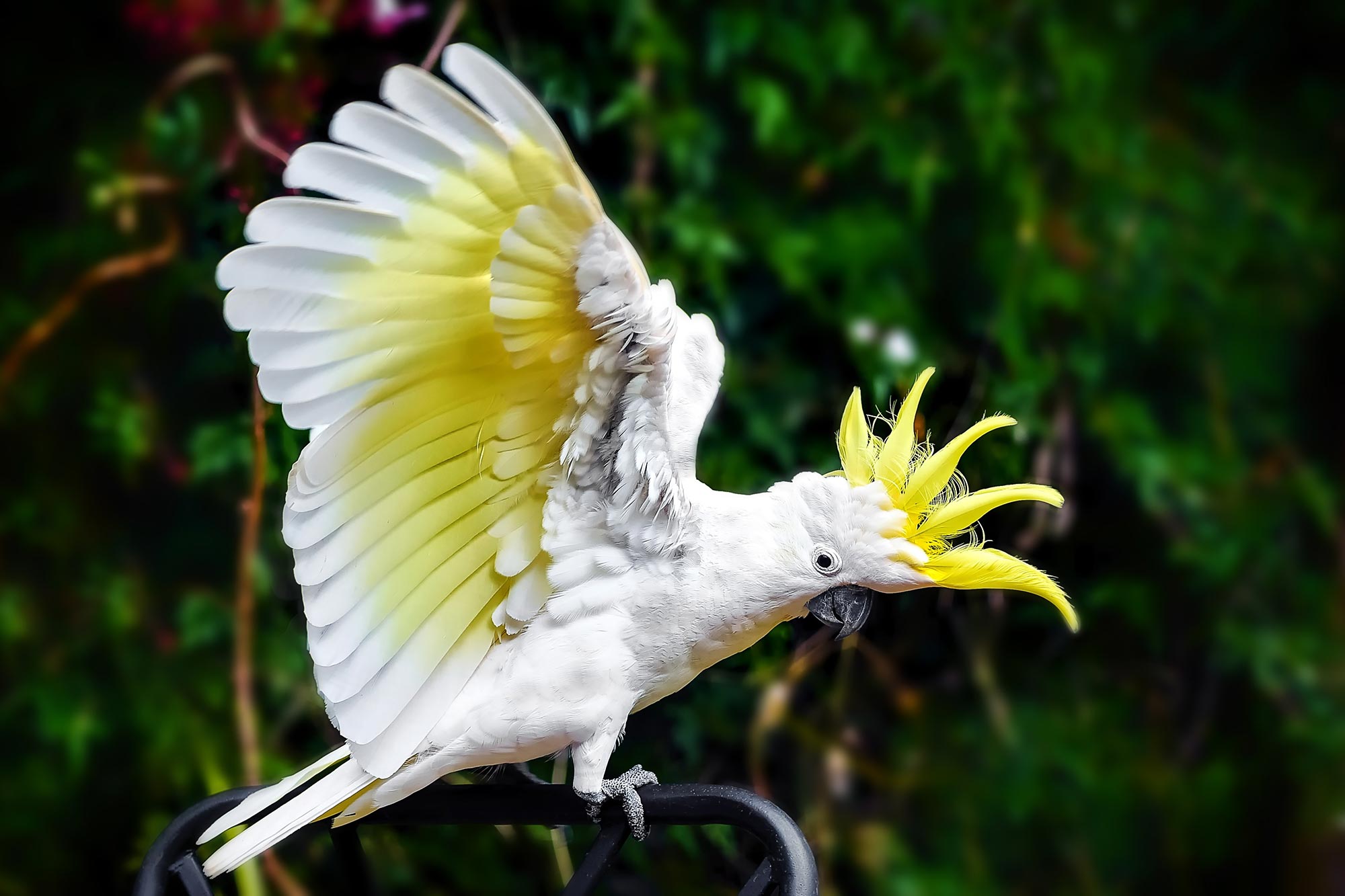
Researcher have made pivotal advancements in the conservation of the Sulphur-crested and Yellow-crested cockatoos by employing genomic studies to uncover new genetic details.
These findings offer new hopes for protecting these species from extinction and enhancing conservation tactics through precise genetic knowledge.
Groundbreaking Genetic Discoveries in Cockatoo Conservation
Researchers from the School of Biological Sciences at The University of Hong Kong (HKU) have made groundbreaking discoveries that could revolutionize the conservation of two iconic cockatoo species: the Sulphur-crested Cockatoo and the critically endangered Yellow-crested Cockatoo, of which fewer than 2,000 remain in the wild.
Previously, no whole-genome studies had been conducted on either species, which were differentiated only by subtle physical traits. Through two pioneering studies, the team uncovered vital genetic insights, reshaping our understanding of these birds and providing renewed hope for their survival in the face of habitat loss and illegal trapping. These findings, published in the prestigious journals Molecular Biology and Evolution and Molecular Ecology, are poised to play a crucial role in shaping future conservation strategies.

Revitalizing Species Management with Genetic Insights
Although originally believed to be two distinct species, for over a century the Triton Cockatoo (Cacatua triton) has been thought to be the same species as the Sulphur-crested Cockatoo (Cacatua galerita) due to their similar appearance and with the distribution of the singular species including Australia and New Guinea. However, the study in Molecular Biology and Evolution, using cutting-edge genomic analysis, has reconfirmed that the Triton Cockatoo is, in fact, a distinct species occurring across the majority of New Guinea, with the Sulphur-crested Cockatoo now known to be restricted to just Australia and very small portion of southern New Guinea.

This finding has profound implications for conservation, particularly in New Guinea where both species exist and where programs led by the Indonesian government and NGOs aim to reintroduce surrendered pet birds into the wild on the western part of the island to counter the effects of climate change, land-use change, and poaching.
Dr. Arthur Sands, an expert on cockatoos from SBS and the main author of the study in Molecular Biology and Evolution, emphasized the importance of this distinction, he said, ‘Introducing the wrong species in the wrong place could jeopardize their long-term survival in the wild through hybridization or competition between the Triton Cockatoo and the Sulphur-crested Cockatoo, potentially even disrupting ecosystems in the long term.’ He stressed that such reintroduction programs must incorporate genetic data moving forward to avoid this. Recognizing the Triton Cockatoo as a distinct species will now also require updates to global legislation, such as the Convention on International Trade in Endangered Species of Wild Fauna and Flora (CITES) which aims to protect these and many other parrot species, and may require new levels of protection being issued given the split.

Advancements in Museomics Reveal New Subspecies Insights
The other study, in Molecular Ecology, focused on the critically endangered Yellow-crested Cockatoo (Cacatua sulphurea), native to Indonesia and East Timor, using DNA extracted from 100-year-old museum specimens to elucidate genetic diversity among subspecies. This approach, known as ‘museomics’, involves studying genetic materials from preserved specimens kept in museums, in this case across the USA and Europe. It allows researchers to gather vital biological data without disturbing the remaining endangered individuals in the wild.

This research identified three genetically distinct groups across the Wallacean region, a biogeographical zone that lies between the Asian and Australian continental shelves, simplifying the previous classification of seven subspecies. The findings suggest that the subspecies C. s. citrinocristata may not be as distinct as previously thought and raises questions about how the isolated C. s. abbotti population ended up on a remote Indonesian island, given that cockatoos are not known for long-distance migration. These discoveries redefine the genetic structure of the Yellow-crested Cockatoo and offer new insights into its evolution and distribution.
Dr. Astrid Andersson, who led the study in Molecular Ecology explained, “One of the benefits of museomics is the ability to examine genetic data from taxa that are extinct, rare or inaccessible. In this case, it provides valuable information to inform conservation efforts, such as translocation, genetic rescue, and breeding—steps that are crucial to avoid global extinction of C. sulphurea.”

Implications for Global Conservation Efforts
Professor Juha Merilä, Associate Director (Ecology & Biodiversity Research Groups) and Chair Professor of SBS, who leads the research group where Drs. Sands and Andersson are based, stated, “Accurate identification of evolutionarily significant units and species is essential for the effective management and conservation of rare and threatened species. Our research highlights the genetic diversity within and among these iconic cockatoo species and underscores the importance of incorporating genetic data into conservation planning.”
References:
“Genomic and Acoustic Biogeography of the Iconic Sulphur-crested Cockatoo Clarifies Species Limits and Patterns of Intraspecific Diversity” by Arthur F Sands, Astrid A L Andersson, Kerry Reid, Taylor Hains, Leo Joseph, Alex Drew, Ian J Mason, Frank E Rheindt, Caroline Dingle and Juha Merilä, 24 October 2024, Molecular Biology and Evolution.
DOI: 10.1093/molbev/msae222
“Museomics Sheds Light on Evolutionary Diversity in a Critically Endangered Cockatoo Species From Wallacea” by Astrid A. Andersson, Arthur F. Sands, Kerry Reid, Taylor Hains, Paolo Momigliano, Jessica G. H. Lee, Geraldine Lee, Frank E. Rheindt, Juha Merilä and Caroline Dingle, 17 December 2024, Molecular Ecology.
DOI: 10.1111/mec.17616
Never miss a breakthrough: Join the SciTechDaily newsletter.
Follow us on Google and Google News.