

C. diff, a dangerous and highly contagious infection, spreads in hospitals much more than previously believed, especially through environmental surfaces like beds, equipment, and even healthcare workers’ hands.
- C. difficile (C. diff) is a highly contagious bacteria and a leading cause of hospital-acquired infections.
- New research shows that C. diff spreads over three times more than previously estimated.
- The bacteria can move silently across surfaces in hospital settings and survive for weeks, infecting patients long after the original source is gone.
C. diff Spread Worse Than Thought
New research suggests that one of the most common hospital-acquired infections spreads far more widely in intensive care units than previously recognized—over three times more than earlier estimates.
Clostridium difficile, or C. diff, is a highly contagious bacterium that causes diarrhea, abdominal pain, and fever, and can be fatal in about 6% of U.S. cases. Earlier studies indicated that direct transmission between patients was relatively rare. But by tracking C. diff throughout the hospital environment, not just in patients, researchers uncovered a hidden web of contamination and transmission.
“There’s a lot going on under the hood that we’re just not seeing,” says Michael Rubin, MD, PhD, epidemiologist and infectious diseases specialist in the Spencer Fox Eccles School of Medicine at the University of Utah and senior author on the study. “And if we ignore that, then we’re potentially putting patients at unnecessary risk.”
The results are published today (April 4) in JAMA Network Open.
How C. diff Moves Through Hospitals
To track infections throughout the healthcare setting, the researchers sampled for C. diff from nearly 200 patients across two intensive care units (ICUs), as well as collecting thousands of samples from hospital room surfaces and healthcare providers’ hands.
The researchers used whole genome DNA sequencing to precisely track bacterial movement. Different bacterial samples have genetic differences, which the researchers measured to track movement of C. diff around healthcare facilities. The team was even able to use these differences to determine if two bacterial samples came from the same patient, rather than being acquired independently from a source outside the hospital.
Surface Contamination More Widespread Than Expected
The team detected the bacteria in 10% of patient ICU stays—either on the patient’s body or in their immediate room environment. And in most of those cases, the bacteria were genetically identical to those found in another patient or another patient’s room, suggesting that the bacteria originated from the same patient rather than coming from two different sources.
“We find about the same amount of patient-to-patient transmission as previous studies,” explains Lindsay Keegan, PhD, research associate professor in epidemiology at U of U Health and first author on the study. “But what we find that’s novel is that there is a lot more movement of C. diff between surfaces, from surface-to-patient, and from patient-to-surface than previously found.”
Invisible Carriers, Long-Term Threats
By simultaneously tracking different bacterial varieties on patients, health care providers’ hands, and in the environment, the researchers uncovered cases of potential transmission that wouldn’t have been caught with other methods.
Notably, the team discovered that for more than half of potential transmission events, the two patients involved were never even in the hospital at the same time—sometimes being separated by weeks. The key to this paradox is the exceptional hardiness of C. diff: the bacteria can survive for a long time outside the body, withstanding common antibacterial measures such as alcohol-based cleansers. Bacteria from one person could be inadvertently transferred to surfaces in a different room, where they could lie in wait for another patient, undetected.
Importantly, not all C. diff bacteria cause disease, and most of the C. diff spread the researchers observed involved harmless bacterial varieties. However, the researchers say that the spread of non-disease-causing C. diff suggests that similar transmission of disease-causing C. diff could be going undetected.
Ramping Up Protection Protocols
The researchers say that they hope their results lead to stronger precautions to prevent the spread of disease within hospitals.
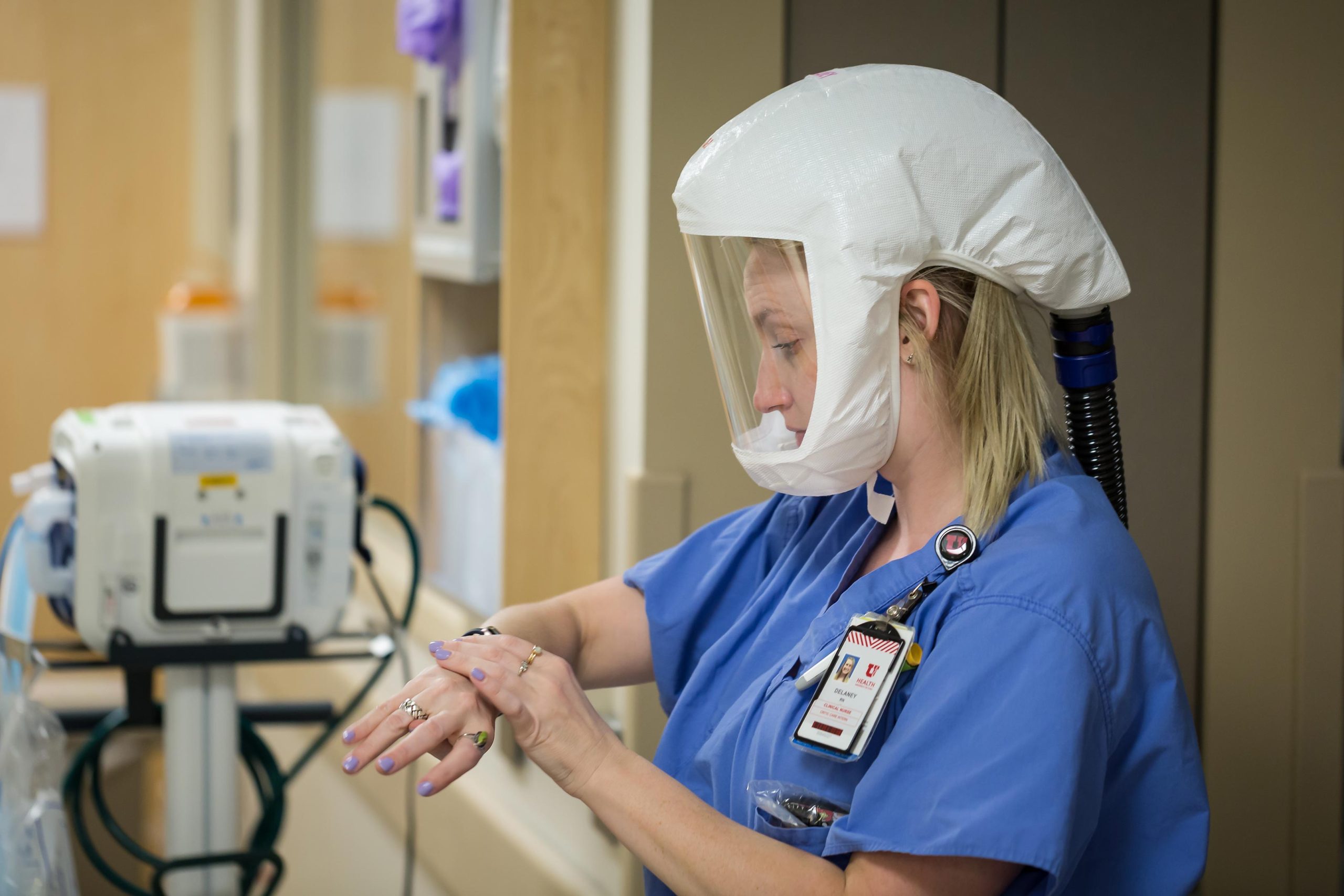
“What I’m hoping we get from this paper is that health care providers put a greater emphasis on infection prevention measures and adhere to them as much as they possibly can,” Rubin says. Using personal protective equipment such as gloves and gowns, as well as practicing rigorous hand hygiene, are crucial, he adds. “Those are the measures that can help interrupt this type of invisible transmission.”
Reference: “Environmental and Health Care Personnel Sampling and Unobserved Clostridium difficile Transmission in ICU” by Lindsay T. Keegan, Windy Tanner, Brian Orleans, Rachel B. Slayton, John A. Jernigan, L. Clifford McDonald, Judith Noble-Wang, Molly Leecaster, Candace Haroldsen, Karim Khader, Damon J.A. Toth, Tierney O’Sullivan, Matthew H. Samore, William Brazelton and Michael Rubin, 4 April 2025, JAMA Network Open.
DOI: 10.1001/jamanetworkopen.2025.2787
The study was funded by the National Institutes of Health / National Institute of Allergy and Infectious Diseases grant 1K01AI159519 and the Centers for Disease Control and Prevention grants 5U01CK000585 and HHSD-200-2011-42039. The content is solely the responsibility of the authors and does not necessarily represent the official views of the National Institutes of Health.
Keegan reported receiving grants from the US Centers for Disease Control and Prevention (CDC) Center for Forecasting and Outbreak Analytics outside the submitted work. Karim Khader, PhD, reported receiving grants from the Department of Veterans Affairs (VA) and bioMerieux outside the submitted work. Rubin reported receiving grants from the CDC and the VA outside the submitted work.
Never miss a breakthrough: Join the SciTechDaily newsletter.
Follow us on Google and Google News.
2 Comments
C. Diff is no joke.
I got infected by this in the hospital getting an appendectomy.
I ended up getting admitted and guaranteed for 7 straight days.
Took 3 different attempts with different antibiotics to get rid of it.
People were required to wear a literal hazmat style suit to come visit me.
Even after it was gone I haven been right ever since.
They just ended up telling me I have IBS now.
Its made me so upset that I’ve wondered if I should sue the hospital.
guaranteed => quarantined