
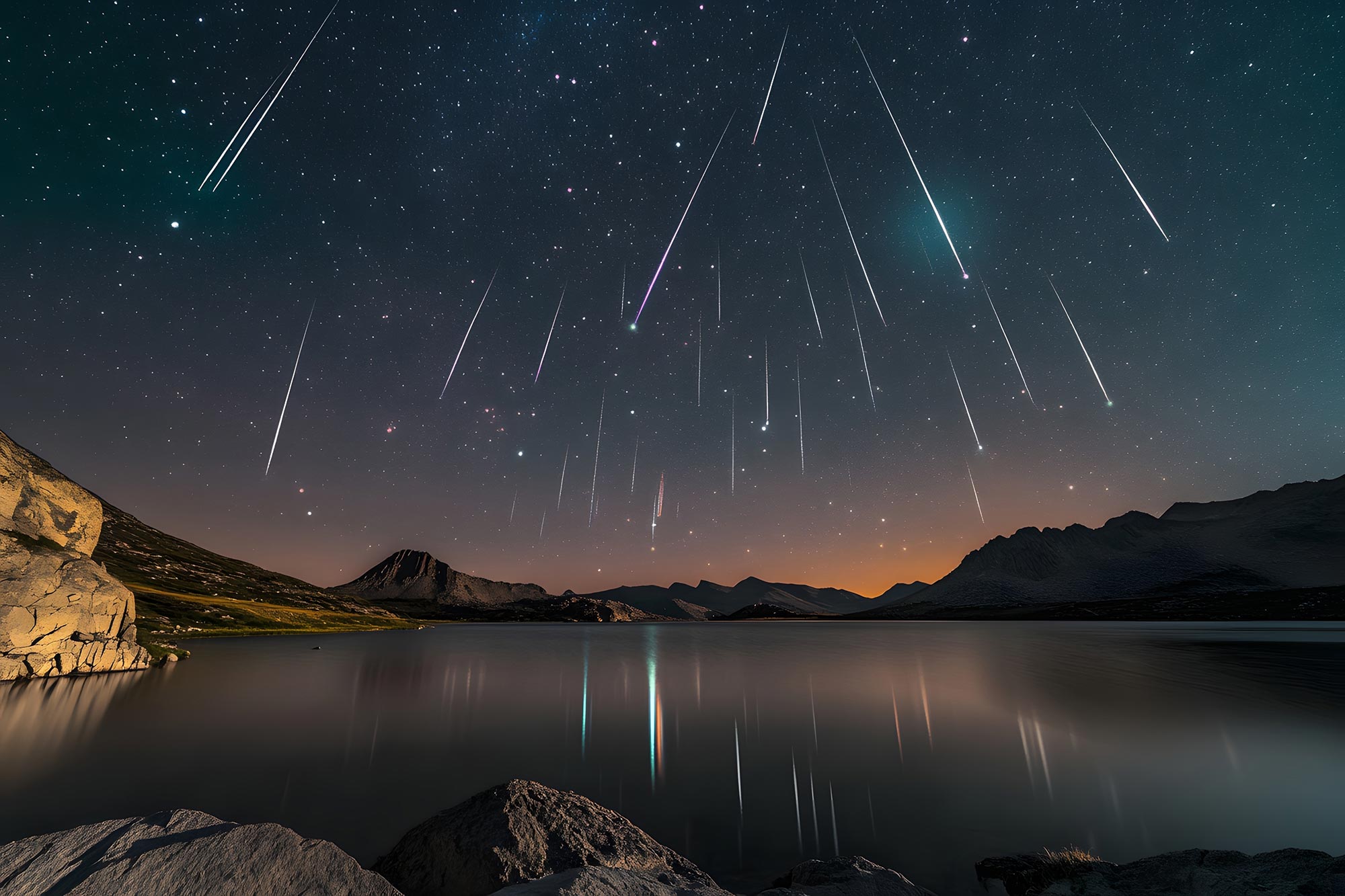
The Taurid meteor shower’s dazzling “Halloween fireballs” may be more than just a cosmic show.
New research led by Mark Boslough suggests that clusters of larger debris could swing near Earth in 2032 and 2036, potentially heightening impact risks.
Taurid Meteor Shower: Halloween’s Fiery Sky Spectacle
Each year from late October through early November, the Taurid meteor shower puts on one of the season’s most striking celestial displays. Often nicknamed the “Halloween fireballs,” the meteors appear to radiate from the constellation Taurus (the bull). The best views come from areas far from city lights, where the night sky is darkest. In New Mexico, where vast landscapes and minimal light pollution create exceptional stargazing conditions, observers enjoy a particularly vivid view of the show.
Meteors streak across the sky when bits of cosmic material, tiny pebbles, dust, or rock, burn up as they collide with Earth’s atmosphere. The Taurid meteors come from debris shed by Comet Encke, which travels around the sun and leaves behind a trail of dust and rock. Earth passes through this debris field twice each year: once in late October and early November, when the nighttime Taurids appear, and again in June, when the Beta Taurids occur during daylight hours. The June meteors are usually invisible to the naked eye unless they create exceptionally bright fireballs.
Could the Taurids Pose a Danger to Earth?
Scientists have begun to explore whether larger fragments within the Taurid stream could pose a potential hazard. A new study led by Research Professor Mark Boslough investigates this question in detail. The findings were published in a special issue of Acta Astronautica, part of the proceedings of this year’s Planetary Defense Conference in Cape Town, South Africa. The paper, titled “2032 and 2036 risk enhancement from NEOs in the Taurid stream: Is there a significant coherent component to impact risk?” examines whether clusters of near-Earth objects (NEOs) within the Taurid stream could increase the likelihood of impacts during future encounters.
“Planetary defense is the multidisciplinary and internationally coordinated effort to protect the Earth and its inhabitants from impacts by near-Earth objects (NEOs),” explained Boslough. “It requires surveys to discover and track NEOs, campaigns to characterize those that are hazardous, modeling efforts to understand and predict impact effects and associated consequences, and mitigation through impact avoidance and/or civil defense.”
Understanding Near-Earth Objects and Impact Hazards
A near-Earth object, or NEO, is an asteroid, comet or fragment whose orbit comes close to or can cross Earth’s path around the sun. These objects have the potential to collide with our planet, but only if their orbit intersects Earth’s and they arrive there at the exact same time. Small particles, such as the dust and pebbles that create the Taurid “Halloween fireballs,” enter our atmosphere regularly. Larger objects, like those responsible for the Chelyabinsk meteor and Tunguska events, strike far less often.
Mitigation requires the development of ways to deflect or disperse an object on a collision course with sufficient warning, as well as emergency response planning for unexpected or unpreventable impacts.
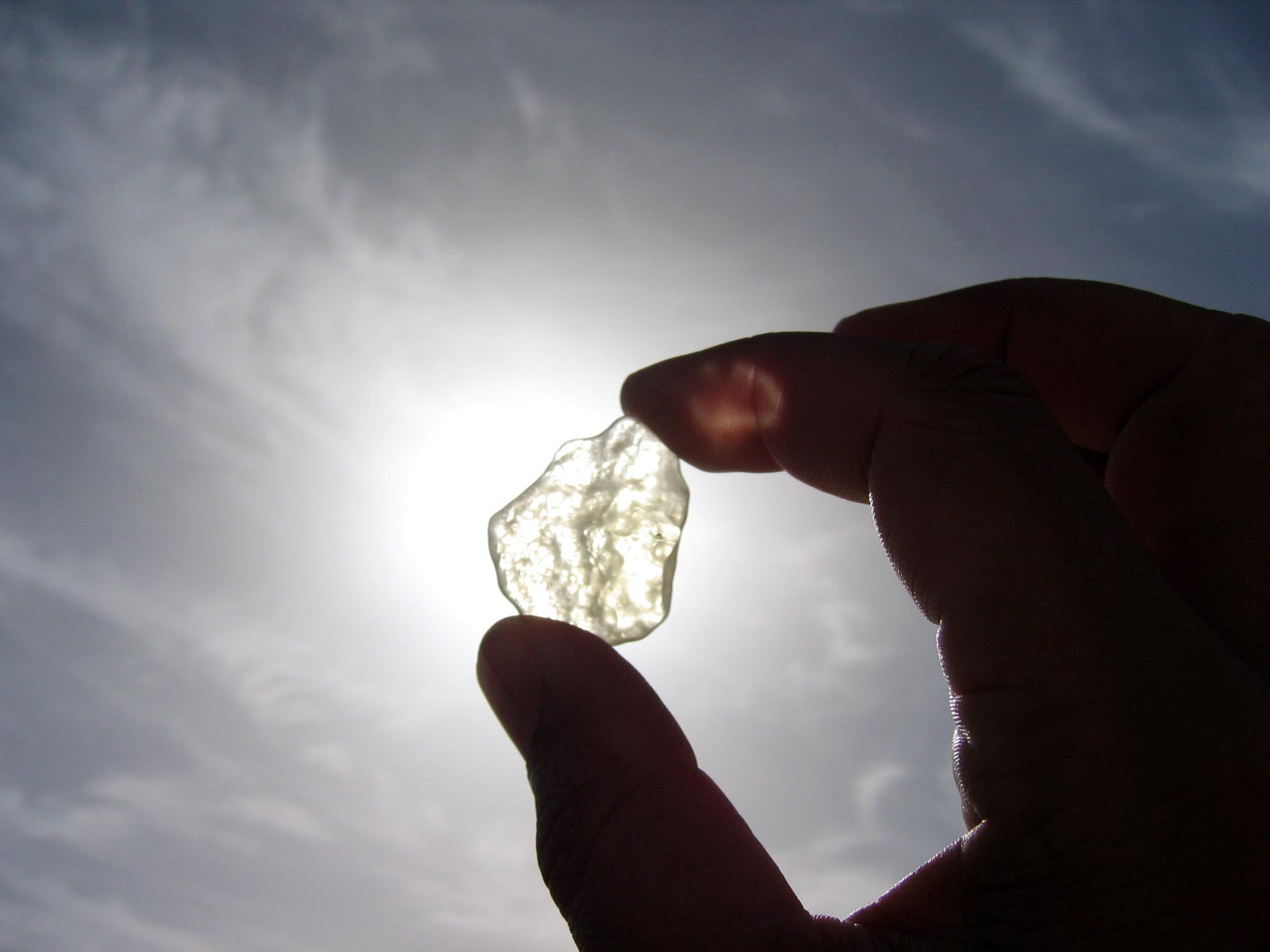
Taurid Resonant Swarm: A Cosmic Mystery
The research incorporated recently published data from observational campaigns associated with the Taurid stream. The researchers found that the risk from airburst-sized near-Earth objects (NEOs), which are small enough to explode in the atmosphere instead of striking the ground, might be larger than currently estimated. Likewise, the researchers also investigated the possibility of a Taurid resonant swarm (TRS).
“The resonant swarm is theoretical, but there is some evidence that a sparse swarm of small objects exists because bright fireballs and seismic signatures of impacts on the moon have been observed at times that the theory has predicted,” explained Boslough.
Objects in the Taurid stream orbit the sun seven times for every two orbits of Jupiter. This cycle, known as a resonance, means that part of the stream approaches Jupiter at regular intervals. Because Jupiter is the largest planet in the solar system, its strong gravity can pull these objects together, creating dense clusters. It’s somewhat like a prospector panning for gold—swirling the pan at just the right rhythm to make the specks collect in one place.
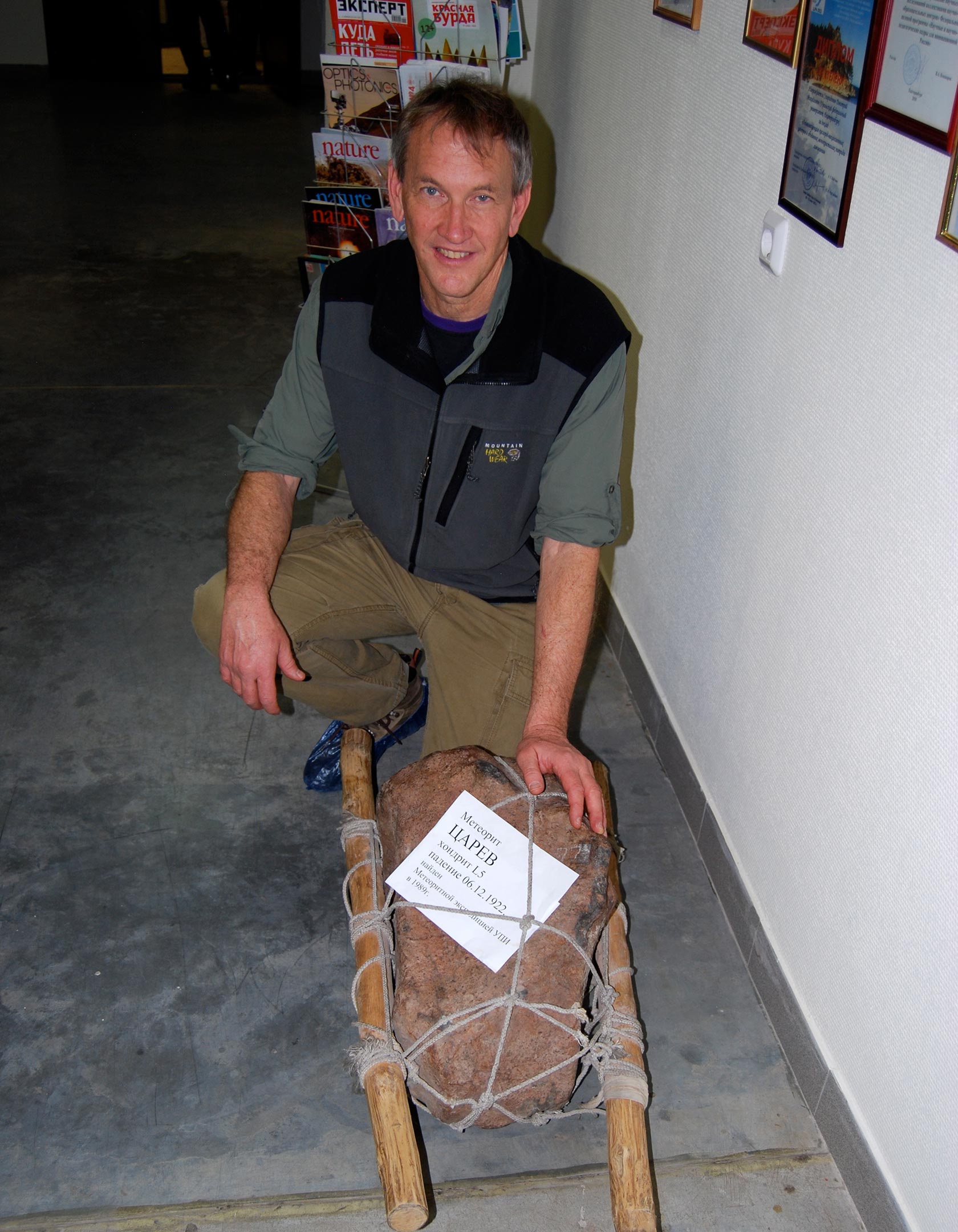
2032 and 2036: Windows of Elevated Impact Risk
The findings suggest that if a Taurid swarm does exist it will pass close to Earth in 2032 and 2036. During this time, Earth could experience a higher impact risk.
“Our findings are that we have the technology to test the Taurid resonant swarm by using existing telescopes for targeted sky surveys in 2032 and 2036 when the hypothetical swarm will make very close approaches,” said Boslough.
In 2032 and 2036, objects in a hypothetical Taurid swarm could be observable according to the researchers, and the risk from airburst-sized NEOS might be larger than currently estimated. A concentration of larger (Chelyabinsk or Tunguska-sized) objects in a swarm would be observable by telescopes, if they exist, but only after they miss the Earth and recede into the nighttime sky.
Chelyabinsk, Tunguska, and Lessons from Airburst Models
Boslough’s airburst models during his time at Sandia National Laboratories (SNL) explores the Chelyabinsk explosion and estimate that the asteroid was about 60 feet in diameter and had an explosive yield of about a half megaton (TNT equivalent). Likewise, the Tunguska was probably about 10 times more powerful (3 to 5 megatons), also based on Boslough’s SNL analysis.
“If we discover the objects with enough warning time, then we can take measures to reduce or eliminate the risk. If the new infrared telescope (NEO Surveyor) is in operation, then we can potentially have much more warning time,” he said.
The research was funded by NASA at UNM and in partnership with NNSA funding at Los Alamos National Laboratory (LANL) in the planetary defense program.
Preparedness and Public Awareness
Boslough suggests that it is important for citizens to be aware of various geohazards including weather, fire, earthquakes, and volcanoes, and to put them in perspective, and to be prepared to act.
“Asteroid impacts represent a small but significant risk, and New Mexico’s national labs have some of the best minds working on the problem,” he said.
One of the key lessons from the Chelyabinsk event is that most injuries were caused by flying glass when people rushed to windows to watch the bright flash in the sky. If a similar event were to occur over New Mexico, this would likely be the primary cause of injury. Experts say the public can learn from Chelyabinsk and to stay away from windows and avoid looking directly at the blast.
The 2032 pass of the hypothetical swarm will arrive from the nighttime side of the Earth. Boslough says that the probability of an impact or airburst might be higher than average, if the hypothesis of a significant concentration is correct.
Daytime Fireballs and the 2036 Approach
Boslough explains that there are such things as daytime fireballs, but they must be extremely bright in order to compete with the sun. A concentration of objects in a swarm (if it exists) would be observable by telescopes after they miss the Earth and recede into the night.
“The average probability is extremely low, so even an enhanced risk means that the probability would still be low. The swarm will come from the direction of the sun in 2036, so fireballs will not be seen in our blue skies unless they are extremely bright,” he explained.
Magdelena Ridge observatory near Socorro is involved in the observational part of planetary defense, and both SNL and LANL have active planetary defense programs. While the university and national laboratories are continuing to research the TRS, Boslough cautions the public about where they get their information from.
Battling Misinformation and Myths
“A lot of false information and mythology about this subject has been promulgated on social media, online sources, and sensational TV shows. This media gives the public the wrong impression about NEOs, impacts, and airbursts, and what we can do to reduce the risk,” he said.
Boslough has worked extensively to correct these misconceptions. His published research helped prompt a scientific journal to retract a paper that wrongly claimed an ancient city in Jordan was destroyed by a Tunguska-scale airburst. The study had misunderstood the physical evidence and nature of such explosions. Boslough also coauthored a detailed rebuttal of the unproven theory suggesting that the Taurid meteor swarm caused a global climate event 12,900 years ago.
How and When to Watch the Taurids
For skywatchers eager to see the Taurid meteor shower, Boslough notes several upcoming opportunities. The best viewing time will be on Halloween night after 2 a.m., when the moon has set and the sky is darkest. A few days following the full moon on November 5, the Taurids should again be visible in the evening sky before moonrise, offering another chance to witness their brilliant fireballs streaking across the heavens.
Reference: “2032 and 2036 risk enhancement from NEOs in the Taurid stream: Is there a significant coherent component to impact risk?” by Mark Boslough, Peter G. Brown, David Clark, Paul Wiegert and Quanzhi Ye, 25 September 2025, Acta Astronautica.
DOI: 10.1016/j.actaastro.2025.09.069
Never miss a breakthrough: Join the SciTechDaily newsletter.
Follow us on Google and Google News.
4 Comments
Ya, Grape It’s Shape
“Green Choco Sorbate”
‘Just a minute,you are in’
Please don’t use AI-generated graphics with your articles.
Saw an airburst this morning about 3:30am in south Phoenix it went red to green and burned out what looked like about 100’ above me. It was pretty cool
Thank you for the great information.It is like ” mind candy” to this science geek!!