
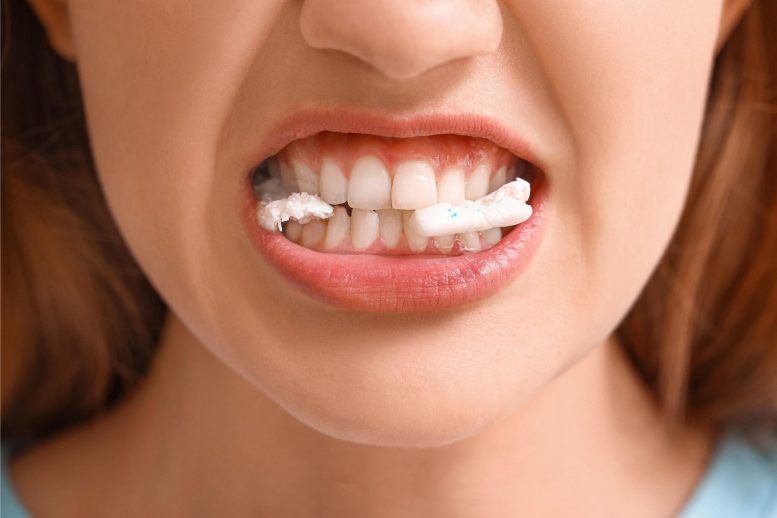
A study reveals that chewing ability significantly affects blood glucose control in Type 2 diabetes patients. Those with good dental function had lower glucose levels, suggesting oral health plays a crucial role in diabetes management.
Mehmet A. Eskan, a researcher at the University at Buffalo, has a recommendation for medical practitioners treating individuals with Type 2 diabetes (T2D): check your patients’ teeth.
Eskan’s recent research, published in the journal PLOS ONE, revealed a notable correlation between chewing functionality and blood glucose levels in T2D patients. Specifically, he found that patients with T2D who maintain a full chewing ability exhibit significantly lower blood glucose levels compared to those with compromised chewing function. Eskan is a clinical assistant professor in the Department of Periodontics and Endodontics at the School of Dental Medicine at the University at Buffalo.
The retrospective study looked at data gathered from 94 patients with T2D who had been seen at an outpatient clinic in a hospital in Istanbul, Turkey. The patients were divided into two groups: the first group included patients who had good “occlusal function” —enough teeth placed properly and making contact in such a way that a person can chew their food well. That group’s blood glucose level was 7.48. The second group couldn’t chew well, if at all, because they were lacking some or all of those teeth; their blood glucose level was almost 27% higher, at 9.42.
Mastication Matters
When you sit down at a picnic table with family and friends, mastication—chewing—is the last thing on your mind. However, as you bite into your burger, several things start to happen. Digestion, the process by which your body extracts nutrients from food, begins as chewing stimulates the production of saliva. Nutrients that are important to reduce blood glucose levels include fiber, which is obtained in large part through chewing appropriate foods. Chewing also has been reported to stimulate reactions in the intestine that lead to increased insulin secretion, and the hypothalamus that promote a feeling of satiety, resulting in less food intake. Eating less decreases the likelihood of becoming overweight, which is a major risk factor for developing T2D.
Dental Care and the Big Picture
Eskan received his DDS at Hacettepe University, a leading medical research center in Turkey, and earned his Ph.D. at the University of Louisville, where he also completed a residency in periodontology. “My special clinical interest is to treat dental patients who are systemically compromised,” he said. His research goal is to contribute to the big picture of improving public health. This research notes that, as of 2019, almost half a billion people worldwide had diabetes, and at least 90% of those patients with diabetes have T2D.
Addressing oral health has recently become part of the approach to managing diabetes along with encouraging patients to maintain a healthy weight, eat a healthy diet, and quit smoking. “Our findings show there is a strong association between mastication and controlling blood glucose levels among T2D patients,” said Eskan. This study did not find any independent variables that could affect blood glucose levels among the subjects because there were no statistical differences among subjects regarding body mass index (BMI), sex, smoking status, medications, or infection as indicated by white blood cell count (WBC) at the baseline.
The dramatic improvement in one patient’s case described in a 2020 study co-led by Eskin illustrates the potential benefit of improving occlusal function through dental implants and appropriate fixed restoration. A T2D patient whose chewing function was severely impaired by missing teeth presented initially with a blood glucose level of 9.1. The patient obtained nutrition by using a bottle and eating baby food. Four months after treatment with a full mouth implant-supported fixed restoration, the patient’s glucose level dropped to 7.8. After 18 months, it decreased to 6.2.
Complications Kill
Research has shown that an increase of just 1% in blood glucose level is associated with a 40% increase in cardiovascular or ischemic heart disease mortality among people with diabetes, according to Eskan. Other complications can include kidney disease, eye damage, neuropathy, and slow healing of simple wounds like cuts and blisters.
“I’m interested in research that can improve people’s health now,” said Eskan. He and co-author Yeter E. Bayram, MD, Department of Internal Medicine, Hamidiye Sisli Etfal Education and Research Hospital in Istanbul, look forward to further studies that explore possible causal relationships between occlusal support and blood glucose levels.
Reference: “Mastication inefficiency due to diminished or lack of occlusal support is associated with increased blood glucose levels in patients with type 2 diabetes” by Yeter E. Bayram and Mehmet A. Eskan, 14 April 2023, PLOS ONE.
DOI: 10.1371/journal.pone.0284319
Never miss a breakthrough: Join the SciTechDaily newsletter.
Follow us on Google and Google News.
1 Comment
Fix the math, it is not 2%