
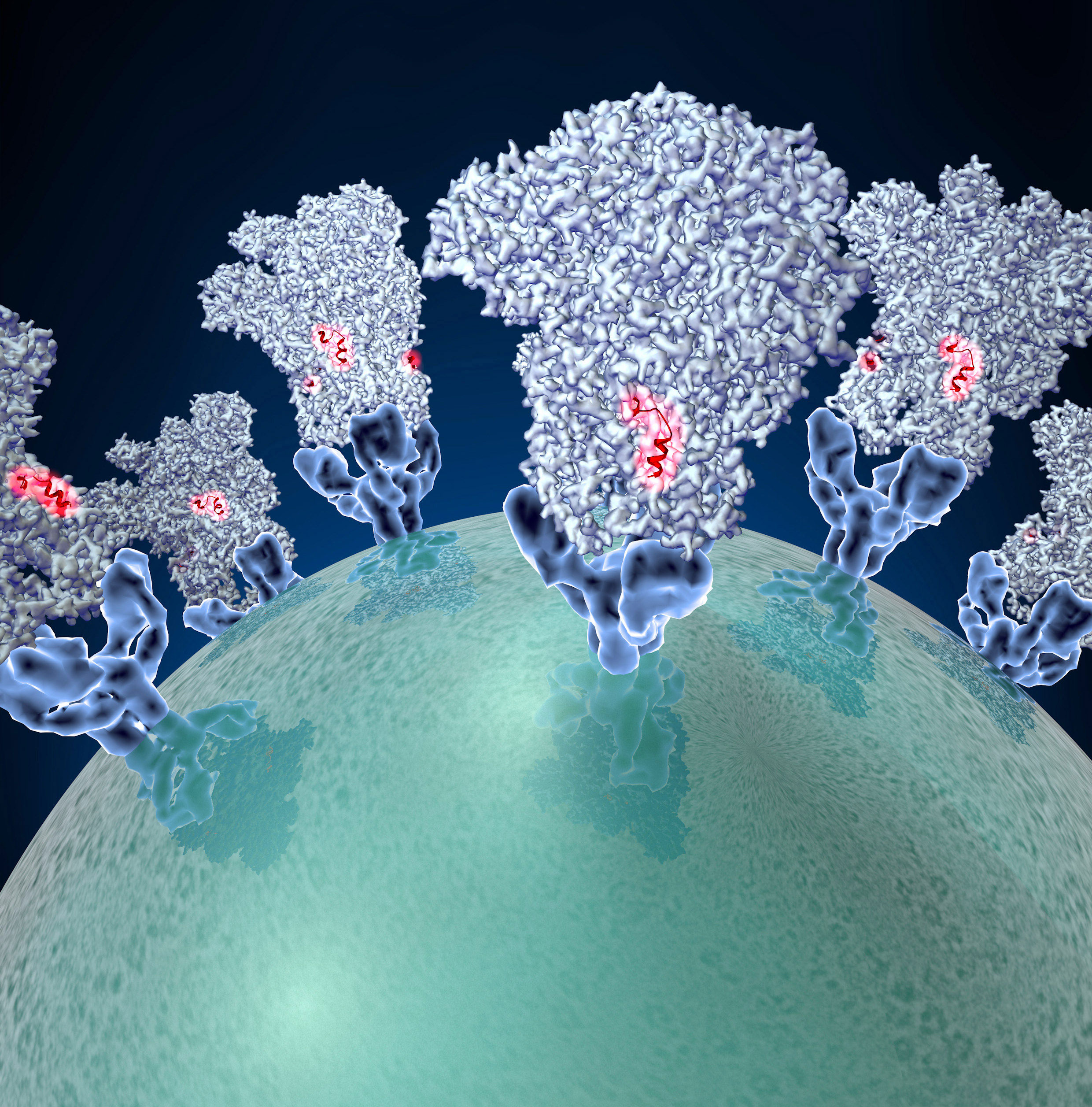
As population immunity continues to grow, understanding how immune responses influence both disease outcomes and viral evolution has become increasingly important.
Years of vaccination and repeated exposure have left many people with some level of protection against COVID 19. Even so, scientists are still sorting out a key question: how do neutralizing antibodies relate to how sick someone gets, and how do those antibodies push the virus to change over time?
Researchers led by Prof. Genhong Cheng at the University of California, Los Angeles (UCLA) analyzed patient data from different phases of the COVID-19 pandemic to examine how neutralizing antibody responses influenced SARS-CoV-2 evolution and disease progression. Using a single-center, retrospective longitudinal cohort, the team connected real-world illness patterns with laboratory measurements of antibody strength.
Antibody Levels Paint a Complex Clinical Picture
The researchers analyzed serum samples from individuals infected during the initial pandemic wave (pre-vaccine), during and after the Omicron wave. For the first-wave patients, they sorted people into three groups based on serum virus neutralization titers: lower (S25), middle (S50), and upper (S75) antibody-level groups. Neutralization titers reflect how well antibodies in a blood sample can block the virus in a lab test, but they do not capture every part of immunity.
The results pointed to a more complicated story than a simple “more antibodies equals milder disease” narrative. People in the lower antibody group tended to have symptoms that lasted longer and underwent more PCR testing, which lines up with slower viral clearance. Yet none of the S25 patients developed severe disease. Meanwhile, some patients with midrange or higher neutralizing levels needed medications or respiratory support.
One way to interpret this pattern is that antibody levels may sometimes act as a marker of how the body is responding, not only how well it is protected. Severe illness can be shaped by many factors beyond neutralizing antibodies, including how quickly the immune system coordinates its response and how much inflammation builds up in the process. That broader view fits the authors’ conclusion that “neutralizing antibodies are a key, but not sole, determinant of COVID-19 clinical outcomes,” the authors pointed out.
The Evolutionary Clue: Escaping Immunity vs. Gaining Entry
The study also explored how antibody pressure can steer viral evolution. By comparing serum collected at different times against a panel of historical variants, the team saw a consistent decline in neutralization potency when older antibodies were tested against newer strains. In practical terms, immune defenses shaped by early infections often struggled to recognize later variants.
Antibodies generated from early infections showed a remarkable reduction, or even complete loss, of effectiveness against newer variants such as Omicron sub-lineages. Antibodies elicited by newer infections performed better against contemporaneous viruses, but still not perfectly, suggesting the immune system updates its playbook while the virus keeps rewriting its own.
That dynamic helps explain why the virus repeatedly favors mutations that change the parts of the spike protein antibodies most commonly target, and why matching immunity to the current viral landscape remains a moving target.
This pattern confirms that population-wide antibody responses exert a powerful selective pressure, driving the virus to mutate and evade detection. However, escape alone is insufficient for a variant to become dominant. The researchers highlighted the case of XBB.1.5.
“While it possessed a similar ability to evade antibodies as its predecessor XBB.1, a single mutation (S486P) in its spike protein significantly increased its affinity for the human ACE2 receptor,” the authors highlighted.
This enhanced binding capability provided the critical fitness advantage that propelled XBB.1.5 to global dominance. The study thus establishes that successful variants must evolve under dual constraint: reducing vulnerability to neutralization while maintaining or improving their efficiency in infecting cells.
Implications for Public Health and Surveillance
This long-term cohort study offers several important implications. It provides a molecular epidemiological explanation for the seemingly contradictory clinical observation of mild-but-prolonged illness, linking it directly to lower antibody efficacy. Furthermore, it definitively shows that pre-existing population immunity is a primary driver of viral evolution.
“These findings emphasize that our immune history actively shapes the virus’s future,” the authors noted. “Monitoring must therefore account for both immune escape potential and changes in receptor binding, as these combined traits define the next successful variant.”
This understanding reinforces the need for alert genomic surveillance that tracks these dual characteristics. It also provides a data-driven foundation for designing improved vaccination strategies, potentially focusing on antigens that elicit broad protection against evolving viral fitness landscapes.
Reference: “Impacts of neutralizing antibody responses on SARS-CoV-2 evolution and its associated disease progression” by Lulan Wang, Saba Aliyari, Nathaniel Sands, Brian Lee, Anthony Yu, Shangzhou Xia, Eliana L. Jolkovsky, Shilei Zhang, Jocelyn Kim and Genhong Cheng, 27 January 2026, Immunity & Inflammation.
DOI: 10.1007/s44466-025-00020-2
Never miss a breakthrough: Join the SciTechDaily newsletter.
Follow us on Google and Google News.