

A study of Kenya’s Winam Gulf is shedding light on how harmful algal blooms may evolve in a warming climate. Scientists identified toxin-producing cyanobacteria that threaten water supplies, wildlife, and human health. Their findings could help predict similar changes in Lake Erie.
To better understand how harmful algal blooms (HABs) might develop in Lake Erie as the climate warms, scientists from the University of Michigan participated in a study of cyanobacteria in Kenya’s Lake Victoria.
When cyanobacteria grow uncontrollably, they can form thick green blooms known as cyanobacterial harmful algal blooms (cyanoHABs). Some cyanobacteria release toxins that pose serious risks not only to wildlife and livestock but also to people who rely on the water for drinking, bathing, and fishing. Winam Gulf, a part of Lake Victoria with environmental conditions similar to those of Lake Erie, experiences harmful algal blooms year-round, making it a useful case study for predicting Lake Erie’s future in a warming climate.
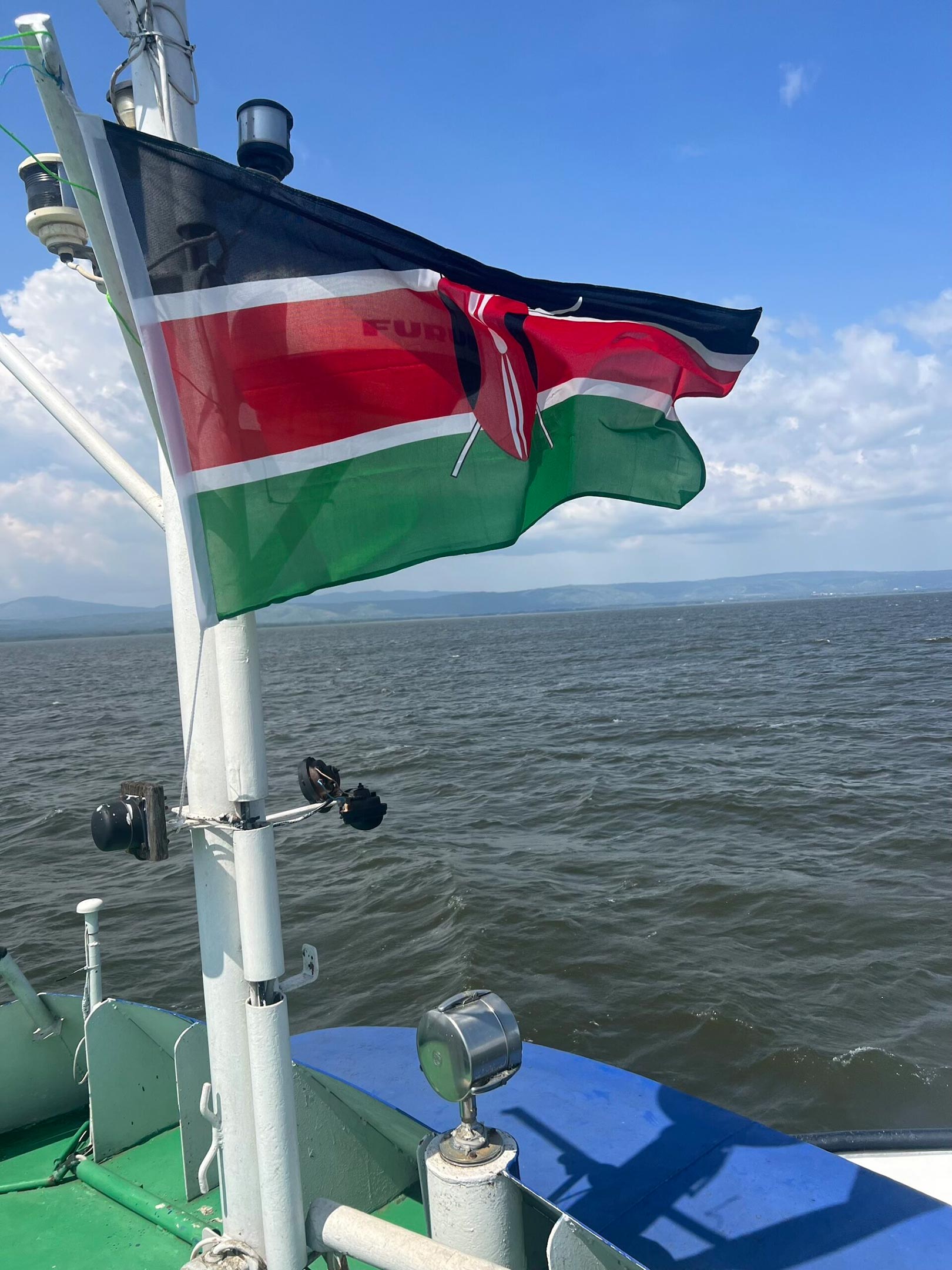
A Crucial Study with Global Implications
“Our collaboration wanted to study not only harmful algal blooms, but also the social consequences of HABs in the context of the Winam Gulf being a model for a warming Lake Erie,” said Lauren Hart, lead author of the study, who completed the work as a U-M doctoral student. “Winam Gulf is one of the most productive basins in Lake Victoria for fishing, and it’s depended upon by Kenya’s third largest city, Kisumu.”
Although these algal blooms do take place year-round, previously researchers had not completed a genetic catalog of the cyanobacteria that live in the Gulf. Now, a group of researchers from North America and Kenya have completed genetic sequencing of cyanobacteria across the Winam Gulf. Their results, which will also help local officials track harmful algal blooms, were published in the journal Applied and Environmental Microbiology.

Health Risks for Vulnerable Communities
“The paper that Lauren led unmasks the synthetic capability of cyanobacterial blooms in an area plagued by year-round bloom events. Unlike in the U.S., where water treatment plants effectively remove cyanobacterial toxins, there are no such resources available in Kenya. Rural populations drink water directly from the lake, yielding exposure risks that Westerners never face,” said senior author George Bullerjahn, professor of biological sciences at Bowling Green State University. “Understanding the toxigenic capability of the Lake Victoria blooms is a first step in developing protocols to inform residents about such risks so that they may change their water use during intense bloom periods.”
Water contaminated with toxic cyanobacteria can’t be made safe by boiling. Boiling can actually make the water even less safe because boiling the toxin-producing bacteria can split bacteria open, unleashing more toxins.
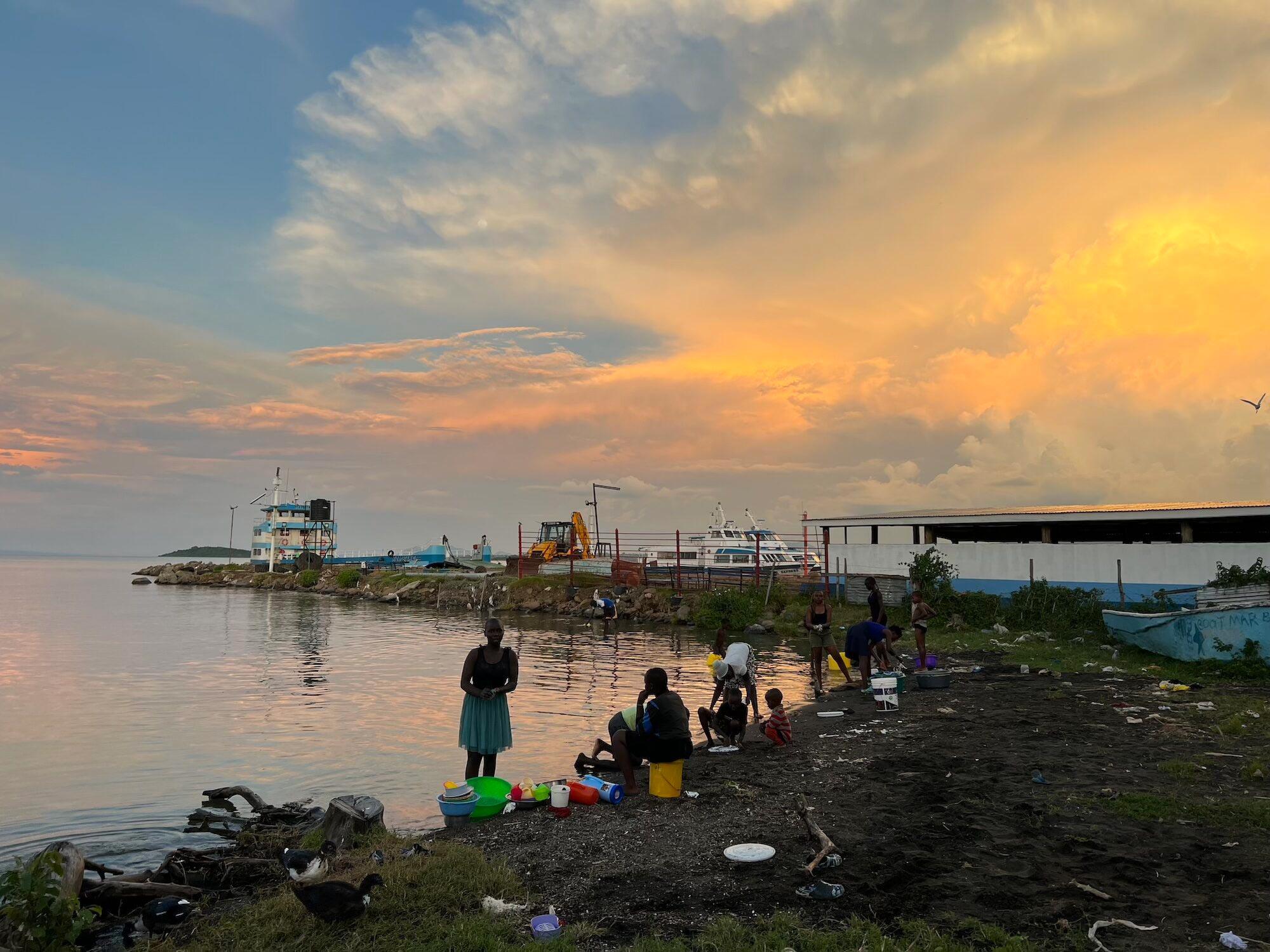
Cataloging Cyanobacteria in Winam Gulf
To do a complete genetic survey of cyanobacteria in Winam Gulf, researchers took samples from the lake in 2022 and 2023. They identified a kind of cyanobacteria called Dolichospermum as the most dominant bloom-forming cyanobacteria. At most sites where the researchers found Dolichospermum, they also found another cyanobacteria called Microcystis. Microcystis and a cyanobacteria called Planktothrix were more abundant in shallow and turbid sites. All three of these cyanobacteria are also found in cyanoHABs in Lake Erie.
This was an interesting finding, Hart said, because areas of turbidity—water in which there’s a lot of suspended material, such as where rivers flow into lakes—can mask the visibility of harmful algal blooms. Harmful algal blooms can often show up as clouds of green material, but in turbid areas, water can simply appear murky.
“This was really concerning in areas where people are using the raw water because you can’t see the bloom, so you’re not practicing these habits you may practice when there is a scum,” Hart said.
Uncovering the Genetic Potential of Toxins
Hart herself identified that the organism Microcystis produces microcystin, a toxin that can damage the liver, as well as 300 other clusters of genes responsible for producing molecules, both toxic and otherwise, according to study co-author Gregory Dick, U-M professor of earth and environmental science and director of the Great Lakes Center for Freshwaters and Human Health.
“Lauren’s work is a great example of how environmental genomics can address longstanding questions, such as which organism is producing known toxins, as well as uncover genetic potential for production of a vast diversity of other molecules of interest, some of which we didn’t even know to look for,” Dick said.
How Algal Toxins Harm Human Health
Toxins can enter the human body through several pathways, including ingesting the toxins, breathing them when they become airborne, or absorbing them through the skin while bathing or laundering clothes. People who are immunocompromised are most at risk for harm from these toxins, according to Hart, who also focuses on how different toxins interact together once inside the human body.
“My work is interested in this synergy question: If microcystin and another toxin that Microcystis makes gets into our bodies at the same time, does one plus one equal four rather than two? Can one amplify the other’s effect?” Hart said. “There is a small line of research beginning to come out that finds harmful synergies between these molecules, especially when it comes to fatty liver disease and harming your gut microbiome.
A Growing Concern for Kisumu’s Vulnerable Population
“Bringing it back to the Winam Gulf, this is important because Kisumu, Kenya’s third largest city, has one of the highest prevalence of malaria and high amounts of HIV, leading to many immunocompromised people. This is going to heighten the kind of effect these cyanotoxins and exposure to HABs have on people in this region.”
Reference: “Metagenomics reveals spatial variation in cyanobacterial composition, function, and biosynthetic potential in the Winam Gulf, Lake Victoria, Kenya” by Lauren N. Hart, Brittany N. Zepernick, Kaela E. Natwora, Katelyn M. Brown, Julia Akinyi Obuya, Davide Lomeo, Malcolm A. Barnard, Eric O. Okech, 2022-23 NSF-IRES Lake Victoria Research Consortium, E. Anders Kiledal, Paul A. Den Uyl, Mark Olokotum, Steven W. Wilhelm, R. Michael McKay, Ken G. Drouillard, David H. Sherman, Lewis Sitoki, James Achiya, Albert Getabu, Kefa M. Otiso, George S. Bullerjahn and Gregory J. Dick, 8 January 2025, Applied and Environmental Microbiology.
DOI: 10.1128/aem.01507-24
The work was funded by a National Science Foundation International Research Experiences for Students grant as well as support from the National Institutes of Health, awarded to Bowling Green State University.
Never miss a breakthrough: Join the SciTechDaily newsletter.
Follow us on Google and Google News.