
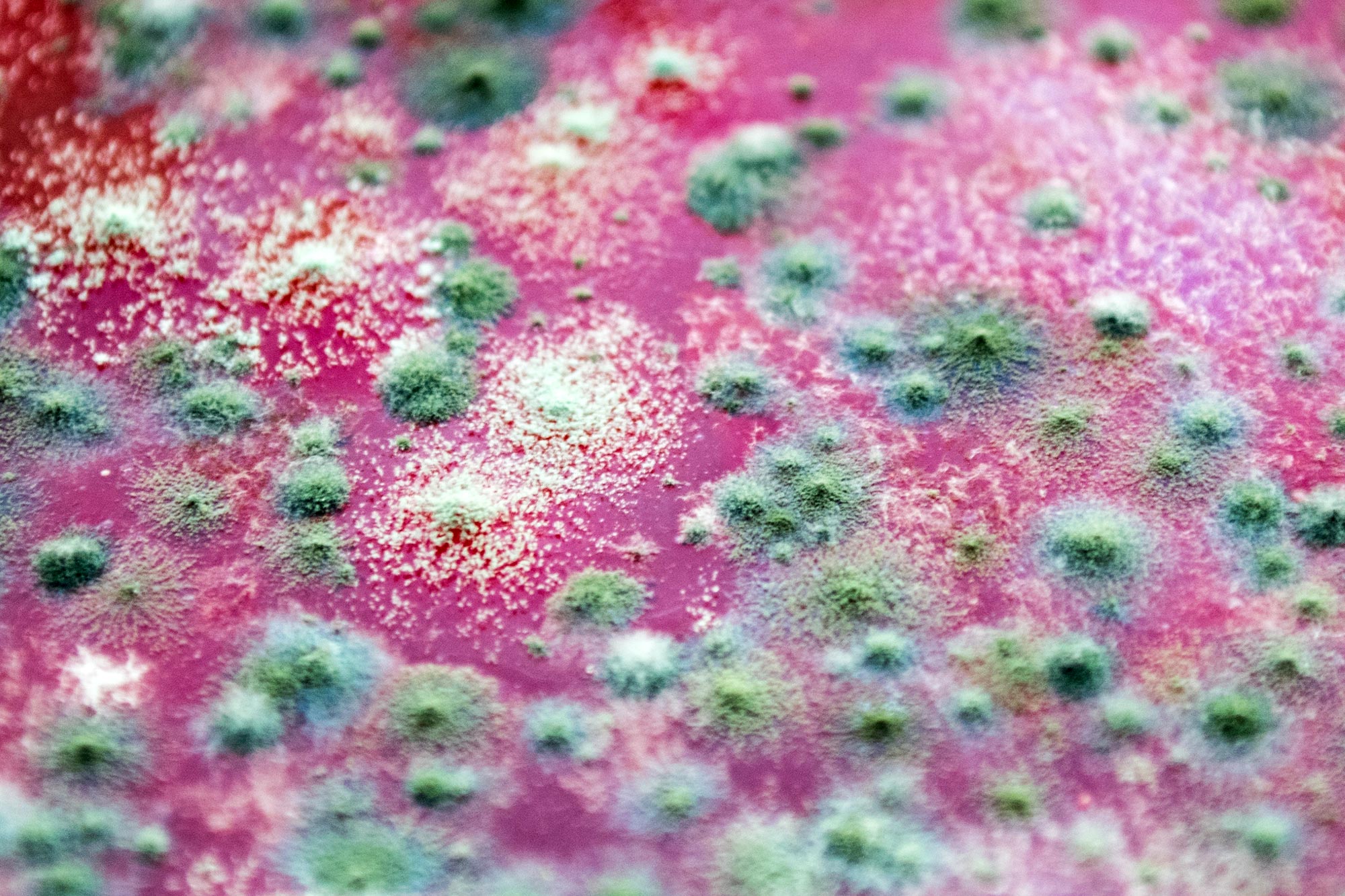
Exposure to B. bassiana fungus activated Toll receptors, leading to cell death throughout the fly brain.
A new study published in PLOS Biology reveals that a fungal infection can activate a fruit fly’s immune system, causing it to attack its own brain cells and leading to neurodegeneration.
Researchers found that the fungus Beauveria bassiana triggers an immune response that destroys neurons and glial cells in the brain. As a result, more than half of the infected flies died within seven days, whereas half of the uninfected control flies survived for nearly 50 days.
In experiments conducted by a team of academics from the University of Birmingham, fruit flies were exposed to B.bassiana in infection chambers. After three days exposure, the fungus had penetrated the blood-brain barrier and had made its way into the central brain.
The scientists found that the fungus is able to trick the fly’s immune system agents called Toll receptors to release two different responses. The Toll-1 receptor triggered the release of antimicrobial peptides (AMPs) as expected, which attack and try to kill pathogens. However, the fungus also provoked Toll-1 to trigger the production of another molecule called Sarm, which suppresses the immune response and kills brain cells instead.
The Role of Sarm: A “Master of Destruction”
Alicia Hidalgo, Professor of Neurogenetics at the University of Birmingham and corresponding author of the study said: “We have shown a process for how fungi have evolved to trick the immune system to get into the brain. The fungus is detected by the receptor that does a normal process to induce innate immunity, but in the brain this can also trigger an immune-evasion pathway that induces cell death in the host brain instead.
“The key antagonist in the immune process is Sarm, a so-called master of destruction, that is causing cell death in the brain. The ability of B. bassiana to trick the fruit fly immune system into activating the master of destruction Sarm and kill cells enables spores to beat the blood-brain barrier and start feeding on brain cells.”
Dr Deepanshu Singh, who worked on the study for their PhD carried out at the University of Birmingham, and is now a post-doc at the University of Manchester, said: “From an evolutionary perspective, these findings highlight the ongoing arms race between hosts and pathogens, where hosts enhance their immune mechanisms while pathogens evolve new strategies to evade immunity.
“It is important to stress that B. bassiana cannot affect humans. Some fungi have co-evolved with the host, so they will infect only particular hosts. B. bassiana infects multiple insect species, but not mammals. However, in principle, this study shows that other fungal infections could affect the human brain in analogous ways.”
Reference: “Toll-1-dependent immune evasion induced by fungal infection leads to cell loss in the Drosophila brain” by Deepanshu N. D. Singh, Abigail R. E. Roberts, Xiaocui Wang, Guiyi Li, Enrique Quesada Moraga, David Alliband, Elizabeth Ballou, Hung-Ji Tsai and Alicia Hidalgo, 13 February 2025, PLOS Biology.
DOI: 10.1371/journal.pbio.3003020
Never miss a breakthrough: Join the SciTechDaily newsletter.
Follow us on Google and Google News.