
Close Menu
    Facebook X (Twitter) Instagram
    SciTechDaily
    • Biology
    • Chemistry
    • Earth
    • Health
    • Physics
    • Science
    • Space
    • Technology
    Facebook X (Twitter) Pinterest YouTube RSS
    SciTechDaily
    Home»Biology»This Overlooked Type of Cell Could Hold Clues to How Cancer Spreads
    Biology

    This Overlooked Type of Cell Could Hold Clues to How Cancer Spreads

    By University of North Carolina at Chapel HillJune 23, 2025No Comments3 Mins Read
    Facebook Twitter Pinterest Telegram LinkedIn WhatsApp Email Reddit
    Share
    Facebook Twitter LinkedIn Pinterest Telegram Email Reddit
    Cancer Cell Illustration
    A new study uncovers how mobile cells play a surprising role in shaping organs by crawling across tissue surfaces and communicating in ways once thought exclusive to the brain. Credit: Shutterstock

    Cells once thought passive are now seen as sculptors. Their choreography may explain how tissues form and fail.

    A new study by scientists at the University of North Carolina at Chapel Hill shows that the cells responsible for shaping our organs may be much more mobile and coordinated than previously thought.

    Using fruit flies as a model, the researchers found that muscle precursor cells move across the surface of the developing testis and help shape it into its final structure. These active cells work together, coordinating their movements through a communication system that has mostly been linked to brain development.

    Migrating cells reveal new role in organ formation

    “While most organs are thought to be shaped by static, brick-like cells, our study highlights the powerful role of dynamic, migrating cells — and how they work together to sculpt living tissue,” said Dr. Maik Bischoff, first and co-corresponding author of the study and postdoctoral researcher in the Peifer lab at UNC-Chapel Hill.
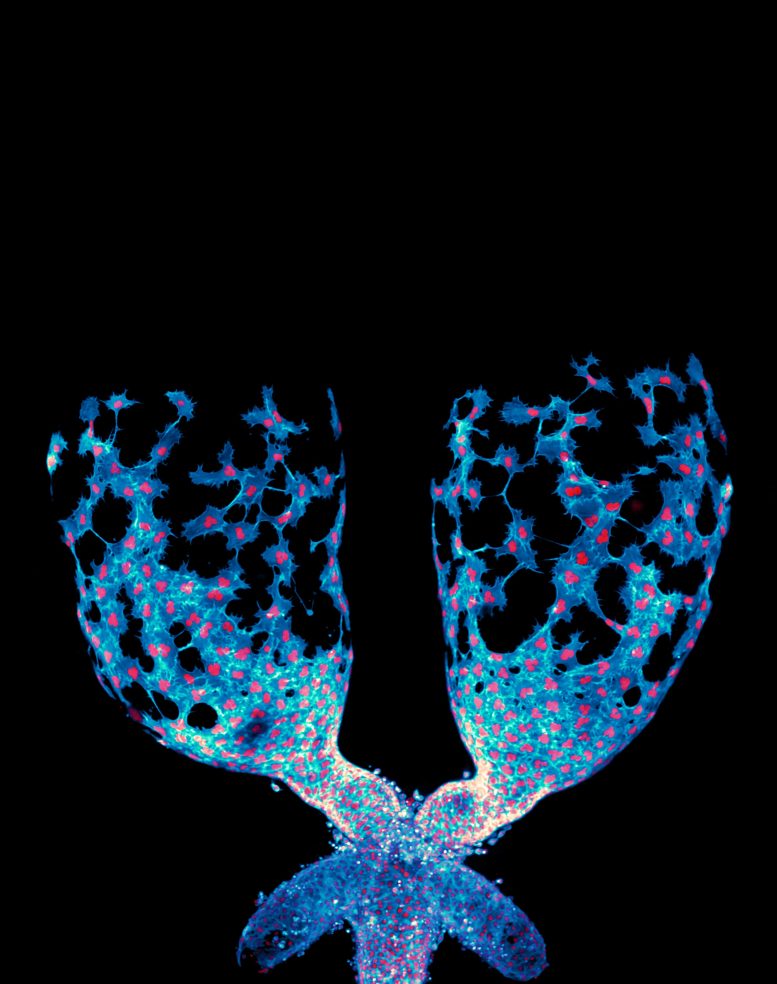
    Live Imaging of Developing Fruit Fly Testis
    Live imaging captured by Dr. Maik Bischoff. Credit: Dr. Maik Bischoff

    Scientists have long recognized two main cell types involved in organ development: relatively stationary epithelial cells, which behave like bricks in a wall, and flexible, highly mobile mesenchymal cells. The research team at UNC set out to understand how these migrating cells work together to shape tissues during development.

    One of their most unexpected discoveries was that these cells use a signaling molecule most commonly associated with brain development. This finding suggests that very different organs, such as the brain and the testis, may rely on similar mechanisms to form their structures.

    Live imaging captures twisting tissue

    The researchers studied the testis in developing fruit flies, which starts out as an oval and eventually twists into a spiral shape. They discovered that muscle precursor cells move across the surface and later tighten around the testis, shaping it from the outside.

    Using live imaging, they were able to observe this process as it happened—a major improvement over the static tissue images used in most earlier studies.
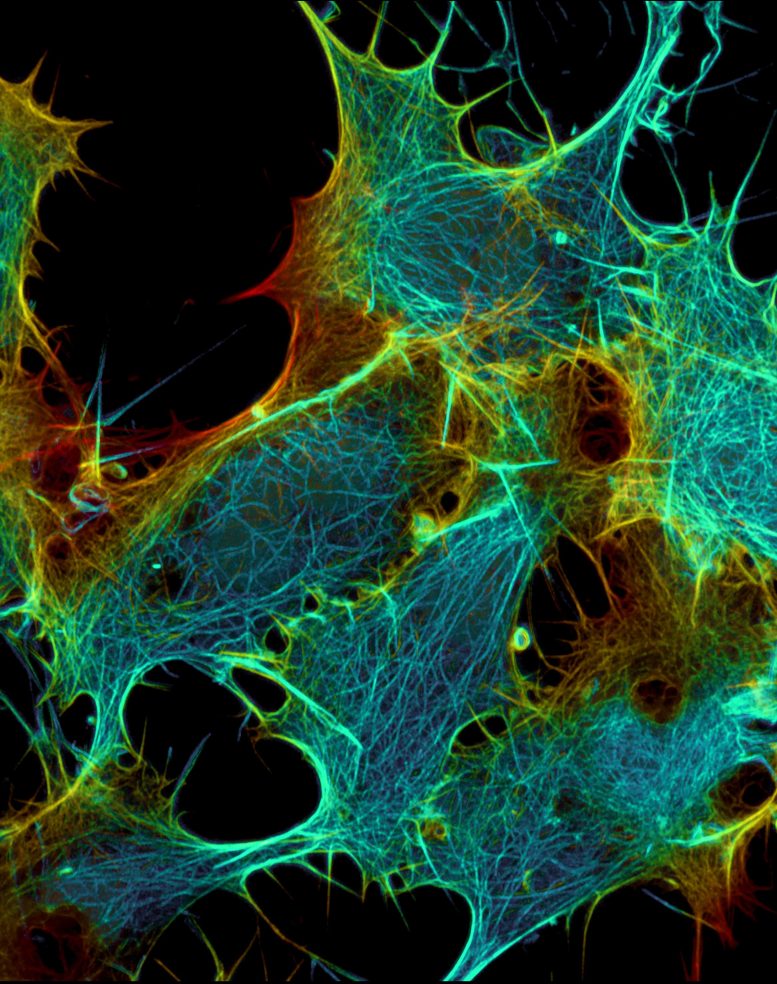
    Live Imaging of Cytoskeletal Networks
    Live imaging captured by Dr. Maik Bischoff of his cell research. Credit: Dr. Maik Bischoff

    “If we want to understand how organs form, we have to watch the process as it happens,” said Bischoff. “Trying to figure it out from static images is like learning the rules of basketball from a handful of screenshots — you miss the whole choreography.”

    Implications for cancer and development

    The work has far-reaching implications. Understanding how mobile cells coordinate to mold tissues could offer new insights into how organs form and what can go wrong with developmental disorders. Due to cancer cells being another example of mesenchymal cells, studying how these cells move and communicate could also help scientists learn how tumors grow and spread.

    “Mesenchymal cells are often overlooked in organ development, but they’re incredibly dynamic and influential,” said Dr. Mark Peifer, senior and co-corresponding author, professor of biology and member of the Lineberger Comprehensive Cancer Center at UNC-Chapel Hill. “By watching them live, we’re uncovering how cells communicate and cooperate to build complex structures — and what happens when that goes wrong.”

    Reference: “Plexin/Semaphorin antagonism orchestrates collective cell migration and organ sculpting by regulating epithelial-mesenchymal balance” by Maik C. Bischoff, Jenevieve E. Norton, Sarah E. Clark and Mark Peifer, 18 June 2025, Science Advances.
    DOI: 10.1126/sciadv.adu3741

    Never miss a breakthrough: Join the SciTechDaily newsletter.
    Follow us on Google and Google News.

    Cancer Cells Developmental Biology University of North Carolina at Chapel Hill
    Share. Facebook Twitter Pinterest LinkedIn Email Reddit

    Related Articles

    Age Accelerating “Zombie Cells” – A New Study Sheds Light on These Unique Cells

    Scientists Discover a Massacre: “Assassin” Cells Murder Innocent Cells

    Recently Discovered Lipid Can Prevent Your Cells From Dying

    A Shortcut to Preventing Cancer

    Scientists Find New Trigger for Onset of Colon Cancer

    Drug-Resistant EGFR May Have “Achilles Heel”

    Single Cancer Cells Often Split into Three or More Daughter Cells

    A Step Towards Understanding the Cellular Basis for Age-Related Vulnerability to Breast Cancer

    New Drug Fights Cancer by ‘Hijacking’ Existing T Cells

    Leave A Reply Cancel Reply

    • Facebook
    • Twitter
    • Pinterest
    • YouTube

    Don't Miss a Discovery

    Subscribe for the Latest in Science & Tech!

    Trending News

    Millions Take These IBS Drugs, But a New Study Finds Serious Risks

    Scientists Unlock Hidden Secrets of 2,300-Year-Old Mummies Using Cutting-Edge CT Scanner

    Bread Might Be Making You Gain Weight Even Without Eating More Calories

    Scientists Discover Massive Magma Reservoir Beneath Tuscany

    Europe’s Most Active Volcano Just Got Stranger – Here’s Why Scientists Are Rethinking It

    Alzheimer’s Symptoms May Start Outside the Brain, Study Finds

    Millions Take This Popular Supplement – Scientists Discover a Concerning Link to Heart Failure

    The Universe Is Expanding Too Fast and Scientists Can’t Explain Why

    Follow SciTechDaily
    • Facebook
    • Twitter
    • YouTube
    • Pinterest
    • Newsletter
    • RSS
    SciTech News
    • Biology News
    • Chemistry News
    • Earth News
    • Health News
    • Physics News
    • Science News
    • Space News
    • Technology News
    Recent Posts
    • Simple Blood Test May Predict Alzheimer’s Years Before Brain Scans Show Signs
    • Scientists Say Adding This Unusual Seafood to Your Diet Could Reverse Signs of Aging
    • U.S. Waste Holds $5.7 Billion Worth of Crop Nutrients
    • Scientists Say a Hidden Structure May Exist Inside Earth’s Core
    • Doctors Surprised by the Power of a Simple Drug Against Colon Cancer
    Copyright © 1998 - 2026 SciTechDaily. All Rights Reserved.
    • Science News
    • About
    • Contact
    • Editorial Board
    • Privacy Policy
    • Terms of Use

    Type above and press Enter to search. Press Esc to cancel.