

A Recently Found Lipid Inhibits Cell Death
An organism uses programmed cell death as a critical tool to maintain its health. Various stress responses are triggered when a cell does not operate as it should. These responses aim to bring back the original cell function.
One example is the process known as autophagy, in which a cell partly digests itself in order to acquire energy that it can utilize for its own repair. Should these efforts fail, the cell dies. This enables the body to combat conditions including infections, diabetes, cancer, and neurodegeneration.

A Double-Edged Sword
Stress responses, however, are a double-edged sword and must be kept in balance to be beneficial to the body. That is why cells also contain substances that stop stress reactions and inhibit cell death.
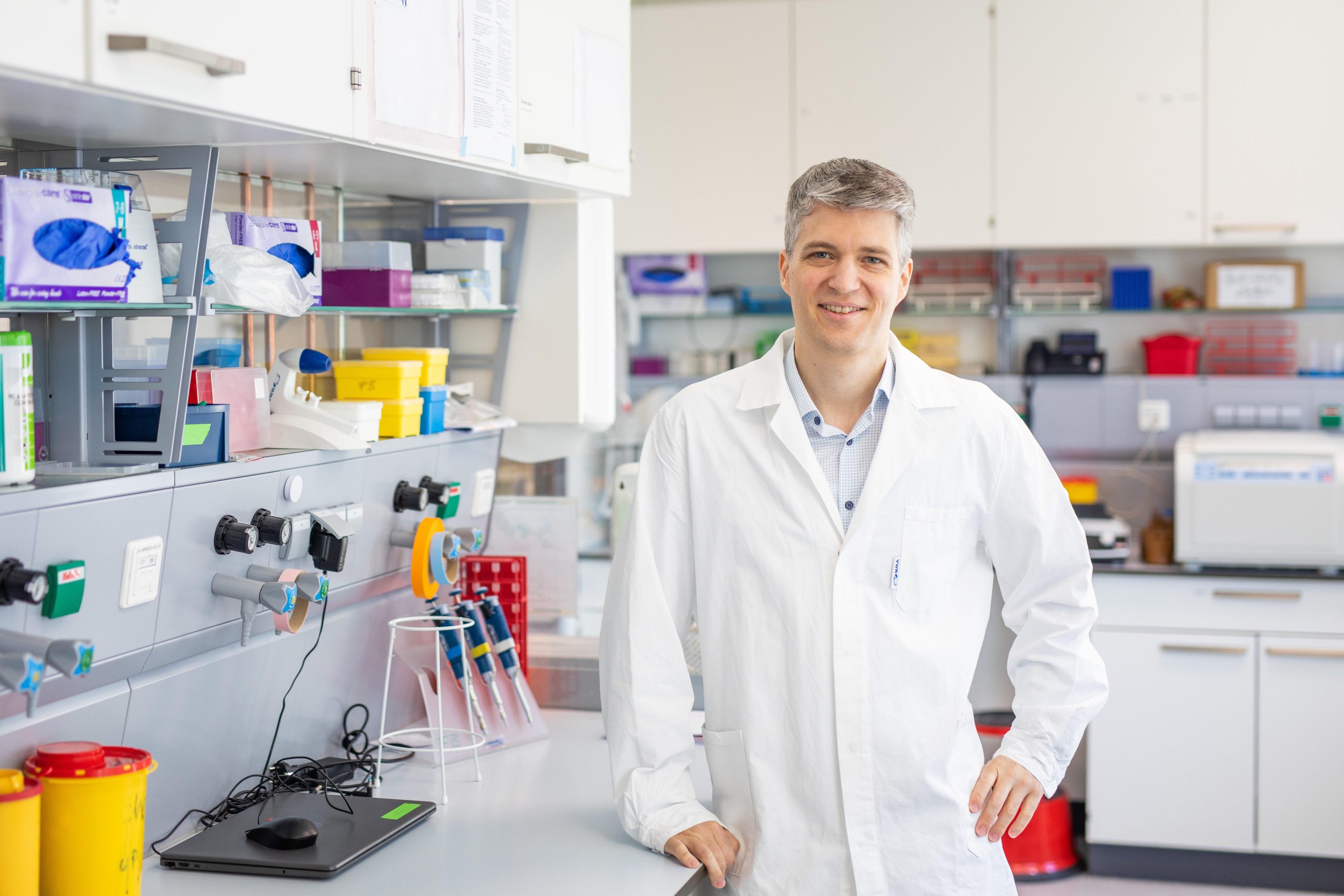
An international consortium of research groups led by Andreas Koeberle from the Michael Popp Institute at the University of Innsbruck has now been able to prove that a membrane lipid called PI (18:1/18:1) is significantly involved in this process. The study, published in the research journal Nature Communications, opens up many interesting medical possibilities.
Stress Through Fatty Acids
Numerous different enzymes are involved in the control of stress responses. The SCD1 enzyme is one of them. It transforms saturated fatty acids into unsaturated ones, making it very efficient against stress brought on by fats in harmful concentrations.
The health of the organism is, in theory, improved by this procedure. But if practiced too often, it might get dangerous. SCD1 has long been associated with inflammation, metabolic disorders, and cancer, according to researchers. It is still unclear what this enzyme’s full functional scope is. Because of the potential for serious side effects, treatments that selectively inhibit SCD1 are not approved for use in therapy.
Researchers have now been able to trace the stress response-inhibiting effect of SCD1 back to an indirect product of this enzyme: The membrane lipid PI(18:1/18:1), which is largely composed of a fatty acid produced by SCD1.
A Fundamental Process Deciphered
In the future, PI(18:1/18:1) could be specifically administered or its formation inhibited. This could fight diseases without having to disrupt the full range of functions of the enzyme SCD1. However, the whole range of PI(18:1/18:1)’s functions must first be thoroughly researched and understood.
“What is particularly interesting is that stress-associated processes, such as the aging process, resistance to chemotherapy, or the development of tumors all influence the amount of PI(18:1/18:1) in the affected tissues. There is a clear connection that opens up new therapeutic approaches,” says Andreas Koeberle.
“We have deciphered a very fundamental process with this study,” he adds. “It’s a significant starting point and sets new directions for further research.”
Natural Products as a Source of Ideas
At the Michael Popp Institute of the University of Innsbruck, researchers study the molecular pharmacological effects of plant-derived natural products. The research work that has now been published was initiated through the application of active plant substances.
“We wanted to find an overriding mechanism that takes place in the body, regardless of the pathway by which cell death occurs,” says Koeberle. “To do this, we used plant substances that have a toxic effect on cells, for example, myrtucommulone A, which is obtained from myrtle. When this substance was added, we could observe clear changes in the composition of the cellular lipids and that’s how we came up with the idea for this project. So, in a way, the natural substances were the starting point to gather ideas and learn what’s going on in the human cell.”
Reference: “PI(18:1/18:1) is a SCD1-derived lipokine that limits stress signaling” by Maria Thürmer, André Gollowitzer, Helmut Pein, Konstantin Neukirch, Elif Gelmez, Lorenz Waltl, Natalie Wielsch, René Winkler, Konstantin Löser, Julia Grander, Madlen Hotze, Sönke Harder, Annika Döding, Martina Meßner, Fabiana Troisi, Maximilian Ardelt, Hartmut Schlüter, Johanna Pachmayr, Óscar Gutiérrez-Gutiérrez, Karl Lenhard Rudolph, Kathrin Thedieck, Ulrike Schulze-Späte, Cristina González-Estévez, Christian Kosan, Aleš Svatoš, Marcel Kwiatkowski and Andreas Koeberle, 27 May 2022, Nature Communications.
DOI: 10.1038/s41467-022-30374-9
The study was funded by the Federal Ministry for Research and Development, the German Research Foundation, the Universities of Jena and Innsbruck, the Leibniz Institute for Ageing Research, the Phospholipid Research Centre, the State of Thuringia, the Carl Zeiss Foundation, the EU Research Framework Programme Horizon 2020 and the Tyrolean Science Fund.
Participants from the University of Innsbruck were the Michael Popp Institute, the Institute of Biochemistry, and the Centre for Molecular Biosciences Innsbruck. Other research partners were the Friedrich Schiller University Jena, the University Hospital Jena, the Max Planck Institute for Chemical Ecology, the University Hospital Hamburg-Eppendorf, the LMU Munich, the Paracelsus Medical Private University Salzburg, the Leibniz Institute for Ageing Research, the University of Groningen, the University of Oldenburg and the University of Barcelona.
Never miss a breakthrough: Join the SciTechDaily newsletter.
Follow us on Google and Google News.