
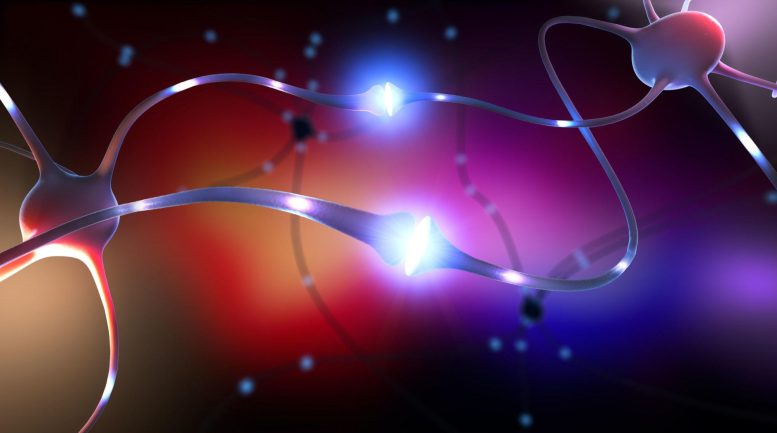
The Findings Could Explain How Memories Form Throughout the Day
Scientists have long believed that rewards such as food or money stimulate learning by triggering the release of dopamine, a hormone associated with pleasure and positive reinforcement. However, a recent rodent study suggests that learning can still happen even when there is no immediate reward involved.
Conducted by a team from NYU Grossman School of Medicine, the study examined the interaction between dopamine and acetylcholine, another brain chemical involved in learning and memory. Previous studies indicated that these two hormones have an inverse relationship; an increase in one leads to a decrease in the other. It was previously thought that rewards facilitate learning by simultaneously elevating dopamine levels while reducing acetylcholine.
Neuroplasticity and Learning Without External Rewards
This sudden hormone imbalance is believed to open a window of opportunity for brain cells to adjust to new circumstances and form memories for later use. Known as neuroplasticity, this process is a major feature of learning as well as recovery after injury. However, the question remained whether food and other external rewards are the only drivers for this memory system, or whether our brains instead are able to create the same conditions that are favorable to learning without outside help.
To provide some clarity, the study authors focused on when and under what circumstances dopamine levels are high at the same time as acetylcholine levels are low. They found that this situation occurs frequently, even in the absence of rewards. In fact, it turns out that the hormones constantly ebb and flow in the brain, with dopamine levels regularly raised while acetylcholine levels are low, setting the stage for continual learning.
“Our findings challenge the current understanding of when and how dopamine and acetylcholine work together in the brain,” said study lead author Anne Krok, PhD. “Rather than creating unique conditions for learning, rewards take advantage of a mechanism that is already in place and is constantly at work,” added Krok, who is also a medical student at NYU Grossman School of Medicine.
For the research, which was recently published in the journal Nature, the study team gave dozens of mice access to a wheel on which they could run or rest at will. On occasion, the researchers offered the animals a drink of water. Then they recorded rodent brain activity and measured the amount of dopamine and acetylcholine released at different moments.
Natural Brain Rhythms for Learning
As expected, the drink treats created the typical patterns of dopamine and acetylcholine release that are prompted by rewards. However, the team also observed that well before receiving water treats, dopamine, and acetylcholine already followed “ebb and flow” cycles approximately twice every second, during which the levels of one hormone dipped while the other surged. Krok notes that this pattern continued regardless of whether the rodents were running or standing still. Similar brain waves have been observed in humans during periods of introspection and rest, she adds.
“These results may help explain how the brain learns and rehearses on its own, without the need for external incentives,” said study senior author and neuroscientist Nicolas Tritsch, Ph.D. “Perhaps this pulsing circuit triggers the brain to reflect on past events and to learn from them.”
That said, Tritsch, an assistant professor in the Department of Neuroscience and Physiology at NYU Langone Health, cautions that their research was not designed to tell whether mouse brains process information the same way as human brains do during this “self-driven” learning, as he describes it.
Potential Implications for Mental Health Disorders
Nevertheless, he says, the results of the study may also offer insight into new ways of understanding neuropsychiatric conditions that have been tied to incorrect levels of dopamine, such as schizophrenia, attention-deficit/hyperactivity disorder (ADHD), and depression.
In schizophrenia, for example, patients often experience delusions that contradict reality. If the dopamine-acetylcholine circuit is constantly strengthening connections in the brain, says Tritsch, then problems with this mechanism might lead to the formation of too many, and incorrect, connections, causing them to “learn” of events that did not really occur.
Similarly, lack of motivation is a common symptom of depression, making it challenging to perform basic tasks such as getting out of bed, brushing teeth, or going to work. It is possible that a disruption in the internal-drive system might be contributing to these issues, the authors say.
As a result, Tritsch says the research team next plans to examine how dopamine-acetylcholine cycles behave in animal models of such mental illnesses, as well as during sleep, which is important for memory consolidation.
Reference: “Intrinsic dopamine and acetylcholine dynamics in the striatum of mice” by Anne C. Krok, Marta Maltese, Pratik Mistry, Xiaolei Miao, Yulong Li and Nicolas X. Tritsch, 9 August 2023, Nature.
DOI: 10.1038/s41586-023-05995-9
Funding for the study was provided by National Institutes of Health grants DP2NS105553, R01MH130658, T32NS086750, T32GM007308, and T32GM136573. Further funding was provided by the Alfred P. Sloan Foundation, the Danna Foundation, the Whitehall Foundation, the Feldstein Medical Foundations, and the Vilcek Scholars Award.
In addition to Krok and Tritsch, other investigators involved in the study were Marta Maltese, Ph.D.; Pratik Mistry, MS; at NYU Langone, and Xiaolei Miao, Ph.D.; and Yulong Li, Ph.D., at Peking University School of Life Sciences in Beijing.
Never miss a breakthrough: Join the SciTechDaily newsletter.
Follow us on Google and Google News.