
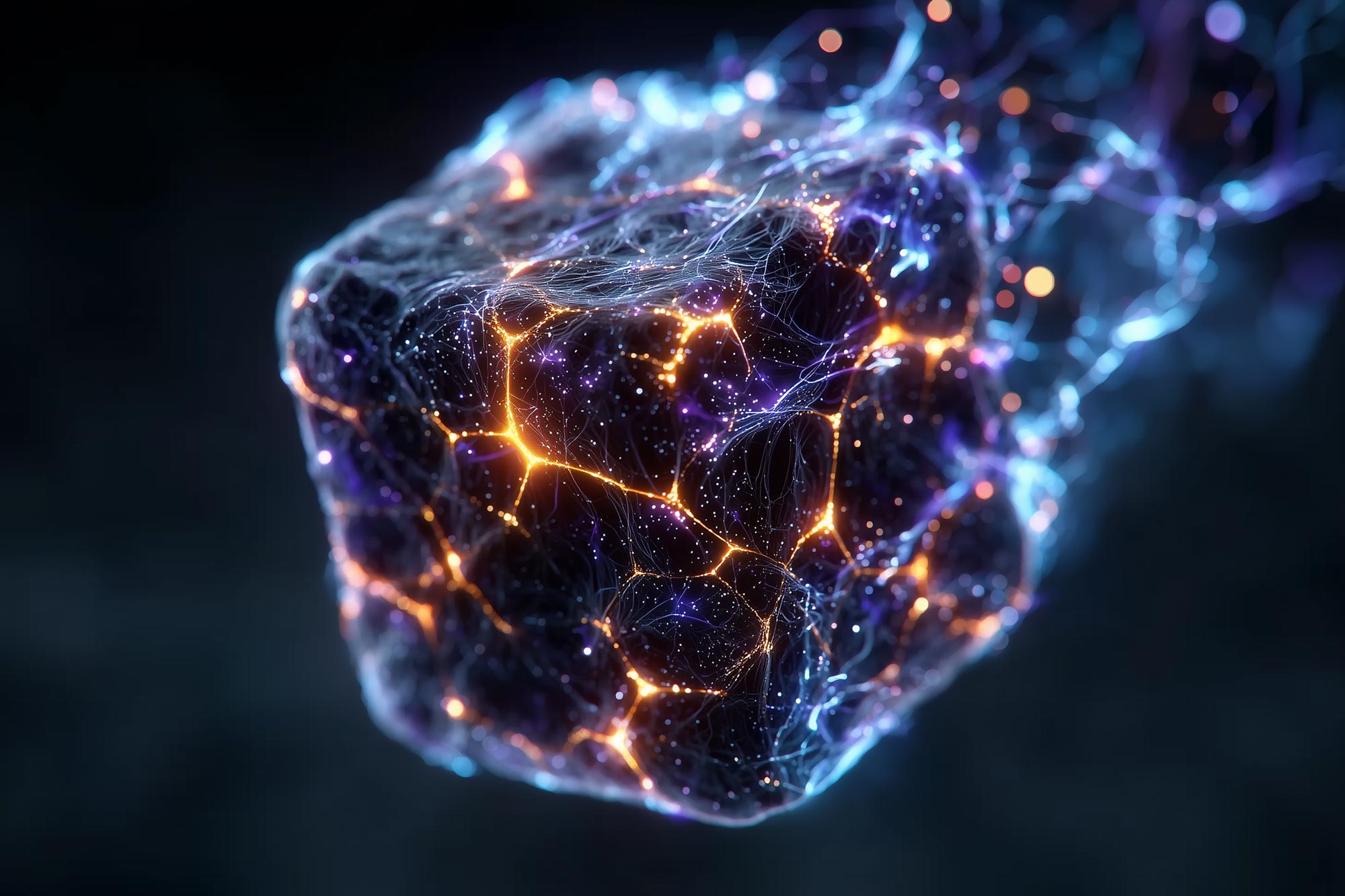
Electrons are usually described as particles, but in a rare quantum material, that picture completely breaks down.
Quantum physics shows that particles do not behave like solid objects with fixed positions. Instead, they also act like waves, which means their exact location in space cannot be pinned down. Even so, in many practical situations, scientists can still rely on a familiar, classical description. They often picture particles as tiny objects moving through space at a certain speed.
This simplified view is especially useful when explaining how electricity moves through metals. Physicists typically describe electric current as electrons rushing through a material, where they are pushed, slowed, or redirected by electromagnetic forces.
When the Particle Picture Breaks Down
Many modern theories also build on this particle-based description. One prominent example is the idea of topological states of matter, a breakthrough that earned the Nobel Prize in Physics in 2016. These theories assume that electrons behave like particles with clear energies and velocities.
However, researchers have identified materials in which this picture no longer applies (see publication below). In these cases, electrons cannot be described as small objects with a precise position or a single, well-defined speed.
Now, a team at TU Wien has shown that even when electrons lose this particle-like behavior, the material can still exhibit topological properties. Until now, such properties had always been explained using particle-based models. The new results show that topology applies more broadly than expected, bringing together ideas that once seemed incompatible.
When the Particle Picture No Longer Makes Sense
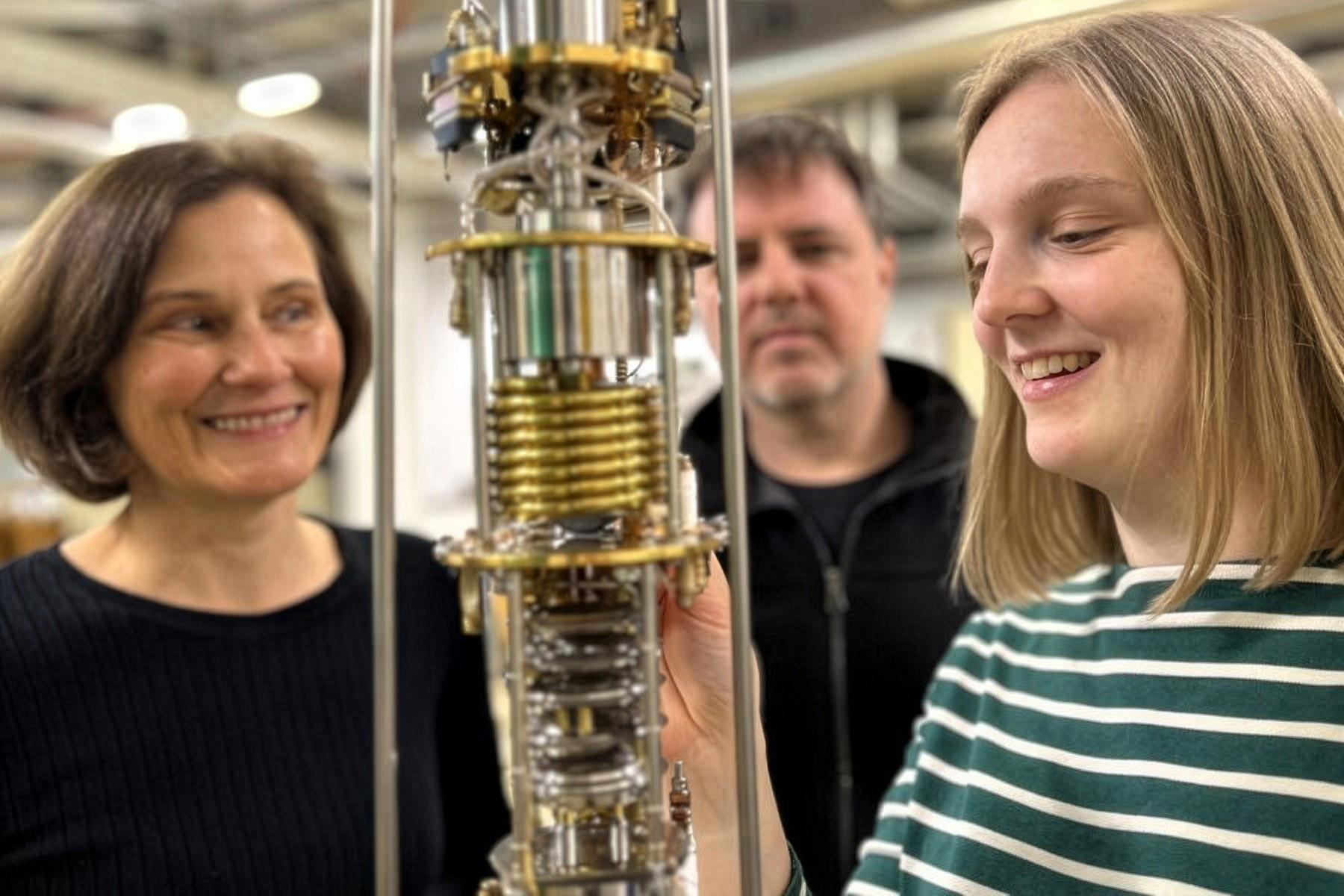
“The classical picture of electrons as small particles that suffer collisions as they flow through a material as an electric current is surprisingly robust,” says Prof. Silke Bühler-Paschen from the Institute of Solid State Physics at TU Wien. “With certain refinements, it works even in complex materials where electrons interact strongly with one another.”
There are extreme situations, however, where this description fails entirely. In these cases, charge carriers lose their particle-like character. This behavior appears in a compound made of cerium, ruthenium and tin (CeRu₄Sn₆), which researchers at TU Wien studied at extremely low temperatures.
“Near absolute zero, it exhibits a specific type of quantum-critical behavior,” says Diana Kirschbaum, first author of the current publication. “The material fluctuates between two different states, as if it cannot decide which one it wants to adopt. In this fluctuating regime, the quasiparticle picture is thought to lose its meaning.”
What Topology Has to Do With Donuts
At the same time, theoretical studies suggested that this same material should host topological states. “The term topology comes from mathematics, where it is used to distinguish certain geometric structures,” explains Silke Bühler-Paschen.
“For example, an apple is topologically equivalent to a bread roll, because the roll can be continuously deformed into the shape of an apple. A roll is topologically different from a donut, however, because the donut has a hole that cannot be created by continuous deformation.”
Physicists use similar ideas to describe states of matter. Quantities such as particle energy, velocity, and even the direction of spin relative to motion can follow specific geometric patterns. These patterns are especially important because they are highly stable. Minor disruptions, such as defects in a material, do not destroy them, just as small shape changes cannot turn a donut into an apple.
Because of this robustness, topological effects are considered promising for applications like quantum information storage, new types of sensors, and guiding electric currents without magnetic fields.
A Theoretical Puzzle
Although topology may sound abstract, most existing theories still rely indirectly on the particle picture. “These theories assume that one is describing something with well-defined velocities and energies,” explains Diana Kirschbaum.
“But such well-defined velocities and energies do not seem to exist in our material, because it exhibits a form of quantum-critical behavior that is considered to be incompatible with a particle picture. Nevertheless, simple theoretical approaches that ignore these non-particle-like properties had previously predicted that the material should show topological characteristics.”
This left researchers with a clear contradiction between theory and expected physical behavior.
Curiosity Leads to Experimental Proof
Because of this conflict, Bühler-Paschen’s team initially hesitated to follow up on the theoretical prediction. Eventually, curiosity took over, and Diana Kirschbaum began searching for experimental evidence of topological behavior.
At temperatures less than one degree above absolute zero, she observed a clear signal: a spontaneous (anomalous) Hall effect. Normally, the Hall effect occurs when charge carriers are deflected by a magnetic field. In this case, however, the deflection appeared even though no external magnetic field was applied.
What made the result especially striking was that the charge carriers behaved as if they were particles, despite strong evidence that the particle picture should not apply. “This was the key insight that allowed us to demonstrate beyond doubt that the prevailing view must be revised,” says Silke Bühler-Paschen.
“And there is more,” adds Diana Kirschbaum. “The topological effect is strongest precisely where the material exhibits the largest fluctuations. When these fluctuations are suppressed by pressure or magnetic fields, the topological properties disappear.”
Rethinking Topological States of Matter
“This was a huge surprise,” says Silke Bühler-Paschen. “It shows that topological states should be defined in generalized terms.”
The researchers describe the newly identified phase as an emergent topological semimetal. They collaborated with Rice University in Texas, where Lei Chen (co-first author of the publication), working in the group of Prof. Qimiao Si, developed a theoretical model that successfully connects quantum criticality with topology.
“In fact, it turns out that a particle picture is not required to generate topological properties,” says Bühler-Paschen. “The concept can indeed be generalized—the topological distinctions then emerge in a more abstract, mathematical way. And more than that: our experiments suggest that topological properties can even arise because particle-like states are absent.”
A New Strategy for Discovering Quantum Materials
The findings also point to practical opportunities. They suggest a new way to search for topological materials by focusing on systems that show quantum-critical behavior.
“We now know that it is worthwhile—perhaps even particularly worthwhile—to search for topological properties in quantum-critical materials,” Bühler-Paschen says. “Because quantum-critical behavior occurs in many classes of materials and can be reliably identified, this connection may allow many new ’emergent’ topological materials to be discovered.”
Reference: “Emergent topological semimetal from quantum criticality” by D. M. Kirschbaum, L. Chen, D. A. Zocco, H. Hu, F. Mazza, M. Karlich, M. Lužnik, D. H. Nguyen, J. Larrea Jiménez, A. M. Strydom, D. Adroja, X. Yan, A. Prokofiev, Q. Si and S. Paschen, 14 January 2026, Nature Physics.
DOI: 10.1038/s41567-025-03135-w
Never miss a breakthrough: Join the SciTechDaily newsletter.
Follow us on Google and Google News.
5 Comments
Ahh, no particles – well that was obvious. But instead of lay down one’s illusions and examine that, they go right ahead and try to make a math that will be consistent with Quantum critical (the specifications of quantum math) – they just love being a member of the hive.
Let’s see, meters? seconds? 10 based number system? Planck stats?
Imagination means you are to think outside the box and the subject here is nature –
Nature is at work – and that’s the subject.
etc, etc.
This Quantum Material Breaks the Rules – and Reveals New Physics.
VERY GOOD!
Please ask researchers to think deeply:
If your rules can be broken, is the rule you believe in scientific or pseudoscientific?
How will you Reveal the New Physics?
Any so-called evidence tainted by human intervention risks distorting our understanding and cognition of the intrinsic dynamics of natural laws.
—— Excerpted from https://zhuanlan.zhihu.com/p/1996561896279667777.
Example 1: Two sets of cobalt-60 are manually rotated in opposite directions, and even without detection, people around the world know that they will not be symmetrical because these two objects are not mirror images of each other at all. However, a group of so-called physicists and so-called academic publications do not believe it. They conducted experiments and the results were indeed asymmetric, but they still firmly believed that these two objects were mirror images of each other, and the asymmetry was due to a violation of the previous natural laws (CP violation). In the history of science, there can never be a dirtier and uglier operation and explanation than this. These people and the so-called academic publications they manipulate no longer know what shame is.
—— Excerpted from https://scitechdaily.com/what-happens-when-light-gains-extra-dimensions/#comment-947619.
Example 2: Please see how the so-called “mystery of θ – τ” is explained: θ and τ are completely identical in all measurable physical properties such as mass, lifetime, charge, spin, etc. However, experimental observations have shown that the θ meson decays into two π mesons, while the τ meson decays into three π mesons, making it difficult for physicists to explain why they are so similar. Physicist Martin Block proposed a highly challenging idea: θ and τ are the same particle, but in weak interactions, parity is not conserved. An easy to understand explanation is the following analogy:: There are two boxes of apples with identical weight, color, and taste. However, when one box is opened, there are two apples, while when the other box is opened, there are three apples. This confuses the old farmer who buys apples. He circled around the orchard and came up with a highly challenging idea: these two boxes of apples are not from the same tree, so they are the same.
—— Excerpted from https://scitechdaily.com/what-happens-when-light-gains-extra-dimensions/#comment-947686.
Rethinking Topological States of Matter. “This was a huge surprise,” says Silke Bühler-Paschen. “It shows that topological states should be defined in generalized terms.”
VERY VERY GOOD!
When we pursue the ultimate truth of all things, the space in which our bodies and all things exist may itself be the final and deepest puzzle we need to explore. This is not only the pursuit of physics, but also the most magnificent exploration of the origin of the universe by human reason.
Based on the Topological Vortex Theory (TVT), space is an uniformly incompressible physical entity. Space-time vortices are the products of topological phase transitions of the tipping points in space, are the point defects in spacetime. Point defects do not only impact the thermodynamic properties, but are also central to kinetic processes. They create all things and shape the world through spin and self-organization.
In today’s physics, some so-called peer-reviewed journals—including Physical Review Letters, Nature, Science, and others—stubbornly insist on and promote the following:
1. Even though θ and τ particles exhibit differences in experiments, physics can claim they are the same particle. This is science.
2. Even though topological vortices and antivortices have identical structures and opposite rotational directions, physics can define their structures and directions as entirely different. This is science.
3. Even though two sets of cobalt-60 rotate in opposite directions and experiments reveal asymmetry, physics can still define them as mirror images of each other. This is science.
4. Even though vortex structures are ubiquitous—from cosmic accretion disks to particle spins—physics must insist that vortex structures do not exist and require verification. Only the particles that like God, Demonic, or Angelic are the most fundamental structures of the universe. This is science.
5. Even though everything occupies space and maintains its existence in time, physics must still debate and insist on whether space exists and whether time is a figment of the human mind. This is science.
6. Even though space, with its non-stick, incompressible, and isotropic characteristics, provides a solid foundation for the development of physics, physics must still insist that the ideal fluid properties of space do not exist. This is science.
and go on.
Is this the counterintuitive science they widely promote? Compromising with pseudo academic publications and peer review by pseudo scholars is an insult to science and public intelligence. Some so-called scholars no longer understand what shame is. The study of Topological Vortex Theory (TVT) reminds us that the most profound problems in physics often lie at the intersection of different theories. By exploring these border regions, we can not only resolve contradictions in existing theories but also discover new physical phenomena and application possibilities.
Under the topological vortex architecture, it is highly challenging for even two hydrogen atoms or two quarks to be perfectly symmetrical, let alone counter-rotating two sets of cobalt-60. Contemporary physics and so-called peer-reviewed publications (including Physical Review Letters, Science, Nature, etc.) stubbornly believe that two sets of counter rotating cobalt-60 are two mirror images of each other, constructing a more shocking pseudoscientific theoretical framework in the history of science than the “geocentric model”. This pseudo scientific framework and system have seriously hindered scientific progress and social development.
For nearly a century, physics has been manipulated by this pseudo scientific theoretical system and the interest groups behind it, wasting a lot of manpower, funds, and time. A large amount of pseudo scientific research has been conducted, and countless pseudo scientific papers have been published, causing serious negative impacts on scientific and social progress, as well as humanistic development.
Complexity does not necessarily mean that there is no logical and architectural framework to follow. Mathematics is the language and tool that reveals the motion of spacetime, rather than the motion itself. Although the physical form of spacetime vortices is extremely simple, their interaction patterns are highly complex, and we must develop more and richer mathematical languages to describe and understand them.
The development of the Topological Vortex Theory (TVT) reflects a progression from concrete physical phenomena to abstract mathematical modeling and, ultimately, to interdisciplinary unification. Its core innovation lies in forging the continuous spacetime geometry of general relativity with the discrete interactions of quantum field theory within the same topological dynamical system. The core idea of TVT — space is physical, and matter is its topological excitation—already provides a solid and elegant scientific path for understanding the origin of all things.
——Excerpted from https://scitechdaily.com/microscope-spacecrafts-most-precise-test-of-key-component-of-the-theory-of-general-relativity/#comment-909171 and https://t.pineal.cn/blogs/6255/A-Mathematical-and-Physical-Analysis-On-the-Origin-of-Objects.
Matter as the Topological Child of Space.
Within the Topological Vortex Theory (TVT) framework, the question of the origin of objects in space finds a naturalistic answer:
1)Matter is not foreign but a product of topological phase transitions of space’s own fundamental physical property (superfluidity) under specific conditions [5, 6];
2)The diversity of objects stems from the diverse configurations of topological defects (vortices, knots, linked rings, etc.) [4];
3)This process is entirely described by mathematically rigorous topological invariants and nonlinear dynamics, requiring no introduction of supernatural assumptions.
This picture not only dispels the mystery of material origin but also provides a new perspective of matter-spacetime unity: the universe we inhabit may be a vast quantum superfluid, wherein all things—from elementary particles to galaxies—are its ripples, vortices, and knots. This is both poetic and mathematically rigorous.
TVT is still under development, and its specific mathematical formulation and experimental verification require further research. However, its core idea—space is physical, and matter is its topological excitation—already provides a solid and elegant scientific path for understanding the origin of all things.
——Excerpted from https://t.pineal.cn/blogs/6255/A-Mathematical-and-Physical-Analysis-On-the-Origin-of-Objects.