
Close Menu
    Facebook X (Twitter) Instagram
    SciTechDaily
    • Biology
    • Chemistry
    • Earth
    • Health
    • Physics
    • Science
    • Space
    • Technology
    Facebook X (Twitter) Pinterest YouTube RSS
    SciTechDaily
    Home»Space»This Scene of Stellar Creation Is the Perfect Laboratory to Study the Origin of Massive Stars
    Space

    This Scene of Stellar Creation Is the Perfect Laboratory to Study the Origin of Massive Stars

    By ESA/HubbleMay 10, 2020No Comments4 Mins Read
    Facebook Twitter Pinterest Telegram LinkedIn WhatsApp Email Reddit
    Share
    Facebook Twitter LinkedIn Pinterest Telegram Email Reddit
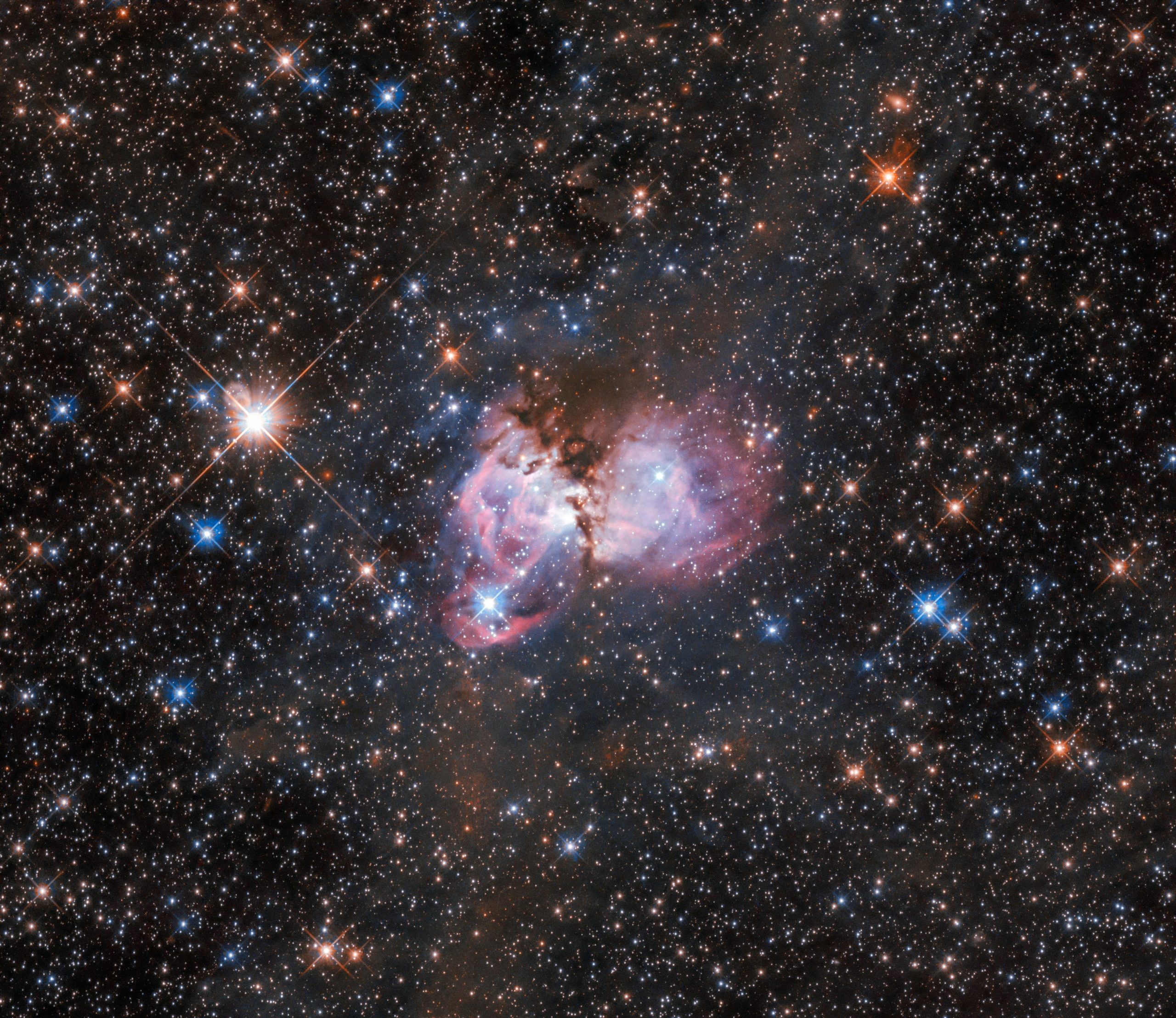
    LHA 120-N150
    This image shows a region of space called LHA 120-N150. It is a substructure of the gigantic Tarantula Nebula. The latter is the largest known stellar nursery in the local Universe. The nebula is situated more than 160 000 light-years away in the Large Magellanic Cloud, a neighboring dwarf irregular galaxy that orbits the Milky Way. Credit: ESA/Hubble, NASA, I. Stephens

    This scene of stellar creation, captured by the NASA/ESA Hubble Space Telescope, sits near the outskirts of the famous Tarantula Nebula. This cloud of gas and dust, as well as the many young and massive stars surrounding it, is the perfect laboratory to study the origin of massive stars.

    The bright pink cloud and the young stars surrounding it in this image taken with the NASA/ESA Hubble Space Telescope have the uninspiring name LHA 120-N 150. This region of space is located on the outskirts of the Tarantula Nebula, which is the largest known stellar nursery in the local Universe. The nebula is situated over 160 000 light-years away in the Large Magellanic Cloud, a neighboring irregular dwarf galaxy that orbits the Milky Way.

    The Large Magellanic Cloud has had one or more close encounters in the past, possibly with the Small Magellanic Cloud. These interactions have caused an episode of energetic star formation in our tiny neighbor — part of which is visible as the Tarantula Nebula.

    Also known as 30 Doradus or NGC 2070, the Tarantula Nebula owes its name to the arrangement of bright patches that somewhat resemble the legs of a tarantula. It measures nearly 1000 light-years across. Its proximity, the favorable inclination of the Large Magellanic Cloud, and the absence of intervening dust make the Tarantula Nebula one of the best laboratories in which to study the formation of stars, in particular massive stars. This nebula has an exceptionally high concentration of massive stars, often referred to as super star clusters.
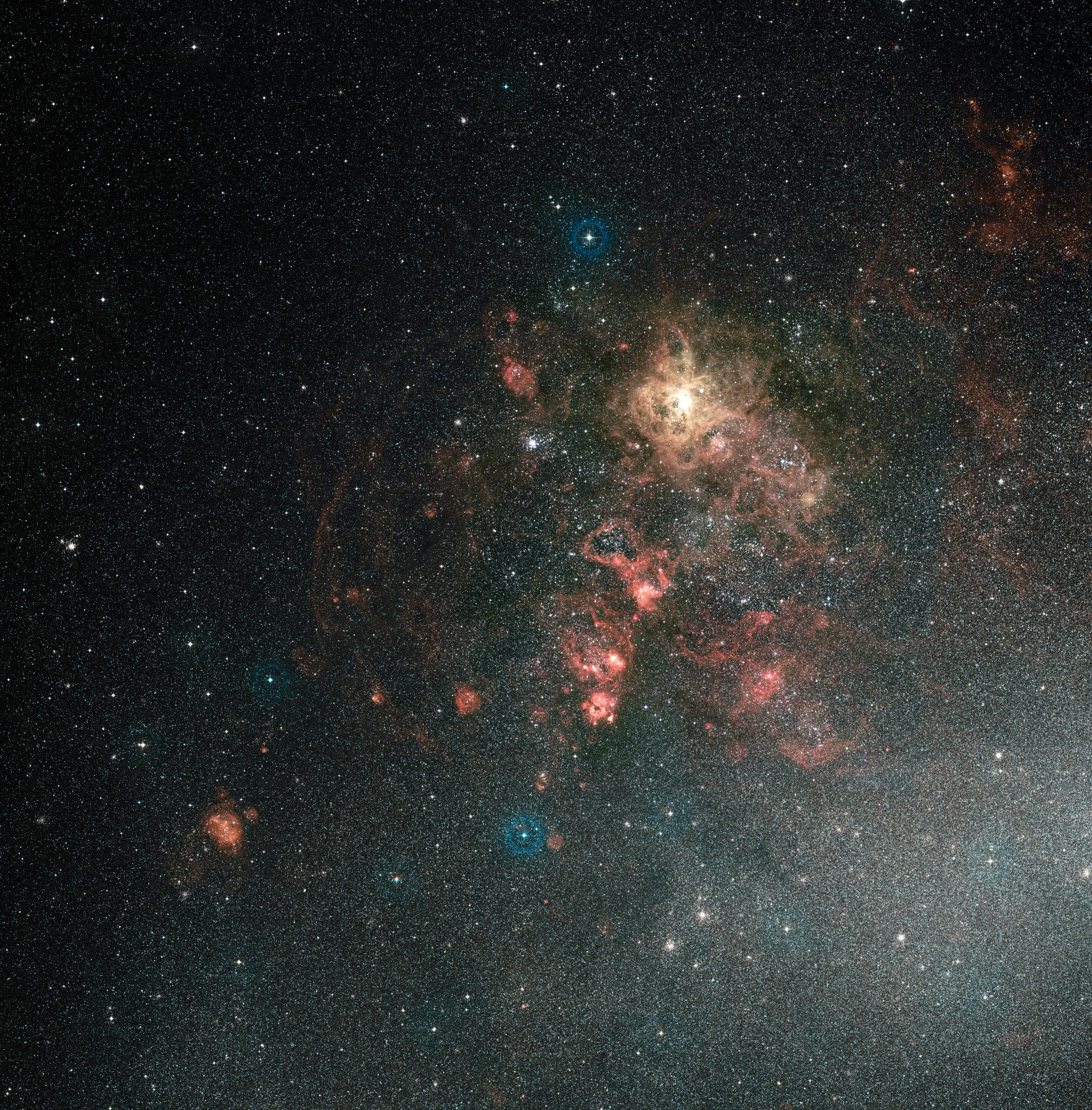
    Wide-Field View of Tarantula Nebula
    This ground-based view of the Tarantula Nebula shows the nebula in its entirety. It is the brightest region of star formation in the local Universe. Hubble’s field of view covers just a tiny spot in the upper-right quadrant of this image, though it reveals detail invisible here, including a supernova remnant. Credit: NASA, ESA, Digitized Sky Survey 2. Acknowledgment: Davide De Martin

    Astronomers have studied LHA 120-N 150 to learn more about the environment in which massive stars form. Theoretical models of the formation of massive stars suggest that they should form within clusters of stars; but observations indicate that up to ten percent of them also formed in isolation. The giant Tarantula Nebula with its numerous substructures is the perfect laboratory in which to resolve this puzzle as in it massive stars can be found both as members of clusters and in isolation.

    With the help of Hubble, astronomers try to find out whether the isolated stars visible in the nebula truly formed alone or just moved away from their stellar siblings. However, such a study is not an easy task; young stars, before they are fully formed — especially massive ones — look very similar to dense clumps of dust.

    LHA 120-N 150 contains several dozen of these objects. They are a mix of unclassified sources — some probably young stellar objects and others probably dust clumps. Only detailed analysis and observations will reveal their true nature and that will help to finally solve the unanswered question of the origin of massive stars.

    Hubble has observed the Tarantula Nebula and its substructures in the past — always being interested in the formation and evolution of stars.

    Never miss a breakthrough: Join the SciTechDaily newsletter.
    Follow us on Google and Google News.

    Astronomy Astrophysics European Space Agency Hubble Space Telescope
    Share. Facebook Twitter Pinterest LinkedIn Email Reddit

    Related Articles

    Hubble Captures a Dangerous Dance Over 100 Million Light-Years From Earth

    Hubble Captures the Final Acts of a Monster Star

    Hubble Find Surprises Astronomers: White Dwarfs Can Still Undergo Stable Thermonuclear Activity

    First Evidence of Water Vapor at Jupiter’s Moon Ganymede – May Hold More Water Than All of Earth’s Oceans

    Our Giant Universe: Hubble Spots Massive Galaxy Cluster With a Wealth of Exciting Possibilities

    Tantrums of a Baby Star: Herbig-Haro Objects

    Unexpected Discovery: Hubble Space Telescope Uncovers Concentration of Small Black Holes

    “Unprecedented” – Unusual Planetary Nebula Fades Mere Decades After It Arrived

    Hubble Captures Unprecedented Fading of Stingray Nebula – “This Is Very, Very Dramatic, and Very Weird”

    Leave A Reply Cancel Reply

    • Facebook
    • Twitter
    • Pinterest
    • YouTube

    Don't Miss a Discovery

    Subscribe for the Latest in Science & Tech!

    Trending News

    Beyond Pain Relief: Scientists Discover a Protein That Could Stop Osteoarthritis in Its Tracks

    Scientists Discover Why Alcohol Prevents the Liver From Healing, Even After You Quit

    Scientists Stunned As Volcano Removes Methane From the Air

    Scientists Discover Signs Africa May Be Splitting Apart Beneath Zambia

    Common Blood Pressure Drug Supercharges Cancer Treatment in Surprising New Study

    540-Million-Year-Old Fossils Reveal a Huge Surprise About Early Life on Earth

    Scientists Reverse Stroke Damage Using Stem Cells in Breakthrough Study

    Eating One Egg a Day Could Cut Alzheimer’s Risk by 27%

    Follow SciTechDaily
    • Facebook
    • Twitter
    • YouTube
    • Pinterest
    • Newsletter
    • RSS
    SciTech News
    • Biology News
    • Chemistry News
    • Earth News
    • Health News
    • Physics News
    • Science News
    • Space News
    • Technology News
    Recent Posts
    • Physicists Observe Strange Quantum Rotation Effect That Defies Intuition
    • Europe Was Never a Giant Dark Forest, New 20-Million-Year Study Reveals
    • Scientists Discover Bizarre 100-Million-Year-Old Insect With Giant Claws
    • New Study Challenges What We Know About Consciousness and the Brain
    • Scientists Discover Ancient “Language Switches” Hidden in Human DNA
    Copyright © 1998 - 2026 SciTechDaily. All Rights Reserved.
    • Science News
    • About
    • Contact
    • Editorial Board
    • Privacy Policy
    • Terms of Use

    Type above and press Enter to search. Press Esc to cancel.